The conclusion is straightforward: L7 HONGDAE by LOTTE HOTELS is for travelers who are happy to treat “staying in the middle of Hongdae” as part of the trip itself. The official address is 141 Yanghwa-ro, Mapo-gu; this hotel is not just near the commercial district, but right inside the area where foot traffic, restaurants, performances, and late-night returns are most concentrated. That works well for friends traveling together, for groups who split up and reunite at night, or for anyone who does not want to deal with cross-district transfers after 11 p.m. The trade-off is equally clear: you’ll be dealing with a denser street environment, and you cannot assume every room will be quiet just from hotel photos. This is not a Holiday Inn Express-style choice built around breakfast and laundry for a longer-stay rhythm; L7’s value is whether you truly want to be inside Hongdae when Hongdae is at its busiest.
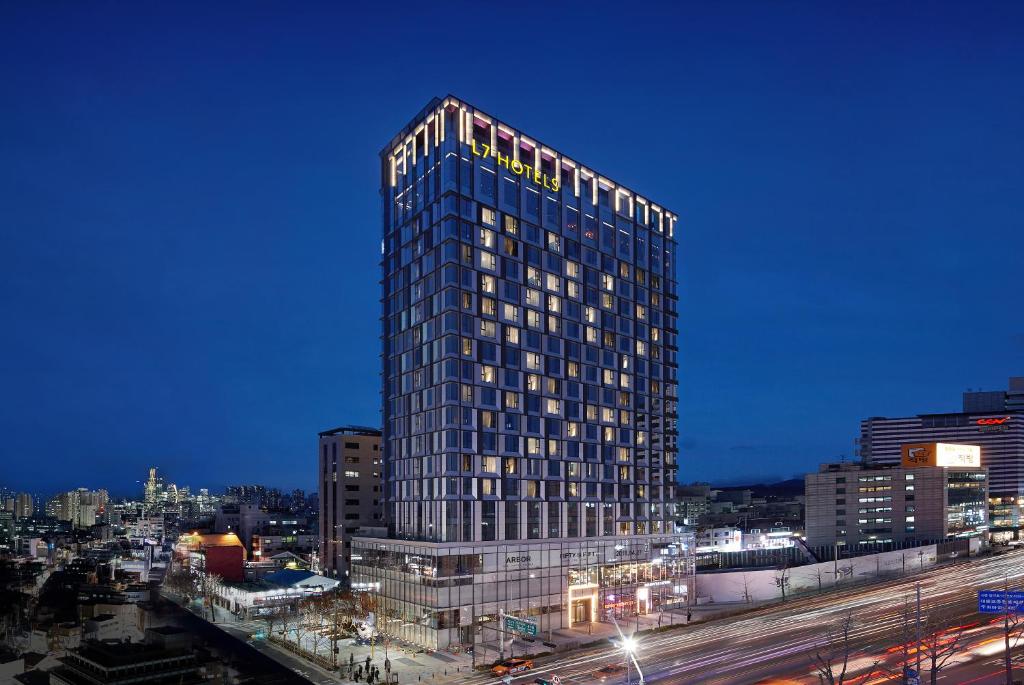
The first decision: do you want to “leave Hongdae” at night, or just go upstairs?
Staying in Hongdae does not necessarily mean staying in the deepest part of the center. If your plan is dinner, then back to the room, then back out for a bar, a performance, or a last-minute dessert stop, L7’s location makes that back-and-forth feel natural. If friends need to drop things off, someone is tired and wants to return first, and others still want to keep wandering, you do not need to renegotiate transportation just to meet again. This is convenience in terms of your daily radius, not convenience in terms of subway minutes. Ask yourself first: over two or three nights, is there at least one night when your Hongdae plans will end after 10 p.m.? If not, a hotel in the center may matter less than you think.
On the other hand, if your first stop every day is Gyeongbokgung, Gwangjang Market, Gangnam, or Jamsil, and you do not especially plan to stay in Hongdae at night, this location will pull you back into a core you are not really using. You can start with a simple Seoul area-selection filter by identifying the route you most want to avoid repeating each day, then choose your hotel from there. Do not let the idea that “Hongdae is most convenient” blur together four cross-district daytime trips and one evening stroll as if they were the same thing.
| Travel situation | How L7 Hongdae fits | Check before booking |
|---|---|---|
| Friends traveling together, often splitting up and regrouping at night | Very suitable | Everyone’s pace for returning and going back out |
| You want to save Hongdae nightlife for last | Location advantage is clear | Room orientation, sleep sensitivity |
| Three people traveling together | Triple room is worth comparing | Exact bed setup, occupancy rules, luggage space |
| You want quiet, early sleep, and an early start | Compare carefully | Room type, floor, cancellation terms |
| Only staying in Hongdae for one night | Not necessarily needed | Where the main itinerary is on other days |
The room question is not about style, but whether you’re willing to share the same evening rhythm
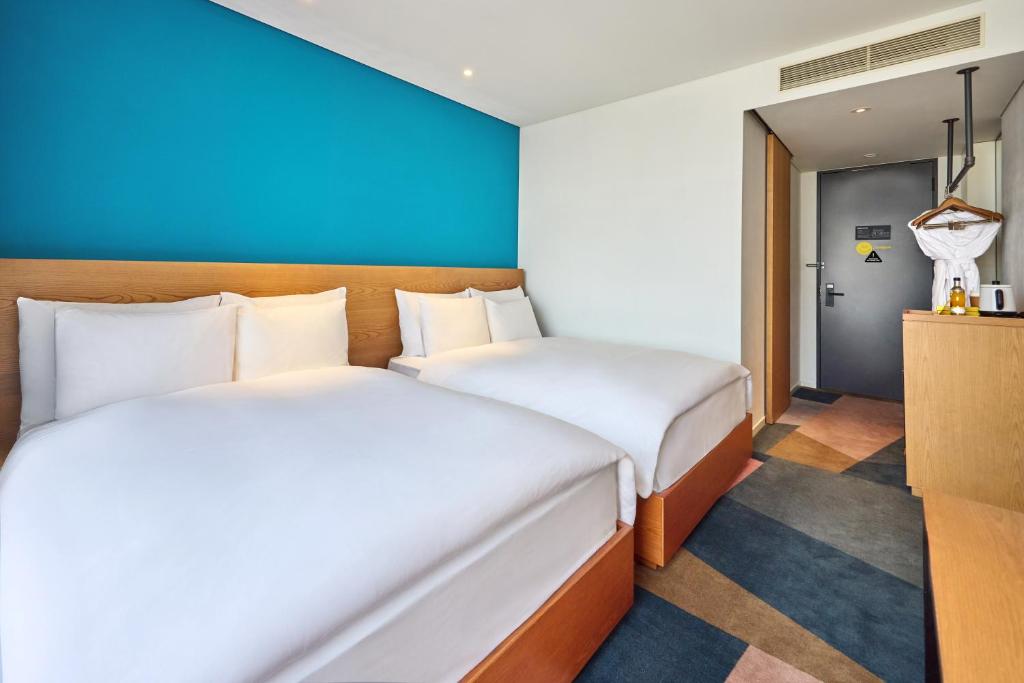
The official standard room information lists about 24.8 square meters, a Double or Twin bed setup, occupancy for two, and a view that may face Yeonnam or Hongdae; the same lineup also includes Standard Triple and Family Twin, both of which turn three-person needs into a direct room choice. That is worth checking first, because the real problem with three-person trips is usually not the lack of beds, but the third person being left to a vague extra bed or sofa bed solution. But even seeing “triple room” does not mean luggage, getting ready, and sleep schedules will automatically work out. When each person has a suitcase, one person goes to bed early, and another comes back late, the real test is how the entrance, bathroom, and bedside space are used.
So when choosing L7, do not stop at “fits 3” in the search results. Put the same dates into three platforms and confirm the bed configuration, adult/child rules, breakfast, and cancellation terms for that room type, then use a practical triple-room check to see whether the room will actually work as a shared space for one night. If you handle that well, you won’t end up choosing Hongdae’s center only to have three people waiting in turns for the bathroom or blocking the doorway with luggage.
The 21st-floor common space is useful, but not something to treat like a free attraction
According to the official information, the 21st-floor Blue Roof Lounge is a 24-hour space with books, LPs, playback equipment, and a shared lounge area. It is genuinely useful when your travel companion needs a quiet pause, when you want to sort out plans before or after check-in, or when you do not want to make “find a café” your next step every time. This kind of common space gives the hotel some usefulness beyond just nighttime sleep. But hotel events may affect access, so it should not be the only reason you choose a room, and it is not something you should assume will definitely be available for work or photos.
If you are only staying in a hotel to shower and sleep, the existence of a common space should barely affect the decision; you should spend more time on the final stretch of the route and the room itself. If you often hesitate in the morning about whether to eat hotel breakfast, L7 should also be judged together with your itinerary. Whether breakfast is worth it is not a brand question, but a question of departure time and where you want to eat; read the breakfast decision guide first so you do not treat every facility as a must-use value.
What you most need to avoid is “staying in the busiest place, but not gaining freedom”
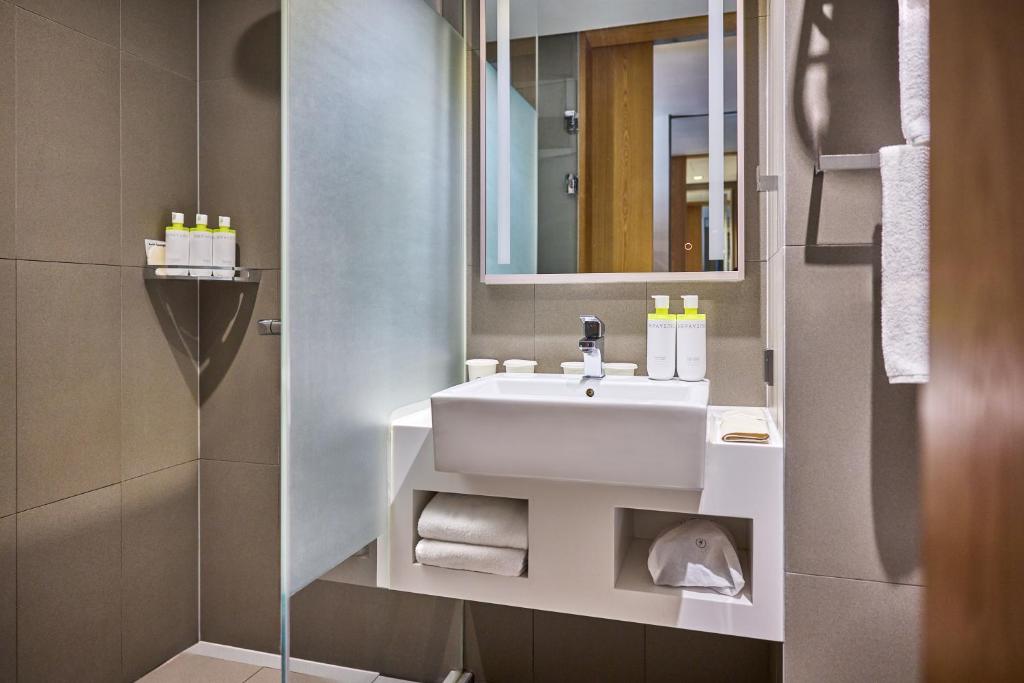
Hongdae’s density cuts both ways. It can save you a frustrating transfer when you come back late or on a rainy day, but on weekends, in heavy crowds, or when you are sensitive to sleep, it can also amplify stress. When booking, do not let platform ratings replace your own needs: if you have an early flight, need to take photos the next day, or are traveling with someone who sleeps early, first confirm possible noise, air-conditioning, and room location; if you already plan to spend your nights in Hongdae, then check whether the route back to the room, luggage storage, and going back out are actually smooth. For a structured way to break this down, see how to judge sleep risk in Seoul hotels, rather than searching only for a single comment saying “good soundproofing.”
The second easy-to-regret situation is finding out after booking that the price conditions are not actually the same. Friday and Saturday nights, holidays, different bed types, and cancellable plans are often not the same product. You can keep this hotel in mind, then check the same date, number of guests, and room type on Booking.com, Agoda, and Trip.com; but before paying, compare the total price, whether prepayment is required, the cancellation deadline, and breakfast, not the first number that appears in search results. If your itinerary is still uncertain, revisit how to compare cancellation and payment terms.
Decide its value by asking: would you return to the room twice in one ordinary evening?
The best test for L7 is not how you get there from the airport, but how one ordinary evening ends. After an afternoon in Yeonnam-dong, you return to the room to drop off your things; after dinner, you come back again to change shoes or rest; if a friend suggests another plan at the last minute, you can still go back down. If those three things sound like your kind of trip, staying in the center gives you usable flexibility. If you never return to the room and spend the whole day out sightseeing, a central hotel is just an expensive coordinate, and may not be better than a place slightly farther out that fits your room type and budget more closely.
This difference also changes what you should pay. Some people think of a hotel as just a room where they sleep six hours a night, where the most important things are quiet, bed type, and the direction they’ll leave from the next morning. Others will return in the afternoon, after dinner, and again late at night, so the room effectively gives the day’s itinerary three pause points. The latter group does not need to claim they “like lively areas”; they simply can actually use a central location. The former should not sacrifice sleep or space just because the address sounds good. First write down when you usually most want to go back to the room, then compare the room type and cancellation terms for the same date. Only then does L7 become not just an appealing name, but a justified candidate.
This test is especially useful for two- or three-person trips. If one person wants to shower and rest early while another still needs to go out and buy something, a low return-to-room cost means you do not have to bind everyone’s evening to the same route; but if someone is especially sensitive to light, noise, or late-night door openings, the freedom of a central location can also become mutual disturbance. It is more useful to say this clearly before booking than to argue after check-in about “we’re already in Hongdae, so why are we going back?”
Departure day should also be worked backward from. Hongdae Entrance Station and AREX do support the route to Incheon, but you still need time for check-out, luggage, walking back to the station, and train schedules. Especially if you have lots of shopping bags, older travelers, or children, do not decide based only on the walking time in Google Maps. Put your last day into how to handle luggage before and after check-in and see whether Hongdae still works as your base.
If your other candidate is Holiday Inn Express Hongdae, first look at the difference in Hongdae rhythm between L7 and Holiday Inn Express; do not treat the same station exit as the only reason to choose either hotel.
For now, do just one thing: open three hotel pages with the same conditions
The buttons below all go directly to L7 HONGDAE by LOTTE HOTELS. First enter the same check-in date, check-out date, number of guests, and room type, then confirm whether the hotel is at 141 Yanghwa-ro, whether it includes the room type you want, and the cancellation terms; only compare total price after the conditions match, so you do not mistake different plans for a discount.
Continue planning
If you still haven’t booked, go back to the Hongdae accommodation fork
Sources and verification
The booking conclusion in this article is based on KoriNavi editorial judgment; room types, common spaces, prices, availability, and terms may change, so please return to the official source and exact property page before booking.