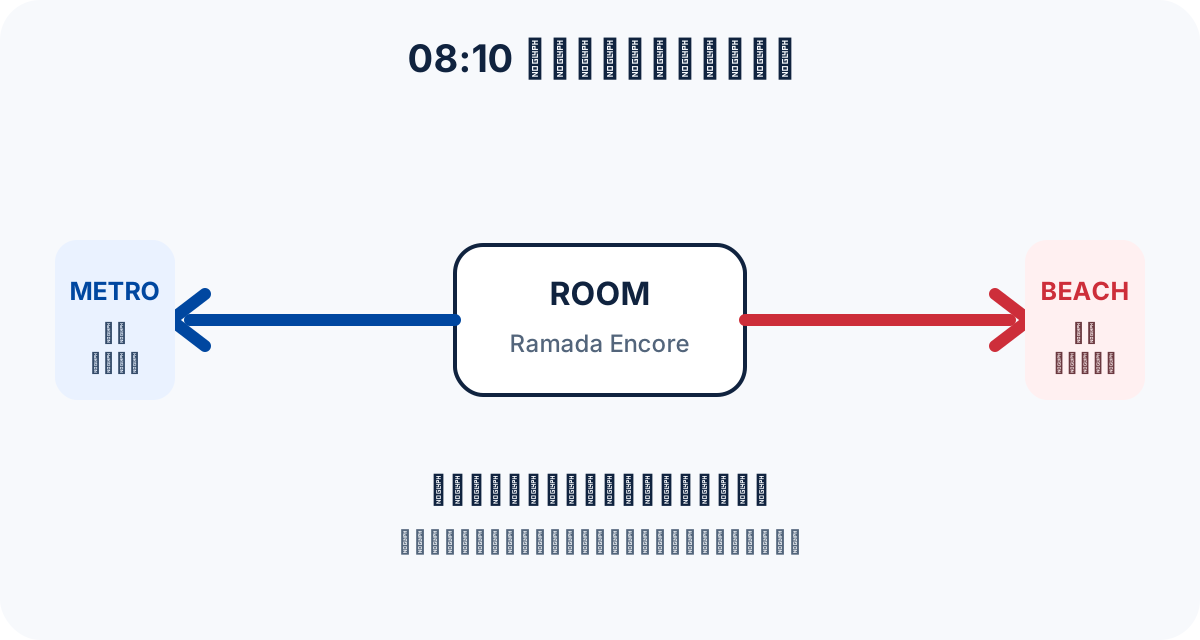
At 08:10 in the morning, two people leave the room at the same time, and the value of this hotel’s location can flip entirely. Traveler A heads west, to Nampo or another district, with the first stop at Haeundae Station; Traveler B stays in Haeundae, with the first destination at the beach. The official address is 9 Gunam-ro, and current lodging data place the hotel near Exit 3 of Haeundae Station; it’s about 500–600 meters to the Beach. You’re not eliminating walking; you’re deciding whether to place that daily walk at the transport end or at the beach/life end.
- Daily cross-district travel: The near-station advantage is used in the morning departures and evening returns to the station.
- Everyday beach/market/beachside dinner: The walking saved at the station end reappears at the Beach/Dining end.
- Split 50/50 on both sides: If the location difference is no longer decisive for payment, then proceed to room type, breakfast, cancellation policy, and total price.
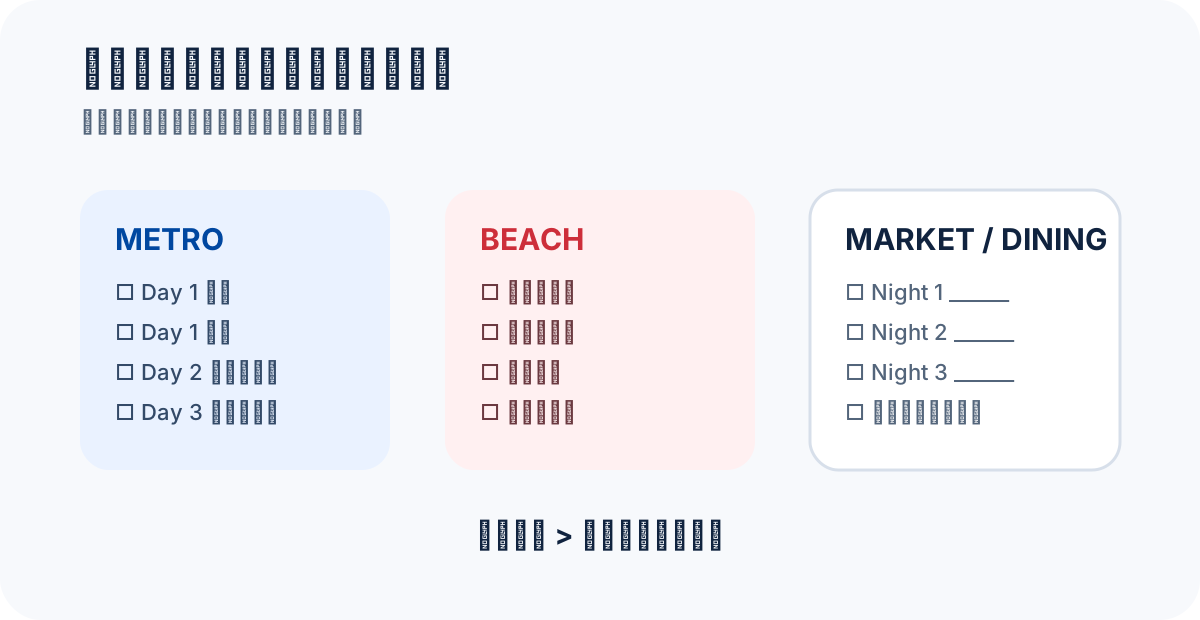
Where should today’s walking be placed?
| Travel goal | Reported proximity to the station hotel | What you need to trade off |
|---|---|---|
| Daily cross-district | Shortens hotel ↔ Haeundae Station exterior walking in both morning and evening | Walk a longer stretch to the Beach for beachside dining |
| Beach slow travel | Occasional rides stay convenient | Breakfast, strolls, swimming, dinners may repeat the same route |
| Only one day at the beach | The transport advantage on other days pays back more easily | The Beach Day can accept one longer walk |
| Every night by the beach for meals | Cross-district travel remains efficient during the day | After three nights’ last meals, walk back toward the station |
| Early start, late return | Most easily turns near-station into “twice in a day” | Accommodation feel may not be Beach-first |
| Family/elderly | After crossing back to the station, easier to check into hotel | If main activities are at the beach, the heaviest walk may be misaligned |
Current data typically lists hotel-to-Haeundae Station as about 1–2 minutes walking, Beach about 6–7 minutes, traditional market about 5 minutes. These numbers reflect only the entrance vicinity and cannot equate “1 minute to the station” with door-to-platform time: elevator, passageways, and vertical movement inside the station still exist. Data verified: 2026-08-10.
Proximity to the station needs to be used twice a day to avoid it feeling like a one-off convenience
Busan visitors often treat Haeundae as a base but still schedule day trips to the West, Nampo, Jagalchi, Gwangalli, or BEXCO. In such itineraries, you’ll walk to the metro in the morning and walk back from the metro to the hotel in the evening; the advantage isn’t about easy luggage drop on check-in day but about daily recurrence.
If two or more of your three nights require leaving Haeundae, Ramada’s transport value easily makes sense; if only once you ride the metro and spend the rest by Gunam-ro toward the beach, Near-Station is a visible benefit with limited actual use.
When the Beach appears three times in a day, the saved route reappears at the other end
Slow travel often reverses the answer. If you start at the beach cafe in the morning, return to the room for lunch, go back to the beach in the afternoon, and end the night at the market or beachside eating, Hotel ↔ Beach occurrences may far exceed Hotel ↔ Metro. The statement “the station entrance is right in front” is still true, but it is no longer your daily largest cost.
Gunam-ro itself is the main life axis extending from the hotel toward the beach. If all three nights are along this axis for meals, strolls, and coffee, moving the hotel closer to the beach doesn’t just buy a view—it saves you from walking a day’s worth of similar routes up to two or three times daily.
Metro shows clearly higher than Beach/Dining: Ramada should stay on the shortlist. Beach/Dining clearly higher: return to Haeundae hotel recommendations for sea-proximate options. If both sides are similar: compare room types and cancellation terms for the same dates.
Booking.com: Affiliate link pending
Agoda: Affiliate link pending
Trip.com: Affiliate link pending
Stay22: Affiliate link pending
Dinner location reveals your lodging core more than daytime sights
Daytime travelers may cross districts, but it’s the evenings that truly reuse your lodging area. First write three nights’ last meals:
Night 1 → ______
Night 2 → ______
Night 3 → ______
Most evenings end near the beach, Gunam-ro, or markets; the Beach end becomes more important; if two nights are spent outside the area and you ride the metro back to Haeundae, the near-station value surfaces at the most exhausting moment. Families and seniors should not rely solely on the “near metro is more convenient” idea: the real question is, at the most tiring moment of the day, is it better to return from the metro to the room or from the beach to the room?
Luggage votes twice, with the middle three days being the main ticket for lodging choice
Check-in and check-out days, handling a large suitcase outside Haeundae is a real upside for Ramada; but luggage typically happens twice, while the location is used daily. If a four-day-three-night trip involves going to the beach every night, don’t let the ease of the first day shuttle decide the whole trip.
Rainy days follow the same logic. On cross-district days, reducing the outdoor stretch to reach the metro feels more tangible; on a Haeundae slow-travel day, what you’re really accepting is walking toward Beach/Dining. Rain won’t change location, only magnify where you originally placed the cost.
Confirm location first, then consider the room type: Is Ramada right for you?
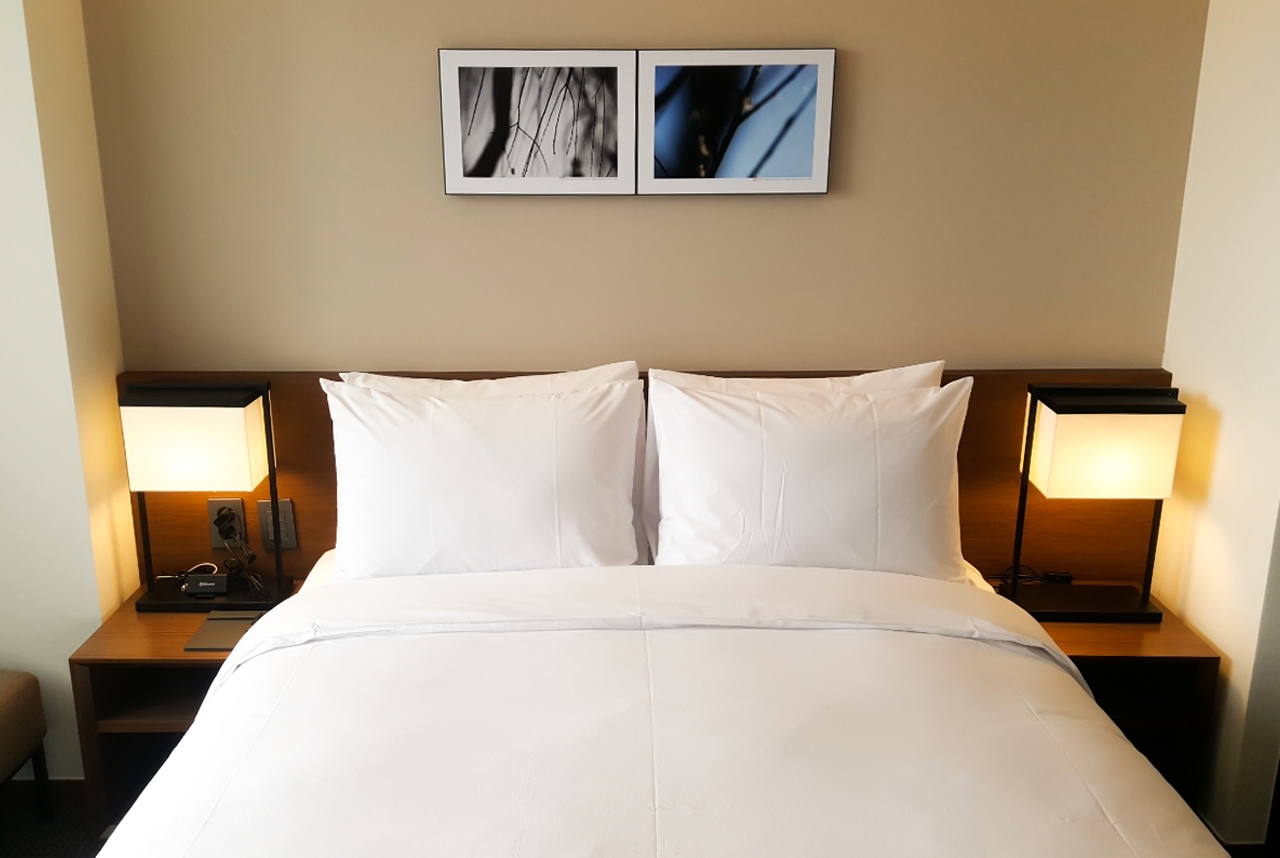
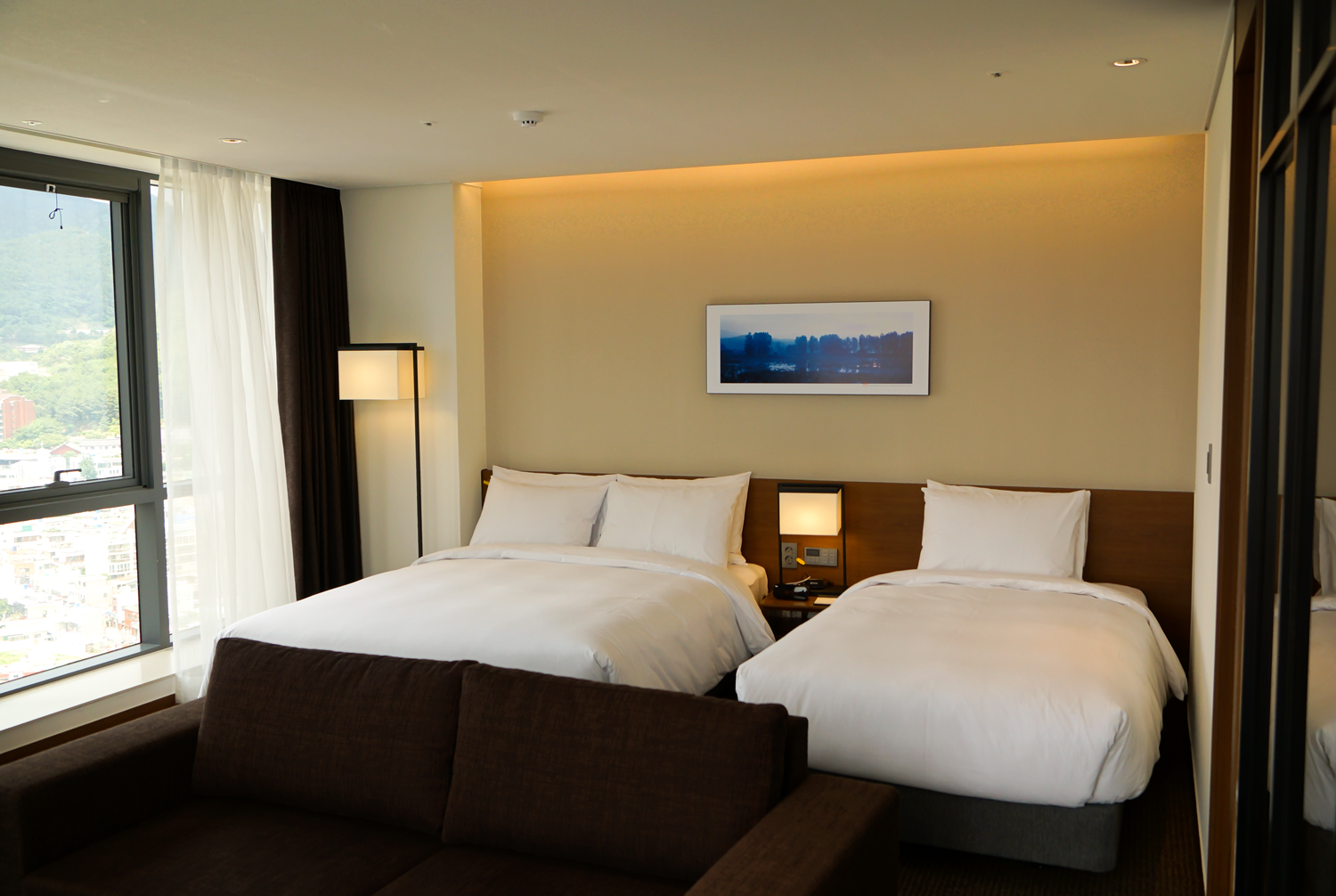
After confirming a near-station hotel suits you, it’s worth taking time to review bed configurations. Publicly listed room types include Superior Double about 20㎡ (1 Queen/Double), Deluxe Twin about 23㎡ (2 Single), Family Twin about 23㎡ (Queen + Single), and Corner-type rooms about 36–39㎡ with bed types varying by exact room. Most public listings specify City View, so don’t treat a potential sea view seen from a high floor as Ocean View unless confirmed by the exact room type on your OTA listing.
| Room type | Bed/Space | What to verify |
|---|---|---|
| Superior Double | About 20㎡; 1 Queen/Double | Whether there is still enough space to move around for 2 people after unpacking |
| Deluxe Twin | About 23㎡; 2 Single | For two friends traveling, ensure there are truly two beds, not just “sleeps 2” |
| Family Twin | About 23㎡; Queen + Single | Three-person sleeping works, but luggage spread-out space must be workable |
| Corner-type | About 36–39㎡; bed configuration varies by exact room | OTA listings vary on max occupancy; verify item by item before payment |
Breakfast and in-house processes are valuable only if they don’t hurt near-station efficiency
Booking currently lists Asian/American Buffet options; Agoda lists aLIVE breakfast, but public prices are not fully consistent, so this article does not quote OTA prices as the hotel’s fixed price. The more important point for this article: if you finish breakfast and head straight to the metro, in-house breakfast helps maintain a fast start near the station; if your routine is to head to a Beach-side cafe every morning, breakfast isn’t a component of transport efficiency.
Additionally, recent guest reviews have mentioned elevator peak times. This isn’t a guarantee every time, but it reminds you: proximity to the station doesn’t mean your door-to-platform time is one minute. If you’re choosing Ramada for early trains, it’s worth checking recent reviews for ongoing internal vertical transport issues before booking.

Moving the hotel five minutes toward the beach—would you do it?
One final thought experiment. Suppose someone moves the entire hotel a bit closer to the beach, and at the same time you still walk the same distance to the metro every day—would you be willing? “Five minutes” is a concept, not a real relocation distance.
Willing: The beach end is your high-frequency living core, so Ramada shouldn’t stay on the shortlist just because it’s near the station. Unwilling: If your main reason for buying this hotel is transport, and that reason is likely used day and night.
Ramada Encore Haeundae is worth it not because it is “very close to the metro,” but because you genuinely need that metro proximity on multiple occasions. First count which side you’ll walk to, then consider the price.
Data and images verified: 2026-08-10. Official hotel name, address, photos, and facility details follow Wyndham official pages; walking-time estimates cross-checked with current OTA and Busan transit data. NAVER Map/KakaoMap routing was not reliably fetched in this test environment, so no seconds-level precision—please reconfirm on the day of departure considering entrances, construction, and detours.