
Nami Island and Gangchon Rail Bike are often sold on the same product page, so it is easy to read them as “might as well do it while we’re here.” In reality, they offer very different rhythms: Nami Island is about arriving on the island and giving your time back to yourself; Rail Bike is about being at a set place at a set time and moving through a stretch together with your companions. Once you see that difference clearly, the answer comes quickly: if Rail Bike is already part of what you were looking forward to, or everyone in your group is happy for it to be the half-day main event, add it. If it is only there because the package includes one more item, because someone is still adjusting to the time difference, because a child needs a nap, or because someone dislikes sun exposure, do not push the group into it with a “we’re already here anyway” mindset.
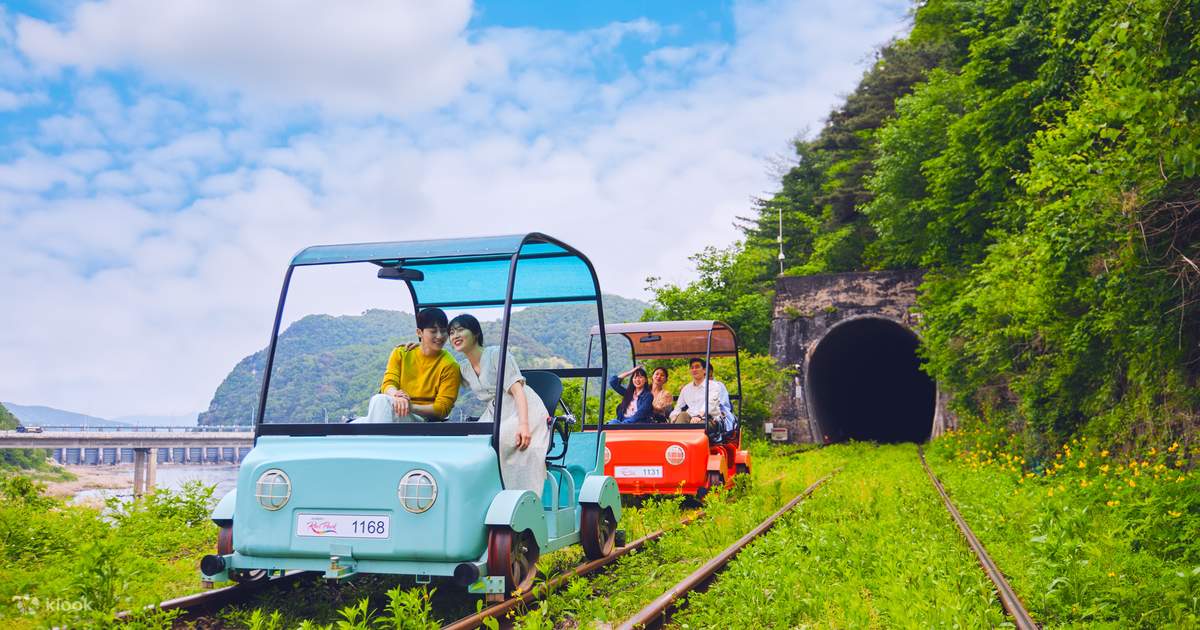
Ask this first: “If Nami Island weren’t included, would I still want to pedal?” — that’s more honest than comparing package price differences
If you remove Nami Island from the itinerary and you would still look up the route for Rail Bike, or still want to pedal an old railway with friends, then it is not a bonus item but an independent wish; even if that means one less garden stop or one fewer hour on the island, the trade-off may still make sense. On the other hand, if your only reason for doing it is that “it only costs a little more,” it may end up squeezing out the tree-lined walks, sitting by the river, slow photography, and late dinner in the city that you actually wanted.
The cost that is easiest to overlook in travel is not the ticket price but the attention required before and after departure. You have to watch the meeting time, find the restroom, fit into the seating arrangement, carry your bag onto the bike, and then reconnect to the next transfer after it ends. Some people feel these arrangements give the day a rhythm; others feel they are waiting the whole time. Decide your stance in advance: today are you participating in an activity, or are you trying to preserve an open stretch of time? Both are valid, but the package homepage’s “add-on” label should not make that decision for you.
Pedaling as a pair can be romantic; arranging it for four people is a different problem altogether
Your experience on Rail Bike depends heavily on how many people are riding together. When two people are both excited, pedaling, chatting, and taking turns with photos can become a shared memory. If a group of friends has similar energy levels, it can also feel like a small thing you accomplish together. But if even one person does not want sun, does not want exercise, has knee discomfort, or only wants to look at the scenery, the silence on the bike will tell you before the itinerary does that this is not their wish. Do not treat “we’re doing it together” as meaning everyone has to be enthusiastic.
Families are a different calculation. Children may find it novel at first, but the real challenge comes after you have already sat on a bus, lined up, and walked, and still have to follow rules; parents have to manage water, jackets, snacks, and restroom needs at the same time. If an older family member is joining, check in advance whether getting on and off, waiting space, the day’s temperature, and enough buffer time are all manageable. Do not assume everyone can handle it just because it looks easy in photos. Sometimes the more mature choice is to let someone stay nearby for coffee and leave Rail Bike to the people who are truly looking forward to it, rather than forcing the whole group on board.
It is not a pure sightseeing train: weather and clothing will directly change the experience
Rail Bike operates outdoors. On a sunny day, you are dealing with direct sun, wind, and a screen that is not easy to check; in cold or rainy weather, the feel of the ride, hand warmth, shoes, and seat comfort become a different issue altogether. This is not saying you should cancel because the weather is not perfect. It is saying that before you go, you should define your acceptable limits: light wind and passing clouds may be fine, but if there is heavy rain, low temperatures, someone is prone to motion sickness, or everyone’s energy has clearly dropped, ask whether it is still worth forcing the ticket.
Think of sunscreen, water, a light jacket, comfortable walking shoes, and a secure way to carry your phone as basic prep. Do not wear shoes that only make sense for taking photos on Nami Island and expect them to work for a different kind of activity. The official Gangchon Rail Park booking rules, time slots, and cancellation policies can change, so check the Gangchon Rail Park reservation guide again before booking. In particular, do not assume every bike type, pet policy, seating arrangement, or same-day on-site purchase option works the same way.
Independent itinerary or guided tour: the real difference is who handles the connection between the two places
If you are only doing Rail Bike, already know the time slot you want, and are willing to research the station and onward transport, planning independently gives you the most control over your stay. If you want to do Nami Island, Rail Bike, and other nearby spots on the same day, and do not want to spend the afternoon figuring out transfers and the last train, then the value of a guided tour is obvious. It compresses the geography into fixed meeting and drop-off points, but the trade-off is that you cannot stay forty more minutes just because the light on the island is perfect.
Do not equate “guided tour” with “no hassle” too quickly. You still need to check whether the meeting point is convenient for you, whether you need to eat breakfast on your own before departure, the actual start time, whether there is a Chinese-speaking guide, whether Rail Bike might be adjusted due to weather or operations, and which city area you will return to at the end. Independent travel also does not need to prove anything by forcing itself through hardship; if handing over transfers and time pressure can buy a steadier mood for your companions, that cost is already meaningful.
When Nami Island and Rail Bike are on the same day, only one place can be the slow part
The most common mistake on a two-main-stop day is trying to fully do both. You want to walk the entire island, take lots of photos, have a slow lunch, and still make it to Rail Bike on time, and in the end you just keep checking your phone. Decide which stop is the main character: if Rail Bike is what you were excited for, keep Nami Island to the most important walking path and one meal; if Nami Island is the real reason for the trip, delete Rail Bike or accept that the island will only be a very short stop. You cannot extend the day by saying “we already paid for it.” You can only decide which part deserves to be fully kept.
Once you have chosen the lead, put the meeting point, ferry or island entry, lunch, activity start, finish, return to Seoul, and dinner into one timeline. If the buffer between two meeting points is so small that you have to run the whole way, choose one fewer stop. The comparison guide for multi-stop Nami Island products will help you check the activity arrangement; if you still have not decided which part is the main wish, go back to the Nami Island main decision hub and sort out the day’s priority order first.
Before paying, do not let “Rail Bike included” replace a real checklist
Even if a named product page says Rail Bike is included, you still need to confirm whether it is definitely included on your chosen date, where the meeting point and return point are, how many people are assigned per bike, the language, whether island entry and other attractions are included at the same time, the rain and cancellation policy, and whether the activity provider assigns the time slot. The official Gangchon Rail Park notes that reservation rules and available time slots may differ, and changes after payment are limited; do not apply someone else’s experience from another year, another route, or another bike type to today’s booking.
Solo travelers also do not need to rush into joining just because they worry that pedaling without companions would be a waste. What you really need to check is whether riding with others, the meeting arrangement, and being placed into a fixed rhythm feels comfortable; if that uncertainty is more noticeable than the pedaling itself, it is better to keep the day for Nami Island or choose an activity with easier independent access. On the other hand, if you are genuinely looking forward to completing a route outdoors, a guided transfer and other travelers may reduce the burden of handling suburban transport alone. The key question is not whether you have company, but whether the arrangement lets you focus on the experience instead of worrying all day about falling behind.
Only when “I am willing to give up some transit time for this pedaling segment” is still a yes is it worth opening a precise product page. The link below is a named itinerary that includes Nami Island, Gangchon Rail Bike, and an additional seasonal stop; it is not a universal recommendation, but a page for people who have already made the judgment above to verify the current option.
Choose one stretch of pedaling, then leave room in the rest of the day
After Rail Bike, what question comes next?
- Return to the Nami Island main decision hub and confirm whether the whole day is worth giving up
- Compare the trade-offs between Nami Island only, multiple stops, alpacas, and gardens
- Fit the day trip into a five-day trip without sacrificing your only day in the city
- When you are tired on the way back, should a jjimjilbang just be a cancelable backup plan?
- If you skip Rail Bike, which part of Seoul can still keep a sense of participation?
Sources and checks
- Gangchon Rail Park: English booking and cancellation guide
- VISITKOREA: Nami Island transportation and visitor information
- GetYourGuide: Nami Island, Gangchon Rail Bike, and seasonal add-on activity page
- Bike type, time slot, seating, group size, weather-related operations, meeting point, seasonal attractions, and cancellation terms may all change. This article was checked in August 2026; before payment, use the official and activity pages for the exact date as the final reference.