
30-second answer: Bulguksa is worth a dedicated visit when Unified Silla Buddhist architecture, heritage, or the Tohamsan side of Gyeongju is genuinely part of your trip. It is not automatically worth adding just because admission is free. On a first one-day visit, the real price is the time you spend leaving the dense downtown cluster, waiting for a bus, walking the grounds, and getting back in time for the evening.
- First Gyeongju trip with only six to eight hours: keep the downtown core unless Bulguksa is a must-see. It is a separate outward journey, not a nearby extra.
- Two days or more: give Bulguksa its own directional block with Bomun or the Tohamsan side. The travel cost becomes much easier to absorb.
- You care about Buddhist art, stonework or architecture: go, and allow time to walk rather than trying to finish in 30 minutes.
- You only want to collect a UNESCO sight: ask whether you would still make the return trip if entry were not free. If not, downtown may be the better use of a short day.
- Mobility is a concern: the approach and grounds include slopes, stone surfaces and steps. Confirm a suitable route with the site instead of assuming a nearby bus stop solves the whole visit.
Admission is free. Your time is not.
Bulguksa's current visitor information says that general admission has been free since May 4, 2023. Korean Heritage's current English visitor material also lists free admission. You may still encounter older pages or screenshots showing a paid ticket. Treat the temple's current notice as the controlling source, not an old search snippet.
That change makes the decision clearer rather than easier. The question is no longer “is the ticket worth it?” It is whether you want to spend the exit cost from central Gyeongju: the bus ride, a possible wait, the walk, the visit itself, and the return connection. A free attraction can still be the wrong attraction for a compressed day.
Write down the three places you truly do not want to miss. If they are Daereungwon, Cheomseongdae, Gyochon Village, Hwangnidan-gil, the museum or Donggung and Wolji, Bulguksa is not between them. It is a directional commitment. If your day already points through Bomun, toward Gyeongju World, or toward Tohamsan, the same trip becomes much more logical.
Who should make Bulguksa a destination?
You want to understand the place, not just recognise the name
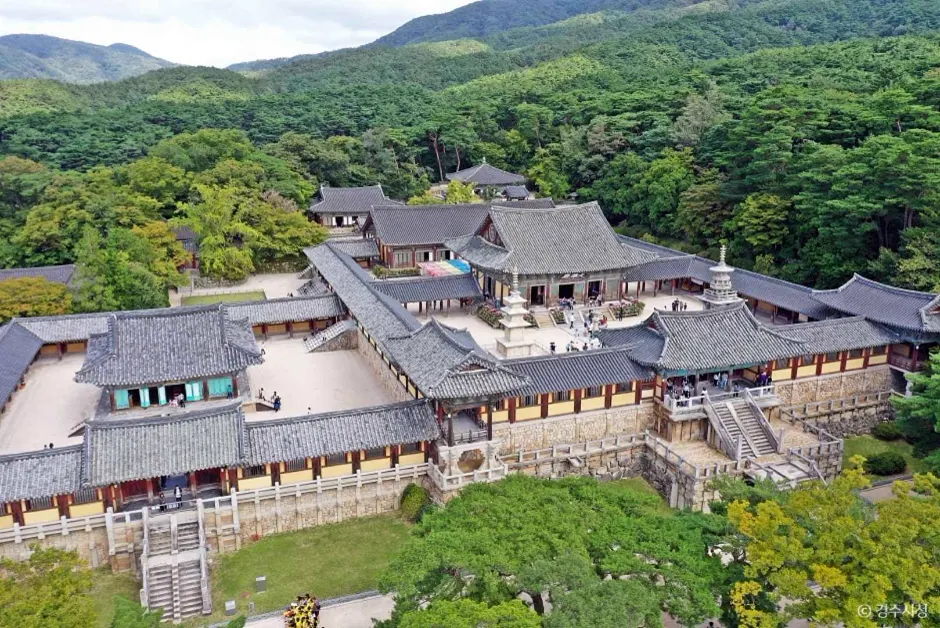
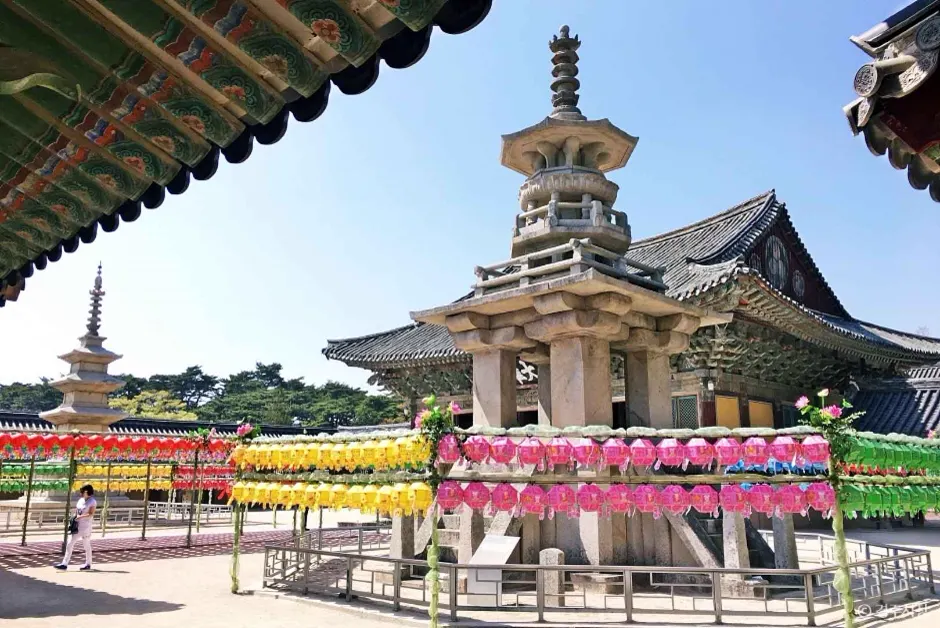
Its value is not simply that it is an old temple. Korean Heritage explains the terraced composition as a symbolic move from the human world below to the Buddha's world above. Cheongungyo and Baegungyo lead toward the main hall, while Dabotap and the Three-story Stone Pagoda sit in the same courtyard with radically different visual logic. For someone interested in religious art or stone architecture, their scale, sequence and relationship are the reason to go in person.
You have a second Gyeongju day
Bulguksa works best when it is not the last item squeezed after downtown. A second day lets you group it with the Bomun or Tohamsan direction, rather than starting a long outward journey late and then racing back to Donggung and Wolji for the night view.
You are prepared to slow down
Arriving at the stop is not the same as visiting the temple. The grounds ask you to walk through several levels, look at the stone structures, and pause in the courtyards. If you only have 30 to 40 minutes, it can become a hurried photo, followed by anxiety about the return bus. It is better to remove a lower-priority stop than to flatten Bulguksa into a checklist item.
When should you skip it for now?
You are day-tripping from Seoul or Busan and reach Gyeongju near midday. Protect the downtown core first. Bulguksa will still be there; losing the daylight-to-evening flow between the tomb area and Donggung and Wolji may cost more than the temple adds that day.
Your group has little interest in temples or historic architecture. Free entry does not mean everyone wants to commit to a substantial ride and slow walk. Hwangnidan-gil, the museum, cafés or night scenery may create a better shared day.
Your itinerary already contains several mountain or temple visits. The point is not to collect another shrine because Bulguksa is famous. Make it the main cultural visit, or leave it for a day when it can be.
The No. 10 bus makes access possible. It does not make the detour disappear.
Gyeongju City's tourist guide describes No. 10 as the “Golden Line” through major sights. From the terminal direction it passes the Cheomseongdae area, Bomun Tourist Complex and Gyeongju World before turning at Bulguksa. The city's planning guidance estimates roughly 40 to 50 minutes from the terminal to Bulguksa without getting off, depending on traffic, and describes an approximately 20-minute interval. No. 11 broadly runs the route in the other direction. It also specifically notes that No. 10-1 does not go to Bulguksa.
Use those figures to understand scale, not as a promise for your date. Traffic, service changes and events can alter the actual trip. Check live departures before boarding, and plan for a wait rather than assuming the bus will arrive as you reach the stop. Once outbound travel, waiting, the walk and the return are included, Bulguksa is a half-day decision—not an empty one-hour gap.
Do not turn several official opening-hour formats into one fixed closing time
The temple's current visitor page gives seasonal last-admission times: earlier in November through January, later in February and October, and later again from March through September. Other official visitor pages sometimes show the broad 09:00–18:00 range. These are not a reason to invent one universal answer. Use Bulguksa's own current notice for your date, especially in winter, around holidays or during special temple activity.
Also, do not arrive at the theoretical last-entry minute if you rely on buses. You still need time to see the grounds, walk back to the stop, wait and connect to your evening. “I made it through the gate” is not the same as “the visit still works.”
Bulguksa and Seokguram are related, but they are not an automatic package
Both belong to the same World Heritage story, which makes it easy to assume that visiting one means adding the other. That is how a manageable half-day becomes an overextended mountain itinerary. Seokguram adds another transport leg, schedule risk and visiting time. Decide which place you actually want to experience first; combine them only when you have the time buffer, weather and group interest to support both.
Free entry is especially poor logic for auto-adding two places. It saves an admission fee, not the mountain road or the wait between connections.
From Seoul or Busan, decide whether this is a Gyeongju day or a Bulguksa day
From Seoul, start with the real arrival time in the Seoul to Gyeongju transport decision; from Busan, use the Busan to Gyeongju transport decision. Reaching Gyeongju by train or bus does not mean you have reached Bulguksa. Count intercity arrival and city exit separately, or the last part of the journey will disappear from the plan on paper and reappear as stress on the day.
If you have not yet decided how to divide Gyeongju geographically, return to the Gyeongju destination hub. This page answers one question—whether Bulguksa deserves the commitment—not the whole city itinerary.
Eight checks before you go
- Is Bulguksa the point of today, or only free? If it is only free, remove it temporarily and see whether the day improves.
- Do you have one day or two? A second day makes the directional cost much easier to manage.
- How long is the actual trip from your hotel or arrival station? Include the possible wait.
- Have you checked No. 10, No. 11 and No. 10-1? Do not board based on a partial route number.
- What is the official last entry for your exact date? Seasons and special operations can change it.
- Can everyone handle the surfaces and steps comfortably? Ask the site about suitable access if needed.
- Where do you need to be after the visit? Leave a return buffer if you are chasing an evening sight downtown.
- Do you truly want Seokguram as well? Do not combine them before checking the second connection.
Make the trip: Buddhist art, Unified Silla architecture or World Heritage is a real theme of your Gyeongju visit, or you have a second day that already points toward Bomun and Tohamsan. Skip it for this trip: you only have a short day, are arriving from Seoul or Busan, your group is not interested in temples, and downtown still contains your essential places. Bulguksa is free now. Whether it is worth visiting depends on whether a half-day of movement and attention buys the kind of experience you actually came to Gyeongju for.
Reviewed 2026-08-23. Admission and seasonal visiting information are based primarily on Bulguksa's official visitor material. Heritage context, address and free admission were cross-checked with Korean Heritage. The No. 10/11 direction, approximate 40–50 minute terminal-to-temple journey, approximate 20-minute interval and No. 10-1 exception are from Gyeongju City's tourism route guide. Bus times are planning guidance only: check live service for your travel date.
Bulguksa official visitor information · Korean Heritage | Bulguksa Temple · Gyeongju City Tourism | Bus No. 10 · VISITKOREA | Bulguksa