
If Busan Station is only where you arrive on day one and leave on the final day, I usually would not stay beside the station just because the KTX stops there. For a three- to five-night trip, the hotel location gets used every day while the intercity station may be used only twice. Choose Seomyeon when your sightseeing spreads in several directions, Nampo when Nampo/Jagalchi/Yeongdo dominate, and Haeundae when the east-coast side is the trip. Busan Station itself becomes the stronger answer for late arrivals, very early KTX departures, one-night stays, heavy luggage or repeated rail trips. The trade-off is simple: make the first suitcase move easier, or make the next three or four days easier.
| Your trip | Start with | Why |
|---|---|---|
| Late KTX arrival + early rail departure or onward train | Busan Station | Minimises luggage handling and risk around a fixed departure |
| 3–5 nights with sightseeing in several directions | Seomyeon | One extra arrival-day ride buys a more flexible daily base |
| Nampo, Jagalchi, Yeongdo and old downtown are the main plan | Nampo | Busan Station and Nampo are both on Line 1, so luggage can keep moving south without an extra line change |
| Haeundae, Centum City and East Busan dominate | Haeundae | Accept one transfer on arrival instead of crossing Busan every day |
| One night only + KTX again next day | Busan Station is very competitive | The station-use frequency is high relative to the number of hotel nights |
| Only the final morning has an early KTX | Do not move automatically | A hotel change is a real task too; compare it with the time actually saved |
If you have not even decided what kind of Busan trip you are building, start with the Busan hotel decision guide and how many days you need in Busan. This page takes over only after the KTX decision is already made: once you step off the train, should the suitcase stop at Busan Station or continue to the area that will run the rest of the trip?

The first mistake is treating the KTX arrival point as the hotel decision
“My train arrives at Busan Station, so I should book a Busan Station hotel” sounds efficient because it eliminates the first transfer. For a one-night trip that can be exactly right. For a four-night trip, the same logic can quietly optimise the least important hour of the stay.
Think in repetitions. You may carry the suitcase from KTX to the hotel once. You may then leave the hotel in the morning and return at night four times. A location that saves twenty or thirty minutes on arrival but adds a cross-city ride to your daily plan can lose badly over the whole trip.
This is why I prefer a station-use count before a hotel search. If you touch Busan Station on arrival and departure only, that is two uses. If you arrive late, take an onward train the next morning, return for another day trip and leave by KTX, the station may appear four or five times. The same address becomes much more valuable without the station itself changing at all.
Busan Station is the right answer when the rail timetable is the hard constraint
Busan Station should not be dismissed as a “boring transit area.” It is a rational base when the train schedule controls the trip. A late arrival can make the simple sequence — platform, station, hotel, sleep — more valuable than reaching the theoretically better sightseeing district at night. The same applies when the next morning has a fixed KTX departure and you are carrying multiple bags.
The official KORAIL booking system currently treats Busan as the intercity rail station for Seoul–Busan searches, while Busan Transportation Corporation separately lists Busan Station as a Metro Line 1 station. That separation is worth keeping in your head: the KTX arrival is one transport layer; the hotel base and city metro are another.
Busan Transportation Corporation also lists elevators at Busan Station and, more broadly, says elevators are installed across Lines 1–4. That reduces accessibility friction, but it does not turn every luggage transfer into a zero-effort route. Platform-to-concourse distance, finding the correct elevator, street-level exits, rain and the final walk to the hotel still exist. “There is an elevator” is useful information, not permission to ignore the last 500 metres.
If you use the station once in and once out, proximity is a two-time benefit. If your itinerary repeatedly touches intercity rail, the same proximity becomes a recurring benefit. Count uses before you count hotel stars.
Seomyeon is usually the safer default for a mixed three- to five-night itinerary
Seomyeon works well after a KTX arrival because it asks for a manageable first-day compromise and then repays it repeatedly. Busan Station and Seomyeon are both on Metro Line 1. Seomyeon is also a Line 2 interchange, which matters once your later days spread toward Centum City, Gwangalli or Haeundae.
This does not mean Seomyeon is “the centre of everything” or that every trip should stay there. It means the line structure gives a mixed itinerary more options without forcing the KTX station to remain the organising principle after arrival. If your days point north, east and south at different times, that flexibility is often worth carrying the suitcase one extra metro segment on day one.
The value is stronger when you are staying four or five nights, because a small daily improvement repeats. It is weaker when you stay only one night, because the extra arrival transfer is paid immediately and may never be recovered. That is why trip length matters more than people expect. If you are still deciding between a compressed trip and an extra night, compare one night versus two nights in Busan before optimising the hotel address.
Nampo is a better KTX follow-on than Busan Station when the old downtown side is your real trip
Nampo is one of the easiest examples of why “arrive at the station, sleep at the station” can be too literal. Busan Station, Nampo and Jagalchi sit on Metro Line 1. If your actual plan revolves around Nampo, Jagalchi, Yeongdo and the western harbour side, your suitcase can simply continue along the same metro line instead of stopping early for the sake of the KTX.
The payoff is not dramatic on arrival. It is cumulative afterward. Breakfast, markets, evening walks and the first stop of the day begin closer to the part of Busan you wanted to experience. You still preserve a relatively simple rail-station connection for the final day because you are returning along the same Line 1 corridor.
The cost is obvious too: if half of your itinerary turns out to be Haeundae, Centum City and the eastern coastline, Nampo makes those days longer. That is not a flaw in Nampo; it is a mismatch between the hotel and the trip. The hotel decision should follow the dominant daily geography, not the district name that sounds most “central.”
Haeundae can be correct even though arrival day is the least convenient
Going straight from KTX to Haeundae feels inefficient because you have just arrived at Busan Station on Line 1 and Haeundae sits on Line 2. Busan Transportation Corporation’s current station information places Seomyeon on both Lines 1 and 2, and Visit Busan explicitly describes Haeundae-to-Busan-Station metro travel as Line 2 to Seomyeon, transfer to Line 1, then Busan Station. In the opposite direction, that gives you the normal arrival logic.
With a suitcase, that transfer is real friction. But the right question is not whether the transfer is annoying. It is whether doing it once is cheaper than crossing the city from Busan Station every morning for the next three days.
If Haeundae Beach, Centum City and East Busan are the centre of the trip, I would rather accept one honest arrival-day transfer and then wake up where the itinerary lives. If Haeundae is only one afternoon inside a mixed four-day trip, I would not force the whole stay east simply to avoid admitting that a beach hotel sounds nicer on the booking page.

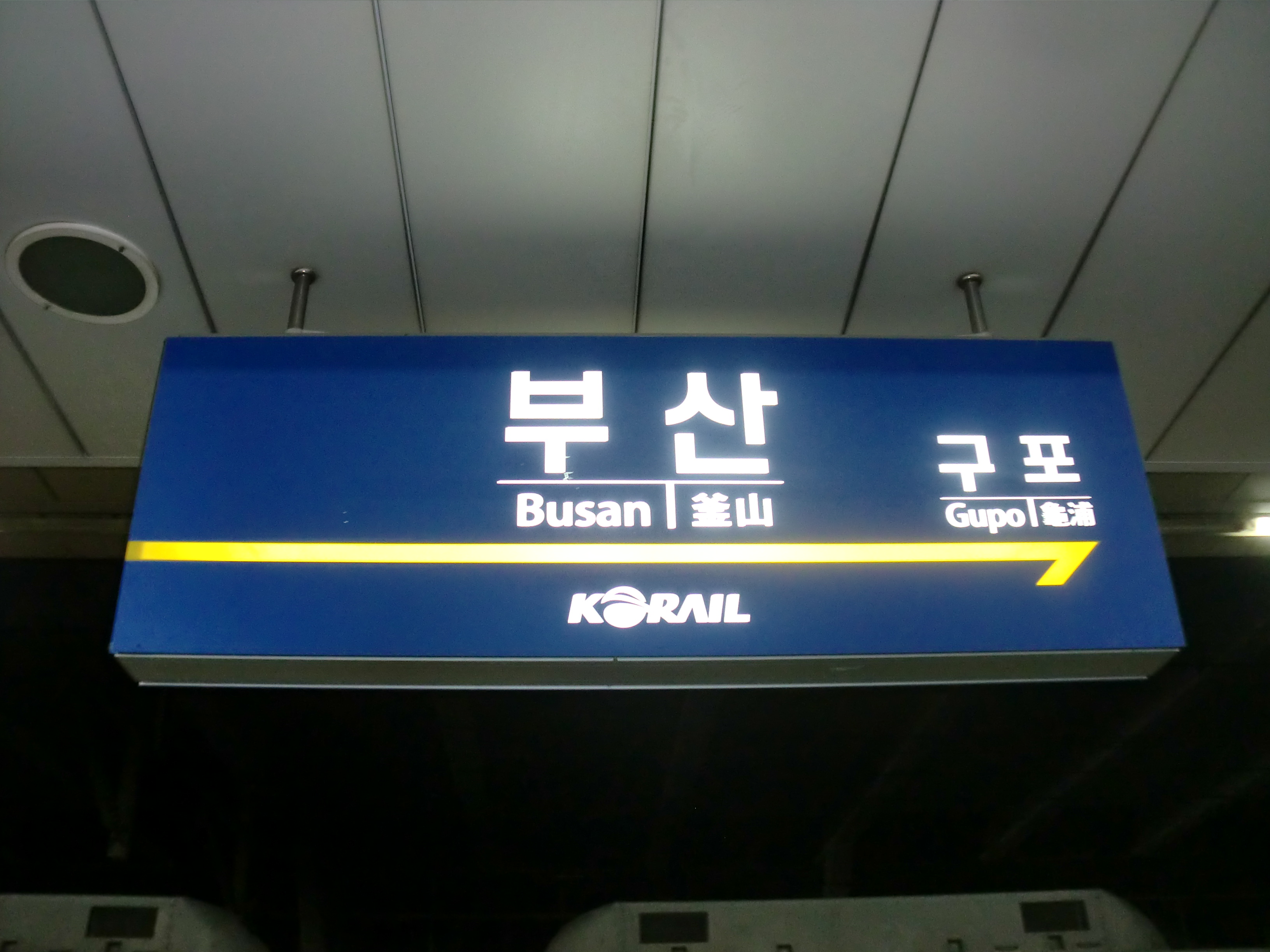
Heavy luggage changes the first hour more than it changes the whole trip
Large suitcases deserve extra weight, especially for families, older travellers or anyone with limited mobility. But luggage is often allowed to dominate the decision long after it stops being relevant. Once the suitcase is in the hotel room, you are no longer dragging it to Haeundae, Jagalchi or dinner every day.
So split the problem in two: arrival friction and daily-base friction. A heavy suitcase increases the first category. It does not automatically increase the second. If you are staying four nights, it can still be rational to endure one careful transfer to Seomyeon or Haeundae so that the luggage disappears from the rest of the decision.
Use elevators where practical, avoid peak-crowd heroics, and do not pretend every station exit is equally good for a large case. The official accessibility data confirms elevators at the main stations discussed here, but you should still inspect the hotel-side exit and the street-level route. A 600-metre flat walk and a 600-metre route involving awkward crossings are not the same luggage product.
Do not split the stay just because the final KTX is early
A common reaction is to stay in the “right” district for three nights, then move to Busan Station for the last night because the final KTX feels early. Sometimes that is smart. Sometimes it turns one early morning into half a day of packing, check-out, luggage movement and another check-in.
Use the same door-to-door logic. How early is the train on your actual date? How much luggage do you have? Is anyone in the group slow in the morning? How serious is the consequence of missing that train? Can you reach Busan Station with a comfortable buffer from the current hotel? Those answers matter more than the phrase “early KTX.”
If you are already considering a move for the last night, run it through the one-hotel versus split-stay framework. The same principle also appears in the early-departure last-night guide: moving is useful only when it removes more risk than it creates.
A late KTX arrival can reverse the normal recommendation
Seomyeon or Haeundae may be the better multi-day base in daylight, yet Busan Station can still win on a late arrival night. This is not inconsistent. The value of a location changes with the hour.
If your train reaches Busan after a long travel day, the first-night job may be nothing more than “get off the train, eat something simple, sleep.” Adding a metro ride and a difficult final walk to save tomorrow’s transfer can be false efficiency. A one-night station stay followed by a planned move next morning may be the cleaner solution — especially if the eventual hotel will not let you check in until later anyway.
But do not create a two-hotel itinerary automatically. If the KTX arrives at a reasonable hour and your final base is easy to reach, moving once is still better than moving twice. The late-arrival first-night guide is useful when the arrival hour, rather than the sightseeing geography, is driving the decision.
Use this four-question test before paying
1. How many nights?
One night makes Busan Station stronger. Four or five nights gives the daily base much more time to repay an arrival transfer.
2. How many station uses?
Arrival and departure only? Or repeated KTX/day-trip use? Frequency is the real station-location multiplier.
3. Where are the next mornings?
Mixed city = Seomyeon; old downtown = Nampo; east coast = Haeundae. Let the repeated mornings decide.
4. How painful is the suitcase move?
More bags, children, seniors or a late arrival increase the value of a simpler first leg.
Verdict: the KTX stop is a transport fact, not a hotel recommendation
For a normal three- to five-night Busan trip, I would not stay at Busan Station solely because the KTX arrives there. I would choose Seomyeon for a geographically mixed trip, Nampo for an old-downtown/Yeongdo-heavy trip, or Haeundae when East Busan is the clear centre. Busan Station wins when the station itself keeps returning to the itinerary: late arrival, early departure, one-night stay, heavy luggage or repeated rail use.
The useful rule is not “KTX travellers should stay near Busan Station.” It is: optimise the location that you will use most often, then pay a one-time transfer cost when that produces a better whole trip. If you are planning three, four or five days, test the hotel against the actual days in the 3-day itinerary, 4-day itinerary or 5-day itinerary before booking.
FAQ
Do I need to stay near Busan Station if I arrive by KTX?
No. Busan Station is strongest when the rail station itself is repeatedly useful: late arrival, early departure, one-night stay, heavy luggage or more intercity rail trips. If it is only used on day one and the final day, the better hotel often sits where the rest of the trip happens.
Is Seomyeon convenient after a KTX arrival?
Yes for many mixed itineraries. Busan Station and Seomyeon are both on Metro Line 1, while Seomyeon also connects to Line 2. You pay one extra arrival segment and gain a more flexible base for later days.
Is Nampo practical with luggage from Busan Station?
Yes when the old downtown side is your main plan. Busan Station and Nampo are both on Line 1, so you can continue south without changing metro lines. Still check the exact hotel exit and street-level walk with your luggage.
Can I go directly to Haeundae after the KTX?
Yes. The normal metro logic uses Line 1 from Busan Station, a transfer at Seomyeon, then Line 2 toward Haeundae. It adds arrival friction but can save repeated cross-city travel when East Busan dominates the stay.
Should I move to Busan Station before an early KTX?
Only when your actual departure time, luggage, mobility or missed-train risk makes the move worthwhile. Do not move just because the train feels “early” without comparing the extra hotel-change cost.
Research boundary
Information checked: 2026-08-20. KORAIL’s current booking system was used to confirm Busan as the intercity rail destination in Seoul–Busan searches. Busan Transportation Corporation’s current station/facility information confirms Busan Station, Nampo and Seomyeon on Line 1, Seomyeon and Haeundae on Line 2, and elevator provision across Lines 1–4. Visit Busan currently describes the Haeundae → Seomyeon transfer → Busan Station metro chain and Busan Station luggage facilities in its trip-planning material. This article intentionally does not publish a fixed “first KTX,” “last KTX,” or exact door-to-door travel time because those depend on date, train, station entrance, waiting time and hotel location. Recheck KORAIL and Busan Metro for your travel date.
Primary sources: KORAIL reservation; Busan Transportation Corporation station list; Busan Metro accessibility FAQ; Visit Busan trip-planning reference.
Related reading
- Busan hotels: choose the area before the property
- How many days do you need in Busan?
- One night or two nights in Busan?
- One Busan hotel or a split stay?
- Late arrival in Busan: where should the first night be?
- Early departure: should you move for the last night?
- Busan 3-day itinerary
- Busan 4-day itinerary
- Busan 5-day itinerary
- Busan to Gyeongju: choose the actual transport chain