
If you are staying in Busan for five nights or more, do not start with the rule that a residence-style hotel is automatically better. Start with the jobs your room will have to perform. Will you wash clothes during the trip? Will you need housekeeping every day, or are you comfortable requesting it? Will takeaway food, milk, fruit or breakfast supplies sit in the fridge overnight? Most importantly, will you actually come back to the room during the day, or will the hotel be a place you see only at midnight? If laundry, food storage and midday resets happen repeatedly, an in-room washer or residence layout can earn its keep. If you wash once, spend all day outside and value front-desk service more than appliances, a conventional hotel with shared laundry may be the easier long-stay choice.
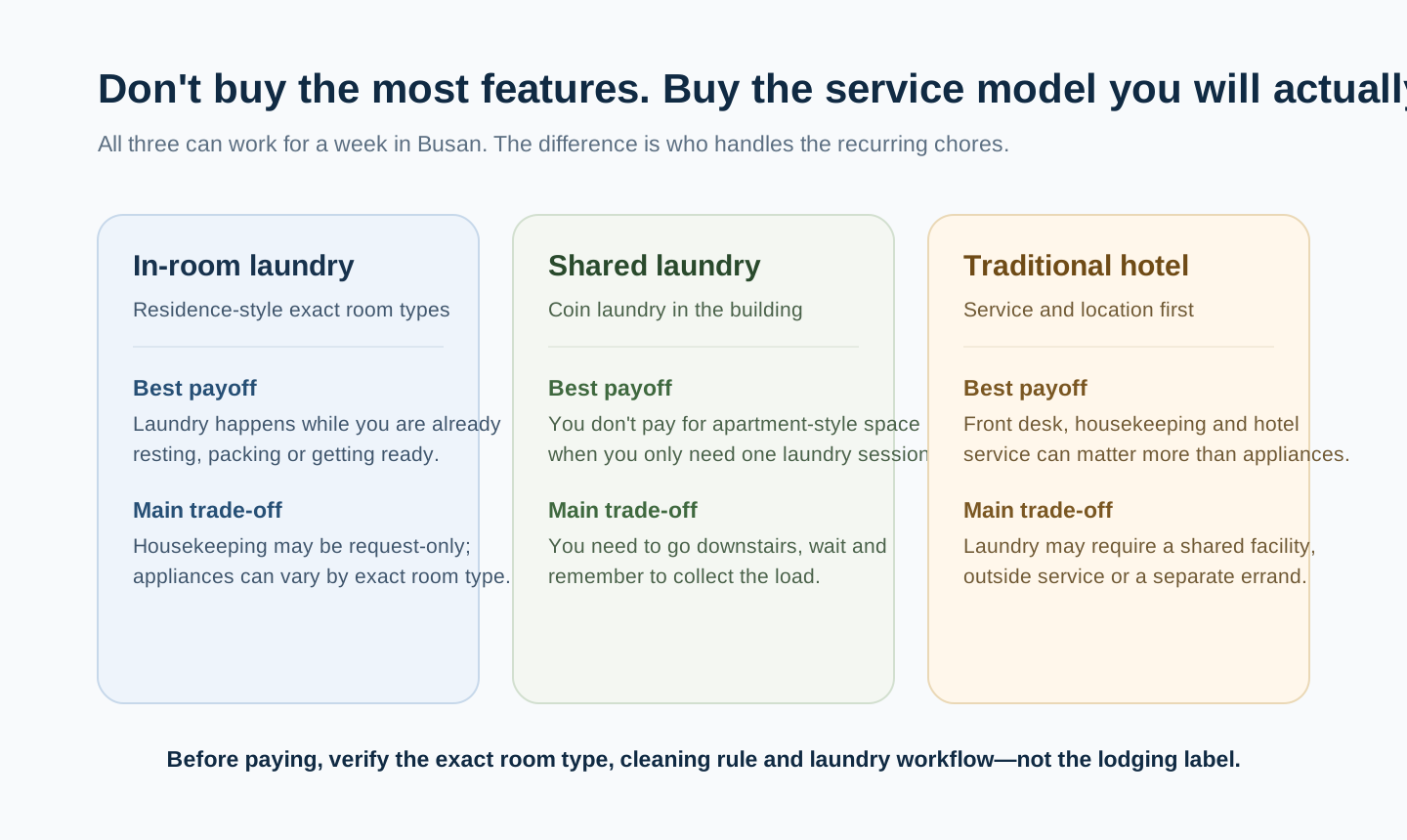
- In-room laundry: strongest when you expect to wash at least once or twice, travel with children, carry a smaller wardrobe, or want laundry to run while you are already resting or packing.
- Shared coin laundry: often enough when you need one planned laundry stop but do not need to pay for apartment-style room features every night.
- Traditional hotel: stronger when reliable front-desk help, predictable service and location matter more than doing household tasks in the room.
- Residence is a no-go: if you never wash clothes, never prepare or store food, rarely return during the day and mainly need a good bed, more appliances are simply unused specifications.
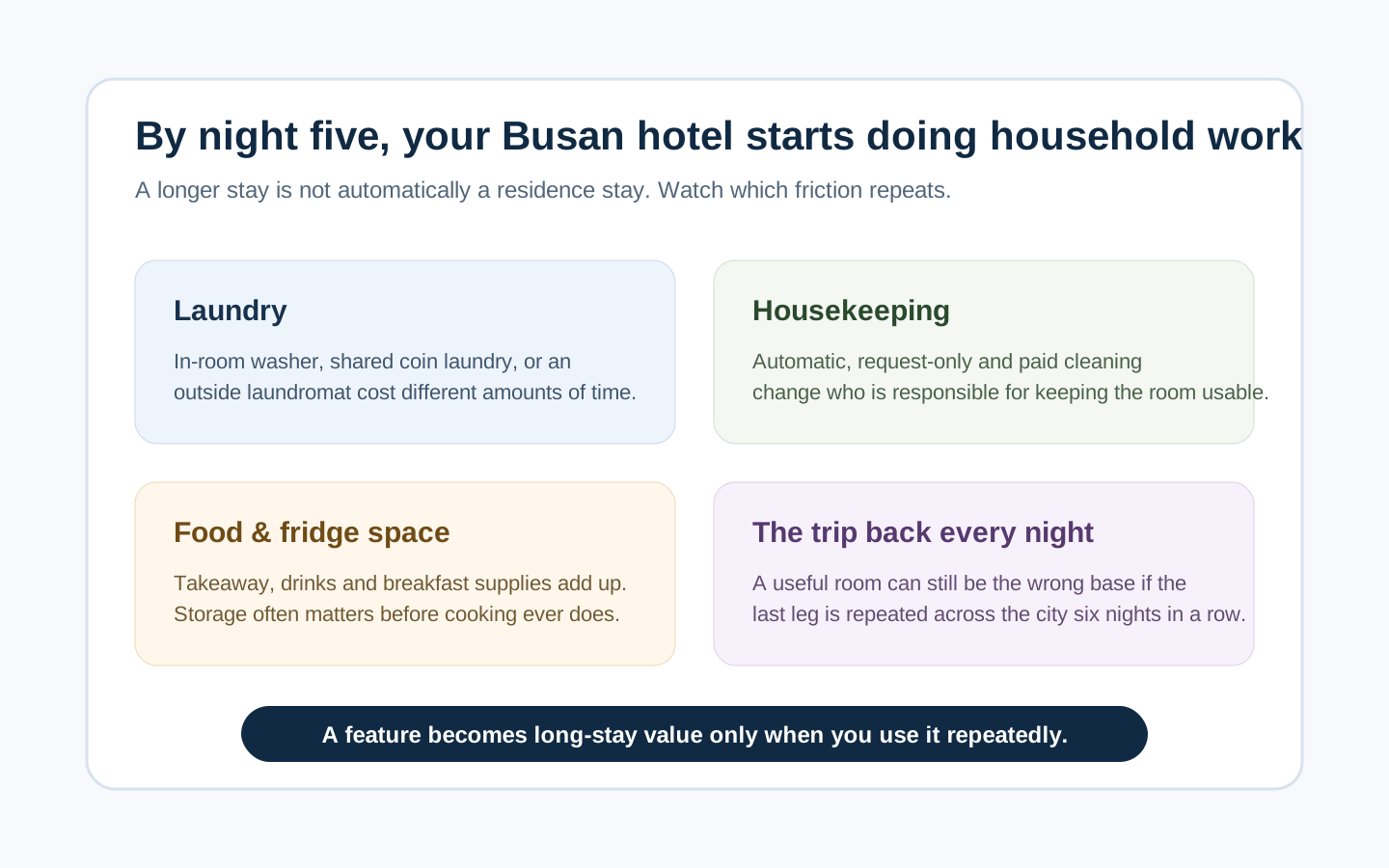
Five nights is not a magic threshold; repetition is
One traveler can stay seven nights and still need almost nothing beyond a bed. They leave after breakfast, return late, pack enough clothes for the week and eat every meal outside. Another traveler can stay four nights and already need to wash a child's clothes, keep drinks cold, return for an afternoon rest and reorganize bags before the next day. The number of nights looks similar. The room's workload is completely different.
A better long-stay test is to circle every task that may repeat inside the room: washing, drying, rubbish, towels, housekeeping, leftovers, breakfast supplies, work, charging multiple devices and reorganizing luggage. If two or three of those happen more than once, residence-style features start becoming useful rather than decorative. If none of them happens, a standard hotel is not a compromise. It may be the more accurate purchase.
This distinction matters because hotel search filters encourage you to treat amenities as permanent bonuses. They are not. A washer that never runs has no practical return. A kitchen you are not allowed to cook in has no cooking value. A large living room that you never see before midnight is expensive empty space. Longer stays do not make every feature more valuable; they make repeated use more visible.
Laundry is three different products: in-room, shared in the building, or outside
In-room laundry does not mainly save a laundromat fee. It saves a separate errand. You can start a load before a shower, let it run while you repack, or deal with children's clothes without taking another bag downstairs. The value is scheduling: laundry disappears into time you were going to spend in the room anyway.
Urbanstay Seomyeon is a useful example of that service model. Its current official support material includes washing-machine instructions for the Seomyeon property, and the brand operates a contactless check-in system. The same operating model also means housekeeping is not simply an automatic daily event. That trade-off is important: you gain more ability to handle daily life yourself, but you also accept more responsibility for managing the stay yourself.
SOTA SUITE Busan Seomyeon shows why the word suite is not enough. The official room list currently includes Standard Queen, Deluxe Queen, Club SOTA Queen, Club SOTA Twin and Club SOTA Family, with different occupancy limits. Its guest guide includes washing-machine instructions, but long-stay value still depends on the exact room product you book. The same guide explicitly prohibits cooking in guestrooms, so an apartment-like appearance, a microwave or a fridge should never be translated into an automatic right to cook.
The third model is shared laundry. It is less frictionless than having a washer in the room, but it can be a smarter trade if you will wash only once. You do not need to pay for an apartment-style room every night just to solve one load of clothes. The important question becomes whether the shared laundry is in the same building, how practical the wash-and-dry sequence is, and whether using it turns into a separate block in the day's schedule.
Housekeeping can matter more than room size by the third or fourth night
On a one- or two-night stay, it is easy to ignore the exact housekeeping rule. On a longer stay, the difference between automatic cleaning, request-only cleaning and paid cleaning becomes very concrete. Towels accumulate, rubbish builds up, sand reaches the floor, luggage stays open longer and someone eventually wants the room reset. None of that is obvious in a polished room photo.
Urbanstay Seomyeon's current service guide says room cleaning is not automatically provided during the stay and describes cleaning as a paid service that must be requested in advance. SOTA SUITE Busan Seomyeon's current guide says that for stays of two nights or more, guests who want housekeeping need to request it through the mobile key by 10 p.m. the previous night; without the request, housekeeping is not provided the next day. Both properties can still work very well for a long stay. The point is that they work for travelers who understand the service boundary before arrival.
If you hate having to remember whether tonight is the night to request cleaning, do not let an in-room washer dominate the entire hotel decision. A washer can reduce laundry friction while a self-managed service model increases another kind of friction. Sometimes a conventional hotel plus one planned laundry session is simpler overall.
This is also where traveler personality matters more than a generic "long-stay" label. Some people genuinely prefer controlling their own room and not having staff enter unless requested. Others want to come back after a full day and have towels, rubbish and basic room reset handled with minimal thought. Neither preference is more sophisticated. They simply reward different operating models.
A long stay multiplies the cost of the route home
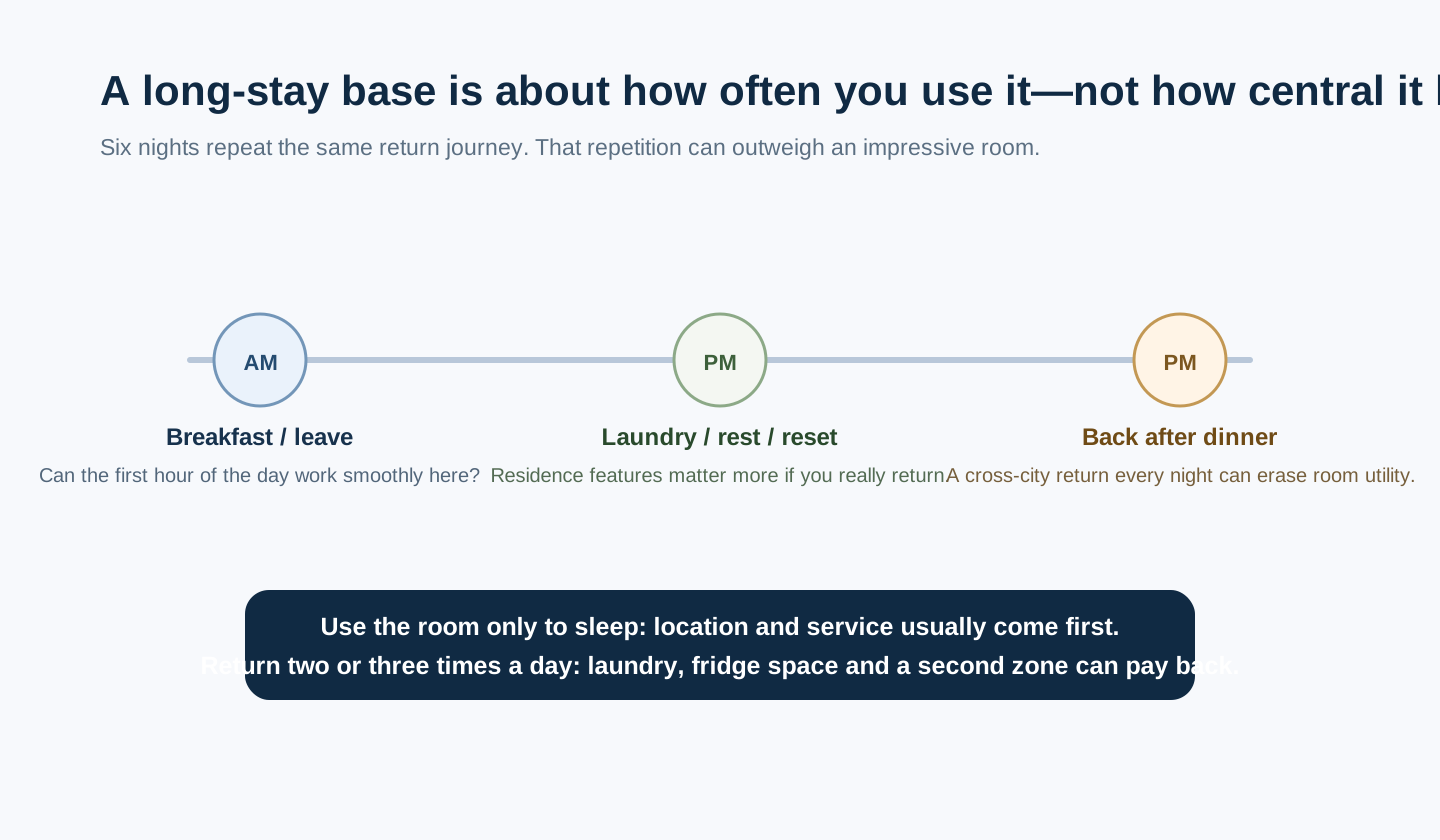
For one night, you may tolerate an extra ride because you like a particular hotel. Stay six nights and that same return journey can happen six times. That is why a long-stay hotel search should not begin with appliances. The first layer is still your living base; the second is the room model.
If your days continue to move between Busan Station, Nampo, Seomyeon and the eastern side of the city, a flexible central base can be worth more than a residence room placed far from most of your evening endpoints. If the second half of the trip is concentrated around Haeundae, Centum City and the eastern coast, residence-style features on the east side have a better chance of being used repeatedly.
The key is not whether an area is "central" on a map. Ask how often the hotel appears in your actual day. Does it help with the first hour in the morning? Can you realistically return in the afternoon? After dinner, is going back still an easy final step, or does it feel like another transfer sequence? The room can only provide long-stay utility when you are actually there to use it.

Do not bundle a fridge and a kitchen into the same requirement
For many long stays, fridge space becomes useful long before cooking does. Fruit from the previous evening, drinks, milk, takeaway desserts, breakfast items or children's food may need to survive until morning. If storage is the real need, a suitable refrigerator may solve most of the problem without requiring a full kitchenette.
Cooking is a separate permission question. SOTA SUITE Busan Seomyeon's current official guest guide explicitly prohibits cooking in guestrooms. That means the visual language of a residence, the presence of a microwave or an apartment-style layout is not evidence that stovetop cooking is allowed. Before booking any long-stay room, read the property rule and the exact room description rather than inferring permission from photographs.
The same rule should be applied to every residence-style hotel: do not promote a property-level amenity into a room-level guarantee. The exact room type matters. A hotel may have multiple room families with different equipment, capacity and layouts. When laundry, cooking or a separate living room is a hard constraint, the room name and rate details need to prove it.
When a residence-style hotel is the wrong answer
You packed enough clothes. If you can comfortably complete six nights without doing laundry, an in-room washer has zero uses. You leave early and return late. If the room is only for showering and sleeping, convenience around the route home can beat a larger room. You rely on face-to-face service. Contactless check-in, request-based housekeeping and self-managed amenities can feel less convenient, not more, if your preferred solution to a problem is talking to someone at a front desk.
There is another common mismatch: paying for a large residence because a longer trip "should be more comfortable" while scheduling every day in a different part of Busan. The room is bigger, but it does not save the most expensive resource in the trip: time. In that case, the real question may be whether your base arrangement is wrong. The English guide on staying in one Busan hotel or splitting between two bases is the better next step before you upgrade the room itself.
Traditional hotels are not a fallback; sometimes they are the better long-stay product
A long stay does not force you into a residence. Suppose your evenings are consistently in Gwangalli and the main thing you want from the hotel is a room you enjoy returning to, not a washer you plan to run every second night. In that situation, a conventional hotel can be the more honest choice. You are paying for the location and the room experience rather than for domestic utility.
If Gwangalli is already your correct base, the Homers Hotel Busan decision guide is useful when room condition, bathroom details and whether the view is worth the room trade-off matter more than residence functions. Hotel Central Bay Busan is another existing English hotel decision page when the bridge-view composition and floor choice are the real reason for staying in the area. Neither should be chosen merely because this is a long trip. They become relevant only after the base and hotel-use pattern point toward that kind of stay.
This is the larger rule behind the Persona layer: a hotel appears only when one of your conditions makes it relevant. A long-stay article should not turn into "ten hotels for a week in Busan." It should remove the wrong hotel model first, then send you to the property decision that answers the next unresolved question.
Four questions to ask before opening a hotel tab
1. Will laundry happen in the room, in the building, or somewhere outside? If you have no answer, you are not ready to rank hotels by laundry. 2. Who is responsible for keeping the room usable on day four? Check whether housekeeping is automatic, request-based or paid. 3. Which part of the room will you use while someone else is sleeping? If the answer is "none," a separate living room may be wasted. 4. Where do most evenings end? A useful room in the wrong part of the city is still the wrong long-stay base.
These questions also stop the most common search mistake: opening every property that has a washing-machine icon, then trying to invent a reason to like one. Reverse the process. Decide what the room needs to do, then allow only hotels that can prove those functions.

Before paying, verify these seven things
| Check | Do not stop at | What you actually need to confirm |
|---|---|---|
| Laundry | "Washing machine available" | In-room or shared, drying method, detergent, hours and whether your exact room includes it |
| Housekeeping | "Housekeeping available" | Automatic or request-only, free or paid, and the request deadline |
| Towels / amenities | They exist at check-in | How replenishment works on a multi-night stay and whether extra items cost money |
| Fridge | There is a refrigerator | Whether its size fits what you actually plan to keep overnight |
| Cooking | The room looks apartment-like | Whether the property explicitly permits the kind of cooking you intend to do |
| Return route | The hotel is near a station | Whether your most common evening endpoint makes the final trip back simple |
| Cancellation | The lowest headline rate | The same room type, guest count, taxes and cancellation terms across platforms |
The expensive mistake is not a bad hotel; it is an unused hotel
Long stays magnify mismatches. A washer that never runs, a living room you never sit in, a kitchen you cannot use and an ocean-view hotel that requires a long cross-city return every evening can all be good products bought for the wrong trip. Conversely, one well-timed shared laundry session and a conventional room in the right place can make a week feel easier than an apartment-style room chosen from an amenities filter.
Use the first three days of your itinerary as a stress test. Mark the last place you expect to be each evening, whether you will realistically return during the afternoon, and which domestic task appears first. Then repeat the same exercise for the remaining days. If the same hotel location keeps working and the same room feature keeps removing friction, that is a genuine long-stay signal.
Source check
Checked 20 August 2026. Room equipment, housekeeping, amenity and operating rules can change. Reconfirm the exact room and current property policy before booking.
- SOTA SUITE Busan Seomyeon — official rooms: current room categories and occupancy limits.
- SOTA SUITE Busan Seomyeon — official guest guide: contactless operation, request-based housekeeping for multi-night stays, washing-machine guide and in-room cooking prohibition.
- Felix by STX — official site: current room-family inventory. Exact room equipment still needs room-level verification.
- Urbanstay Seomyeon official property and support materials: contactless operating model, Seomyeon appliance guide and cleaning-service rules. Recheck the current support page attached to the exact reservation before travel.
Verdict: Do not start a Busan long-stay search with "Which hotels have a washing machine?" Start with "Which chore will repeat most often?" If laundry repeats, decide whether it needs to happen in the room or can be one shared-laundry session. If housekeeping and front-desk help matter more, do not force yourself into a residence model. If most evenings end on the east side, an eastern base can make residence features usable; if they do not, the same room may become a daily transport penalty. A feature deserves a place in the room rate only when you will use it again and again.