One way to cut the candidate list in half: ask each person travelling with you to write down one thing the room must handle after arrival, before bed, and on the morning of checkout. If the answers involve taking turns showering, one person turning on the lights to unpack, someone still replying to messages, or taking care of children, then how the space is divided matters more than the listed square footage. If the answers are three suitcases, shopping bags, and where different bed types can actually fit, then the real question is the bed and walkway layout. The difference looks small, but it decides who keeps stepping aside and who has to postpone everything until the next day after one night in a shared room.
This is not a ranking of two “family-friendly” hotels, but two different room orders
When searching for rooms for multiple guests, one vague phrase is what usually pulls people in: family-friendly, spacious, can fit three to four people. These descriptions feel right to everyone because they never force you to say who exactly needs the space, and at what time. Two adults plus two children, three friends, two adults with an extra bed for an older relative — even when all are labeled as sleeping four, the room has to serve different purposes. Applying someone else’s experience to your own trip only leads to arriving and finding that the bed count, bathroom flow, or luggage placement never solved the real problem.
ENA’s logic is closer to “splitting one night into several uses”: one person rests first after returning, another is still unpacking for the next day, or a parent and child need a quiet finish that won’t be interrupted by conversation. In that case, you need to check the suite, living area, sliding doors, and how much space remains after adding an extra bed. Hotel PJ’s question is more about “how a group exists in the room at the same time”: bed type, balcony or window area, whether the walkway is still usable after luggage is opened, and whether the bathroom entrance becomes a bottleneck. You cannot swap the two based on star rating or first impressions from photos.
Start with the late-arrival scene: are you worried about disturbing each other, or having nowhere to put things?
Picture the first night, already late. Someone wants a shower, someone needs to open a suitcase and find a charger, someone only wants to lie down, and another person needs to keep the light on for flight or work reasons. If this scene sounds like your trip, don’t rush toward the room that simply looks like it has more beds. What actually reduces friction is whether activities can be divided into different corners, so the person who wants to sleep early doesn’t have to wait while everyone else finishes everything. For ENA, the room type should be checked first for the actual relationship between the bed area and living area, not the word “suite” alone. A suite name does not guarantee every option has the separation you imagine.
If your first night is more about lots of luggage, lots of shopping bags, and everyone needing to organize clothes for tomorrow, then Hotel PJ’s usable space deserves attention first. A room being large does not mean there is still room to move once the bags are opened; being able to sleep four people does not mean every bed is suitable for adults. In that case, put bed width, extra bed or sofa bed, and the route from unpacking to the bathroom on one checklist. It only takes a few extra minutes beyond comparing the total price, but it helps you avoid the most common misunderstanding: thinking you booked a “multiple-guest room” when you really just squeezed one more sleeping place into a standard room.
| Comparison point | ENA Suite Hotel Namdaemun | Hotel PJ Myeongdong |
|---|---|---|
| What to check first | Suite layout, separation between living area and bed area, and whether you can still move around after adding an extra bed | Triple/quad room type, bed width, space for luggage to spread out, and the walkway in front of the bathroom |
| Best fit for nights like | When someone sleeps early, someone returns late, or a family needs a quiet ending to the day | When friends are traveling together, shopping is involved, and everyone is unpacking and sorting clothes for the next day at the same time |
| How the location gets used | City Hall, Namdaemun, and Seoul Station come up repeatedly | The Myeongdong, Euljiro, and Dongdaemun area is used more intensively |
| Must-check before booking | Whether the actual bed count, bathroom, and living space belong to that room type | Whether the bed size is acceptable for adults, and the extra bed and breakfast rules |
| When not to choose it | If everyone is spending the whole day in Hongdae or Gangnam and only using the city center once | If you need a clear separation between sleeping and activity, not just one more bed |
What you see in photos has to match the exact room type you actually booked
Hotel pages often show suite shots, representative rooms, and facilities side by side. That helps you understand the hotel, but it is not enough to judge the actual product you are buying. Before you click pay, copy the full room name from the booking platform: is it a twin room with an extra bed, a family room, a suite, or a room in a different building? Then check whether the occupancy includes infants, where the third person sleeps, and whether breakfast is included for each guest. If even one of those differs, the “cheaper” option shown in the photo may not be the same comparison at all.

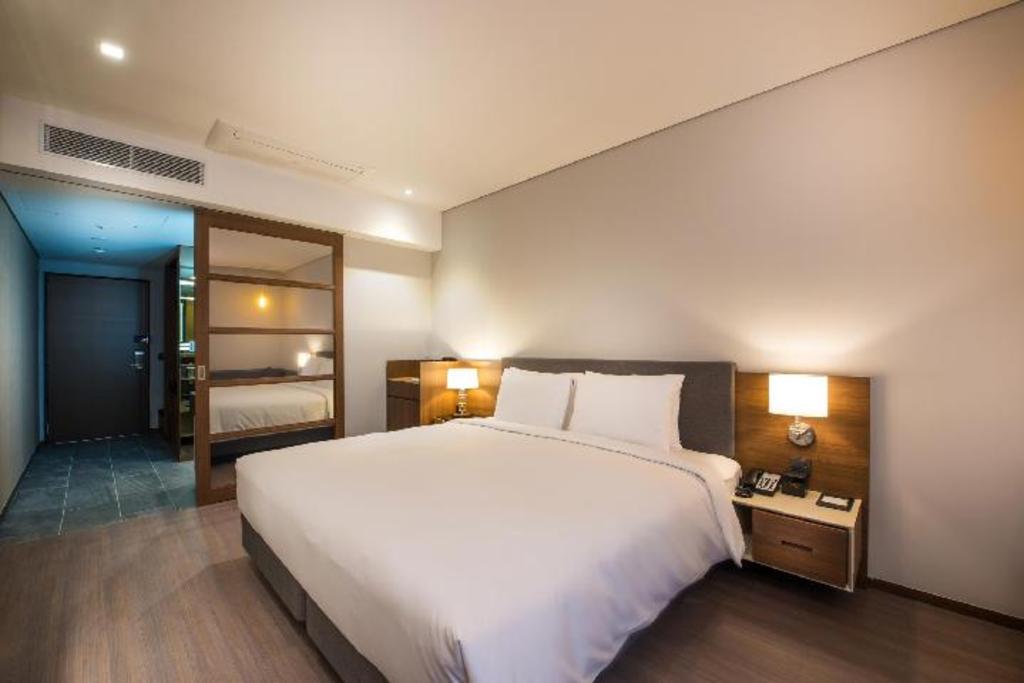
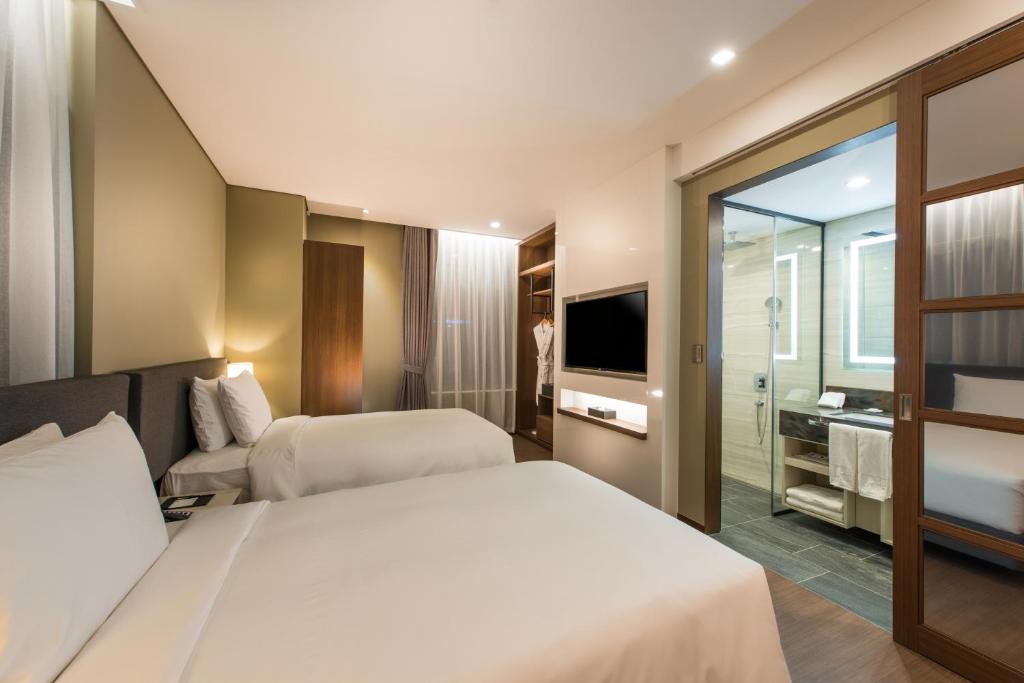
ENA is not a “choose it just because you’re traveling with family” hotel. It suits travelers who already know the room will be used for several different purposes: one companion needs to sleep first, another still has to unpack; a child needs to wind down while adults check the next day’s transport; or you don’t want all the talking, hair-drying, charging, and packing compressed beside one bed. On the other hand, if your trip means late returns every day around Dongdaemun and Myeongdong, and everyone just wants a shower and sleep once they walk in, the extra cost of the suite concept may not be used. Counting space you won’t have time to use only makes it harder to admit the room is not actually the right fit.
Hotel PJ’s strength is that it makes the clutter and pace of a group visible
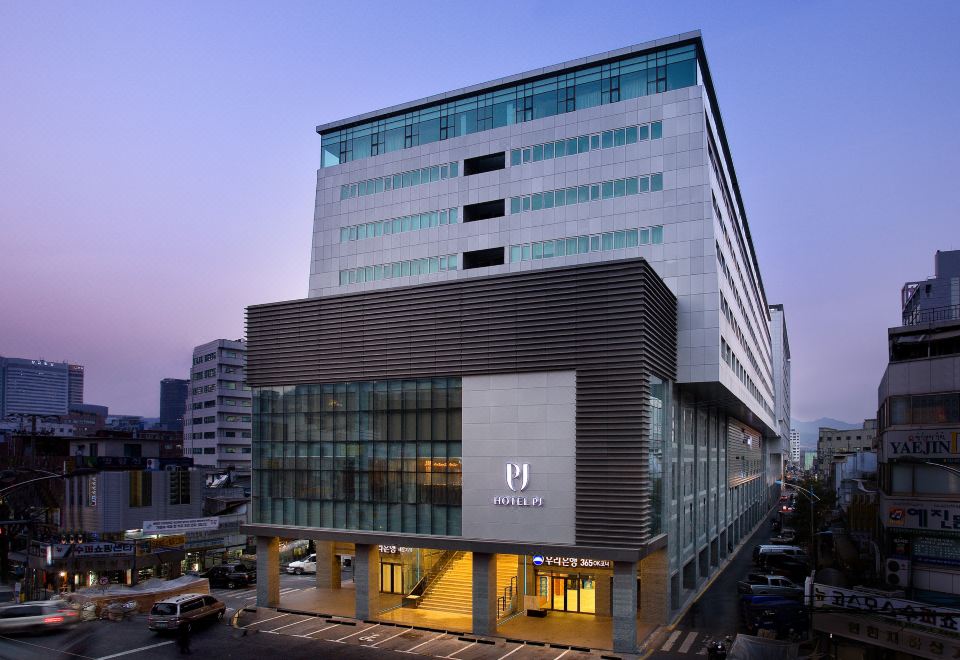
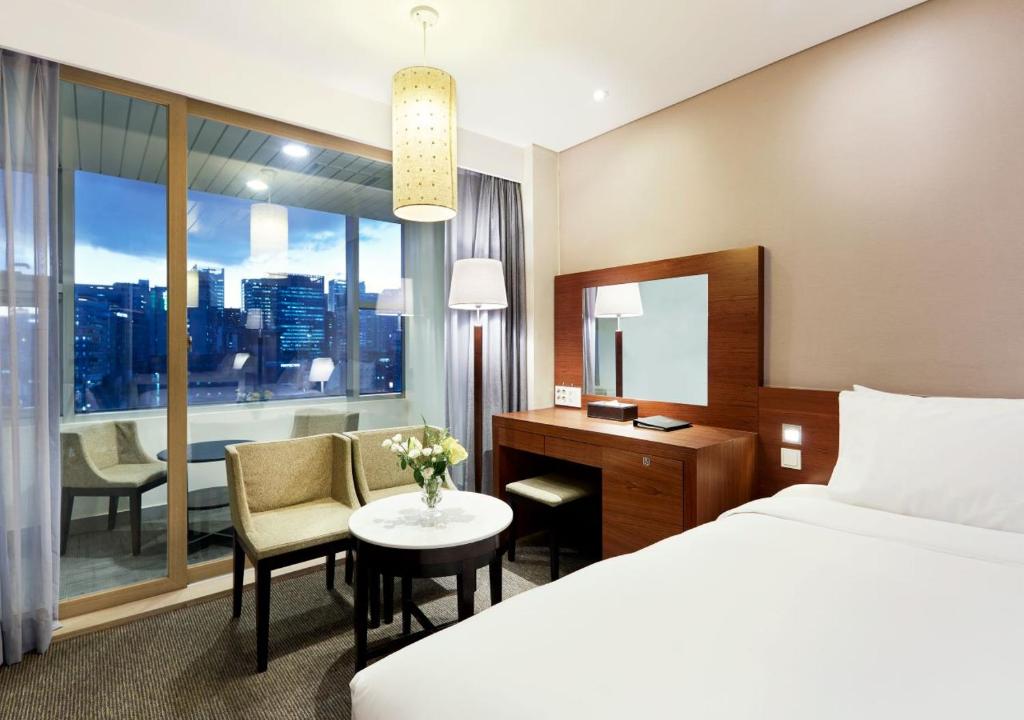
Hotel PJ is the better candidate for trips where everyone comes back to the room at the same time. With friends, the most common issue is not whether there is a bed, but whether one person is showering while everyone else is squeezed beside the luggage; someone needs to change clothes while another is hunting for an outlet; and the purchases from that same night are blocking the only walkway. These frictions won’t appear in the first line of the room description, but they become more and more noticeable over two nights or more. If your companions move at different speeds, but everyone still unpacks and chats before bed, place the room’s walkable space and bed placement ahead of the brand name.
It still comes with trade-offs. A more open feeling does not mean clear privacy separation. If you are traveling with older relatives or children and your core needs are early lights-out, naps, or independent washing-up without disturbing others, you cannot overlook that difference just because the room name sounds larger. Open the exact room type you would actually book and confirm whether it includes a balcony, a particular layout, or a specific bed type; do not assume the benefits of another photo are already part of your booking.
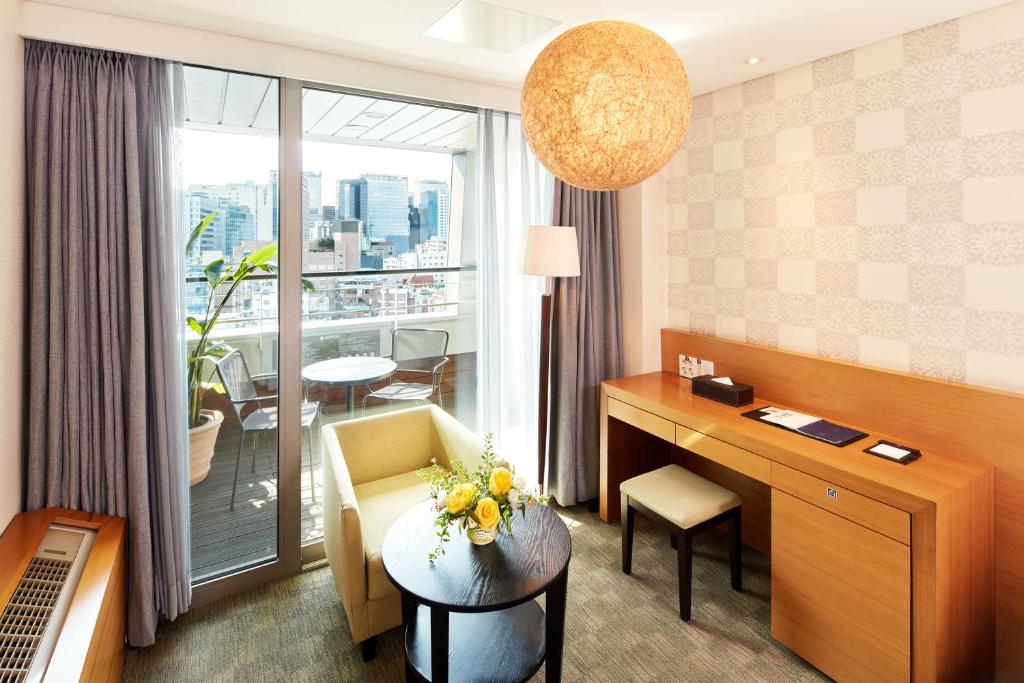
The final question is not “which is bigger,” but which one gives tomorrow back to you
Choosing ENA means you’re trading for the ability to handle different room tasks separately. Choosing Hotel PJ means you’re trading for more room to avoid constantly stowing and restowing luggage when several people return at once. The real loss is not missing photos from the other hotel, but choosing a room layout that will force you to keep fixing the same daily friction. If the first option sounds more like your trip, go back to the full ENA stay decision guide and confirm the suite details. If the second sounds more like your group, read the full Hotel PJ stay decision guide before deciding whether you really need that bed type and location.
If you still don’t have a clear answer, there is no need to open six booking tabs. Start by using the Seoul hotel decision tool to sort out your budget, purpose, evening pace, and transport preferences, then come back and compare these two hotels. The tool won’t replace checking the room type, but it can stop you from mistaking an answer that only works for one night for the base of the whole trip.
Before paying, ask the last two questions: what exact bed type have you booked, and can everyone finish their evening at their own pace when they arrive? Only when both can be answered is price worth making the final comparison.
Further reading
More conditions to lock down when traveling with a group
Sources and verification
- Official information for ENA Suite Hotel Namdaemun
- Official information for Hotel PJ Myeongdong
- Room types, occupancy, breakfast, cancellation, and payment rules vary by plan; before paying, use the hotel page for your selected dates as the final reference.