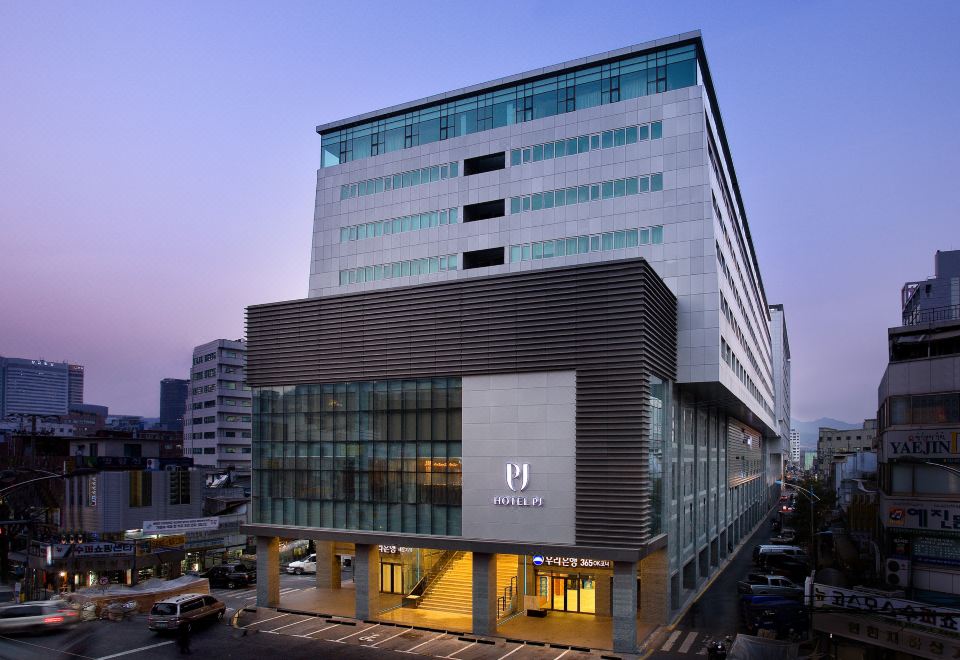
Many people interpret “staying in Myeongdong” as staying right in the middle of the shopping streets, so Hotel PJ’s address can make them hesitate at first. That is exactly where its value lies: it sits closer to Euljiro 4-ga, Chungmuro, and Gwangjang Market, making it easier to spread your itinerary across Jongno, Dongdaemun, and Myeongdong instead of starting each day from the same shopping district. For two light travelers, that may only mean a little extra walking. For three people, seniors, strollers, or anyone with a suitcase, the practicality of the room and the entrance often matters more than “how many minutes from Myeongdong” and can shape the whole trip.
Do not start with the price: do you actually need to stay in one usable space?
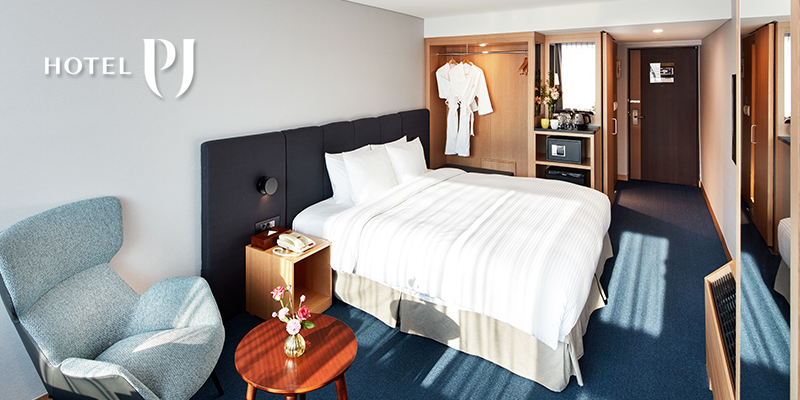
When families or groups look for a Seoul hotel, the most common mistake is sorting first by total nightly price and only later realizing the cheaper option means two rooms, the wrong bed setup, or nowhere to sit once the luggage is open. Hotel PJ is worth putting on the shortlist because its larger multi-guest room types make it possible for “staying together” to actually mean staying together, instead of cramming sleeping arrangements into a single booking. The question is not whether the room type sounds good, but whether the third bed, sofa bed, or twin-bed combination really matches your group size and age rules.
There is a trade-off here too. A room for more people is not always cheaper than two standard rooms on every date, and not everyone will use a balcony. But if everyone needs to put down shopping bags after dinner, take turns showering, or organize the next day’s items for children, having even a small shared area reduces friction. Do not let “it is only a little more for an upgrade” push you into booking on impulse. First line up the number of guests, bed type, and cancellation terms in the same row so you can tell whether that extra cost is really buying space.
Coming back from Gwangjang Market is a different night from coming back from Myeongdong
If your evenings include Gwangjang Market, the alleys of Euljiro, or the Dongdaemun Design District, Hotel PJ’s location makes more sense than a Myeongdong hotel that is tied to the main street. You do not need to walk back through Myeongdong after every meal and start over again, and it is easier to connect daytime plans in Jongno with the evening. The advantage here is continuity of route, not a claim that every attraction is at the doorstep. Getting to the busiest core of Myeongdong still takes time, and that time feels longer in the rain, when you have bought a lot, or when the kids are tired.
On the other hand, if what matters most is being able to return to the room immediately after late-night snacks and leaving only after the last shop on the main street closes, staying in Myeongdong’s core area may still be the better call. Hotel PJ does not need to beat every Myeongdong hotel; what it offers is another route that connects shopping, traditional markets, and the eastern side of the city. Mark where you will end your day latest first; that is more reliable than reading a vague downtown label on a booking page.
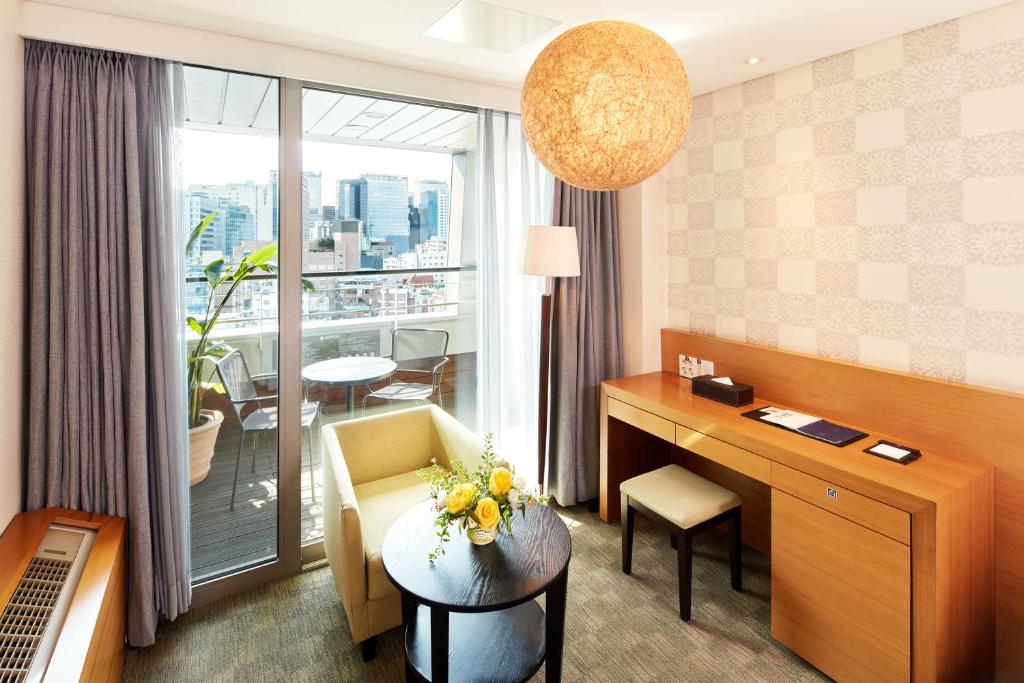
The balcony is not the headline feature; it is a buffer when luggage and sleep schedules do not match
Balcony photos easily make people imagine night views and morning coffee, but for group travelers it is often more of a buffer. If someone wakes up early to organize things, if one person is still awake while everyone else is asleep, or if clothes need a little fresh air, having another place to pause is more practical than a pretty view. It is not guaranteed, though: different room types, floors, and dates may not have the same balcony or outlook, so check the room photos and terms before booking instead of relying on the hotel homepage alone.
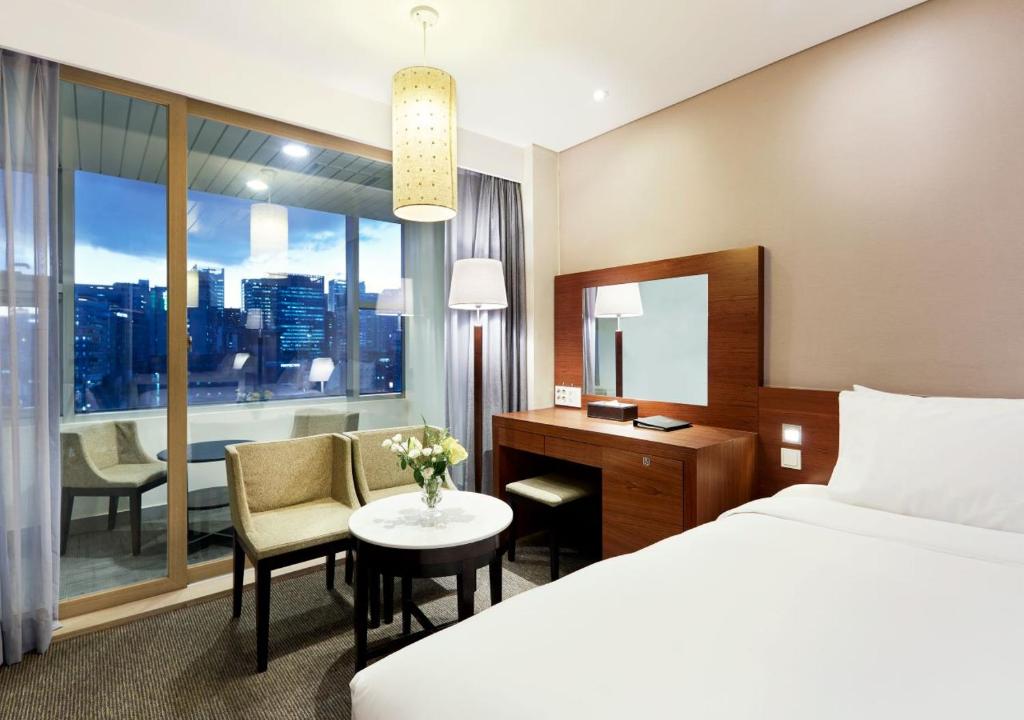
If your travel companions are light sleepers, pay more attention to room direction, street noise, and the distance between the beds than to the balcony. That is another kind of loss aversion: booking a room with more space but losing the next day’s itinerary because nobody slept well is not a good trade. You can start with how to judge sleep quality in Seoul hotels and then decide which room type is worth paying for; do not let a floral balcony photo stand in for actual needs.
Put four guests and large suitcases in the same table, and the answer appears
If you have four adults or two adults and two children, do not stop at a “family room” search result. List each person’s sleeping space, the floor space needed when luggage is open, and the time needed to use the bathroom in turns. If four people are staying only one night and leaving early the next morning, two cancellable standard rooms may actually feel more relaxed. If you are staying three nights or more and coming back at different times each day, a room that lets everyone keep their belongings in one place reduces the chaos of moving things around. That is a cost you will not see in the room-rate table.
Another practical advantage of Hotel PJ is that a “larger room” does not have to mean a luxury resort. It is closer to an organizing stop on a city itinerary: coming back at midday to drop off food from the market, sort jackets and shopping, let one person rest while others prepare for dinner. If you spend most of the trip outside, that flexibility may not matter. But once it rains, someone feels unwell, or you buy more than expected, the space that seemed unnecessary quickly earns its keep.
Whether to use the area on arrival day depends on what time you get in
If you are arriving in Seoul in the evening, do not turn the first night into a full Myeongdong shopping day. Put your luggage away first, then decide whether to head toward Gwangjang Market, Euljiro, or Chungmuro for dinner. That usually gives you more breathing room than rushing into the busiest area right away. If you arrive on an early flight, start by checking how to handle luggage before check-in so you can connect storage, lunch, and your first attraction. A good first night does not need to tick off many boxes; it just needs everyone to know how the next day will begin.
Shuttle, parking, and breakfast: what will you actually use?
Any shuttle, parking, or breakfast service listed on the hotel page needs to be checked against the latest rules for your stay dates. These services can be genuinely useful for certain trips — for example, if you are traveling with seniors, need to move between Myeongdong and Dongdaemun on one day, or are renting a car and need parking — but they should not be the reason you book without confirming the details. Shuttle times, stops, and reservation requirements can change in ways that make a seemingly convenient option unusable. Especially for early-flight arrivals or late concert finishes, start with your own luggage and nighttime transport plan, then treat hotel services as a bonus.
The same goes for breakfast. If you need to head early to Gwangjang Market, Jongno, or Dongdaemun the next day, hotel breakfast can keep the group from making separate decisions about the first meal. If you already plan to eat at a market, breakfast only locks you into a schedule. Whether to add breakfast at a Seoul hotel is not really about how much food is offered; it is about whether you will actually be in the hotel at that time.
Final checks before booking: do not let “fits multiple guests” become a misunderstanding
Open Booking.com, Agoda, and Trip.com to the same date and the same guest count, then check four things: the number of beds in the room type; whether the third guest uses an existing bed, an extra bed, or a sofa bed; taxes and breakfast; and the deadline for free cancellation. This is especially important for groups of three or more, because search results may first show a room as available, only for age or bed-type limits to appear when you click through. Spending a few extra minutes checking now can prevent the loss of having to rebook on the spot later. That kind of pressure is harder to fix than paying a slightly higher but reasonable room rate.
How to read the price gap without being fooled by what only looks cheaper
Group stays are easiest to misread when you look only at the per-night price after splitting rooms. A room that looks cheaper may end up costing more once you add an extra bed, breakfast, or a nonrefundable rate. On the other hand, overpaying just to avoid splitting the group into two rooms can also squeeze the rest of your itinerary. A fair comparison puts the total room cost, each person’s sleeping arrangement, cancellation terms, and the burden of walking back from the subway station together. Do not forget to factor in everyone’s arrival times as well. You are not choosing a photo; you are trying to reduce the daily question of who goes back first and where the luggage should go.
Who it suits best is not just the “first-time Myeongdong visitor”
If you want to divide Gwangjang Market, Dongdaemun, Euljiro, and Myeongdong into separate legs without constantly retracing your steps, and you do not want to split the room too much just because you are traveling as a group, Hotel PJ is a candidate worth checking first. It does not promise that you will stand in the middle of any attraction, but it does give a group better landing-order logic. If you are only staying two days and your focus is entirely on Myeongdong’s main street or Hongdae nightlife, be honest and choose a place that matches your final return route. A well-chosen hotel usually does not feel the most glamorous; it feels like no one has to decide again at night where to meet.
Further reading
- How to choose a Seoul hotel: start by splitting your itinerary
- How to read room types for three people in Seoul
- Myeongdong lodging: how to choose between the main street and the outer blocks
- Solaria Nishitetsu: the Myeongdong main-street option
- Novotel Dongdaemun: the trade-offs for a Dongdaemun itinerary
If the remaining candidates are Hotel PJ and ENA, start by looking at the real trade-offs of multi-guest rooms. Do not compare only how many people the room can hold; the way the room is divided, whether luggage can be spread out, and the evening rhythm are what truly make the two different.