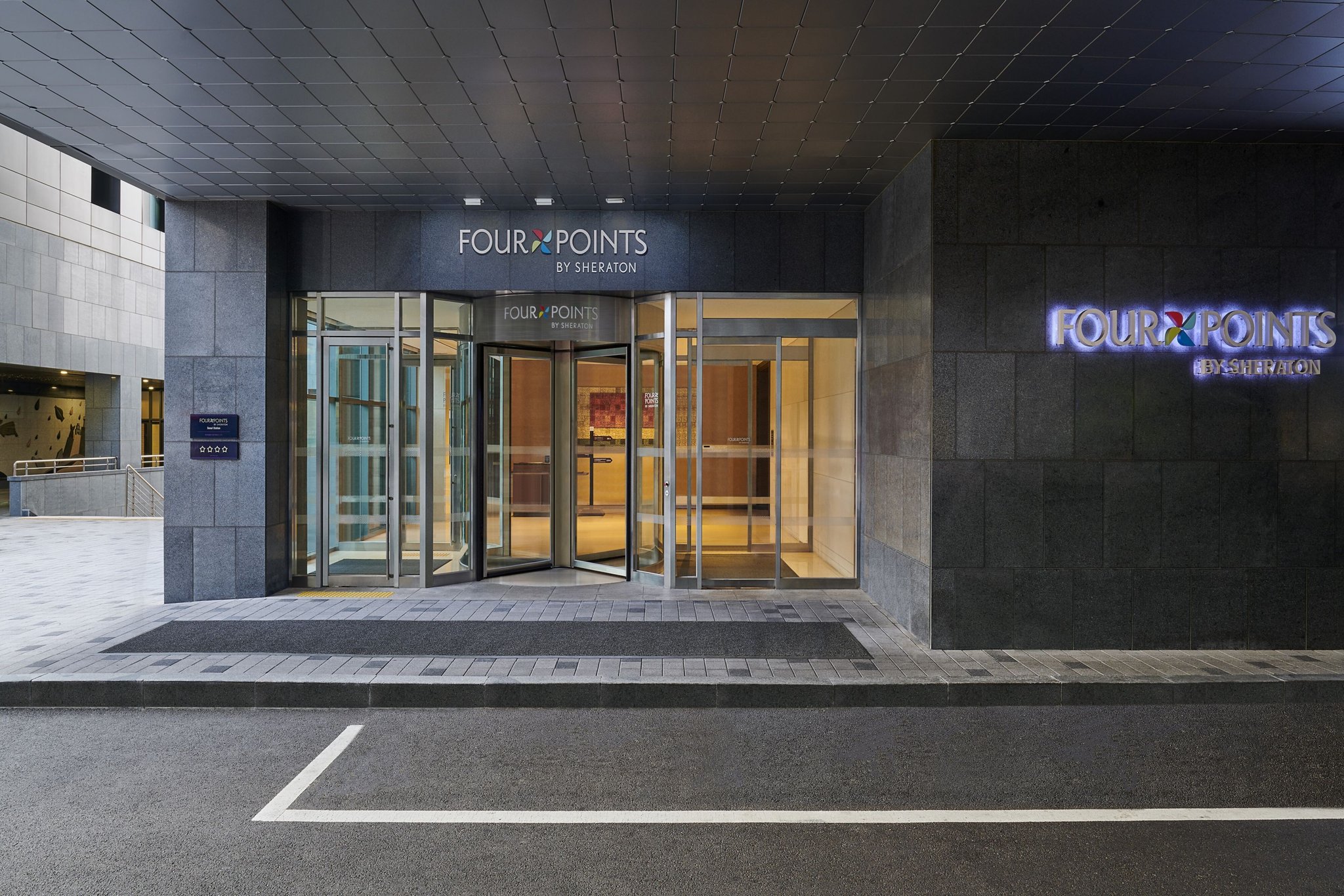
Bottom line first: Four Points by Sheraton Josun, Seoul Station is best for two types of travelers. The first is anyone arriving with large luggage who does not want to wrestle with Seoul Station’s street-level exits before checking in. The second is anyone whose itinerary includes AREX, KTX, or an early intercity departure and who is willing to make “staying at the transport hub” the top priority. The hotel’s official address is 366 Hangang-daero, Yongsan-gu, and Booking.com’s property details also state that it can be connected to Seoul Station via an underground passage. That does not mean you can go from platform to room without walking; it does mean the hardest parts, such as crossing streets, finding the entrance, and avoiding rain, are reduced. For travelers who want their evenings reserved for Hongdae bars, Yeonnam-dong cafés, or Gangnam nightlife, this location may actually make the last leg of the day longer. Don’t let the words “Seoul Station” trick you into treating it as the fastest answer for the whole city.
Start with your itinerary: what part of the trip does it actually save?
The real value of putting your hotel near Seoul Station is the flexibility to switch transport modes. If you are entering from Incheon and have already decided to take AREX; if you need to drag your luggage back to the airport on the last day; or if you will take KTX to Busan or Gangneung in the middle of the trip, this location lets the hotel sit right on the seam between journeys. In that case, instead of comparing one or two subway stops, you should check whether you will use Seoul Station at least twice during the same trip. If you will only use it once, and you are not arriving late, staying closer to the area where you spend your daytime hours is usually the more sensible choice. You can start by checking how to judge the final leg on airport buses and AREX, and avoid confusing arrival at the station with arrival at the hotel.
It is also a good fit for people who do not want to split their stay between two hotels. If you spend the first three nights in the city and need to catch an early train on the last morning, changing hotels is not always easier: luggage storage, pick-up timing, check-in time, and baggage all eat up half a day. On the other hand, if you are willing to use Seoul Station as your base for the whole trip, start by reading the cost of staying in one hotel versus splitting between two. When “moving once less” matters more than “taking two fewer subway stops every day,” Four Points moves to the front.
| Your situation | How this hotel scores | What to recheck before booking |
|---|---|---|
| You are arriving or departing via AREX | Should be on the shortlist first | Your flight time, walking distance inside the station, and the final entrance |
| You need to take KTX to another city | Very suitable | Train schedule and whether you need to store luggage early that day |
| You will mostly go to Hongdae or Seongsu every day | Not always cost-effective | Return transfer, late-night service, and your group’s energy level |
| You are traveling as three people or with children | Check the exact room type first | Occupancy, bed type, extra bed policy, and luggage route |
| You only want to stay next to shopping and nightlife | Usually a better district is the right choice | Where you will actually spend your evenings |
An underground connection does not mean you can skip checking the exit
“Directly connected to Seoul Station” is a useful feature, but it is not a no-think pass. Seoul Station itself is large, and the routes for AREX, KTX, the subway, and street-level pick-ups are different. On rainy days, or when you are pushing a stroller or each carrying a 29-inch suitcase, elevator placement and the final flat walk still affect how it feels. What the hotel official page and OTA listings can confirm is the address and connection condition; which exit to use, any construction barriers, and last-service times must be checked in official day-of-travel information before you leave. If your flight is very late, read the risks of checking in late in Seoul first; then put your arrival notice, booking name, and a screenshot of the entrance directions somewhere everyone in your party can see.
This is also where it differs from hotels in Myeongdong. Myeongdong’s strength is compressing dinner, shopping, and the walk back to your room into one area. A Seoul Station hotel’s strength is absorbing the city-to-city transfer. Neither is better in absolute terms; they simply serve different trip priorities. If you want your evenings to belong to a shopping district, compare the practical boundaries of staying in Myeongdong first. If what matters more is whether your arrival day and departure day can avoid one transfer, then come back and consider this hotel.
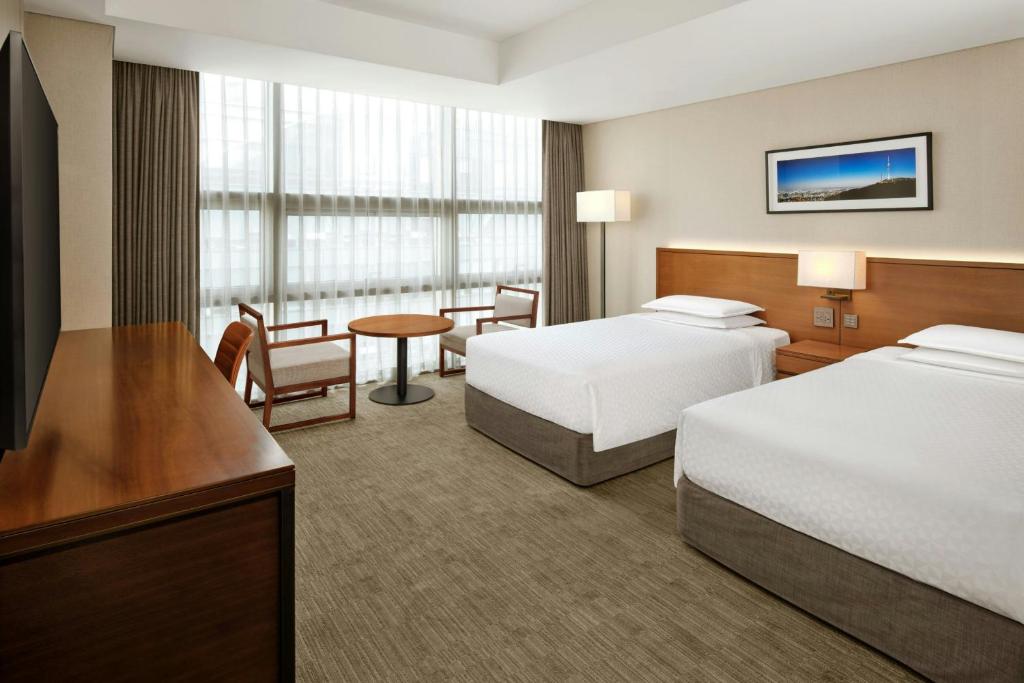
A hotel room is not for photos; it is for absorbing travel-day fatigue
Room evaluation here should not start with whether it looks new. It should start with what you need the room to do. Early-departure travelers usually need a place to organize luggage the night before and gather chargers and documents in one place. Guests with laptops often use the room to answer messages and adjust the next day’s plan after arriving. Two people traveling together also commonly need one person to shower first while the other is still putting away clothes. Booking and Agoda list different bed types and room configurations, but the occupancy shown on each platform changes by date, inventory, and plan, so you cannot assume someone else’s room type is yours. Three-person trips are where this hotel is easiest to misread: two beds do not automatically mean three people will stay comfortably. Use the three-person room check for bed type, luggage space, and daily routine line by line, rather than just looking at “family-friendly” in search results.
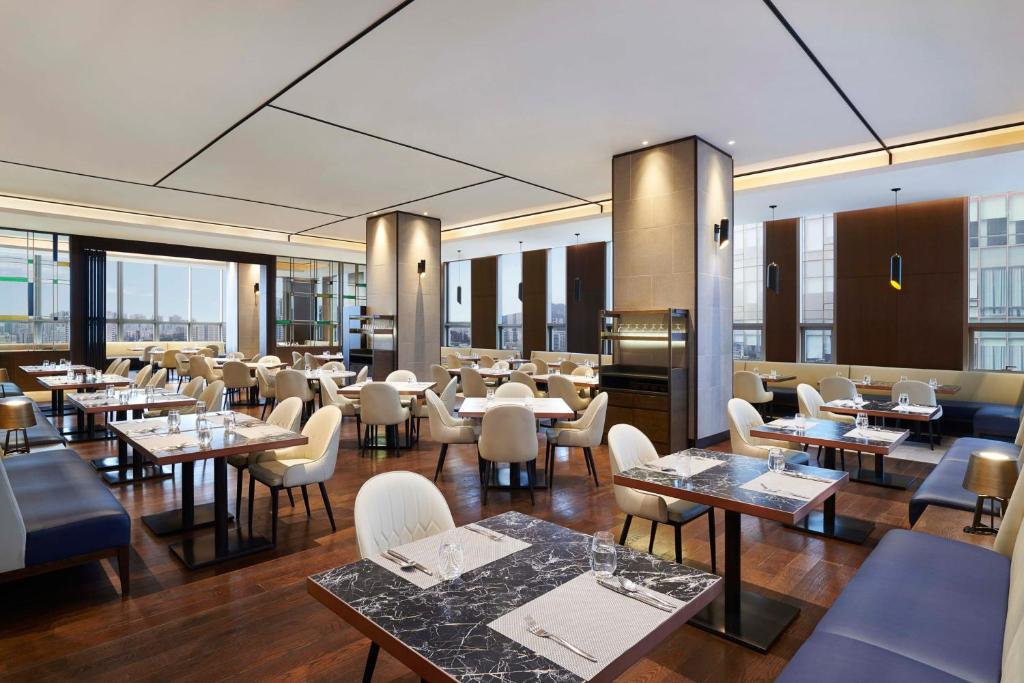
The hotel’s official page lists room and facility information and shows a fitness center; the dining space is another modest plus that does not need exaggeration. Its point is not that you must eat breakfast at the hotel, but that on a tired arrival day, a rainy day, or when you need to leave very early, it removes one more decision about finding somewhere to eat in another district. If you were already planning to have breakfast at a market or café, first check whether breakfast is worth adding, and do not let a breakfast plan hide the transport and room-type factors that actually shape the trip.
Who might regret staying here?
The first type is anyone who imagines “Seoul Station” as the center of every sightseeing stop. It is a transport hub, not the center of every neighborhood. If you spend almost all day in Hongdae, Yeonnam, or Hapjeong, staying in Hongdae can save the repeated subway rides every day. The second type is anyone who wants the hotel’s surrounding streets to be the main part of their walking and late-night-snack routine. The convenience here is more about routing than stepping straight out into the exact streets you most want to explore. The third type is anyone whose trip barely touches the airport railway, KTX, or the Seoul Station area and who chooses it only because of the brand and reviews. In that case, what you may be paying for is extra return travel time every day. If Hongdae is your nighttime base, go straight to the entrance and alleyway logic of staying in Hongdae and do not force Seoul Station’s strengths onto it.
Another kind of regret comes from treating cancellation terms like a fixed service. Rules vary by platform, room type, payment method, and date; this hotel is no exception. Especially for early-morning KTX, flight changes, or when your travel companions are still undecided, check the conditions on three platforms using the same dates and the same room type before deciding. You can use a comparison method for cancellation and payment terms so you do not overlook the deadline just because a listing says “cancellable.”
Put it into your itinerary and you can tell in three minutes whether to keep it
The simplest test is not the straight-line distance on a map, but writing down the last activity of each day. Say you enter from Incheon on day one, head to Busan on day three, and leave early on day five. Seoul Station will appear in the route at least three times: arrival, intercity transfer, and departure. Putting the hotel here means you skip one “should we store or retrieve the luggage in another district first?” decision every time. Even with one or two subway rides during the day, the trip is usually still smoother. By contrast, if all five days are just city walks, you arrive in the afternoon on day one, and the final departure is not rushed, Seoul Station appears only once and its core advantage is barely used.
Traveling companions magnify this difference. Two adults who are comfortable with transfers can judge hotel distance more loosely. With a child, an older family member, or someone carrying large camera equipment, every stair, crossing, and line change becomes a shared cost. For this kind of trip, you do not need the “closest” hotel; you need one that still lets you recover from mistakes. Before paying, ask yourself these three questions separately: Can we still walk on a rainy arrival day? Who handles the luggage on an early-morning departure? If one person arrives first, can the other find the hotel back from the station alone? If two of the three answers feel shaky, this hotel’s transport-oriented value becomes stronger. If none of them feels stressful, shifting the budget to a district closer to your daytime base often makes for a happier stay.
If your shortlist includes both Kongdeok and Hongdae, do not compare only the first-night price; first look at how Seoul Station, Kongdeok, and Hongdae divide the trip, then decide whether the transport hub really beats the evening neighborhood.
Before booking, let three platforms answer the same question
You do not need to rush into whichever platform looks cheapest. First set the check-in date, check-out date, room type, number of guests, and cancellation need to be exactly the same, then see which option really fits you. What you need to confirm is whether it is Four Points by Sheraton Josun, Seoul Station, whether the address is 366 Hangang-daero, whether the room can accommodate your party size, whether breakfast is included, and whether the cancellation deadline is in Seoul time or your local time. Once those five points match, comparing total price and payment conditions makes sense. The three buttons below all go straight to the same hotel’s property page, so you do not need to search through Seoul results and find the hotel name again.
Keep planning
Beyond Seoul Station: handle the next leg of the trip
Sources and verification
This article’s recommendation is KoriNavi editorial judgment; hotel services, room types, prices, availability, and terms can change, so please return to the official site and exact property page before booking.