Here’s the short answer: if your itinerary includes KTX, a transfer at Seoul Station, or a departure day when dragging luggage is the last thing you want to do, prioritize whether Four Points Seoul Station’s underground connection will actually work for you; if your days point in several different directions and no one wants to keep changing hotels, GLAD Mapo in Gongdeok is more like a transfer buffer; and if Hongdae is where you’ll return for two or three nights, with breakfast and laundry helping you wrap things up, then Holiday Inn Express Seoul Hongdae comes into the picture. All three connect to the airport rail, but that doesn’t mean they save you the same kind of time.
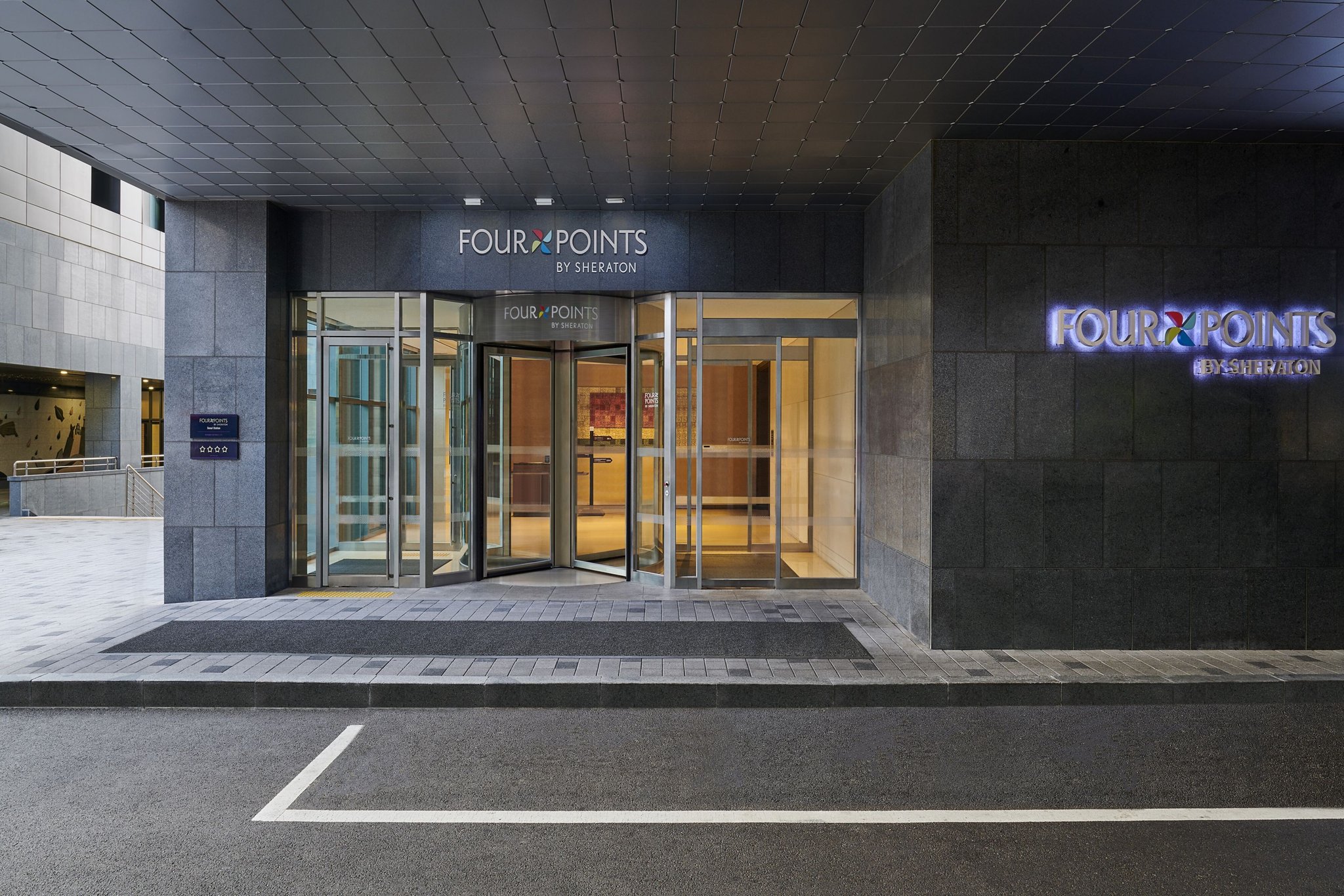
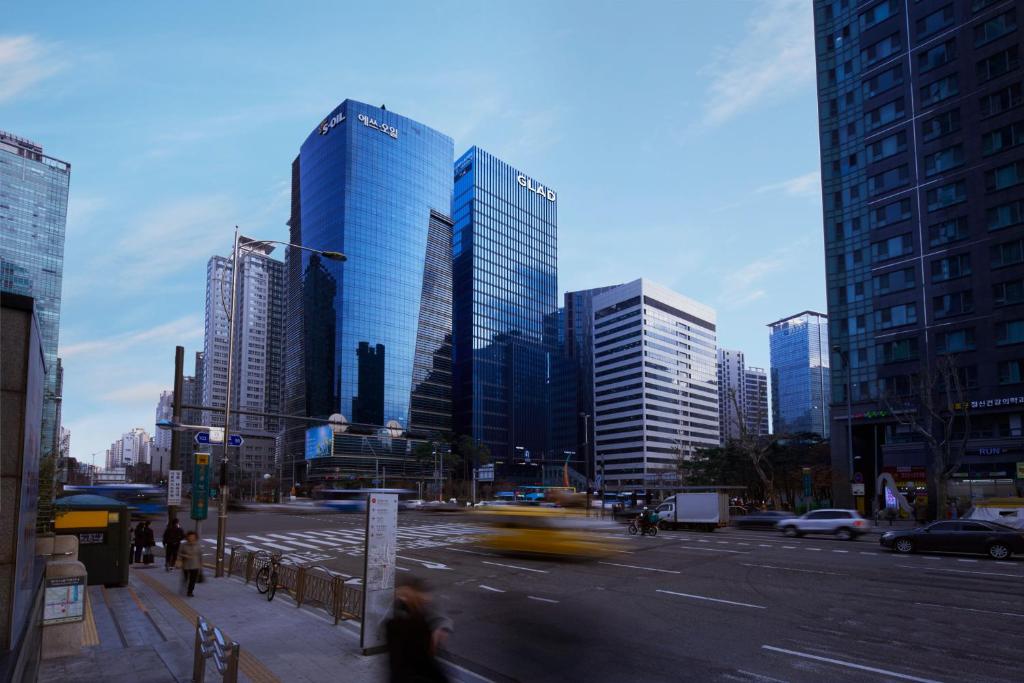
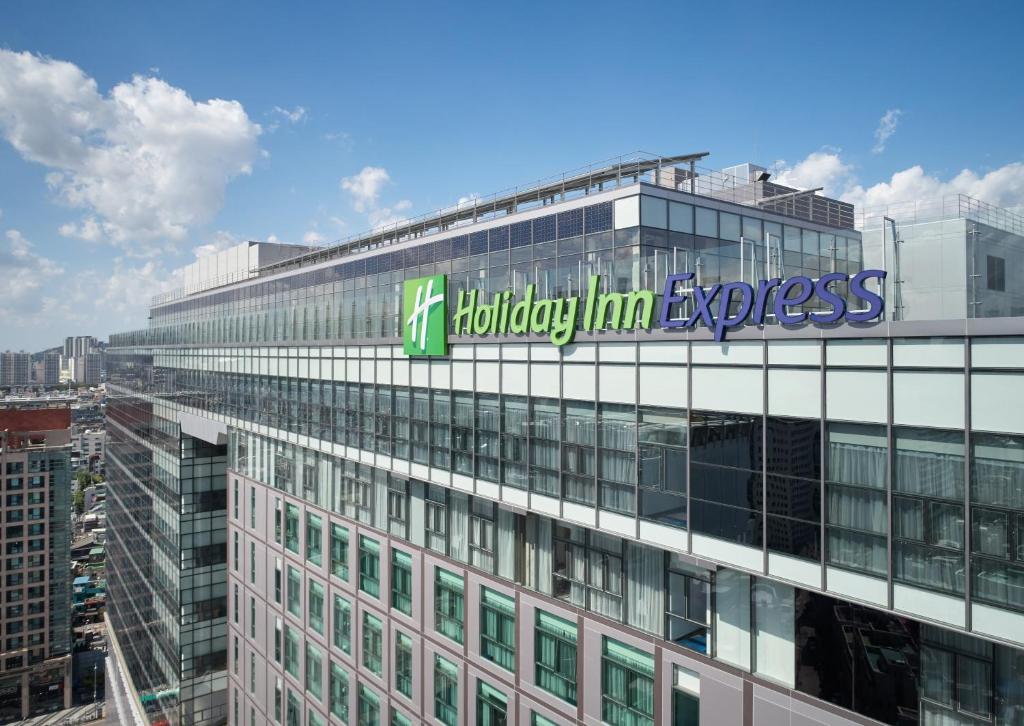
| The scenario most likely to get stuck | Which hotel to look at first | Why it’s not the one | What to check before booking |
|---|---|---|---|
| Carrying big luggage while needing KTX or a departure flight the next day | Four Points Seoul Station | Your days are all in Hongdae or deep in Gangnam | Underground route, exact room type, same-day cancellation terms |
| West side in the morning, city center in the afternoon, and another line change at night | GLAD Mapo | You only want to keep every night inside one nightlife district | Gongdeok exit, bed setup, and your companions’ sleep schedule |
| After dinner in Hongdae, you want to go back to the room, do laundry, then head out again | Holiday Inn Express Hongdae | Hongdae is only on the plan for one night, while the rest of the trip runs east and south across Seoul | Breakfast, laundry arrangement, and return timing |
First split “convenient from the airport” into two questions: easy on arrival, or easy for the whole trip
The airport rail only gets you to a station. It won’t carry your luggage to your room, and it won’t decide where you end your third night. Four Points makes the most sense when Seoul Station appears in your arrival, departure, or cross-city days; placing your hotel at a transport hub compresses the heavy-bag part of the trip into one area you’d rather not deal with again and again. You can start with the last leg from the airport bus or AREX; if you’re arriving late, though, you also need to think about the hotel entrance and same-day check-in process, not just the station name.
GLAD Mapo is different. Gongdeok is not a neighborhood where you arrive and never need transit again; it’s a node that helps you avoid switching lines at the wrong time. When your daytime stops are spread across Hongdae, City Hall, Seoul Station, Yeonnam, or the west side, the value of staying here is that morning departures and evening returns can point in different directions. But if you spend every day on the same subway line or in the same district, those extra lines just become a map that looks more impressive than it is. Start with the decision on whether to stay in one hotel or split stays between two: do you really need a transfer base, or do you actually just need somewhere easy to return to at night?
Write out what your evenings look like, and Hongdae’s advantage becomes clear
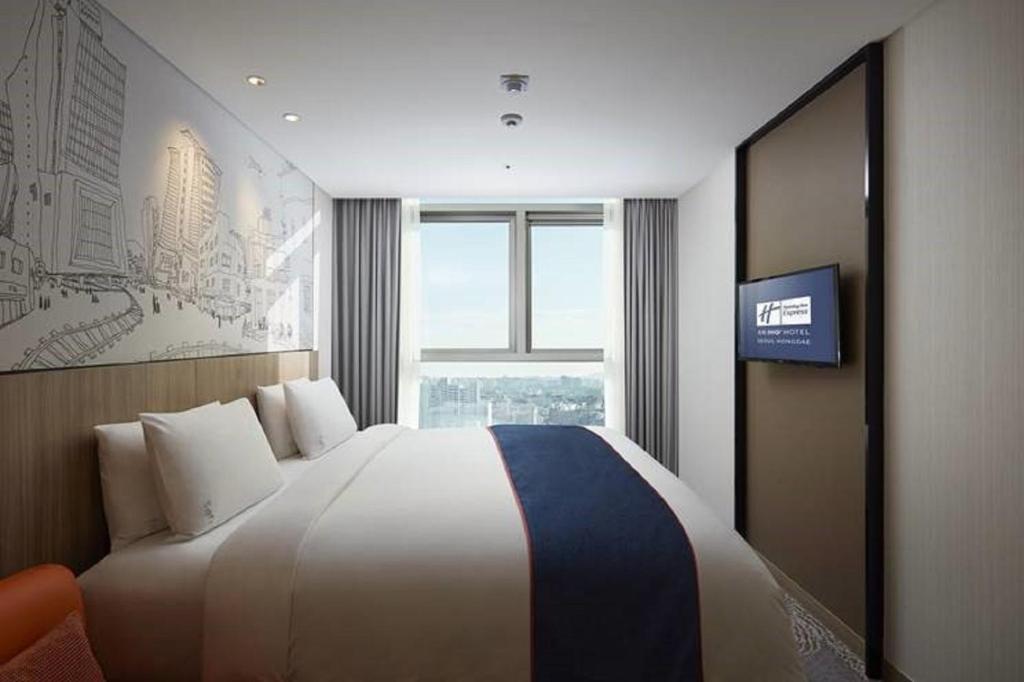
Holiday Inn Express Seoul Hongdae should not win simply because it is “near Hongdae Entrance.” Its advantage only matters if you use it: coming back to the room after dinner to drop off shopping, one person heading upstairs first, someone else still wanting to go to Yeonnam-dong, not wanting to search for breakfast the next morning, or needing to handle laundry in the middle of a stay. These are the kinds of trips where you return to the room more than once in a single evening. If that’s how you travel, a Hongdae base reduces small decisions. If you only have Hongdae in the plan for one night and spend the rest of the trip running to palaces, Dongdaemun, Jamsil, or Gangnam, a close address still won’t make up for the daytime movement.
So don’t compare it with Four Points as if the question were “which is closer to AREX.” The former is about keeping your evenings inside one everyday radius; the latter is about making transit days less painful. If you care about how dense the neighborhood feels at night, whether you sleep early, or whether you have an important next-day schedule, you still need to separate room type from surroundings; don’t let a popular district cover up the risk to your sleep. At this point, you can follow up with how to check sleep conditions in Seoul hotels instead of treating any “high floor” or “city view” as a guarantee of quiet.
When three people are traveling together, don’t confuse “can book for three” with “actually fits three”
All three hotels may show different bed types, dates, and occupancy limits depending on the booking platform, but you can’t rely only on the “3 adults” filter in search results. GLAD Mapo’s official information includes different twin and larger-bed options, and Holiday Inn as well as Four Points can show different combinations depending on room type, date, and package. What really matters is how the three beds are arranged, who can still move around after the luggage is spread out, and whether late showers will block the other two people at the door. This isn’t about comparing hotel size; it’s about drawing the actual bathroom, entryway, and bedside space you’ll all need to use in turns over one night.
If your companions include older adults, children, or people who sleep very early, start with checking bed layouts and luggage space in triple rooms. That will rule out the wrong candidates sooner than simply looking for “an extra bed.” Only after the triple-room setup, breakfast, cancellation deadline, and payment timing line up should you go back to the individual hotel pages and compare total prices. Don’t just copy the first number each platform shows into a table.
Run the arrival day and departure day as two separate tests, and a lot of candidates fall away on their own
The first night is often the easiest to sell yourself on because it’s “close to the airport rail.” But what you need to test is not the moment the train arrives; it’s the 20 minutes after you get off: who is pushing the largest suitcase, whether you need to find an elevator, whether your companions can wait by the roadside, which floor the hotel lobby is on, and whether you still have to walk through a shopping complex or cross a street before reaching the room. Four Points is easiest to test: take the route from AREX, KTX, or the subway and put it together with the reality of carrying luggage. If you’ll use Seoul Station more than twice, the location helps reduce stress. If you’re only arriving in the afternoon and sleeping late in Hongdae the next day, that convenience may only get used once.
GLAD Mapo needs a different script. Suppose the next morning is Hongdae, the afternoon is City Hall or Seoul Station, and the evening has plans in Mapo or Hongdae. Gongdeok means you don’t need to move your base just because one line transfers better than another. But if your daily focus is on the east side, staying in Gongdeok means every trip starts by heading in the opposite direction. Holiday Inn Hongdae should be tested by the “after 9 p.m.” scenario: after dinner, after shopping, when one person wants to rest and someone else still has one more stop in mind, do you want to return to the room once and head out again, or do you want to stay outside until the end? This isn’t a personality test; it’s whether you’ll actually use the Hongdae address the way you think you will.
Run the logic in reverse for departure day too. Check-out time, luggage storage, the last meal, picking up items from the hotel, the trip to the station, and train schedules all need to fit together; if one piece is off, the route that looked neat on a map falls apart. For early flights, older companions, or lots of shopping bags, start with how to handle luggage before and after check-in, then decide whether Seoul Station is really worth making central to the trip. Don’t assume that because the map says it’s only a few minutes on foot, a family with two suitcases feels the same way a backpacker does.
When comparing prices, keep only three workable candidates and don’t make cheap room rates out of mismatched conditions
Once you know which base you prefer, then start looking at prices. Lock the check-in date, check-out date, number of guests, bed type, whether breakfast is included, payment currency, whether cancellation is allowed, and the cancellation deadline into one exact set, and then open the specific hotel pages. If Four Points is showing a twin room for two, GLAD shows a non-refundable double, and Holiday Inn shows breakfast included but for a different occupancy, those prices are not comparable. Don’t use a member-rate offer from one hotel to undercut a flexible rate from another, because what you’re actually buying is different risk.
When the difference is small, ask which mistake would be hardest to fix: can staying in the wrong area be corrected by riding a few more subway stops? Can a triple room with the wrong bed setup be changed after check-in? If your flight changes, will the cancellation policy force you to pay for another night? You can follow the order for checking cancellation and payment terms and put price last, not first. That leaves you with two or three candidates you can actually book, instead of saving ten hotels that aren’t even playing the same game. Even if your final choice ends up outside these three, this filter still applies to the next set of options.
The last question isn’t which one is best, but which kind of regret you can live with
If you choose Four Points Seoul Station, you may gain breathing room for departure and cross-city travel, but nightlife won’t necessarily be right outside the door. If you choose GLAD Mapo, you get transfer flexibility when the itinerary is spread out, but it won’t automatically save you a subway ride every time. If you choose Holiday Inn Hongdae, you get freedom to return to the room at night, plus more predictable breakfast and laundry, but if your daytime plans are always elsewhere, Hongdae becomes just the starting point for repeated cross-city travel. In those last halves of each sentence, the one that matters least to your trip is your answer.
Once you’ve decided, don’t start over with a fresh hotel search. Go back to the matching hotel page and compare the same check-in date, occupancy, bed type, and cancellation terms on Booking.com, Agoda, and Trip.com; each article already takes you to the exact property page. If you still haven’t decided which district to stay in, go back first to the Seoul accommodation area elimination page, and don’t let three hotels that should never have made the shortlist compete for a false first place.
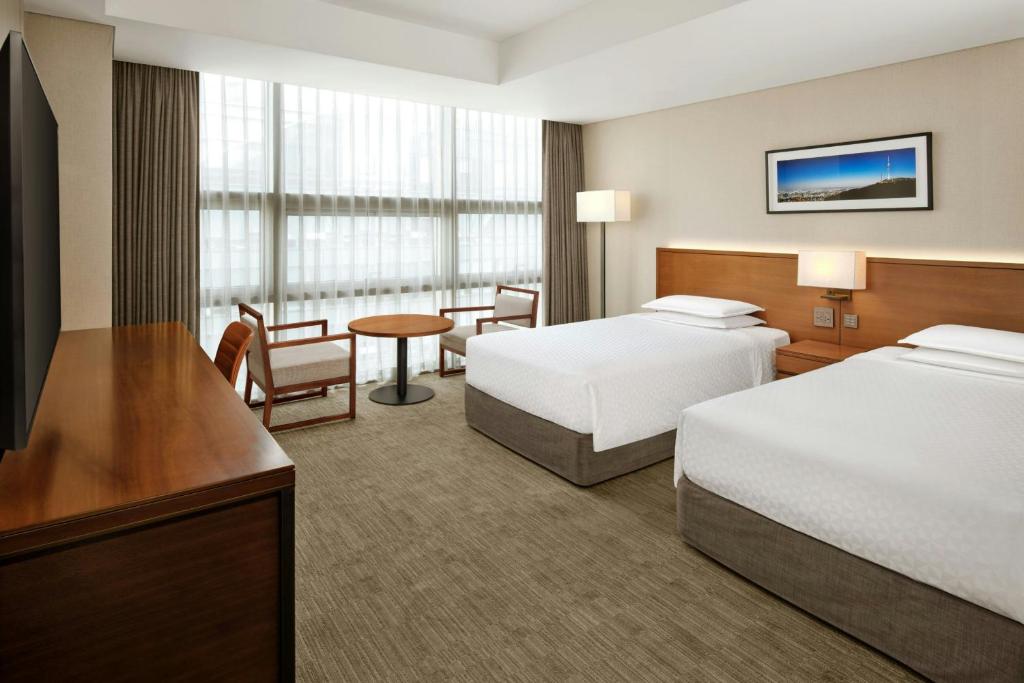
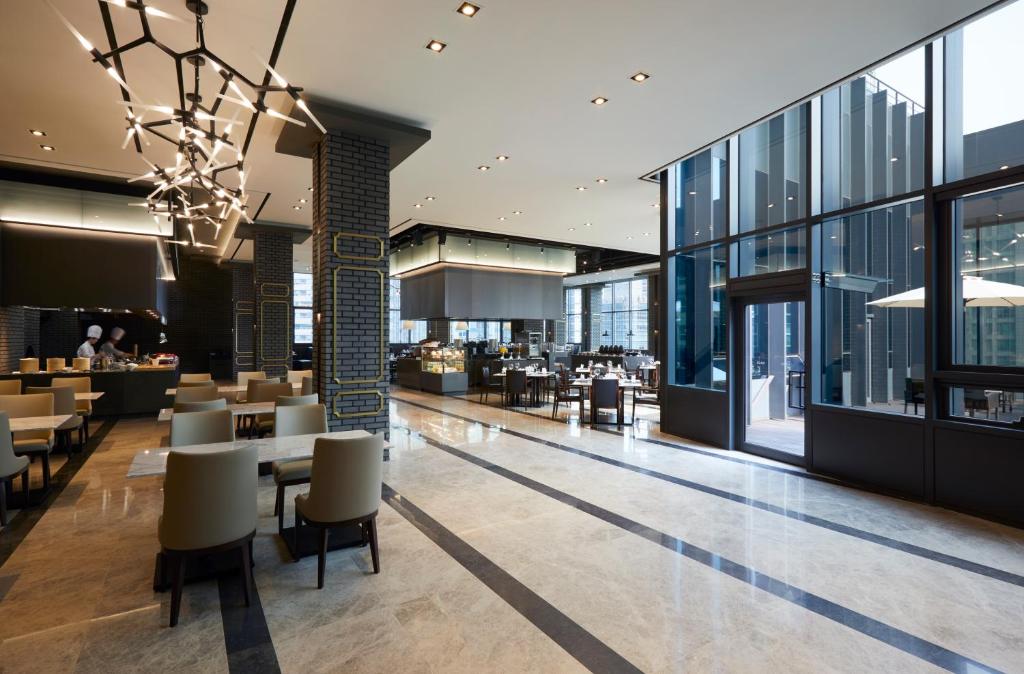
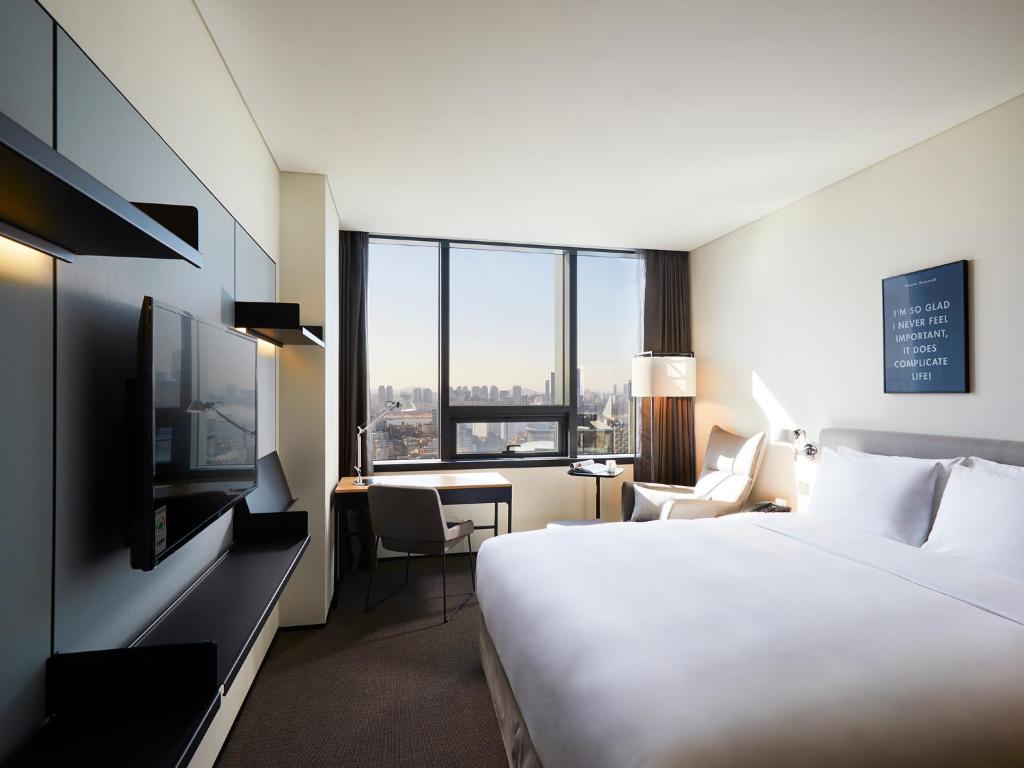
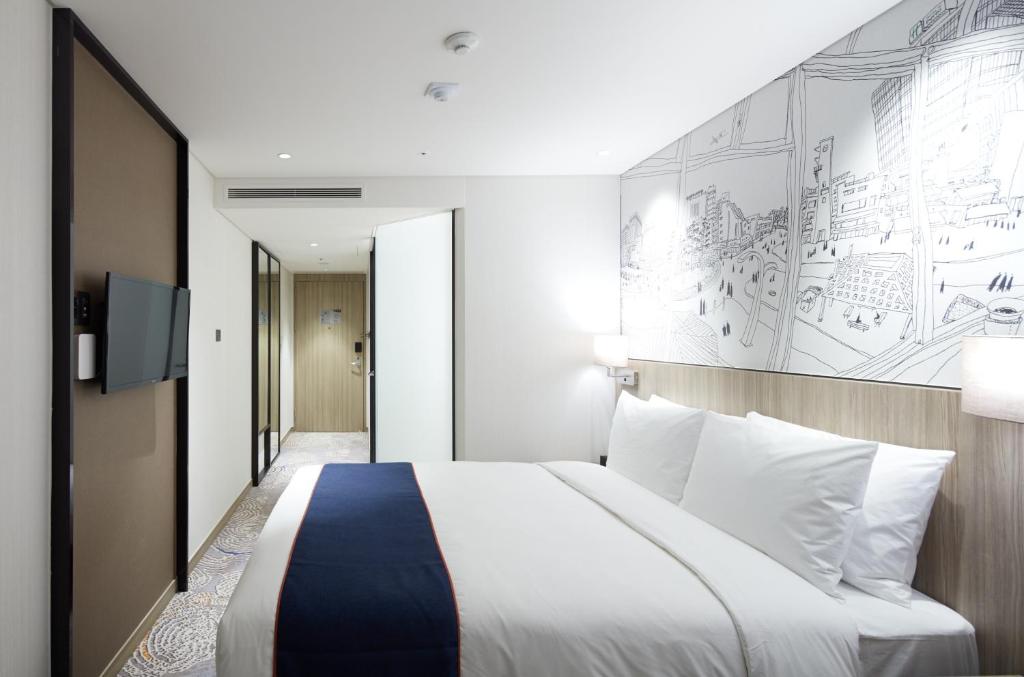
Looking at three photos for each base keeps the station from looking like the same kind of convenience every time
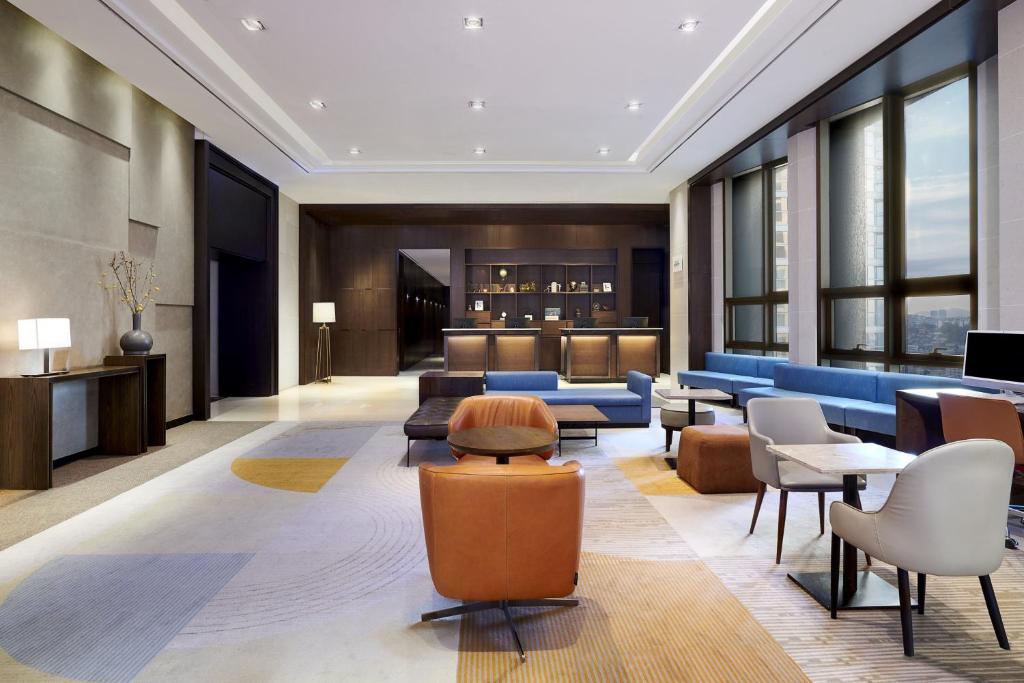
Each photo set below appears before that hotel’s CTA. First look at the entrance, room, and shared spaces you’ll actually use, then verify the plan with the same date, number of guests, bed type, and cancellation terms.
Keep planning
The next step is not another ranking
- Four Points Seoul Station: the real trade-offs of staying at a transport hub
- GLAD Mapo: when Gongdeok transfer convenience actually matters
- Holiday Inn Express Hongdae: when it’s worth paying for a neighborhood base
- How to arrange luggage before and after check-in
- How to compare hotel cancellation and payment terms
Sources and verification
The comparison conclusion is KoriNavi editorial judgment. Transportation, room types, breakfast, laundry service, and booking terms can change; before payment, rely on the official page and the specific property page you selected.