
The short answer: Gyeongpo Beach is worth visiting if you want more than a quick photo of the East Sea. Its best version is a slow half-day that combines sand, pine shade and Gyeongpo Lake. If your Gangneung day is already full of cultural stops and you only want one coastal view, a short stop can be enough. One distinction matters: public areas are accessible year-round, but that does not mean swimming is safe or permitted year-round. Treat swimming season, flags and weather as a separate check.
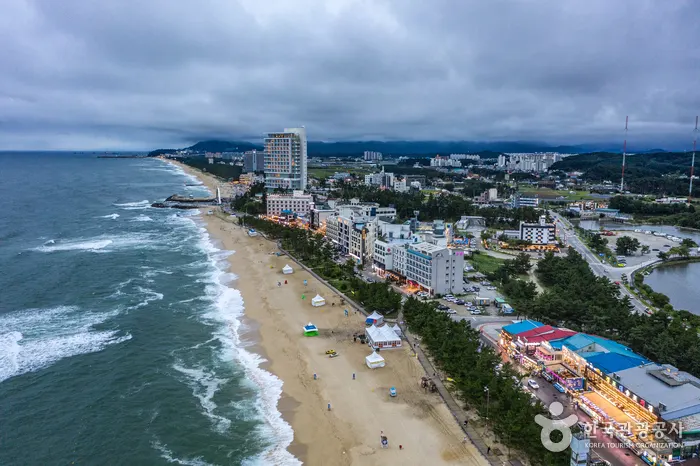
- You want to walk, see the sea and avoid rushing: allow roughly half a day and treat the beach, pines and lake as three parts of one walk.
- You only want one East Sea photo: stop briefly if it fits your route, but do not cross the city twice for a single picture.
- You want to swim: check the current official season and on-site safety directions. “Beach open” is not permission to enter the water.
- Wind, rain or rough conditions: keep the option to shorten the outing to the lake or pines. A beach does not become mandatory when the weather removes its appeal.
What Gyeongpo really offers: beach, pine forest and lake
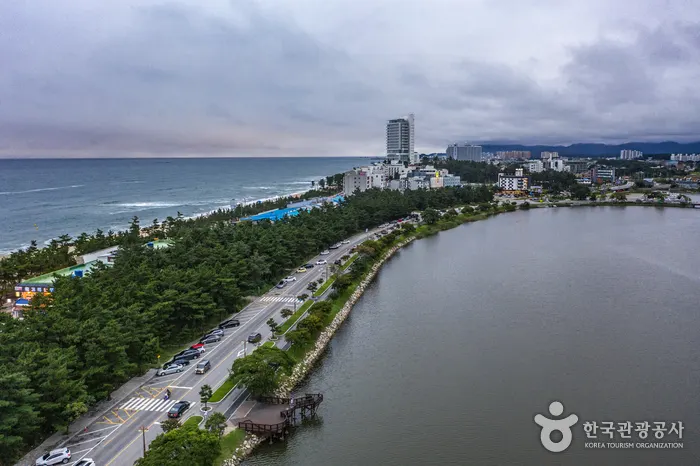
Official visitor information describes Gyeongpo Beach as a sandbar between Gyeongpo Lake and the East Sea, with about 1.8 kilometres of shoreline and a pine forest nearby. That makes it different from a stop where you touch the sand, take a photo and leave. Depending on your energy, you can join sea air, tree shade and lake views into one continuous walk.
That combination gives Gyeongpo a real place in a one- or two-night Gangneung stay, especially when one person wants the coast and another does not want to spend all day on the sand. But if you only have half a day and your priorities are traditional sites, the central market or cafés in town, do not force Gyeongpo into the schedule because it is famous.
BEACH only: a sea view, a snack and a short walk—good when another part of the day is the real priority. BEACH + PINE: for travellers who genuinely want to slow down by the coast. BEACH + PINE + LAKE: the version that earns a half-day. Do not try to pair this full loop with another distant coastline in the same time slot.
Open all year is not the same as safe to swim all year
VISITKOREA lists public access at Gyeongpo as 24 hours, which supports an early sea view, an evening walk or a non-summer pine-forest stroll. It is not a year-round swimming permit. Swimming season, lifeguard coverage, restrictions after dark and weather controls can change by year and by the conditions on the beach.
You will still find Gyeongpo swimming dates from 2025 online. Those dates are historical information, not a plan for the current trip. If swimming is a main reason for coming, check the current Gangneung or on-site Gyeongpo notice before leaving, then check flags, announcements and lifeguard direction again when you arrive. Even walkers should respect wind, rain and waves: the same beach can offer a very different experience on another day.
You can visit without a car, but do not treat a ten-minute taxi ride as a guarantee
Official tourism information uses a taxi journey of about ten minutes from Gangneung Station or the bus terminal as a directional reference. Your actual trip changes with where you are staying, holiday traffic and where you get dropped off. For travellers without a car, the question is not whether Gyeongpo is reachable. It is whether it is today’s half-day anchor or a short stop that fits a single direction, rather than a return journey between the centre, Gyeongpo and another coast.
For a first Gangneung visit, start with the car-free Gangneung guide to arrange accommodation and transport direction. With one day, use the Gangneung one-day itinerary before deciding how many hours you want to give the east coast. This page decides Gyeongpo itself; it does not pretend that one beach works automatically in every route.
Who should give Gyeongpo half a day?
Travellers who want Gangneung to feel slower. The coast, pines and lake offer space to pause rather than an admission ticket for one facility. Groups with different needs. One person can sit by the sand while another walks through the pines or along the lake; no one has to swim to get value from the stop. People who can place Gyeongpo with nearby places in the same direction. That is when the journey out feels like part of the day, not an expensive out-and-back.
Accessible-travel information notes boardwalks around the beach and pine forest, plus accessible parking, slopes and toilets near entrances. That is a useful starting point, not a guarantee of today’s surface, maintenance or seasonal facilities. If a member of your group needs an accessible route, confirm the current situation locally.
Who should make it a short stop—or skip it?
If you do not enjoy lingering by the sea and only feel that “Gangneung means I must see a beach,” a short stop is enough. Keep time for what you actually want to do. If you are staying in the centre and your day is for museums, historic houses, the central market and dinner, you do not need to force Gyeongpo into the last open hour.
Day trippers from Seoul or Busan should be especially honest about the return journey. Check the Gangneung day trip or overnight guide before assuming you have a relaxed half-day. If you do not, Gyeongpo may be better saved for another stay than used to fragment an already tight day.
Season changes the activity, not the decision method
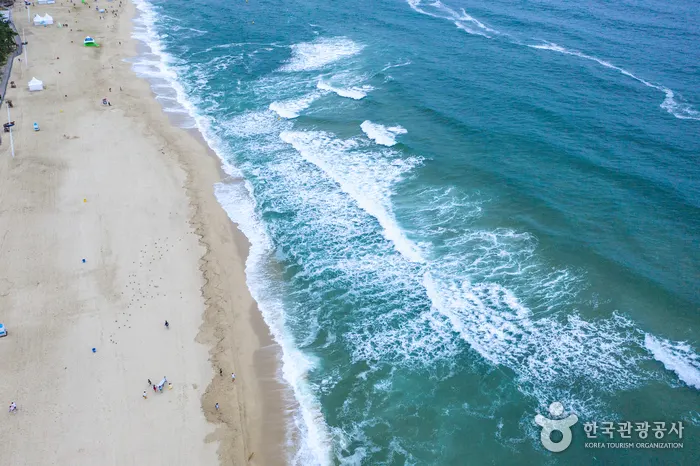
Spring can combine the coast with the lake. Summer adds the separate question of whether swimming is officially open and safe. Autumn and winter make Gyeongpo more of a sea-view and pine-walk destination. When weather is unstable, ask whether the sea air and walk still justify the trip. If the answer is no, keep the time for town rather than calling a rainy beach “essential.”
Some summer dates may include city or festival programming. For example, a 2026 Gyeongpo Summer Festival announcement names July 30 to August 5. That may make evenings livelier, while also changing crowds, parking and noise. Always check the organiser’s latest information rather than treating a festival-week atmosphere as normal Gyeongpo.
Six checks before you go
- Is today about walking or swimming? They have different preparation and safety gates.
- What is the current official swimming season and what are the on-site flags? Do not substitute last year’s dates.
- Are wind, rain and waves still worth the trip? Keep a town alternative.
- Will you do BEACH, PINE, or add LAKE? That determines the time you need.
- Will the journey from your hotel or station create a needless return trip? Count the return, not just the map distance.
- Does anyone need a flatter or accessible route? Boardwalks help, but current conditions still need checking.
Give it half a day if you want to make the sea, pines and Gyeongpo Lake one slow walk and your itinerary has room. Stop briefly if you only want an East Sea view but already have more important plans. Skip it today if weather has removed the appeal, a day trip is too tight, or you do not really want to linger. Gyeongpo is free, but free should not pressure you to add another stop. Swimming is always governed by the current official notice and on-site safety direction.
Next: decide which direction your Gangneung night belongs to
If Gyeongpo will be your half-day anchor, return to the Gangneung guide hub to place the coast, cafés, culture and return route in order. If you may stay a night or more, the day trip versus overnight decision will help you decide whether Gyeongpo is a core part of the trip or simply a sea view along the way.
Checked: 2026-08-23. Public access, location, shoreline and pine-forest description were checked against VISITKOREA. This guide does not use historical swimming-season dates as current information: confirm the current annual notice and on-site safety information before entering the water. Accessibility details are a planning start point and can change on site.
VISITKOREA | Gangneung Gyeongpo Beach · VISITKOREA | Gyeongpo Provincial Park · VISITKOREA | Beach-season guidance (historical reference) · VISITKOREA | 2026 Gyeongpo Summer Festival