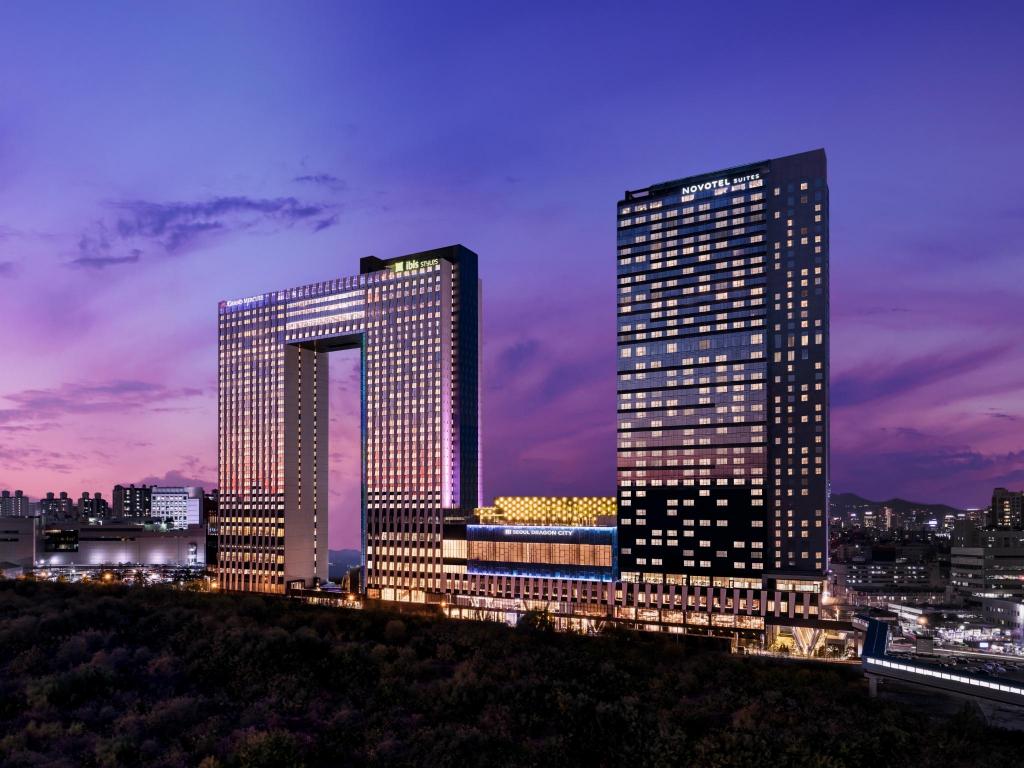
When people see “next to Yongsan Station,” it is easy to assume they are looking at one of Seoul’s easiest transport choices. That is only half true. ibis Styles sits inside the Seoul Dragon City complex, which does make KTX, the subway, a shopping mall, and the Yongsan electronics district feel like part of one trip. But from the platform to the station exit, through the indoor connection and up to the hotel lobby, it is still a chain of movement that involves signs, luggage, and elevator waits. It works for travelers who are happy to trade one longer indoor walk for not having to stay across town; it does not work for anyone who thinks “near the station” means a 10-second walk from the door to the room.
KTX days are not the only reason to stay in Yongsan, but they make the difference much bigger
If you are returning to Seoul from Busan, Daegu, or Gangneung and leaving again from Yongsan the next day, the most practical benefit of staying here is not having to drag large bags first to Myeongdong, Hongdae, or Gangnam and then back again. That is not just about saving a few minutes: on rainy days, with late trains, or when traveling with several people, skipping one transfer also means one less decision about who carries which bag. On the other hand, if Seoul is your only stop and you are spending every day around Jongno and Myeongdong, this location may not repay its transport advantage.
Mark the days you arrive and leave by KTX first. If the hotel only saves you half an hour on your last day but costs you more time getting back each of the first three nights, staying in Yongsan may simply concentrate the convenience in the least important part of the trip. If you are transferring with luggage on both days, the benefit stops being a map advantage and becomes a physical reduction in effort. That judgment matters more than brand, building height, or lobby design.
The indoor route in a complex hotel is both a strength and a hurdle
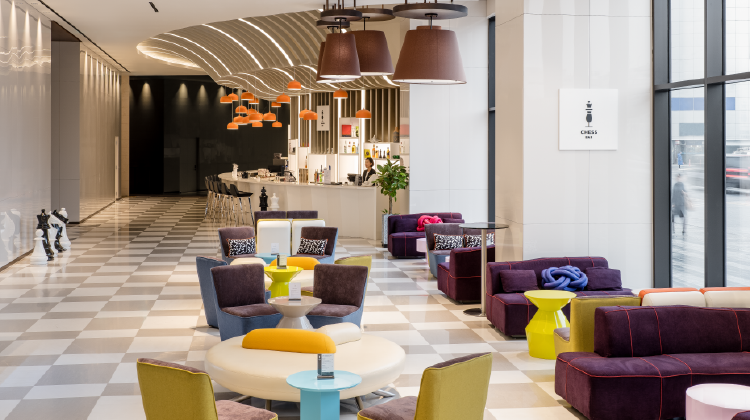
The advantage of Dragon City is that when it rains, gets cold, or you are tired at night, you do not have to stand at a street corner looking for a restaurant every time. The mall, dining options, convenience facilities, and station are connected, which is reassuring on a first day with a late arrival. But the cost of a large mixed-use building is orientation. Different elevators, floors, and wings can make a first stay take a few extra minutes to figure out where breakfast is, which elevator leads back to the room, and which exit to use from the station.
That does not mean it is bad. It means you need to count “less time outdoors” together with “still some walking indoors.” If you are traveling with older family members, children, or heavy luggage, it is usually more reliable to spend a few minutes on arrival confirming the route back to the room than to search for signs in a hurry the next morning before a train. This is the most concrete version of loss aversion: missing a KTX or wandering in the rain is harder to recover from than choosing a room that is slightly cheaper.
I’Park Mall, the electronics market, and dinner should not all become reasons to stay
If you already plan to shop at I’Park Mall, watch a movie, have dinner, or deal with electronics in the area, staying in Yongsan does make it easier not to carry shopping bags across town all evening. You can take your purchases back to the room first, then decide whether to go to the Han River, Itaewon, or Hongdae. But if your itinerary has no Yongsan activities at all, forcing it into the plan just to prove the hotel has a good location may make you miss the places you actually wanted to visit.
This is where the Barnum effect easily appears: every large hotel can say it is “good for business and leisure,” but you still have to ask yourself where you will end the night. If dinner and nightlife are in Hongdae, you may simply prefer to stay in Hongdae. If you want to combine the National Museum of Korea, Seoul Station, and one KTX leg, Yongsan has a clearer case.
For museum days and shopping days, the reason to stay in Yongsan is not the same
A National Museum of Korea day does not usually work like a Myeongdong shopping trip, where you can switch plans at any time. You spend hours walking indoors, viewing exhibitions, and finding rest areas; after that, if you still want dinner or to return to the room and sort photos, Yongsan as a midpoint is easier to close out than heading all the way back from the north. But the museum is not right next to the hotel, so you still need to count the final stretch from the entrance, bus, or taxi. The reason to stay here is not that every attraction is “super close,” but that it lets you combine several directions without sleeping somewhere different each night.
The shopping-day calculation is even more straightforward: if you are buying at I’Park Mall, comparing electronics, or handling returns, carrying large paper bags across subway lines will quickly narrow your evening options. This hotel lets you put things back in the room first, then choose again whether to stay in Yongsan, go to Itaewon, or take a car to Hongdae. But if shopping is only an hour in a much bigger trip, that convenience should not control the whole accommodation decision. First ask whether you will really return to the room even once; the answer matters more than the mall name.
Views, floors, and how long you actually stay in the room
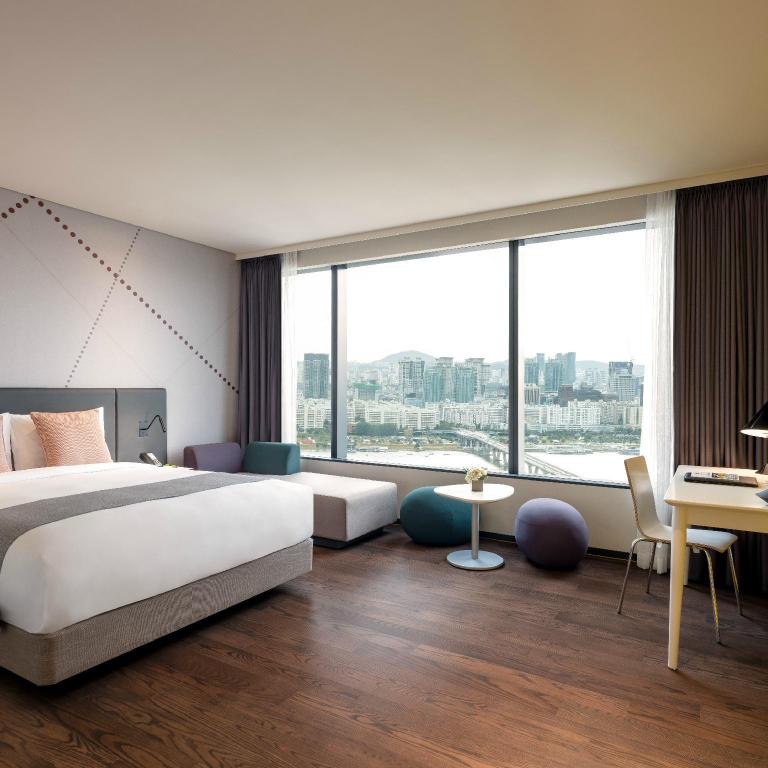
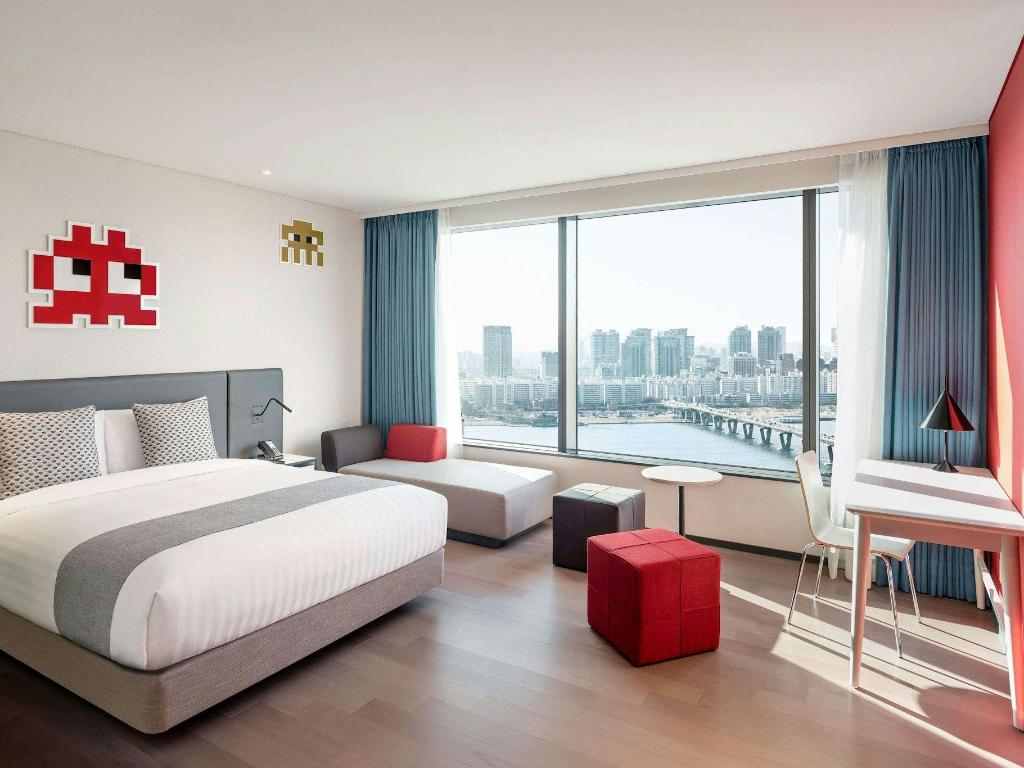
High floors and city views often make people feel that paying a little more will make the trip feel complete, but in a transport-oriented base like Yongsan, the real question is whether the room will actually be used. If you take an early KTX, spend the afternoon at a museum, and go to another area in the evening, you may only glance out the window before bed. If you have work to do, are dealing with jet lag, need rest with a companion, or happen to catch a rainy day, window space and the view can turn the room from a place to sleep into a place to stay. Do not leave the unfinished-effect trap to a room upgrade: first map out the day’s most likely time back in the room, then decide whether the view will be used.
Twin-room travelers should also pay attention. On different platforms, “twin” may mean two single beds, beds that can be pushed together, or simply a room type name that includes twin. When traveling with friends, family, or coworkers, the biggest risk is arriving and discovering that the sleeping setup needs to be renegotiated on the spot. Saving screenshots of the bed type and cancellation terms is a better way to reduce risk than repeatedly switching between review pages. How to confirm room types for multiple guests applies to two people as well: a simple headcount does not mean the needs will automatically match.
Late arrival, early departure, and the first decision inside the hotel
When you arrive in Yongsan late at night, the best move is often not to head straight for the farthest night market but to finish one small task first: confirm which exit to use for the station tomorrow, which floor breakfast is on, and whether luggage storage is available. When staying in a large building for the first time, these seemingly minor details can save you the next morning when you are racing to catch a train. If your flight lands late, also read the late-arrival check-in checklist for Seoul; do not mistake a 24-hour front desk for unlimited flexibility in every transport connection.
Anyone leaving early the next morning for another city should not let breakfast photos decide for them. If the train is early and the station already has grab-and-go options, hotel breakfast may just keep you in a place where you should not be lingering. But if several people are traveling together and everyone’s morning choices slow the group down, eating first at the hotel is the steadier option. There is no fixed answer, but this is how “transport convenience” becomes your actual departure routine instead of just a line in a brochure.
Who should not pay extra just to stay in Yongsan
If this is your first time in Seoul and all three nights are centered on Myeongdong, Jongno, Hongdae, and Seongsu, Yongsan may only make you transfer one more time through the station system every day. You will see the advantage of “many lines are available,” but miss the fact that every line still means walking to the platform, waiting for the train, and then walking into the district at the other end. In that case, staying in the area you visit most often is usually more comfortable than staying at a transport hub that only looks universally convenient.
Likewise, if your budget is limited and you only take KTX once, compare the actual total room rate at Seoul Station, Hongdae, or near your destination. Do not assume that Dragon City’s visual scale automatically makes it a better fit for the trip than a smaller hotel. Brand, connectivity, and high-floor views can all make you feel like you will regret not choosing them. What really reduces regret is acknowledging that this hotel has a very specific range of use cases.
Turn transport convenience into one less backtrack
Yongsan’s value is not how many lines appear on the subway map, but whether it can save you one backtrack with luggage. For example, if you are taking KTX after checkout but still planning a museum visit or I’Park Mall in the morning, being able to leave your bags in the same hotel building and collect them later is much calmer than hauling them from Myeongdong to the station. But if you are simply arriving from the airport and staying three nights while moving around the same district every day, that advantage is not being used at all.
Before booking, test your own itinerary in a very concrete way: write down arrival, departure, and the heaviest day, and mark every route where you will be carrying luggage or shopping bags. If ibis Styles removes even one of those legs, the room-rate difference has a reason. If it does not remove a single step from the map, keep the money for a room closer to where you will spend the night. That is more honest than whether “hub hotel” sounds impressive, and it helps avoid realizing only on day two that you never actually used the convenience.
Finally, check the station direction, wing, and cancellation terms
Before booking, line up the twin room, view, and cancellation options for the same date, and confirm whether the hotel name includes the correct Yongsan / Seoul Dragon City branch information. In a large mixed-use hotel, the biggest risk is not that the room is poor; it is that you think you booked the side that connects to KTX, but actually end up in another direction. Booking.com, Agoda, and Trip.com may also differ in room type, breakfast, and cancellation deadline. Compare first, then pay, so the station advantage is truly yours and not just a line of marketing copy.