
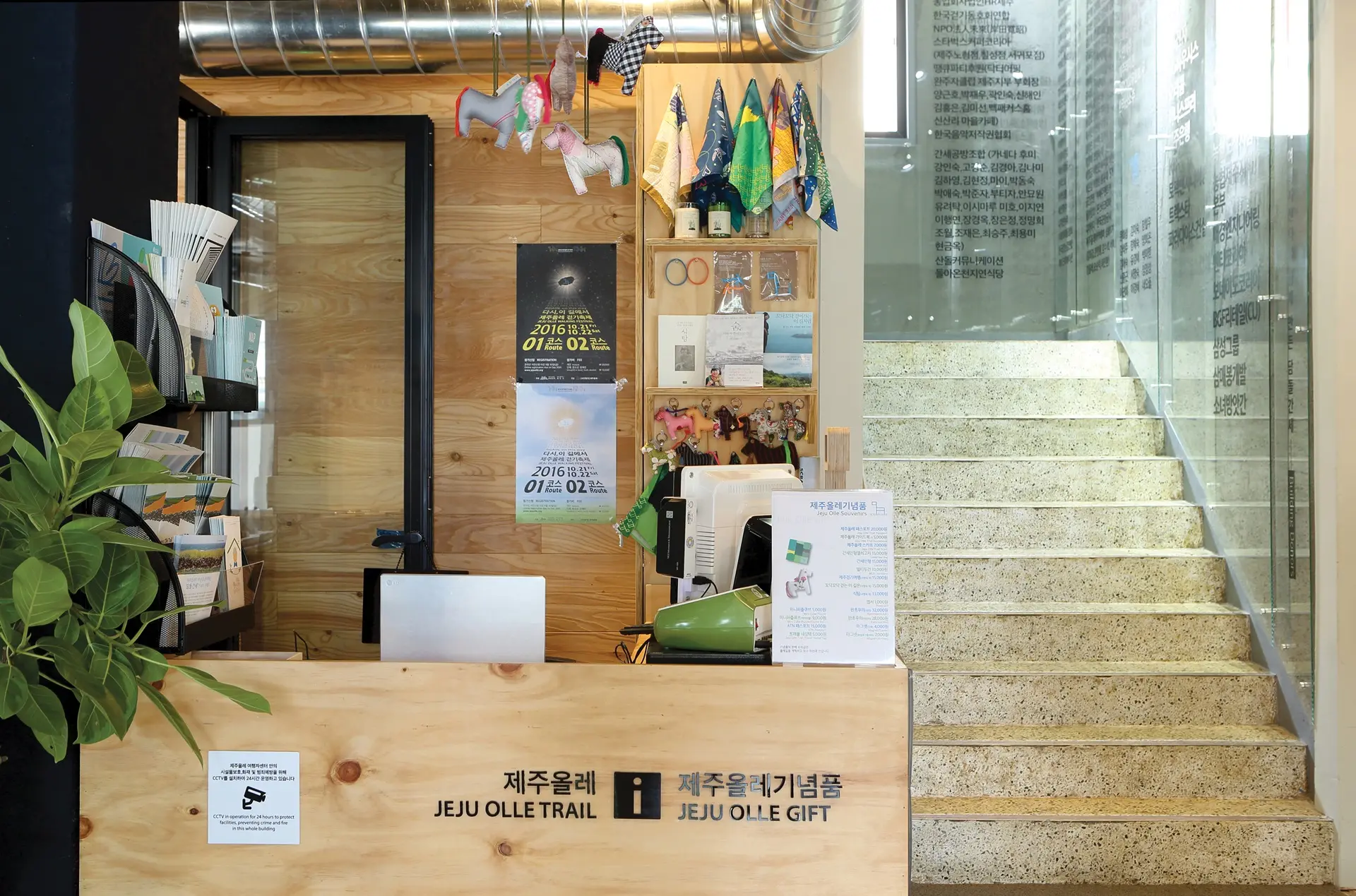
30-second answer: if your walking block is only Route 6 + Route 7, start by pricing one Seogwipo base, not two hotels. Jeju Olle Foundation currently lists Route 6 as Soesokkak → Jeju Olle Tourist Center, 10.1 km, about 3–4 hours, and Route 7 as Jeju Olle Tourist Center → Seogwipo Bus Terminal, 12.9 km, about 3–4 hours. The two walking days connect in the same Seogwipo area. A second hotel starts to make sense when later routes keep pushing your start and finish points into another part of the island and the new base removes repeated returns—not simply because today's trail finished somewhere west of yesterday.
Current Jeju Olle Foundation data should lead this decision. Its 2026 table lists Route 6 at 10.1 km ending at Jeju Olle Tourist Center and Route 7 at 12.9 km ending at Seogwipo Bus Terminal. Visit Jeju still carries older route pages describing Route 6 as 13.3 km ending at Oedolgae and Route 7 as 14.7 km between Oedolgae and Wolpyeong. Jeju Olle also posted a Route 7 Beophwanpo section change dated 1 July 2026. The lesson is practical: use the route operator's current map before booking around a start or finish point. A hotel chosen from a years-old route screenshot can solve yesterday's endpoint.
The question here is accommodation: after several hours on foot, do you return to the same room or move the whole luggage system forward? Use where to stay in Seogwipo for the general base decision, Jeju without a car for transport planning, and the Jeju rental-car decision if you have not settled the transport model. This page uses a narrower test for walkers: what does the second hotel key card remove that you would otherwise repeat?
Use a WALKER BASE PAYBACK test: the second hotel should remove more than one transfer problem
For a normal sightseeing trip, changing hotels costs packing, checkout, luggage storage, transport and another check-in. For an Olle walker, that cost lands on top of a day that already contains three, four or more hours on foot. The most expensive part may not be another fifteen minutes on a bus. It may be returning to the old hotel, collecting a suitcase, dragging it into the next transport segment, waiting for the new room and then reorganizing wet clothes, walking shoes and tomorrow's daypack.
That is why the threshold should be higher than “the next hotel is closer to tonight's finish.” KoriNavi's WALKER BASE PAYBACK asks whether the second base serves at least two consecutive walking blocks. A strong move might remove tonight's long return, tomorrow morning's long approach and another return after the following route. A weak move only saves one morning trip and makes you spend the previous evening on luggage administration.
Why Route 6 + 7 is unusually friendly to a single Seogwipo base
Route 6 begins at Soesokkak and currently finishes at Jeju Olle Tourist Center. Route 7 starts from that same Tourist Center and currently continues to Seogwipo Bus Terminal. The important point is not that every meter of both routes is next to your hotel. It is that there is no structural need to insert a hotel move between the two full walking days.
A clean two-day pattern looks like this: on the first morning, travel light to Soesokkak, walk Route 6 toward central Seogwipo, recover in the same room, then begin Route 7 around the Tourist Center the next day. At the end of Route 7, return to the same base without collecting a 24- or 28-inch suitcase from another property. The walking remains point-to-point; the luggage does not have to imitate it.
This matters even more on a two- or three-night stay. Your evening jobs are already useful: shower, dry footwear, wash or separate sweaty clothing, refill water, charge devices, check the latest trail notice and repack the day bag. Adding a hotel move between Route 6 and 7 rarely improves that recovery loop. If the total Jeju stay is only three nights, also compare the threshold in one hotel or two hotels for three nights in Jeju.
Do not let the old Oedolgae endpoint turn every coastal landmark into an accommodation anchor
The older Visit Jeju Route 6 page still describes Soesokkak to Oedolgae. That can lead to a very specific booking error: Oedolgae starts looking like the place where Route 6 “must” end for the night, so the traveler begins searching for an Oedolgae-area hotel and then treats Route 7 as a new westbound hotel stage. The current Jeju Olle table no longer supports that route structure.
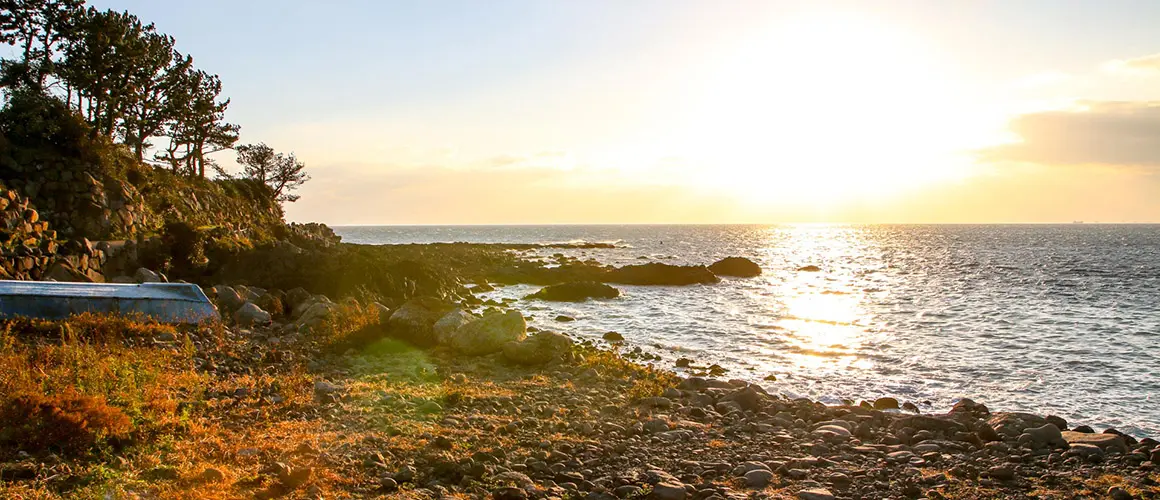
Oedolgae and the coastal scenery around Route 7 still matter as walking experiences. The error is turning “the trail passes this place” into “my large luggage should sleep here.” A route highlight, a stamp point, a lunch area and a hotel base solve different problems. The next morning's start and the repeated transport pattern should decide the base before one photogenic section does.
Car-free walkers should separate “where the person goes” from “where the luggage goes”
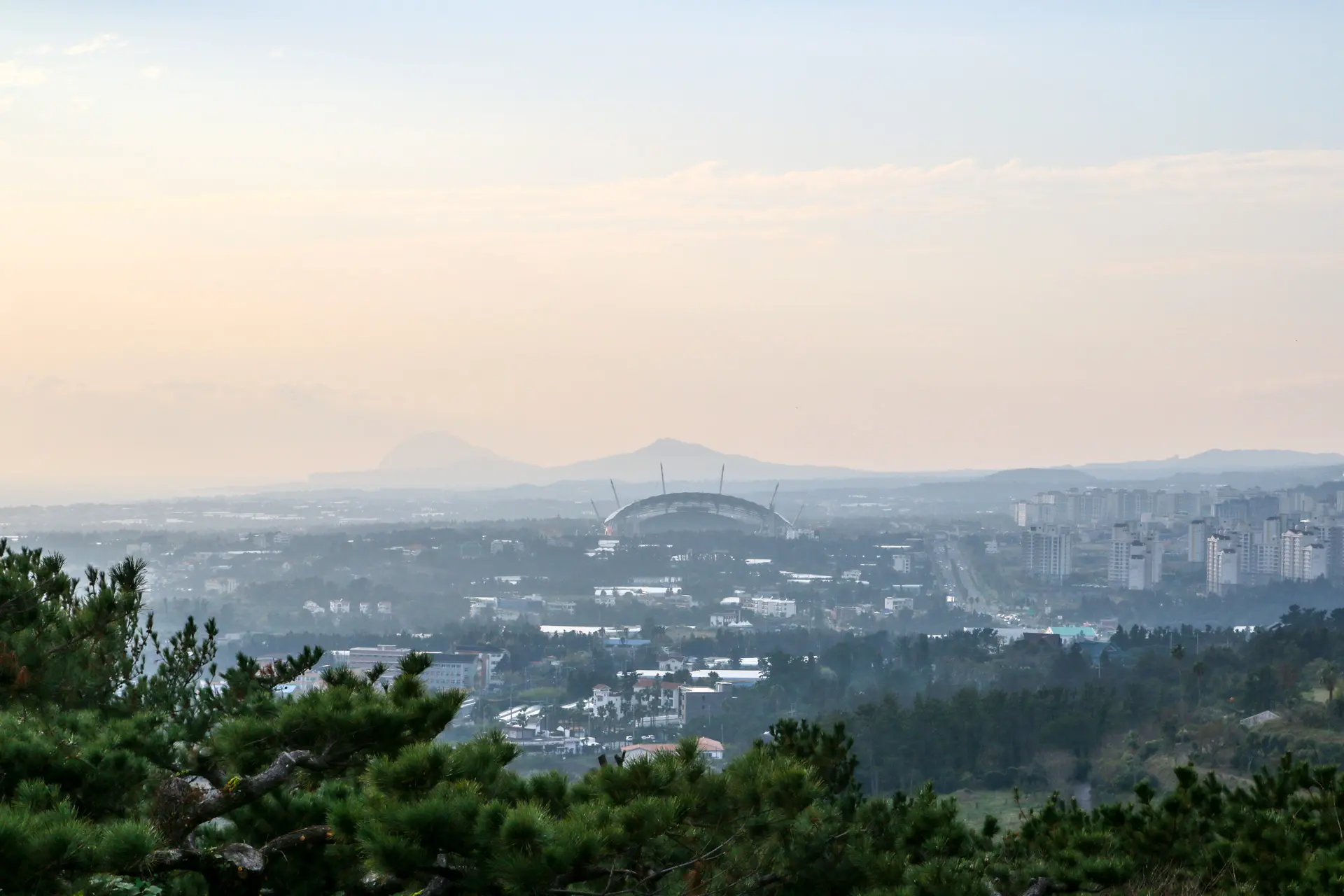
Without a rental car, it is tempting to assume the suitcase needs to follow every point-to-point route because you will not have a boot to leave it in. For a two-day Seogwipo walking block, the opposite is usually easier. Keep the large bag in one hotel and let the walker travel with water, rain protection, a power bank, snacks, light layers and whatever the day genuinely needs.
Moving the person to a trailhead is a normal part of a walking day. Moving the person plus every item owned on the trip is a different operation. If the public-transport approach to Soesokkak is workable and Route 7 begins around the same Seogwipo center you are already using, there is little benefit in making the full suitcase perform the same point-to-point journey.
If large luggage is already a major constraint, combine this with the large-luggage, no-car hotel decision. The rule becomes stricter for a walking trip: base two should remove a confirmed recurring transfer or handling event. “It looks closer to tomorrow's trail” is not enough.
Your real post-walk checklist is a hotel requirement, not an afterthought
Walkers often compare hotels by location and room price, then remember recovery only after the first day. A multi-day walking base needs a more practical evening: footwear can dry, sweaty clothes can be separated or washed, food and water are available without another difficult journey, and tomorrow's transport can be checked while you are already resting.
This does not mean every walker needs a resort, spa or laundry room. It means a room that works after five hours outside can be more valuable than a prettier property that forces another transfer for dinner or basic supplies. For some travelers, a simple city hotel with easy food wins. For others, a quieter room with better recovery matters. The premium should be tied to what your legs will actually use.
Park Sunshine Jeju: construction risk weighs differently for an all-day walker
Park Sunshine Jeju can make sense as a Seogwipo walking base because a walker may leave early and return late, reducing the hours exposed to daytime construction. But this is August 2026, so the existing single-hotel guide's renovation warning cannot be ignored. The currently documented renovation window covers rooms, Terrace expansion, Coin Laundry/Fitness additions and parking improvements, with possible noise and access disruption.
For a walker who is outside during construction hours and only wants a reliable sleeping base, that risk may carry less weight than it would for a family planning afternoon naps. For a walker who wants to return at noon, work from the room, or specifically chose the property for newly added laundry or fitness facilities, the risk rises again. Do not count an announced facility until it is actually open for the stay date.
Casaloma Hotel: recovery facilities only matter on the date you can use them
Casaloma Hotel Seogwipo can be attractive when the city base itself works and you want a recovery option after walking. Its rooftop heated pool is a real guest benefit during the announced 2026 season, but the existing guide also records named cleaning closure dates. That means a walker should not add “free pool after Route 7” to the value calculation until the actual stay date survives the maintenance calendar.
The distinction matters because walking fatigue makes facilities emotionally easy to overvalue. A pool that is closed on your only recovery evening is worth zero for that night. A facility that is open but you return too late to use may be worth close to zero too. Price the room first as a functional Seogwipo base, then add only the recovery rights that fit your date and walking schedule.
Hotel Bridge Seogwipo: a No Parking rate can be a feature, not a defect, for a walker
Hotel Bridge Seogwipo illustrates why Persona routing matters. Its current OTA inventory includes ordinary rates and products explicitly labelled No Parking. For a rental-car traveler, that can be disqualifying. For an Olle walker who is intentionally car-free, the parking right may have no value at all.
If a No Parking rate is otherwise the legal room, view, breakfast and cancellation product you want, it can be a legitimate lower-cost option for this Persona. The hotel should still win on the real walking-base questions—return access, food, rest and the next morning's transport—but you do not need to pay extra to preserve a parking entitlement you will never use.
For three nights or more, laundry and drying become hard requirements for a Walker Base
J084, the “Olle Trail laundry accommodation” Persona, should not become a separate thin article because it is still the same Walker Base decision. Two walking days may be manageable with a small rotation of quick-dry clothing. After three or more nights, sweaty shirts, socks, rain layers and damp footwear become a repeated recovery job. Before payment, confirm whether the property has guest-usable self-service washing and drying, a clearly usable drying solution, or a practical nearby laundromat. A vague OTA label such as “Laundry” is not proof that a guest can wash and dry clothes on demand.
For a longer walking stay, put staying in the same room, evening resupply, space to dry gear, laundry/drying, and luggage storage or post-checkout holding ahead of a view or a pool. These are benefits you use on day three, day four and day five. A second base can be closer to tomorrow's trail and still lose if it forces you to rebuild food, laundry, drying and luggage routines from zero.
A long walking stay should move in blocks, not follow the trail to a new hotel every night
J085, the long-stay walking Persona, belongs here for the same reason. More nights do not automatically justify more hotel changes. They give you enough time to divide a long trail sequence into two reusable living zones. Use Seogwipo for a cluster of routes; move once only after two or more consecutive future walking days have genuinely shifted into another geography.
A long-stay split should pass three tests at once: the new base serves at least two walking days, laundry/drying/resupply can be re-established there, and one large-luggage move will not be followed by another move the next day. Passing only the route-distance test can simply replace transport cost with living-system cost.
When does the second base finally become worth it?
The answer changes when you stop doing a compact Route 6 + 7 block and continue walking far enough that returning to central Seogwipo starts creating the same detour every day. If the next route starts farther west and the route after that continues farther west again, the old base can become a tax. The same applies if your walking block clearly shifts east, north or into another set of consecutive start points.
Do not move on the first day the map looks stretched. Look for a pattern: tonight's finish is far from the old base, tomorrow's start is also near the new area, and the next finish or start remains there. When the new hotel removes two or three of those repeated segments, the luggage move finally has a job.
This is similar to the broader split-stay rule in where to stay in Jeju, but walkers should be stricter because recovery is part of the itinerary. A self-drive traveler may tolerate packing before driving to the next region. A walker who has already spent the day on foot pays more for every extra evening task.
Do not book Route 8 or 9 logic from Route 6 + 7 geography
Route numbers are sequential, but accommodation geography does not stay equally convenient forever. The fact that Route 6 and Route 7 work cleanly around Seogwipo does not prove that one Seogwipo hotel remains optimal for every later route. If your trip continues, re-run the payback test instead of treating this article as a permanent one-base recommendation.
The key is to refresh current Jeju Olle data at each meaningful transition. Route sections can change—as the 1 July 2026 Route 7 Beophwanpo notice demonstrates—and third-party pages can preserve older endpoints. A walking trip is unusually sensitive to small route changes because your hotel, first bus and return route may all be planned around an exact start or finish.
Rain changes the walking day before it changes the hotel
Wet weather does not automatically mean changing hotels. It may mean shortening the route, switching days or using the current base as the recovery plan. A stable Seogwipo room can be an advantage because you do not have to move luggage on the same day that walking conditions are already harder.
Keep the Jeju rainy-day plan with the route schedule. If wind, heavy rain or local conditions make the route inappropriate, preserving the room and swapping the walking day is often cleaner than defending both the original trail and a non-refundable hotel progression.
The cheapest hotel is not the one with the lowest nightly rate if it makes recovery expensive
For consecutive walking days, room price is only one part of the total. Add evening transport, extra taxi use if you miss a connection, laundry or clothing reset, food access, luggage handling and the chance that a late return makes a paid facility unusable. Some of these costs are money; others are time and energy.
This is why an ordinary Seogwipo city hotel can outperform a more scenic property for an Olle block. If the city base lets you finish, eat, dry out, sleep and launch the next morning with less friction, the hotel is doing its job. Sea view is a bonus only after that system works.
A simple two-day Route 6 + 7 plan should feel almost boring at night
That is a compliment. Day 1: travel to Soesokkak, walk Route 6, return to the same room, recover. Day 2: begin at the current Route 7 start around Jeju Olle Tourist Center, walk west toward the current finish, then return without checking into somewhere new. Your route is the adventure; the hotel logistics do not need to be.
If a plan requires you to check out before every walk, ask where the suitcase will be during the route, what time the new room can actually be entered, how you will retrieve or transfer the bag, and what happens if rain or fatigue makes you stop early. If those answers are more complicated than simply returning to the same Seogwipo base, the move has failed its payback test.
Eight questions before you add a second Olle hotel
- What is the current official finish today and start tomorrow? Use Jeju Olle Foundation's current route information, not an old route article.
- Does base two remove at least two repeated transport segments? One shorter morning is usually not enough.
- Where does the large luggage stay during the walk? If the answer requires extra storage, collection and another transfer, price that work honestly.
- After three or more nights, is washing and drying actually confirmed? “Laundry” in a facilities list is not the same as guest-usable self-service machines.
- Can resupply, gear drying and recovery happen in the same living zone? Rebuilding those routines every evening is a real cost.
- What recovery right are you actually buying? Quiet, pool, laundry, food access or simply a reliable room—count only what is open and usable on the exact date.
- Does poor weather or a route change leave the hotel useful? A base that works only for one sunny endpoint has low resilience.
- Does the following route keep moving in the same new direction? If not, you may be changing hotels only to reverse direction again.
Route 6 + 7 only: one Seogwipo base is usually the cleaner default because the current Route 6 finish and Route 7 start meet at Jeju Olle Tourist Center, while your large luggage can stay in one room. Three or more consecutive routes: consider a second base only when later starts and finishes keep migrating into the same new area and the move removes repeated return trips. Three nights or more: laundry, drying, resupply, same-room continuity and luggage handling become hard requirements, not decorative amenities. Car-free walkers: move the walker daily; move the large luggage only when the next base has proven it can earn back the transfer. The worst default is one route, one hotel, every night.
Next decisions
Route structure was rechecked on 20 August 2026 against Jeju Olle Foundation, which currently lists Route 6 as Soesokkak → Jeju Olle Tourist Center (10.1 km, 3–4 hr) and Route 7 as Jeju Olle Tourist Center → Seogwipo Bus Terminal (12.9 km, 3–4 hr). The official site also lists a Route 7 Beophwanpo section change dated 1 July 2026. Visit Jeju still displays older Route 6/7 endpoint and distance information on legacy pages; where those conflict, this article follows the trail operator's current route table.
Laundry, drying, luggage storage and same-room continuity are dynamic hotel/rate conditions. This article does not treat an OTA “Laundry” label as proof of guest-usable self-service washing or drying; recheck the selected hotel's current facilities and rate terms before payment.
Jeju Olle Foundation — current route table · Visit Jeju — legacy Route 6 page · Visit Jeju — legacy Route 7 page
Actual routes, temporary detours, transport, hotel facilities and operating policies may change by date, weather or works. Recheck the latest official route notice and the selected hotel conditions before travel and payment.