
DMZ is not the kind of place you can answer with a simple “worth it” or “not worth it.” Some people go because they want the North-South relationship from their textbooks to become something they can actually understand on the ground; others just want to see a very different side of Korea starting from Seoul; and some look at an itinerary with a tunnel, observatory, and cable car and assume a multi-stop tour must be more complete. The problem is that these travelers are looking for different things. If you have not first decided whether you want historical context, unusual scenery, or a day that saves you from researching transport, any DMZ package will look appealing — but not necessarily right for you.
Here is the short answer: if you are interested in modern Korean history, inter-Korean relations, or guided commentary, DMZ is worth keeping an entire morning or day open for; if you mainly want to collect “unusual sights” and do not like early departures or group tours, there is no need to force it in just because you think you might miss out. The Third Tunnel, Dora Observatory, and extra bridge/cable car add-ons are not about the number of attractions being better — they are about whether you can still stay engaged with the experience through long transfers and security rules. This is not a city café stroll, and it also should not be squeezed in on the day after a concert or the day before you leave.
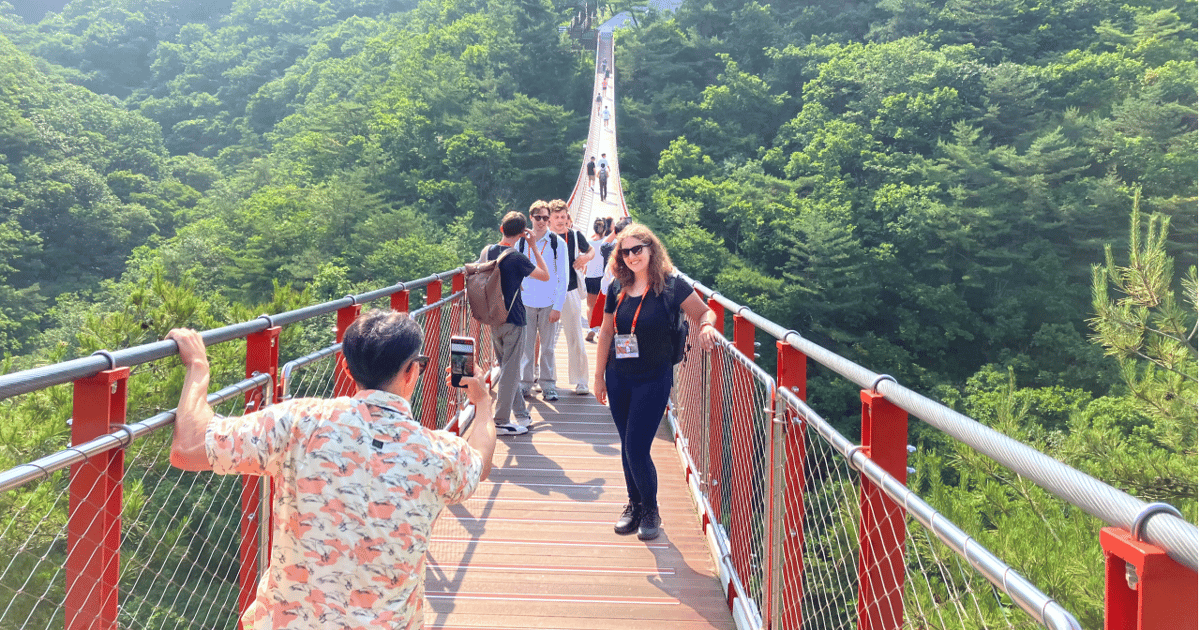
Figure out what you actually want to see before deciding which parts matter
If your main goal is to understand the history of division and feel the place itself, the key questions are whether the guide can explain each stop clearly, whether you can follow along, and how the day’s operating schedule is set; the Third Tunnel and observation points matter more than one extra photo stop. If you prefer outdoor scenery and something that feels more active, a bridge, cable car, or riverside view may make the day feel closer to what you expected, but those elements do not automatically deepen your understanding of the DMZ. Mixing both needs is the easiest way to end up having seen everything and still not being able to say why you went.
The Third Tunnel also has physical demands that photos do not show. Some sections are narrow, and the slope and headroom affect how the experience feels. If you are uncomfortable with enclosed spaces, have knee issues, are traveling with young children, or have just arrived by flight, check the product page for suitability and the actual arrangements first. Dora Observatory is also affected by weather on the day and by on-site rules, so it should not be treated as a guaranteed version of the promotional photo. The DMZ has a special character, and that is exactly why allowing for uncertainty matters more than imagining the trip from the itinerary title alone.
An early meeting time is not a minor inconvenience; it decides whether the night before stays flexible
Most DMZ group tours require an early morning meeting in Myeongdong, Hongdae, or central Seoul. That means the previous night is not the time for a late K-pop class, night market tour, concert, or dinner across town; if your hotel is far from the meeting point, the morning before you even board the bus can already feel stressful. Putting DMZ on the day after arrival may seem efficient, but it is often the most exhausting day of the trip: you are still adjusting to the time difference and then have to follow a fixed pace for a full-day itinerary.
It is more stable to place it in the middle of the trip, leave the previous night close to your accommodation, and avoid booking another fixed-time ticket after returning to Seoul. If your itinerary already includes an Nami Island outskirts day, do not stack the two long-transfer activities back to back; leave a city day in between that can flex if needed, and your travel companions will also be less likely to remember the trip as one long bus ride. The cost of DMZ is not just the ticket price, but also the mental energy and time it occupies, and it is worth acknowledging that before booking.
| Your real reason | What to check first | What may suit you | When not to force it |
|---|---|---|---|
| You want to understand the history and meaning of North-South Korea | Guide language, Third Tunnel and observatory arrangements | A classic DMZ tour with clear explanations | You only have half a day left, or you do not want a guided explanation at all |
| You want outdoor scenery and a sense of activity | Whether the bridge/cable car is available that day, and your physical stamina | A full-day tour with added scenic stops | You assume every add-on is part of the DMZ core |
| You do not want to research suburban transport and rules | Meeting point, latest return time, cancellation rules, and identification documents | A group tour meeting in the city center | You already have a very late night before, or you need to catch a flight the next day |
| You are only worried about having nothing to say if asked | First check what experience you actually want | You do not need to buy this for that reason | Any itinerary will only add fatigue |
Do not treat “free cancellation” as a reason to ignore the rules
Unlike ordinary city activities, DMZ itineraries can be affected by identification documents, on-site access, weather, and military or administrative arrangements. The cancellation flexibility on the product page matters, but it is not a substitute for checking details before departure. Before paying, make sure you know: what documents to bring, the meeting point and late-arrival rules, whether the tour includes the stops you actually want, how the itinerary changes if a section is unavailable, and whether the language is one you can understand. If you do not want to spend a few minutes confirming these things, that is a sign you may not really need this tour.
Also do not let phrases like “North Korea view” push your expectations too far. The view and on-site content depend on multiple factors, and a good guide will help you understand what you are looking at and why the place exists, rather than just leaving you to search for a scene that matches your imagination from far away. Treating it as a historical site that requires respect for the rules — not as a thrill-seeking theme park — is what makes the day feel closest to its real meaning.
Before going down into the tunnel, set yourself a standard for when you would stop. You do not need to prove you are fearless to deserve a DMZ visit; if you slept badly the night before, feel unwell that day, or a companion is becoming anxious, staying in the easier-to-move-around areas does not make the trip meaningless. The point of the itinerary is understanding, not completing every component designed for group tourists. This is especially true if you are traveling with children or older adults: check walking distance, slopes, and restroom arrangements first, so “going together” does not simply mean the person who can walk the most sets the pace for everyone.
Documents and communication are another detail that is easy to underestimate. Before departure, keep your passport and any required documents in one fixed, secure, easy-to-reach place instead of digging through a large bag at the meeting point; screenshot the meeting location, the guide’s contact information, and the return station, and do not assume every area will let you comfortably look things up in real time. These preparations will not make the tour more exciting, but they can prevent a small omission from turning your whole morning into a rush.
After returning to Seoul, the safest evening plan is not to cross the city again, but to choose dinner near your accommodation or a walk you can cancel at any time. If the coach returns late because of traffic or on-site adjustments, you do not need to apologize to another paid reservation; after a day of taking in so much information, give yourself time to process it. Travel that matters is often not about adding one more stop, but about leaving space to understand what you just saw.
Finally, check the language again. Even if the English guide is excellent, if it is hard for you to follow, the trip will turn from a historical site into a string of stops you cannot understand. If you need Chinese, confirm directly whether that specific date and option provides it, instead of relying on the fact that multiple languages are listed somewhere on the product page. Choosing an explanation you can actually understand is far less likely to cause regret than adding one more bridge.
Precise product details are only for people who have already decided
GetYourGuide has a named DMZ product departing from Myeongdong and including the Third Tunnel, observatory, and optional bridge or cable car. The link below is only for travelers who have already decided they want this kind of full guided tour; after opening it, check the meeting point, duration, language, documents, and cancellation rules for that day. It should not be used to push someone who was not already interested in the DMZ into the cart.
If you decide not to go, you are not missing a whole Seoul experience. Using that full day for palaces and hanbok, a class you actually want to join, or simply a slower city day may fit you better. Travel is not about collecting every national symbol for your album; it is about knowing which part is worth giving your attention to.
Also put your identification documents, the meeting point, and your first arrangement after returning on the same checklist: if you do not bring your passport, if your meeting time is too tight, or if you have a dinner or performance after coming back to Seoul that cannot be delayed, DMZ is not the kind of trip you can fix by leaving ten extra minutes. Confirm those three things before deciding, and it will be steadier than trying to change plans at the last minute on the morning of departure.
After DMZ, let the trip return to your own pace
After a full day out, do not ask yourself to sprint again
Sources and cross-checks
- GetYourGuide: Seoul DMZ, bridge, and cable car tour page
- DMZ access, itinerary substitutions, identification documents, meeting rules, guide language, and cancellation terms may change depending on on-site management and the date; please use the current product page as the final reference before payment and departure.