
A hanbok experience sounds simple enough: pick an outfit, put it on, head into Gyeongbokgung for photos, and return it on time. But once you actually start, you realize the clock doesn’t begin when you step into the palace. Choosing a style, waiting for changing rooms, doing your hair, storing your belongings, checking your phone battery, and keeping pace with the people you came with all eat into the time before and during the rental. That’s why many people choose the two-hour option and still end up looking for the way back to the shop before they’ve reached the corners they wanted to photograph. The problem isn’t that two hours is always too short; it’s that what you want to do often goes far beyond “rent clothes and take a few pictures.”
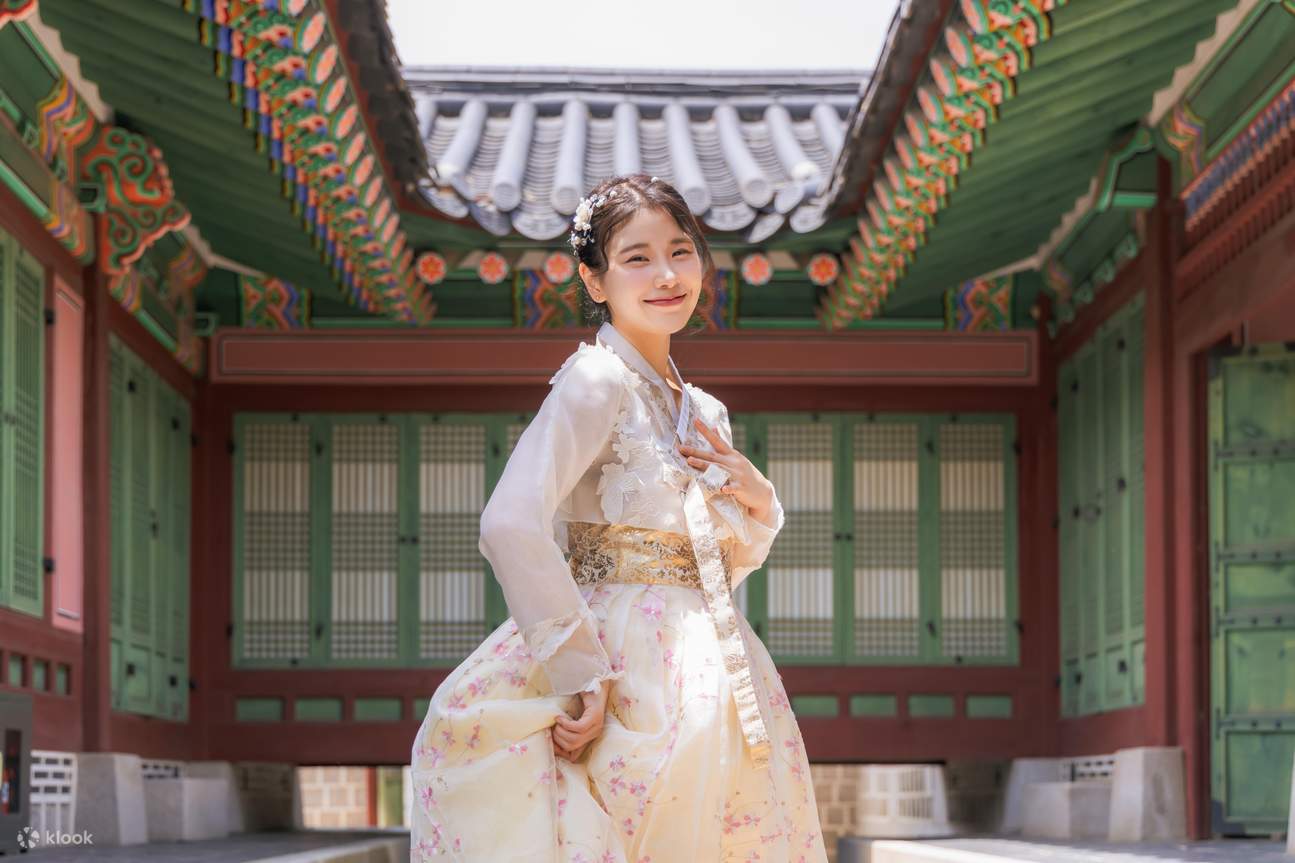
Here’s the short version: if you only want one set of photos at Gyeongbokgung and everyone in your group is happy to move quickly, two hours can work. If you want hair styling, time to browse styles slowly, a walk to Bukchon or Samcheong-dong, or turn-taking with friends for photos, treat the hanbok day as a half-day outing. Don’t let a short rental that looks cheaper end up slicing your whole morning at the palace into a nonstop countdown. This is not about spending more; it’s about deciding whether you want a ritualized experience or a travel task you can finish quickly.
Rental time is never the same as the time you can actually spend taking photos
What most people underestimate is the friction before the photos even begin. Sizing, layering, accessories, and hair styling are not things everyone can decide in five minutes; the more friends you have, the longer everyone waits for each other. Even if the shop is only a few minutes from Gyeongbokgung Station, the time from the shop door to standing in front of the palace wall still includes storage, putting on shoes, checking the route, and finding the entrance. If you also want to avoid crowds and wait for your group to touch up makeup, two hours gets squeezed into a stretch where you don’t dare sit down or leave the main path.
Here’s a very practical way to judge it: cut your mental photo list in half and keep only the two spots you absolutely must shoot. If that still means fitting in the rental, styling, the palace, and returning the clothes before lunch, choose four hours or half a day. If you only want photos near the main gate and main halls, and you’re willing to skip hair styling and wandering around, two hours is reasonable. You’re not buying more fabric; you’re buying enough breathing room not to keep checking your phone.
Whether Gyeongbokgung belongs in today’s plan depends first on weather and day of the week, not on how much you want to wear hanbok
Hanbok and palaces are both highly weather-dependent. Light rain doesn’t necessarily make photos impossible, but damp cold, strong wind, intense summer sun, or extremely heavy crowds can turn the experience you imagined into a clothing-and-makeup problem. Gyeongbokgung also has fixed closure days and opening hours, and rental shops do not always follow the same schedule; check the official notice first, so you don’t arrive and discover the palace you most wanted to enter is closed that day. This is something to confirm before you even compare which shop has more styles.
Don’t schedule hanbok on a hotel move day, an early airport transfer day, or a day when you already have an evening performance. You may think it only takes the morning, but once you change back into your regular clothes, you often still want to eat, sort photos, or return to your accommodation to drop off things. If you still need to cross the river to Gangnam in the afternoon, or get to a venue early at night, the joy of wearing hanbok turns into a constant calculation of transfer time. Keeping it to a morning already centered around Jongno, Bukchon, and Samcheong-dong makes it feel like a natural extension of a whole neighborhood walk instead.
| Your real goal | Better fit for rental length | What you can realistically fit in | What to give up first |
|---|---|---|---|
| Just one set of palace photos, with another fixed plan in the afternoon | About two hours | Shop, main Gyeongbokgung area, return the outfit right away | Hair styling, Bukchon wandering, and multiple photo locations |
| Going with friends and wanting different angles and styles | Four hours or more | Palace, nearby alleys, and time before and after lunch | Don’t try to squeeze in another faraway attraction |
| You want a complete set of photos or are marking a special occasion | Half a day or professional photography | Confirm photography, meeting time, and a backup plan for weather first | Don’t downgrade it into a rushed, in-and-out activity |
| Traveling with children or with someone who is very sensitive to heat or cold | Short rental, or reschedule altogether | Keep only the easiest walking segment | Don’t let photos drain everyone’s patience |
What you should really compare is not “traditional” versus “premium,” but who saves you trouble
Shop names, the number of styles, and social media photos can easily make you spend an entire evening comparing options, but for a first rental, four things matter more: how close the shop is to Gyeongbokgung or the palace you want to visit, whether the base package includes commonly used accessories and storage, whether styling is extra or requires a queue, and whether overtime rules are clearly stated. If your group includes different body types or needs plus sizes, confirming size information is more practical than chasing the same look as an influencer. You don’t need to find “the prettiest hanbok in Seoul”; you need a setup that won’t make your group start waiting around on the very first morning.
The GetYourGuide page for the Grand Hanbok product lists a pickup location near Gyeongbokgung Station, rental duration, and some accessories; Klook and KKday also each have precise hanbok rental products around Gyeongbokgung. When comparing, make sure you’re looking at the same rental length first, then check hair styling, storage, overtime, and cancellation terms so a seemingly cheap option doesn’t turn into a string of on-site add-ons. If someone in your group isn’t wearing hanbok, don’t make them sit around in the shop. They can grab coffee nearby and agree on an entry time, so the experience belongs only to the people who actually want it.
Rain also deserves an advance decision. If it’s only a passing drizzle and your main focus is the palace interior and one or two fixed spots, a shorter plan can still make sense. If the rain is obvious, the wind is strong, or the ground is slippery, switching to an indoor activity is usually more worthwhile than forcing it. What you lose is one expected set of images, not your whole Seoul trip. Use the rain-day cutoff line for palace outdoor photos, hanok indoor shoots, and fully indoor hanbok experiences to decide when to change direction, then save a screenshot of the booking terms. That way, if plans change, you’re choosing a different option rather than going out just because you already paid.
Overtime risk is not just about the extra fee. Rushing back to the shop makes the group split up, lunch becomes rushed, and the first stop in the afternoon gets delayed too. If you know you take time when you photograph, choose enough rental time from the start or set the return time before lunch; don’t rely on “we’ll just add more time later,” because return queues, storage, and checkout can also get busy during peak hours. The most comfortable plan is not to use every minute of the rental, but to still have time to sit down, drink some water, review the photos, and then naturally change back into the next part of the day.
And don’t let your phone drop to one bar. When everyone is using photography, maps, and payment at the same time, a power bank is more valuable than another accessory. Save the shop address and return time as screenshots so a brief network issue doesn’t leave you panicking in an alley.
One last thing: don’t let other people’s photos decide what your day has to look like
Hanbok can create the illusion that everyone visiting Seoul for the first time should do it, and that skipping it means missing a key travel checkpoint. But it isn’t required. If you don’t enjoy changing clothes, don’t like being photographed, or your group isn’t especially interested in palaces, walking through one at a relaxed pace in your regular clothes and then going for lunch can be the better morning. On the other hand, if this is something you genuinely want, don’t give it such a tight slot just because you’re afraid of spending time on it. Being able to honestly choose “this is what I want” or “this isn’t my kind of trip” is what keeps the prettiest photos from steering you around.
Once you’ve picked a hanbok day, go back to the Seoul experience overview and don’t buy another activity on the same day that also requires a meeting time. If the weather goes wrong or the crowds are too much, a jjimjilbang is a flexible backup; a day trip outside the city should be saved for another full day. Leaving a morning with real room for something to happen is more memorable than trying to fit four kinds of Seoul into one schedule.
If you’re still deciding whether to add a photo session, first compare the difference in results between a plain hanbok rental and a professional photoshoot. If you’re concerned about which palaces you can actually enter in hanbok, start with free admission rules and exceptions at the Four Major Palaces. For photo backdrops, closure days, and return routes for Gyeongbokgung, Changdeokgung, Changgyeonggung, and Deoksugung, use which palace to choose for hanbok to decide each one separately. If you want someone to connect the architecture into a story, compare the attention trade-off in hanbok palace tours versus free-roam visits. When you’re ready to pay, review the three named options: plain rental, professional photography, and hanbok tour packages on the same day. Separating the questions is the only way not to guess outfit, admission, location, explanation, and photo delivery all from one product page.
If you still haven’t decided on the palace, weather, or the photo outcome, go back to the hanbok decision hub and don’t let one rental product make every choice for your whole morning.
Count the return trip in your photo day too, and the afternoon won’t get chopped into pieces
The part people most often overlook after the rental is the transition back to the shop, changing clothes, and moving on to the next plan. If lunch is booked far away or you’re heading to another district in the afternoon, don’t leave the return time to the last five minutes. A little buffer keeps your options open if the weather suddenly turns hot, a companion wants a few more photos, or there’s a queue for changing inside the shop. On the other hand, if your Seoul stay is already based near Jongno, the hanbok day can flow naturally back into a rest at your hotel or lunch nearby. If your accommodation is far away, it should be scheduled as the one theme of the day that cannot be compressed. You’re not wasting empty time; you’re protecting the afternoon from turning into a chase.
Give the time back to your itinerary
After hanbok, where else can Seoul go?
- Go back to the experience overview and choose a different memory
- If it rains or you’re tired, how to use a jjimjilbang as a backup plan
- If you don’t want photos, switch to a hands-on K-pop or cooking class
- If you want a full day outside the city, reconsider Nami Island
- Put the palace morning back around a Jongno hotel base
Sources and checks
- GetYourGuide: Gyeongbokgung hanbok rental activity page
- Klook: Gyeongbokgung hanbok experience product page
- KKday: Seoul hanbok experience product page
- Korean Palace official website: opening information
- Styles, queue times, accessories, rental duration, palace opening hours, and cancellation conditions vary by date. Please check the current product page and official notices before booking.