
When you bring children to Seoul, the itinerary is often pulled in two directions: one side worries they’ll be bored, so it squeezes in theme parks, aquariums, crafts, and night views; the other worries they’ll be too tired, so it only books places near the hotel. Both approaches leave something missing. The better move is not to look for a one-size-fits-all “best for families” answer, but to first identify what this trip cannot afford to lose: nap time, room to move, meal routine, or the parts of the journey the adults still want to keep for themselves.
Here’s the short answer: for preschoolers or families still relying on a stroller, one main activity that allows you to leave early and switch between indoor and outdoor spaces is enough. A full theme park day only makes sense once the child is old enough to wait, choose rides actively, and handle the rhythm. For teenagers who are only mildly interested in rides, a Gyeongbokgung hanbok experience, K-pop dance class, or market cooking class may feel more involved than an expensive one-day ticket. The biggest mistake is not skipping one stop; it’s quietly turning the adults’ plans into something that is supposed to please children for sure, only to arrive and find that neither side is truly satisfied.
Age is only the starting point; the real question is how many times a day you’ll hear, “Wait a bit longer”
It’s natural to type a child’s age into the search box, but for decision-making, three other things matter more: how long they can wait, whether hunger makes them lose patience immediately, and whether they can fall asleep in an unfamiliar place when they need a break. A three-year-old and a six-year-old may both want to see a parade, but that doesn’t mean both can handle the nonstop sequence of entry, queuing, lunch, and more queuing. Children over ten also do not automatically need the most thrilling rides; some really just want to pick their own snack, film a short video, or feel like they are being treated as a real travel companion on a day out.
So before choosing an activity, list the day’s fixed points. If you already have a breakfast reservation, need to check into the hotel in the afternoon, and are going to a show at night, then a theme park ticket may not be a surprise treat—it may be the fourth thing that cannot be late. On the other hand, if the day is otherwise open and the hotel is in the Jamsil area, then the park can genuinely become the centerpiece. This kind of trade-off may not look exciting, but it helps keep the whole family from pushing through the day just because they don’t want to waste the ticket.
A rainy-day backup needs more than just an indoor destination
Seoul has plenty of indoor options, but “under a roof” does not automatically mean suitable for rainy weather. Theme parks, malls, aquariums, and hands-on classes can all keep you dry; the real difference is whether you still have to queue, whether you can sit down, whether a stroller is easy to manage, and whether the rainy-day crowds will all head there at once. If your child usually naps in the afternoon, do not assume a large indoor attraction is a natural rest stop. Lights, music, and crowds often make people more tired, not less.
For families that need a controlled pace, an activity that lasts about two hours and offers fixed seating or easy in-and-out access is usually more stable. If you want to keep a sense of culture, see how to time a Gyeongbokgung hanbok experience and place the clothing, photos, and palace visit in the morning rather than stretching it into an all-day plan. If you want to burn off energy, save the major theme park for a day when the weather is uncertain—but still check the day’s operating rides and height restrictions before you go in. A backup plan’s real job is to let you change course when you see rain in the morning, not just give you one more address to save.
Whether Lotte World is worth it is an all-day question, not a ticket question
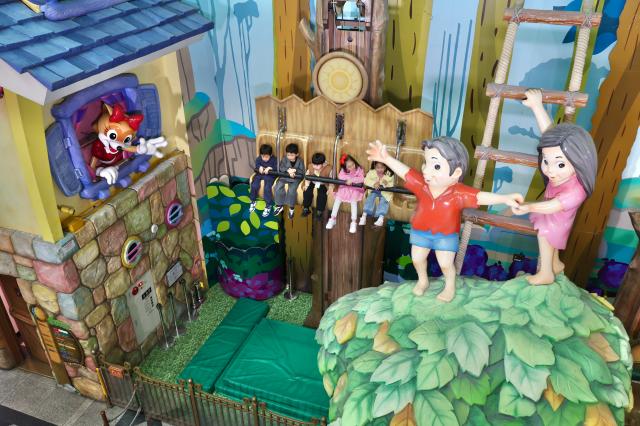
Lotte World’s advantage is that indoor and outdoor attractions can be combined in the same day, and it connects naturally with the Jamsil mall, lakeside area, and food options. It suits children who already look forward to rides, shows, or character spaces on their own, and adults who are comfortable making “today we only do this” the right choice. It is not a good fit for arrival day, departure day, or days when you want to cross town later to Bukchon or Hongdae. It may all look like “Seoul” on a map, but what really eats time is the before-and-after: entering, queuing, finding food, and leaving with the crowds.
Don’t let “we already bought a day pass” become a reason to force every ride. This is one of the most common forms of loss aversion in family travel: the child is already tired, but the adults don’t want to leave because of the ticket price. A more useful approach is for each person to choose one thing they most want to do before entering, then treat anything after that as a bonus. If you’re staying in Jamsil or have a show that day, also read how to choose between Seoul theme parks by transfer cost—don’t treat Everland and a downtown park as interchangeable options.
Cultural activities should leave children one part they can decide for themselves
The most common mistake in family cultural activities is assuming that if adults understand the content, children will automatically engage. Kids do not need to memorize dynasties, but they may remember the color of the hanbok they chose, the ingredients they saw in the market, or the sauce they mixed themselves. If they are not used to long explanations, choose something with a clear hands-on moment and a visible result. If a teenager already enjoys exploring music and visuals, then a K-pop dance or cooking experience may be a better way to let them choose what they take away.
On the other hand, if a child really does not want to wear traditional clothing, do not force the booking just because the photos would look nice. One of the easiest sentences in travel to fall into the Barnum effect is “the whole family will love it.” It sounds as if it fits everyone, but it doesn’t say who will be changing clothes under the sun, who will be waiting for photos, or who really just wants ice cream. Often, letting one person opt out—or switching to a short photo stop—feels more like a real shared trip than packing everyone into the same plan.
Whether you can keep going in the afternoon is often decided by how you come back in the morning
The rhythm of a family trip often splits in the afternoon. In the morning, everyone feels fine traveling far; by two o’clock, you realize the stroller was squeezed onto the subway, the restaurant had no seats, and the child can’t sleep in a strange place. That’s not a planning failure—it’s a sign that the hotel should be treated as a base you can return to. If a child still needs a set nap time, the hotel location, room size, and early check-in may matter more than how many attractions you can squeeze in. Start with which part of Seoul makes family travel easier without constant backtracking rather than judging only by how the room looks in photos.
Families with strollers also shouldn’t assume every subway station is equally easy to use. Transfer distances, elevator locations, and rush-hour crowds can turn a move that looks short on the map into a very long one. On days like that, replacing one subway transfer with a taxi is not necessarily wasteful; it may be exactly what preserves the last two hours of the afternoon. Don’t try to force transport costs down so far that an expensive activity loses its meaning after the child has already melted down.
Adults should keep a little bit of Seoul for themselves, too
A family trip does not mean adults give everything up; it means resizing adult expectations into something that can actually happen. If parents want to browse a market, let the child choose one thing they want to eat. If you want a night view, link dinner with a riverside walk that you can leave at any time, rather than buying another ticket with a fixed meeting time. Children have their own highs and lows, and so do adults. Once you admit that, you won’t feel like the whole trip is incomplete just because you skipped one popular spot.
Before you leave, it is also worth letting the child take part in one choice: let them pick one activity from three photos for what they most want to do today, and agree in advance that if energy runs out, the other option can wait until next time. This is not about handing planning responsibility to the child; it’s about showing them that travel is not endless rushing from one stop to the next. When everyone knows what can be dropped, a sudden rain shower, getting lost, or a longer nap is less likely to make the whole day feel ruined.
Before you go to bed each night, ask just one question: what do you least want to lose tomorrow—sleep, play time, or a stretch of time for the adults? The answer may be different every day. That is the most practical decision tool for family travel in Seoul, rather than copying every “must-go” recommendation from the internet onto a single itinerary.
Further reading
- Seoul experiences overview: start by sorting by travel purpose
- Everland vs. Lotte World: calculate transfer time before you choose
- How to schedule a Gyeongbokgung hanbok experience without rushing
- K-pop dance or cooking class: which feels more hands-on?
- How to choose a Seoul hotel area that supports a family itinerary