
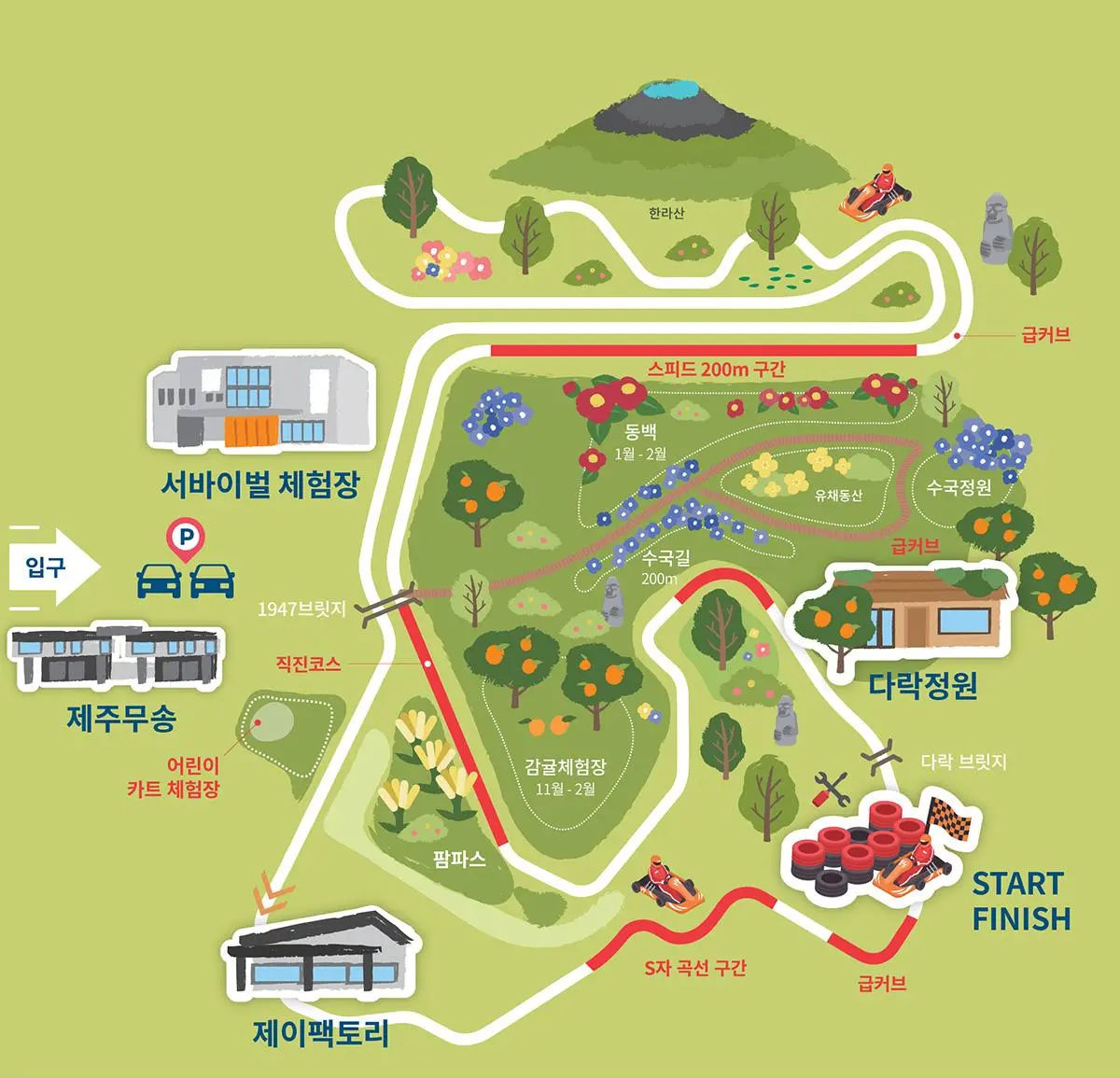
The decision framework is WEATHER OVERRIDE MATRIX. Build the order in this sequence: weather → driver/passenger role → 1- or 2-seat kart → lap count → voucher channel → transport eligibility → cancellation → final total. The Chinese source records that current venue rules require drivers to be 20+ in rainy conditions, so weather can rewrite the order before price matters.
30-second decision
- Dry day, solo driver: check both the venue’s current age/height gate and the platform package’s own rider rules.
- Rain is possible: re-check the driver age first. A younger solo driver who qualifies in dry weather may no longer qualify after rain.
- Two people sharing one kart: lock the tandem driver/passenger rules rather than buying two solo products by habit.
- You care about ride time: compare the same 2-, 3- or 4-lap product. Different lap counts are different purchases.
- You are using KKday: the source records a current self-drive/rental-car eligibility condition that must be passed before the discount is useful.
Rain changes the order, not just the cancellation risk
Many attraction guides treat rain as “will the venue cancel?” Wind 1947 is more complicated because the current official rules cited by the Chinese source also change who may drive. The source records rainy-day drivers as requiring age 20+. That means a dry-weather solo ticket can turn into the wrong SKU even when the venue remains open.
Do not assume the platform will automatically repair the booking for you. Rebuild the role assignment first: who is driver, who is passenger, which kart type still satisfies the safety rules, and whether the selected package matches that revised order.
Venue rules and platform rules both apply
The source records general venue rules around solo driving from age 12 with a minimum height of 150 cm, with Junior Kart handling for ages 12–16, while the current Klook solo package is stricter at roughly age 14–62 plus 150 cm. When a platform SKU is stricter than the venue baseline, buying that SKU means you must satisfy both.
For 2-seat karts, the source records a separate driver/passenger structure rather than a generic “adult + child” ticket. Treat riding role as a product field.
Lap count is part of the SKU
The source maps 2, 3 and 4 laps to roughly 4, 6 and 8 km. If Klook shows one lap package and KKday another, the lower headline price is not a valid comparison. Normalize the same number of laps before comparing totals.
Current operating clock changes by season
The Chinese source records the current official clock as 10:00–19:00 with last ride around 18:30 during the May–September peak season, and 10:00–18:00 with last ride around 17:30 outside that period. OTA location text can lag the official season table, so use the latest official operating clock for the day and the exact product page for voucher/cancellation conditions.
Klook and KKday solve different transaction problems
The source records a Korean 010 mobile-number delivery requirement: the usable ticket is sent through KakaoTalk or SMS, and the Klook voucher itself is not the admission ticket. Fix rider eligibility, kart type and laps before checkout.
Klook — check exact Wind 1947 product 28168The current source uses an e-voucher and records a self-drive/rental-car product gate. Match the same weather assumption, kart type, laps and cancellation before comparing the final total.
KKday — check exact product 101554No Trip.com CTA: the source verifies exact entity 134029275 and the correct Seogwipo address, but it did not verify a standalone payable kart product. KoriNavi does not turn an attraction-information page into a booking CTA.
Final decision
On a dry day, choose the legal driver/passenger structure first, then the kart and lap count. If rain is possible, rebuild the order around the rainy-day driver gate before buying. Only after the same weather state, role, vehicle and laps are fixed should Klook and KKday prices be compared.