
Short answer: Jagalchi Market is worth visiting on a first Busan trip if port life or seafood interests you, but entering the market does not oblige you to buy sashimi. Divide the visit into SEE the working market and South Port, BUY live fish or dried goods, and EAT a seated seafood meal. Looking around the building and waterfront can be complete in 30–60 minutes; comparing seafood and eating needs 90 minutes to two hours. The biggest risk is not forgetting a fish name. It is treating the building, outside vendors, live-fish section, dried goods, and restaurants as one schedule, then ordering before a final total is clear.
- SEE: Walk through the live-fish hall, outside market, and public waterfront without spending. Stay out of working lanes, wet hazards, and vendor space.
- BUY: Live fish, fresh fish, dried seafood, and sea products vary by weight, unit, season, packaging, and export rules. Confirm each item.
- EAT: Before ordering, ask for one written total covering seafood, weight, preparation or cooking, table or seating, side dishes, soup, and service. Stall systems differ.
- Lowest-risk version: Arrive late morning on a non-closing weekday, walk one complete circuit, then decide whether to eat. With little time, do SEE and do not buy merely because you arrived.
What is Jagalchi Market?
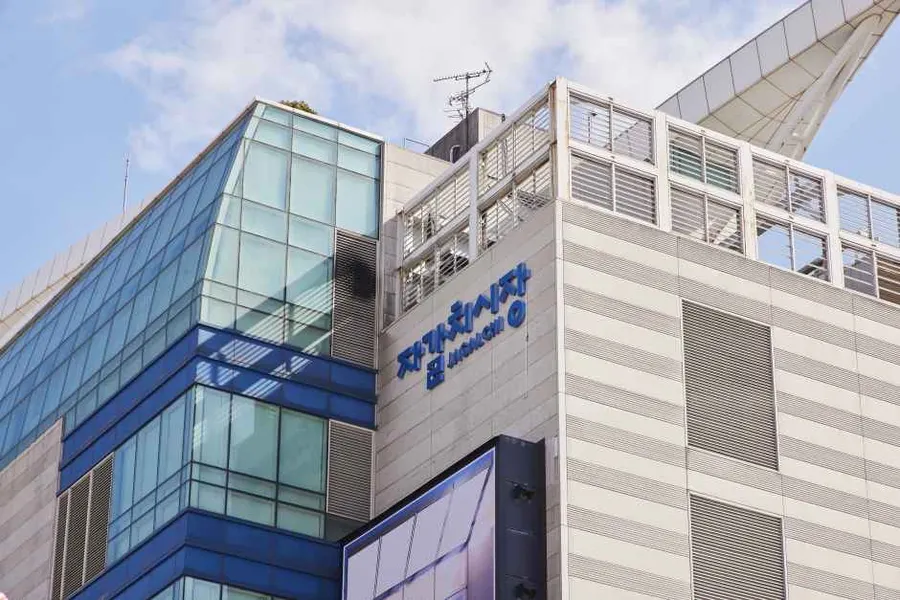
Jagalchi Market sits at 52 Jagalchihaean-ro in Busan’s Jung-gu, beside Nampo-dong and South Port. VISITKOREA describes it as one of Korea’s major seafood markets selling live, fresh, and dried fish. Visit Busan places it with Gukje Market and Bupyeong Kkangtong Market among the city’s representative traditional-market areas.
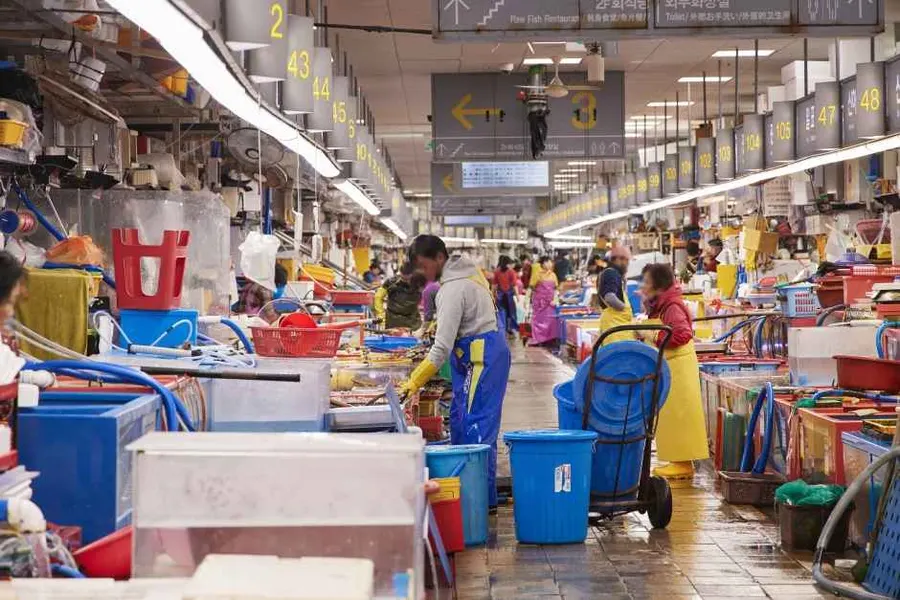
Its value is not only “fresh food.” It shows how the city still meets the port: tanks, dried goods, salt air, hoses, boxes, deliveries, calling vendors, and a harbour view operate together. This is a working market, not a seafood theme attraction created for visitors.
Is it worth a special visit on a first Busan trip?
Yes when Nampo, BIFF Square, Gukje Market, or Busan Station already belongs to the route. Jagalchi fits naturally into half a day of a three-day Busan itinerary without another cross-city move. Even a traveller who eats no raw fish can use the market and port perspective.
If you stay in Haeundae, want only beaches and cafés, and have one half-day left, crossing the city solely because Jagalchi is “essential” may be poor value. The question is whether the west-side old centre already matters, not whether the market is famous.
Should it make a two-day Busan trip?
When a short trip already chooses Nampo and western Busan, Jagalchi links easily to nearby markets. When both days centre on Haeundae, the Blue Line, and Gwangalli, do not spend the best midday block reversing direction. Use the first-Busan-trip length guide to count complete days rather than dividing time evenly among landmarks.
The market does not need a full day. A 30–60-minute SEE visit can be more sensible than reserving an afternoon for seafood without checking the closing day or ordering model. Extend to two hours only when the group genuinely wants to buy or eat.
Jagalchi is not only the modern building
The map address normally leads to the modern Jagalchi Market building with live fish, seafood, food service, and public facilities. Around it are street and waterfront sellers, connected market spaces, and dried-goods businesses. Each part has a different schedule, payment pattern, and atmosphere.
Seeing the ground floor does not mean seeing all of Jagalchi, and an outside fish seller does not necessarily follow the building’s management. First use the building to orient yourself, then follow legal public routes outside. Never walk through staff-only working space or apply one neighbouring market’s rules to another.
Why do official pages say 02:00, 05:00, 06:00, or 08:00?
They describe different sections and sometimes different content versions. At the August 2026 check, Visit Busan listed 05:00–22:00 for the main attraction. VISITKOREA also had a 05:00–22:00 page, a live-fish entry with 06:00–22:00, an older Chinese entry beginning at 08:00, and a dried-goods entry beginning earlier.
Wholesale work, dried goods, live fish, restaurants, and public facilities do not share one rhythm. Individual vendors also rest. This guide does not promise one market-wide time. Late morning through lunch is more useful for a visitor who wants both viewing and food; contact a specific shop directly.
Does it close on the first and third Tuesday—or also the fifth?
Current official sources conflict. Several VISITKOREA entries state the first and third Tuesday of each month. Visit Busan states the first, third, and fifth Tuesdays. Choosing one and hiding the conflict would make the guide simpler but less safe.
If visiting on Tuesday, especially a fifth Tuesday, check the BISCO Jagalchi Market notice or call +82-51-245-2594 before departure. Some public space may be physically accessible while the intended stall or restaurant is closed. An open door does not prove full operation.
What time is best for a first visit?
For working-market atmosphere without wholesale purchasing, arrive late morning on a non-closing weekday. For lunch, allow time to walk one circuit before ordering. Very early arrival can precede restaurant operation; late evening can leave only selected dining while outside and dried-goods sellers wind down.
The market’s busiest trade period and a visitor restaurant’s ideal meal period are not identical. Go earlier for deliveries and fish-market movement, around lunch to sit down, and in daylight when combining nearby retail markets.
What do 30, 60, 90 minutes, and half a day buy?
Thirty minutes: live-fish hall and public waterfront, with no meal. Sixty minutes: add outside sellers or dried goods. Ninety minutes: walk first, then eat a simple meal. Half a day: add one or two of BIFF Square, Gukje Market, and Bupyeong Kkangtong Market.
Do not spend the whole half-day searching for the “cheapest” tank. Endless comparison exhausts the group and does not necessarily make the order clearer. Set a budget, ask two or three sellers, then choose one—or choose none.
Which accommodation areas make Jagalchi convenient?
Nampo, Jungang, and Busan Station can place Jagalchi on arrival day, departure morning, or an old-centre half-day. Seomyeon connects on Line 1. Haeundae and Gwangalli require a cross-city block. Start with the Busan accommodation divide: urban mobility and western routes, or east-coast life.
One market should not control the entire hotel plan. A single Jagalchi visit does not justify moving out of Haeundae. When two or three Nampo-side activities repeat, a central or old-centre base reduces actual backtracking.
Is it easy from Busan Station?
Yes. Subway Line 1 approaches Nampo and Jagalchi, and a taxi may work for several travellers without luggage. The important rule is not dragging large suitcases into a wet market. Use the Busan Station accommodation test to decide whether bags go to a hotel or storage first.
From a KTX arrival, leaving the train, finding the subway, storing bags, and reaching the market is not a ten-minute activity. If arrival fatigue is high, do SEE plus one meal. Do not automatically add Gamcheon, Songdo, and a night market.
Should you walk from Jagalchi Station or Nampo Station?
Visit Busan lists about a six-minute walk from Nampo Station Exit 2 or Jagalchi Station Exit 10 on Line 1. Choose according to the previous stop, next attraction, elevators, crossings, and live construction rather than fixing one exit for a theoretical one-minute saving.
Jagalchi Station can align naturally with BIFF Square, Gukje, or Bupyeong. Nampo can suit the waterfront and central direction. Handle payment first with the Busan transport-card guide, then check the exit live.
Is it awkward to walk around without eating?
No. This is a commercial public environment, and the fish species, labour, dried goods, and harbour already provide a visit. A smile and “just looking” are enough. However, do not repeatedly request prices or have fish lifted for photographs when there is no intention to buy.
A SEE visit respects work: keep narrow aisles open, avoid hoses and delivery lines, do not touch tanks, and do not place a camera directly in a vendor’s face. Observing a market does not turn workers into performers.
What should you look for on the first circuit of the live-fish hall?
Look for price units, tank or stall numbers, the ordering process, card acceptance, and whether dining happens elsewhere. Do not order the first fish that catches your attention. One circuit helps distinguish fish-only takeaway from seafood that will be prepared and eaten on site.
When interested, write down party size, total budget, raw versus cooked, soup preference, and allergies. Ask the seller to show included items and the total on a calculator or paper. A short list of numbers is safer than nodding through a long translated conversation.
How do you ask about seafood, preparation, and restaurant charges?
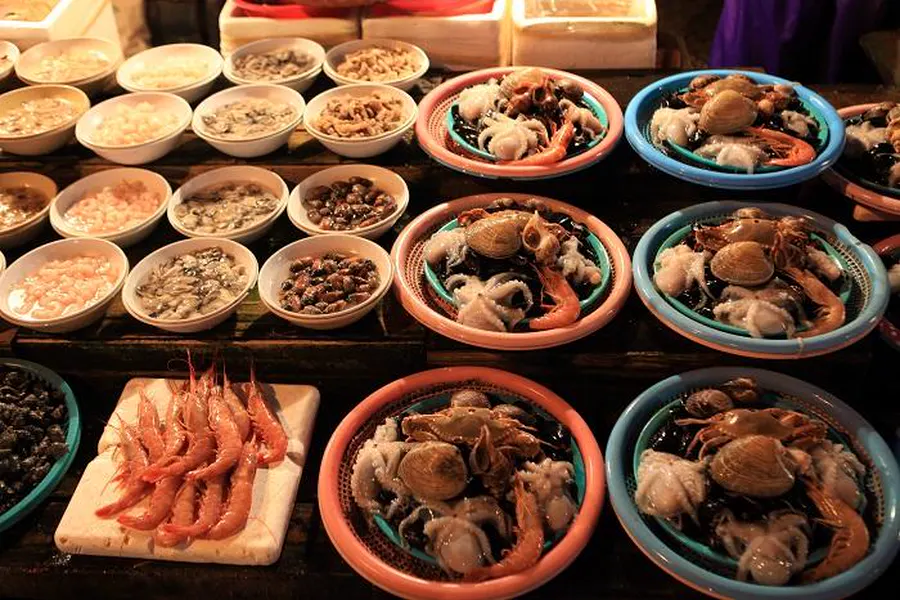
Do not ask only, “How much is the fish?” Confirm species, weight or portion, per-item/per-kilogram/per-plate unit, cleaning or slicing, cooking, upstairs seating, basic sides, soup, drinks, tax, and the final total. Different stalls can separate parts of the bill.
The useful request is: “Please show the total for everything we will eat.” Do this before the fish leaves the tank or processing begins, when cancellation is still possible. Photograph the written quote or menu and compare each line at payment.
How much should two people order?
Do not use an old “two-person set price” as a 2026 guarantee. Species, season, weight, wild or farmed supply, side dishes, and dining system change the bill. State the total budget and appetite, ask for a suitable portion, then accept or decline the complete quote.
Small mixed portions can be more useful than one oversized fish when trying several things, but the mixed plate still needs an item list. Do not accept more weight because refusing feels awkward. Unfinished food wastes money and reduces the rest of the day.
Do you need to recognise every fish species?
No. Knowing whether you want sashimi, grilled fish, shellfish, crab, octopus, or soup is enough to begin. Translated species names vary. Point to the tank, photograph the price sign, and confirm count and cooking method rather than pretending expertise.
If quotes vary widely, check whether the weight, species, and processing are actually the same before declaring one dishonest. When a seller cannot or will not state the total clearly, leave politely. Other stalls—and a no-purchase visit—remain valid.
Is there anything for people who do not eat sashimi?
Yes. The market and surrounding area can offer grilled fish, cooked seafood, shellfish, fish soup, dried goods, and seaweed, depending on the shop and time. Looking and buying packaged goods are also complete options. Fame does not require raw food.
Anyone uncomfortable with raw texture, personally sensitive, pregnant, or following a medical restriction should choose fully cooked food and confirm preparation with the shop. “Fresh” is not a substitute for individual medical advice or risk tolerance.
Are the same seafood species available all year?
No. Season, catch, weather, and supply change fish, crab, shellfish, and prices. King crab, mackerel, sea urchin, or octopus seen in another visitor’s month may not appear with the same quality or cost on your date.
Treat seasonality as a live choice, not a compulsory list. Look at the stock and written units, ask what is sensible today, and change species, cooking method, or dried-goods purchase when a target becomes poor value.
How should allergies, vegetarian diets, and religious restrictions be handled?
Shellfish, molluscs, fish, sauces, soup stocks, and shared utensils create possible cross-contact. A severe allergy cannot rely on a photograph or one “no shrimp” answer. Use a precise translated allergy card, ask whether safe handling is possible, and do not eat when confirmation is weak.
Strict vegetarian or religious requirements can be difficult in seafood restaurants with shared preparation. Make Jagalchi a SEE visit and use a separately verified Nampo restaurant afterward rather than asking an active fish stall to redesign the whole meal.
Are cards accepted, and should you carry cash?
The VISITKOREA live-fish entry lists cards as accepted. That does not guarantee that every outside seller, small purchase, foreign card, or connected market follows the same pattern. Ask before ordering and keep a second card or modest Korean cash as backup.
Before tapping, see the amount and currency. When paying a fish stall and dining area separately, ask the order and request a receipt from each. Two payments do not automatically mean double charging, but each must match a confirmed component.
How can you reduce misunderstandings without Korean?
Prepare a short Korean translation containing party size, total budget, raw or cooked, allergies, no-spice request, soup choice, and “final total including all fees.” Use a calculator for each number and save the quote before processing. Several translation apps speaking long paragraphs can hide the critical figure.
When vendors are busy, brief questions work better than a long bargaining story. If portion and total remain unclear, moving to a restaurant with a written menu is not rude. Language pressure should never force a purchase.
Will the market smell fishy, feel wet, or be difficult to walk?
A live-fish market contains seawater, fish smells, hoses, tubs, plastic boxes, and deliveries. That sensory environment alone is not proof of poor hygiene. It does mean wearing non-slip shoes, avoiding trailing clothing, and watching the floor.
Anyone sensitive to smell can shorten the live-fish hall and focus on the building exterior, waterfront, and dried goods. Do not spray strong perfume or loudly describe the workplace as dirty. This remains someone’s working environment.
Is it suitable for children or older travellers?
Yes for a shorter visit that avoids the busiest delivery lanes and a long meal wait. Children must not hit tanks, put hands into water, or run through aisles. Older visitors benefit from identifying elevators, seating, and toilets first.
If someone fears fish, dislikes the smell, or will not eat seafood, do not force a complete route because it is “uniquely Busan.” Split for 30 minutes and meet at the waterfront or BIFF Square.
Can wheelchairs and strollers enter?
Korea Tourism Organization accessibility information lists a step-free main entrance, elevators, an accessible toilet, and accessible underground parking. These features primarily describe the modern building; they do not make every narrow outside stall, wet lane, or connected market equally level.
Use the main building entrance and elevators, and avoid the peak crowd. Decide on outside sections from live aisle width. Call ahead when a particular facility is essential rather than relying on one accessibility icon.
Is Jagalchi better on a rainy day?
The indoor live-fish and dining areas can absorb some rain, but the station walk, outside market, and waterfront remain wet. Floors can become more slippery. A rainy version shortens the outside section, enters the building first, and checks conditions after the meal.
In all-day heavy rain, do not cross from Haeundae solely to use Jagalchi as shelter. The Busan rainy-day plan keeps the market within one route near the accommodation base. It is a partially indoor working market, not an all-day dry mall.
Can you bring large luggage inside?
It is not recommended. Wet floors, narrow aisles, people, tanks, and delivery equipment make a suitcase obstructive and easy to splash. On an arrival or departure day, use the hotel, station, or reliable storage first.
Travellers arriving by rail can use the Busan KTX arrival and big-luggage guide to reduce handling. Saving one storage stop rarely justifies turning a working market into a suitcase route.
Should you ask before taking photographs?
The building exterior, public waterfront, and broad environment usually interfere less. Ask with a simple gesture before a close portrait, a transaction, fish processing, or a specific stall. Stop when declined.
Do not flash tanks or workers, stand in delivery lanes for a composition, or move products. A photograph cannot contaminate food or delay trade. The market’s first function is commerce.
Are the Sky Park and terraces worth finding?
The VISITKOREA live-fish entry lists a seventh-floor Sky Park and terraces on several levels. These spaces can move the experience from indoor tanks back toward South Port, giving non-eaters another reason to stay.
Open levels, elevator access, weather, and events can change. Follow current signs and never enter a restaurant or working back area to search for a terrace. The ground-level public waterfront is the fallback if an upper public space is closed.
How do you connect Jagalchi, BIFF Square, and Gukje Market?
A natural route starts with seafood at Jagalchi, then walks toward BIFF Square and Gukje Market. Bupyeong Kkangtong Market can follow when snacks matter. Reversing the direction is fine, but do not shuttle between markets searching for the same dish.
With four days, the four-day Busan itinerary can separate the Nampo half-day from the eastern coast. Stay in the old centre for Jagalchi day; do not return from Haeundae the next day just to repair one missed market photo.
Is morning or evening better?
Morning is closer to market purchasing and working rhythm and aligns with daytime retail nearby. Late morning through lunch can combine viewing and a meal. In the evening, selected restaurants may operate while outside and dried-goods sellers no longer show their full daytime pattern.
For dinner, confirm the restaurant’s final order. For seeing the market, daylight is safer. A main listing that ends at 22:00 does not mean every floor and outside stall still looks like noon at 21:30.
What about Sundays, holidays, and the Jagalchi festival?
An ordinary Sunday should not automatically be treated as the market-wide closing day, although individual shops can rest. Lunar New Year, Chuseok, temporary maintenance, and festival dates can change crowds and business. Check each year’s official Jagalchi Festival programme.
Event days bring energy but not necessarily easier dining or transport. Travellers who want calm price confirmation can avoid the main stage period. Festival visitors should check whether the building still follows ordinary floor operations.
Is driving and parking convenient?
Official material lists underground parking, and one live-fish entry previously identified 129 spaces and an hourly charge. Rates and capacity can change. A parking facility can still have a queue on busy weekends, festival dates, and lunch periods.
Line 1 reaches two nearby stations and is normally simpler without luggage. Drivers must not use outside loading and delivery space as tourist parking. Market operations take priority.
How do you reduce tourist-price and billing disputes?
The effective tool is confirmation, not aggressive bargaining. Check unit, weight, portion, preparation, restaurant, sides, soup, drinks, and final total. Compare identical specifications before deciding that one quote is unfair.
If pressured, the price remains unclear, or a fish is about to be lifted before the total is agreed, stop and repeat that the order is not confirmed. You can always leave. Jagalchi’s value does not depend on completing a seafood purchase.
A low-risk Nampo half-day schedule
10:30: walk from the subway and start with the building and live-fish hall. 11:15: see outside sellers and the public waterfront. 12:00: eat only after confirming the total; otherwise leave. After 13:15: walk toward BIFF Square and Gukje Market.
The times provide structure, not guaranteed opening for every seller. If the market is closed or one target shop has not opened, keep the waterfront, BIFF, and Gukje route. Do not wait at an entrance for an unknown opening.
Fifteen checks before you go
- Choose SEE, BUY, or EAT as the main purpose.
- Check the exact building, live-fish, dried-goods, or restaurant time.
- On Tuesday, verify first/third/fifth-week closures.
- Do not apply 05:00–22:00 to every seller.
- Choose Nampo or Jagalchi Station exit by the next stop.
- Store large luggage first.
- Wear non-slip shoes that can tolerate splashes.
- Walk one circuit before buying.
- Confirm price unit, weight, and portion.
- Ask about preparation, cooking, seating, sides, and soup.
- Require a final total before processing starts.
- Confirm card or cash and whether payment is split.
- Use a precise translation card for allergies and restrictions.
- Ask before close photographs of vendors or processing.
- Keep an exit plan that works without buying or eating.
Final verdict: which version is worth it?
Best: you already have a Nampo route, see the market and port first, and eat only after a clear total. Complete for free: spend 30–60 minutes in the building, outside market, and waterfront without buying. Do not force it: make a short return from Haeundae, fail to check a Tuesday closure, or bring a group with no interest in fish, smell, or wet working floors.
Jagalchi Market does not require an expensive seafood meal as proof of visiting. A smooth trip uses SEE to understand the port, then adds BUY or EAT only when needed. If price, operation, or comfort does not work, the market memory is enough.
Sources and update note
Checked August 23, 2026. Recheck the market, floor, shop, restaurant, closure, prices, parking, and facilities on the visit date. Official sources conflict on hours and fifth-Tuesday closure.