
The short answer: Daegu Seomun Market is worth visiting, but first decide whether you mean the working daytime market or the Friday-to-Sunday night market. Daytime brings textiles, clothing, dried goods, kitchenware and established food shops. Evening brings red food carts and weekend crowds. The common failure is arriving on Monday to Thursday at night, seeing a few ordinary businesses still open and assuming the advertised night market has begun.
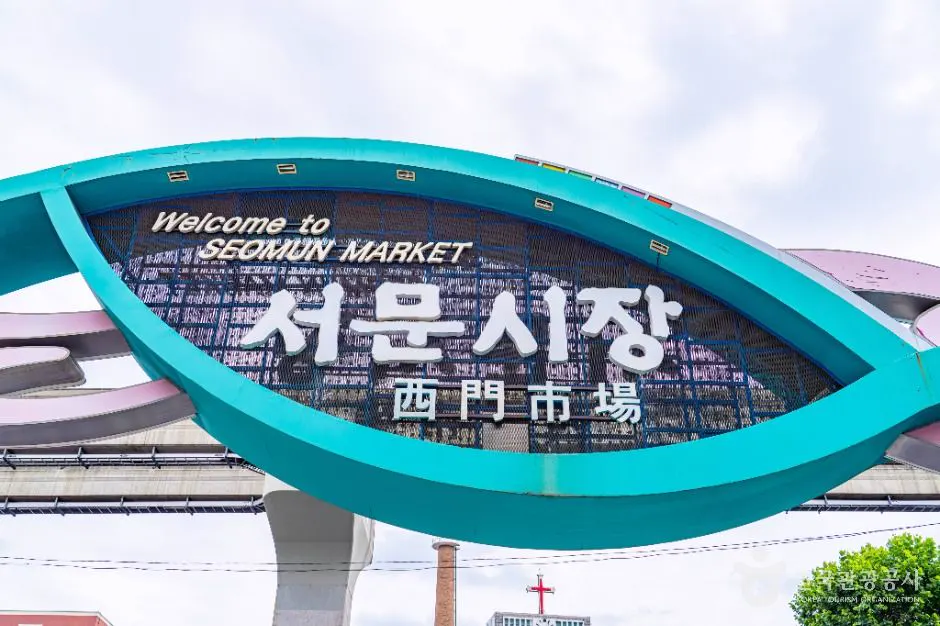
- DAY MARKET: arrive during shop hours for textiles, everyday goods, long-running food businesses and the market layout.
- WEEKEND NIGHT: come for carts and evening food only after confirming that tonight is an operating Friday, Saturday or Sunday.
- CLOSED-DAY: check regular closures, weather and temporary notices before travelling for one specific shop or stall.
- Do not merge the schedules: daytime shops being open does not mean the night market operates, and night carts do not mean every daytime shop remains open.
One name contains two different market rhythms
Seomun dates to the Joseon era, when it was counted among the country’s three major markets. Named for its old position west of the Daegu fortress, it moved to the present site in the 1920s. Textiles, clothing, dried goods, crafts, tableware and food remain central; it is more than an evening snack street.
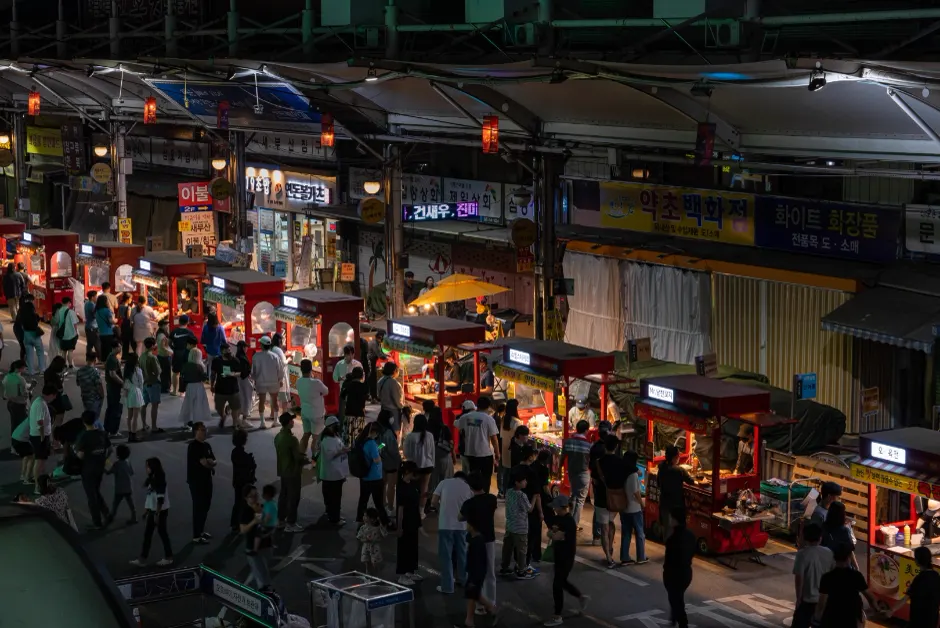
The night market is a separate operation. Carts occupy the lane and ready-to-eat food becomes the focus. Come by day for fabric and everyday goods; choose night when small dishes and a lively walk are the purpose.
DAY answers what you want to browse or buy. NIGHT confirms that the food-cart market operates on your weekday. CLOSED-DAY protects the visit from regular holidays and temporary changes. Pass these gates before making a food list.
Read the official times without turning them into a promise
Current VISITKOREA information lists the daytime market at approximately 09:00–18:00, with hours varying by shopping area and business. It lists the night market on Friday and Saturday from 19:00–23:30 and Sunday from 19:00–22:30, closed Monday to Thursday. The daytime market is also listed as closed on the first and third Sunday of each month, while individual businesses may differ.
Sunday needs an extra check: the same official listing shows a Sunday night session and a regular Sunday closure rule for the daytime market. Do not assume every section follows one schedule. Verify a particular stall or restaurant directly when it is the only reason for going.
Go in daylight for the market, not a ten-item eating challenge
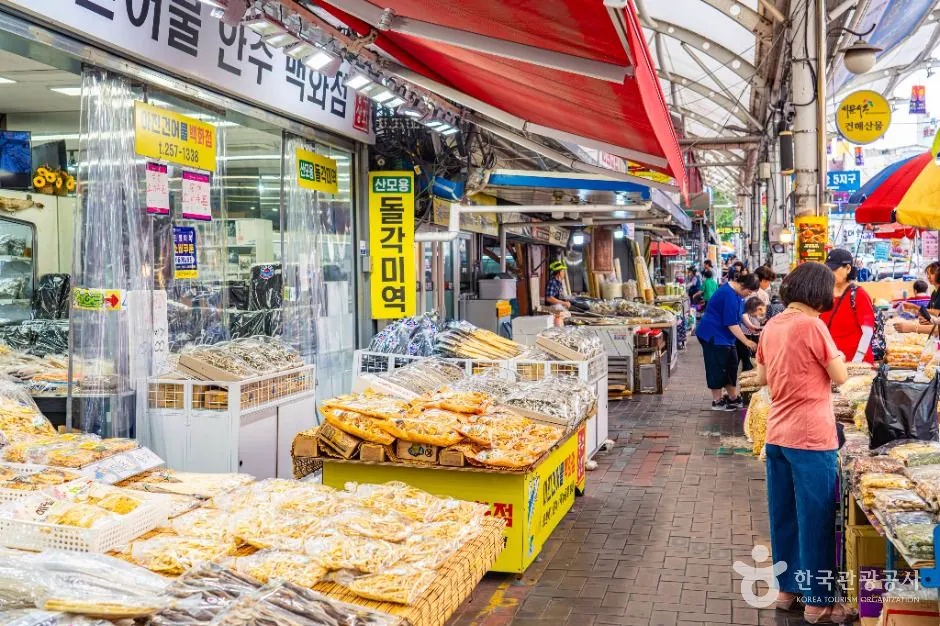
Daytime works best for visitors willing to browse sections and see an everyday traditional market. Fabric, clothes, shoes, flowers, dried food and dining are not compressed into one short corridor. Choose one primary purpose—shopping, observing the market, or eating one or two dishes—then use signs and the information point rather than following a long social-media checklist.
Flat dumplings, noodles, hotteok, tteokbokki and pork soup are common references, but menus, prices and queues differ. Arrive hungry, not committed to the first long line. Ask about ingredients when allergies, religious restrictions or spice tolerance matter.
Who should choose the night market?
The night market suits visitors who want small dishes, evening lights and a lively crowd, and who are comfortable eating while standing. Queues, limited seating, sold-out items and weather still change the experience. Walk the route once, compare portions and waiting time, then share a few dishes instead of locking the group into “must-eat” stalls.
If Daegu is a one-day visit, use the Daegu one-day itinerary to choose the daytime market or weekend night market, not automatically both. The Daegu evening plan can then connect food, the journey back and your accommodation. Returning only because the market has changed names at 19:00 often produces two similar food stops rather than a stronger day.
A day trip may end before the night market properly begins
The night market starts late enough to compete with an intercity return. Waiting until 19:00 and leaving shortly afterwards may deliver only the opening crowd and one dish. Use the Daegu day trip or overnight guide to count the walk out, transport to the station, dinner and boarding buffer. The market’s closing hour is not your safe departure time.
Public transport is simpler than driving, but an exit is not a stall location
Official travel material uses exits 2 and 3 of Seomun Market Station on Daegu Metro Line 3 as a reference. Once there, distinguish the market entrances, shopping sections and night-market lane. A single map label covers a large complex. The Daegu without a car guide helps separate the metro ride, walking inside the area and the journey out.
A Korea transport card simplifies local fares but cannot confirm tonight’s stalls. Official information says cards are accepted at the market, yet a small vendor’s terminal, minimum amount or temporary fault may differ. Carry one backup payment method without repeating the misleading claim that the whole market is cash-only.
Covered daytime lanes do not make the night market a complete rain plan
Some shopping lanes are sheltered, so the daytime market may remain easier than an exposed attraction. The walk from transport, wet surfaces, cart placement and outdoor night-market lane still respond to weather. Heavy rain, strong wind or a cancellation notice can remove the part you came to see. Keep the Daegu rainy-day plan ready with genuinely indoor choices.
Pushchairs, wheelchairs, luggage and discomfort with crowds also change the answer. A packed weekend lane may be the least controllable version; an earlier daytime visit to one section can be easier.
With two days, give each market session a different job
Give each session a different job: textiles and one established meal by day, then a short cart sample on a weekend night. The two-day Daegu plan after an overnight stay stops the market from taking over both days.
Your hotel matters after the carts, not before them
After a crowded food lane, the final metro, rainy walk and tomorrow’s departure matter. Use where to stay in Daegu to decide whether tonight or the next morning should control your base.
Seven checks before leaving
- Do you mean the daytime market, weekend night market or both?
- Is tonight an actual night-market session rather than ordinary shops remaining open?
- Does the date meet a first- or third-Sunday closure or another notice?
- Would the market still be worthwhile if one famous stall were absent?
- Can the group accept crowds, standing food and strong cooking smells?
- How will you reach the hotel, station or next stop afterwards?
- Is there a dinner alternative if weather cancels carts or food sells out?
Go in daytime: you want textiles, dried goods, everyday market life and a slower browse. Go on a weekend night: operation is confirmed, small dishes and crowds suit the group, and no tight return follows. Choose somewhere else: it is Monday to Thursday and the carts are the only purpose, a closure has not been checked, or the group cannot manage a packed standing-food lane. Seomun is worth visiting once you select the version that exists today.
Checked 23 August 2026. History, address, hours and real-site images follow VISITKOREA and Daegu official tourism material. Current planning information shows the daytime market at about 09:00–18:00; Friday and Saturday night market 19:00–23:30; Sunday 19:00–22:30; and first- and third-Sunday closure for the daytime market. Shopping sections, businesses, stalls, dishes, payments, weather cancellations and events may differ, so recheck the date.
VISITKOREA: Daegu Seomun Market and Night Market DaeguTour: Seomun Night Market