
If your entire Jeju trip is only two days, first decide whether eastern Jeju deserves that much of the trip. When the east itself gets two days, the case for two nights in Seongsan is not “there are lots of attractions.” It is whether an Udo ferry day plus another eastern anchor day create enough flexibility to justify a separate base.
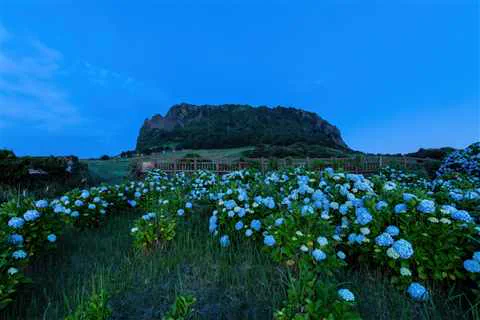
Two Seongsan nights make sense when you have two eastern anchors that cannot replace each other
- Anchor one: an Udo ferry day. Ferries depart from Seongsan Port; boarding requires identity information and sea conditions can affect service.
- Anchor two: another full eastern day. This can be Seongsan, Seopjikoji, Pyoseon or a timed east-Jeju activity. The key is that the next day does not immediately require a cross-island move.
- You need a swappable day. Udo often takes several hours once port arrival, waiting and island time are included. A second eastern day gives you something to swap in if ferry operations change.
- You avoid another luggage move. With only one eastern day, check-out, luggage and another hotel check-in often erase the time you thought a Seongsan night would save.
Decision: Udo plus another full eastern day makes a two-night Seongsan base a purchase of itinerary flexibility. With only one eastern day, keeping your existing Jeju City or Seogwipo base is often the cleaner choice.
The fixed parts of an Udo day matter more than the sightseeing list
Official Jeju tourism information routes Udo visitors through Seongsan Port. Boarding requires identity documentation and a passenger form, and the crossing itself is short. Those details turn Udo from “we can pop over if there is time” into a real itinerary block with a port and boarding process.
If your hotel is near Seongsan, the morning problem is mostly the last mile from the room to the port. From Jeju City or Seogwipo, you are adding a cross-area departure decision before the ferry day has even started. Put the hotel address, Seongsan Port and your intended sailing window on the same map before you pay.
Udo is not automatically a neat half-day
Visit Jeju suggests roughly three to four hours for a light Udo visit with a few sights and a meal or café stop, while also warning that weather and sea conditions can change ferry operations. That makes “Udo in the morning, western Jeju in the afternoon” possible but fragile: your return time and a cross-island drive become linked.
This is where a two-night Seongsan stay starts to earn its keep. When ferries run, you can return to the east for dinner and rest. When they do not, the second eastern day can move forward instead of forcing a full-island reshuffle.
If you have a rental car, confirm whether it can go to Udo
Current Jeju information restricts non-resident vehicle entry to Udo through a multi-year policy period, with specific exceptions. That means “we already rented a car” does not automatically mean “we will drive the same car onto Udo.” Check the current vehicle category and eligibility before the ferry day.
If the car stays on the mainland, returning to Seongsan Port and staying nearby can be even more useful because you are not trying to bolt another distant timed activity onto the same afternoon. If you are still deciding whether to rent at all, use Jeju rental car: do you need one?.
Build two eastern days that can swap places
Day one can be Udo and day two Seongsan/Seopjikoji or another booked eastern activity—or the reverse. The important part is that day two must actually be swappable when ferry conditions change. If both days are locked to non-refundable cross-island activities, staying in Seongsan does not create real flexibility.
Seongsan, Seopjikoji and Pyoseon are all called “east Jeju,” but they are not the same last-mile hotel base. Once the second anchor is known, use East vs West Jeju and the broader eastern stay planning flow to place the hotel correctly.
With only one eastern day, not moving hotels can be more useful
Arriving late on day one, doing Udo or Seongsan on day two, then moving to Jungmun or Seogwipo on day three can make a one-night Seongsan stop look efficient. In practice it adds another check-out, luggage move and check-in. Unless that evening itself has a confirmed Seongsan use case, the stay has no second-day return.
On a three-night Jeju trip, this cost becomes especially visible. The question stops being “is Seongsan convenient?” and becomes “is one extra hotel change buying a complete morning or evening?”
With two nights, room quality starts to matter more
A one-night transit room can get away with being very basic. Over two nights, ask whether you will return to the room after Udo or a coastal day to dry clothes, recharge devices, rest, organize the next ferry day or eat nearby. If yes, room layout, drying space and evening food access matter more than a single view photo.
If the room is only for sleep and the price premium is large, keep the budget for transport or the next base. If you are considering a compact east-Jeju stay, Playce Camp Jeju shows how room-hours change the value of a small room; for a larger resort-style base, Phoenix Island Jeju solves a different group-space problem.
Morning and evening are the real Seongsan premium
The strongest argument for two nights is not that Seongsan cuts every drive on the island. It is that the fixed eastern pieces sit at the edges of the day: port departure, sunrise, an early coastal start, a relaxed dinner after Udo, or simply not having to repack before the second east-Jeju morning.
If your actual itinerary starts late and finishes elsewhere both days, that premium disappears. A hotel cannot create eastern time you never planned to use.
Weather flexibility is valuable only if the second day is genuinely flexible
Staying in Seongsan does not make ferries run in poor conditions. It only reduces the collateral damage when a ferry day moves. Keep one of the two eastern days less rigid so Udo, a coastal block or a paid attraction can trade places.
For a paid eastern half-day, you can compare Aqua Planet vs Snoopy Garden. For northeast outdoor time, compare Rail Bike vs EcoLand. The point is not to fill every gap with another ticket; it is to preserve one movable block.
Who should stay two nights in Seongsan?
Good fit: Udo is a priority, you have another full eastern day, you value an early start or relaxed eastern evening, and your next base is not needed until after those two days. Less useful: you only have one east-Jeju day, your second day points west or south immediately, or the hotel move exists only to save one morning drive.
Final answer
If your eastern Jeju plan contains Udo plus a second full east-Jeju anchor, two nights in Seongsan are usually worth considering because you are buying schedule flexibility and removing one luggage move between those days. If eastern Jeju is only a single day trip, keep one base and make that day a clean round trip instead of creating a new check-in for one morning.