
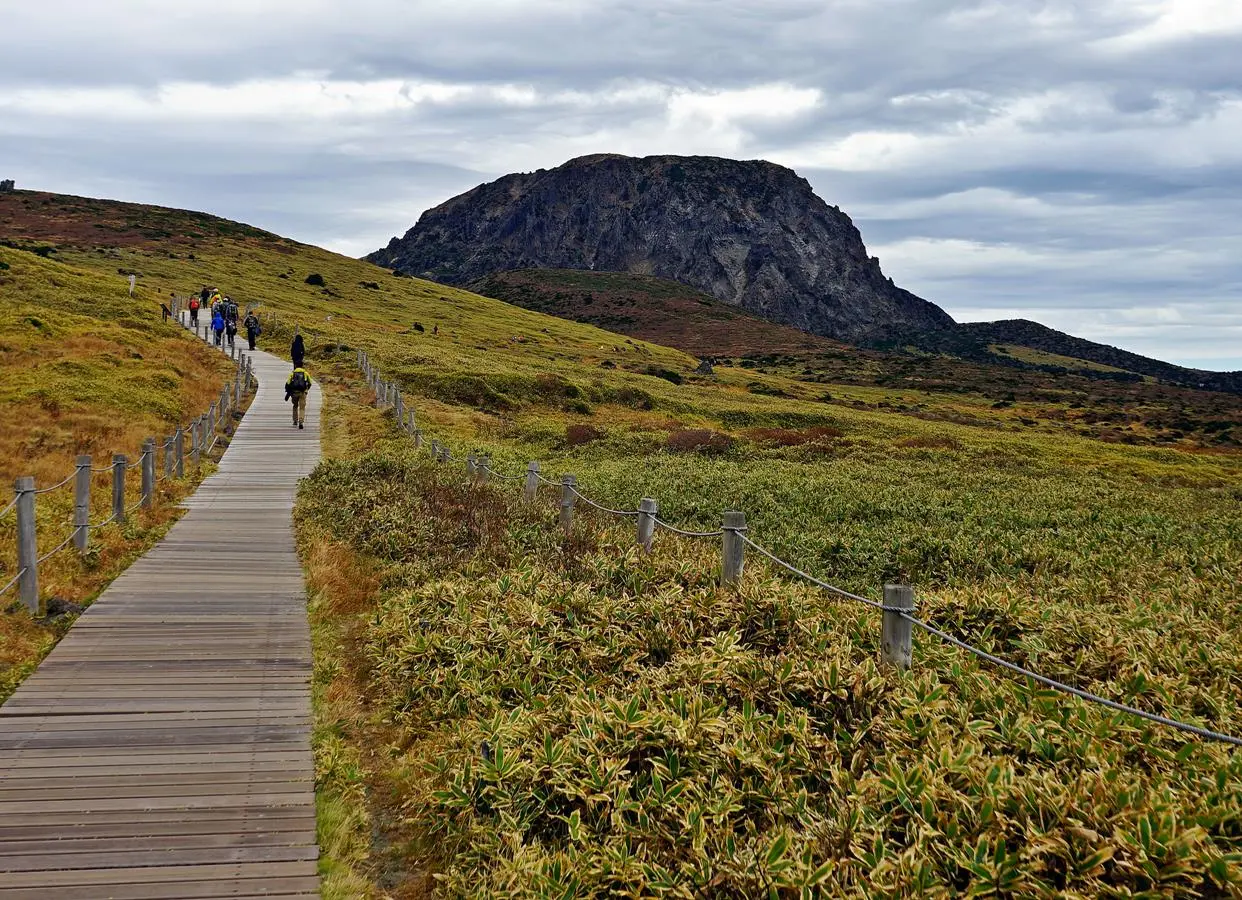
30-second answer: if Baengnokdam is the non-negotiable goal, solve the current Seongpanak/Gwaneumsa access situation before booking accommodation. If you are walking Yeongsil or Eorimok for highland scenery rather than the summit, the 1100-road transport pattern matters more than summit-route logic. From 1 August through 30 September 2026, the Gwaneumsa section from Samgakbong Shelter to Baengnokdam is closed for rockfall-prevention repairs and deck replacement, so Baengnokdam is reachable only through Seongpanak during that period. A hotel chosen because it supposedly makes a Gwaneumsa summit morning easier is solving a route that is currently unavailable.
The Hallasan National Park notice keeps the Gwaneumsa entrance-to-Samgakbong section open, but closes Samgakbong-to-Baengnokdam from 1 August to 30 September 2026. If your trip is after September, recheck the official system before using this as your booking assumption. A construction window is not a permanent trail rule.
This page answers one accommodation question: what movement should the previous night remove? The broader Jeju stay-base guide decides the island base, the rental-car guide decides the transport model, and the winter stay guide handles mountain-weather flexibility. Here the first question is narrower: which trailhead is the first thing tomorrow morning that you cannot afford to get wrong?
Split the hotel decision first: Baengnokdam summit day or scenic highland day?
The easiest way to overpay is treating every Hallasan trail as the same trip. Under normal operation, Seongpanak and the upper Gwaneumsa route are the summit-access products. Yeongsil, Eorimok and other highland courses do not become Baengnokdam routes just because you walk longer. They are different days with different access, bus and timing logic.
If the summit is not the goal, you do not need to force the whole trip into a summit-day hotel pattern. Visit Jeju currently describes the Yeongsil course as 5.8 km and about 2 hours 30 minutes, with the trail itself remaining subject to weather closure. That can be a complete mountain day without turning the previous night into an ultra-early summit operation.
For August–September 2026, Seongpanak is not merely one summit option—it is the only one that reaches Baengnokdam
The current Hallasan National Park notice is unusually important to accommodation planning. From 1 August through 30 September 2026, construction blocks the Gwaneumsa trail between Samgakbong Shelter and the summit. You can still hike from the Gwaneumsa entrance to Samgakbong, but you cannot complete the Baengnokdam summit from that side or use a standard “up Seongpanak, down Gwaneumsa” traverse during the closure.
If your dates fall inside this window and Baengnokdam is a hard requirement, the sequence is simple: confirm Seongpanak access and the reservation conditions first, then solve the morning arrival, then choose the hotel. A mountain-view room does not create summit access, and a hotel that is “better for Gwaneumsa” has no summit advantage while the upper route is closed.
Seongpanak's first practical problem is not kilometres—it is whether you can park
A June 2026 Hallasan notice says the Seongpanak lot is very small relative to demand and can become full very early. The official capacity is currently listed at 156 vehicles. The same notice identifies an alternative transfer parking area near Jeju International University / the 5.16 road with 199 spaces, and explicitly recommends public transport when possible.
That changes the meaning of “I will stay closer and drive there.” A shorter drive does not guarantee a space at the trailhead. If you arrive after the lot fills, you may still need the alternative parking-and-bus pattern. Before paying more for a mountain-side hotel, decide which morning you are actually buying: drive directly and accept parking risk, aim for the transfer lot, or start from a place with a workable bus or taxi plan.
The same official parking notice currently uses Route 281 on the 5.16 road as a transport reference and gives roughly 45 minutes from Jeju Bus Terminal to Seongpanak as a current planning anchor. Do not turn that into a permanent timetable. Frequencies, road controls and service details can change; recheck the Jeju Bus Information System for your actual hiking date.
Hotel Nanta: useful when tomorrow's mountain-side start matters more than tonight's city life
Hotel Nanta Jeju can enter a Hallasan shortlist because its hillside position is a different product from a Yeondong city night. For a traveler with a car or taxi plan whose next morning is clearly mountain-oriented, that may be more coherent than spending the night by the coast and then reversing inland before dawn.
The trade-off is equally important. Hotel Nanta is not Yeondong. If tonight still includes Dongmun Market, Tapdong, bars or a dense city dinner, the mountain-side location can create another transfer before you have even started the hike. Its NANTA guest benefit also belongs at zero unless you are actually attending the show. Do not let a benefit from the single-hotel page become imaginary value in a hiking-night booking.
Amber Pure Hill: being on 1100-ro does not make every Hallasan trailhead convenient
Amber Pure Hill Jeju is a genuine mid-mountain resort at 2671-30, 1100-ro. That makes the setting relevant to a highland trip, but “1100-ro” is not a magic translation for “close to every Hallasan entrance.” You still need to match the next morning's trailhead and road direction.
There is also a purchase mismatch to avoid. Amber sells resort time: the shared Pure Sky Pool, private-pool room products and separate heating entitlement are real decision layers. If your plan is wake at 05:00, hike all day and return late, you may use almost none of the features carrying the premium. It becomes easier to justify when the mountain setting and resort hours are themselves part of the trip, not when the property is only functioning as an expensive alarm clock.
WE Hotel Jeju fits Yeongsil/Eorimok plus recovery better than a pure “sleep before summit” purchase
WE Hotel Jeju sits on the 1100-road side in the Seogwipo mid-mountain area and sells a wellness-oriented stay. That can make strong sense when Yeongsil or Eorimok is the mountain day and you also intend to leave time for recovery, forest surroundings or the hotel's facilities.
But its most distinctive guided wellness value is not automatically guaranteed by simply booking a room. The current KoriNavi hotel page records advance reservation requirements, with program slots opening 14 days before the stay and able to fill early. If you hike all day and only want to collapse into bed afterward, price the unused wellness value at zero first. If the next day is deliberately a recovery block, compare Podo Hotel vs WE Hotel to decide whether you want recovery controlled inside the room or through scheduled programming.
For Yeongsil and Eorimok, check the 1100-road transport before debating Jeju City versus Seogwipo
If you are not going to Baengnokdam and your real plan is Yeongsil or Eorimok, the summit reservation system should not dominate the hotel decision. The current Jeju Bus Information System lists Route 240 as a 1100-road service connecting Jeju Bus Terminal → Eorimok entrance → Yeongsil entrance / Yeongsil office → WE Hotel → Jungmun → ICC Jeju in the relevant direction.
That is more useful than a generic statement that “Jeju City is north” or “Seogwipo is closer to the mountains.” A car-free traveler should first see which side produces the cleaner first bus and return. A driver should check the actual trailhead road and the post-hike direction. The hotel should serve the mountain day you are truly doing, not the Hallasan keyword in an OTA filter.
Yeongsil itself is a different-scale outing from a summit day. Visit Jeju currently lists the trail at 5.8 km and about 2 hours 30 minutes and warns that weather can close the route. That makes it perfectly reasonable to keep the main trip base and treat the highlands as a half- or full-day block instead of moving hotels for one night.
Without a car, a hotel that looks “near Hallasan” can be worse if it misses the first usable transport
Car-free travelers are especially vulnerable to the phrase “near the mountain.” A forest hotel can look perfect on a map and still leave you with no useful early connection to the trailhead you chose. The first and last transport segment must be checked before the room.
Use the Jeju car-free guide for the one-direction rule. If you are carrying large luggage, do not move the whole suitcase system for a single hiking night unless the new hotel removes a confirmed transport problem. The large-luggage, no-car hotel guide uses the same threshold: a second key card needs to eliminate a real handling event, not merely look closer on the map.
Weather and season can invalidate a hotel plan faster than distance can improve it
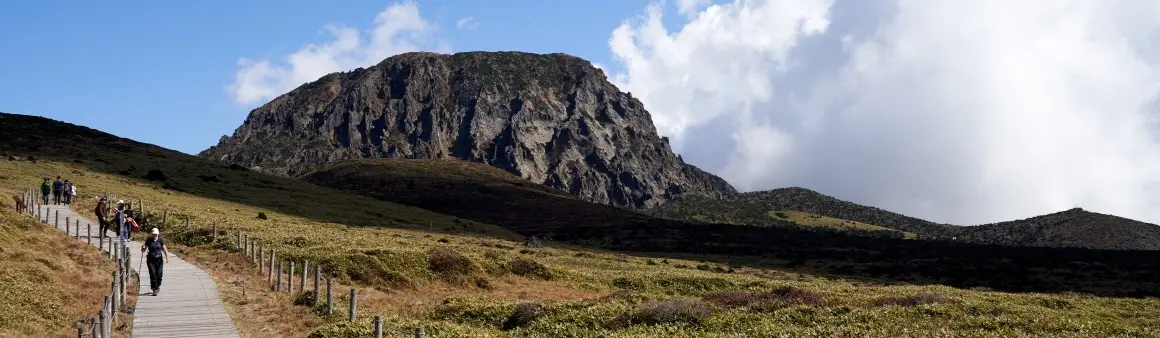
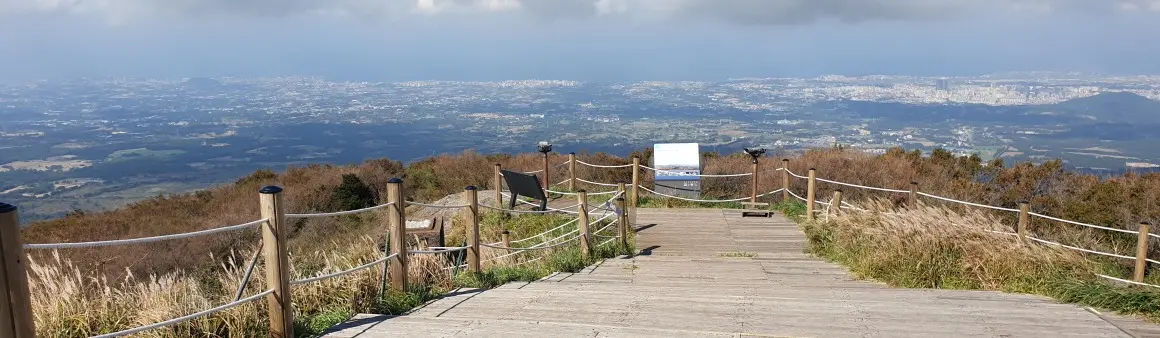
Hallasan is a mountain-weather problem as well as a hotel problem. A calm morning at the coast is not proof that the highland trail or access road is operating normally. Entry controls, heavy rain, snow, wind and road restrictions can change what is usable on the day.
Winter travelers should keep the winter Jeju base guide beside this decision because it separates mountain conditions from city conditions. If the mountain day collapses, the right response is usually to swap the day, not to defend a sunk hotel choice. Keep a rainy-day / poor-weather fallback that works from the same base.
The night after the hike matters too: where do you least want to travel once your legs are finished?
A hotel that makes the morning easier can still create a poor evening. After a long hike, the driver may no longer want the road segment that looked trivial on the booking screen. If nobody wants to navigate after dark, if dinner matters, or if the group wants a bath and an early sleep, the post-hike movement belongs in the hotel cost.
This is the same logic as the Jeju rental-car decision: a car proves you can reach a place, not that every final drive is worth doing. If the following day returns to Jeju City or the airport side, a north-side base may still be the cleanest overall. If Yeongsil/Eorimok is followed by a deliberate recovery day, a mid-mountain or southwest wellness stay can use more of what you are paying for.
Six questions decide whether the Hallasan night deserves a hotel move
- Which trailhead tomorrow? Write Seongpanak, Gwaneumsa, Yeongsil or Eorimok—not simply “Hallasan.”
- Is Baengnokdam required? If not, do not impose summit-day reservation and hotel constraints on a scenic highland day.
- Is there a current closure or access restriction? The 1 Aug–30 Sep 2026 Gwaneumsa upper-section closure is exactly the kind of fact that can reverse the booking answer.
- Self-drive or no car? Drivers must include parking-full risk and alternatives; no-car travelers must lock the first usable connection and return.
- Will the hotel's resort or wellness facilities actually be used? A 05:00 departure and a late return can turn an expensive pool or wellness promise into unused inventory.
- What happens after the hike? If you immediately move hotels again, the time saved by sleeping “closer to Hallasan” may be returned through packing, luggage and another check-in.
Baengnokdam summit day: lock the currently usable summit route first, then choose the hotel that makes the morning transport reliable. For August–September 2026, the summit is currently reachable only via Seongpanak. Yeongsil/Eorimok scenic day: the 1100-road / Route 240 pattern and your drive route matter before a generic Jeju City-versus-Seogwipo debate. Mountain resort night: it can be a great purchase, but call it what it is—a separate resort or recovery purchase. Only pay the premium when you will actually use it. The mistake is choosing a hotel that looks close to Hallasan and deciding the trailhead afterward.
Related reading
Rechecked on 20 Aug 2026. The Gwaneumsa closure and Seongpanak parking information come from Hallasan National Park / the Hallasan reservation system. Route 240 comes from the Jeju Bus Information System. Yeongsil distance and course information come from Visit Jeju. Access, parking, bus operation, road controls and weather can change; verify the official sources again for your hiking date.
Hallasan National Park — Gwaneumsa upper-section closure · Hallasan National Park — Seongpanak parking notice · Jeju Bus Information System — Route 240 · Visit Jeju — Hallasan Yeongsil Course
Actual arrangements can vary by date, season, weather, road condition, reservation quota or operating policy. Reconfirm the latest official information before booking and again before departure.