
The short answer: Jeju paragliding can be worth doing if you treat it as a wind-led activity window, not a 10 a.m. attraction at a guaranteed oreum. A tandem instructor may fly with you, but wind direction can change whether you fly, when you fly, where you meet and whether you see coast or volcanic landscape. Put it in a flexible morning or afternoon. Do not make it the last opening before a flight, a hotel move or the only clear-weather plan you cannot change.
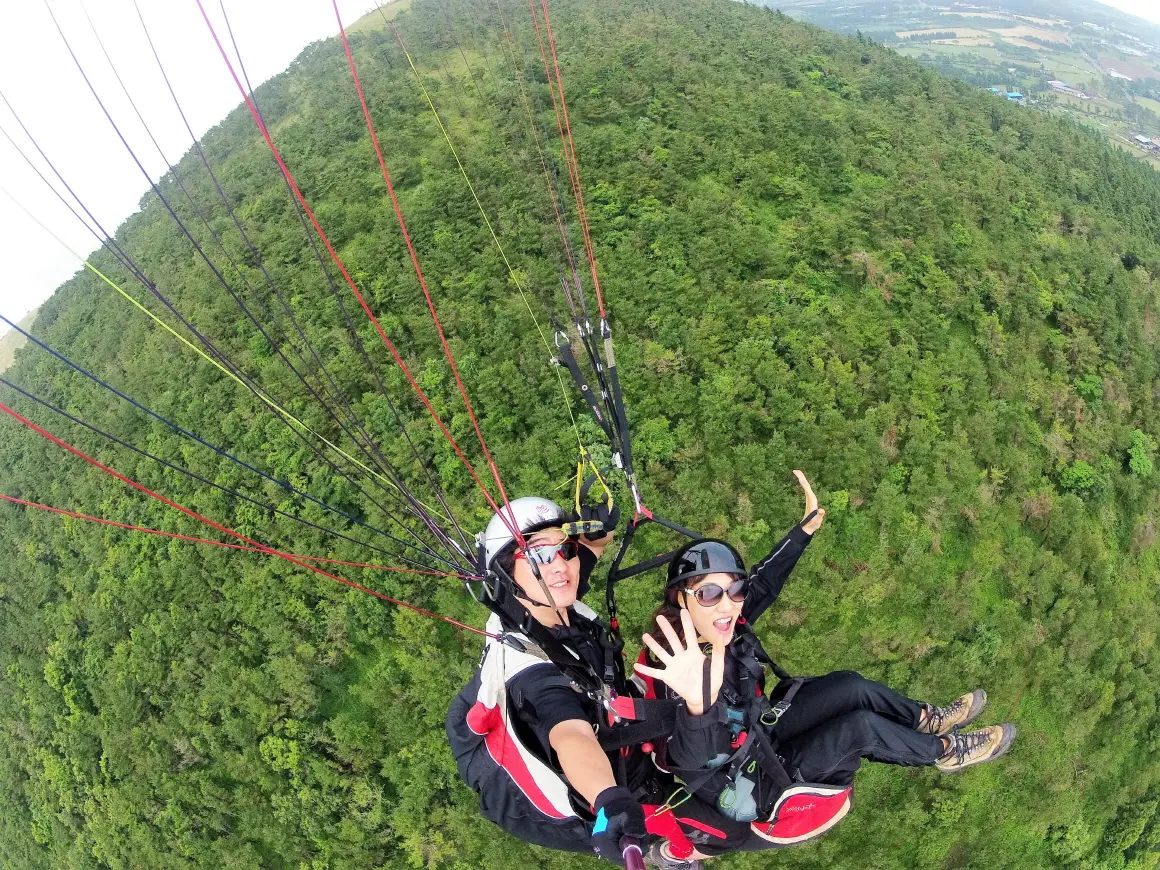
- WIND: can you accept a delay, reschedule or cancellation because of wind, rain or cloud?
- LOCATION: do you understand that the meeting point and launch area may differ—and may move with conditions?
- REFUND: have you read whether a weather cancellation and your own late cancellation follow different rules?
- Your itinerary is tight: do not use an airport day, hotel-move day or one unmovable slot.
Do not start with “where do I fly?” In Jeju, wind comes first
Visit Jeju notes that paragliding locations in Jeju depend on weather. Geum Oreum is a commonly used and popular launch area, but it is not a place you permanently lock in by paying. Another official listing also tells visitors to confirm by phone according to the weather. That is not vague marketing: it is a basic condition of unpowered flight.
The useful questions before purchase are therefore not “which photo has the best view?” but: when will the operator contact me, can the meeting and launch locations change, and what happens if the changed location no longer works for me? If the answer is only “we'll see the weather”, without a clear contact and rescheduling process, do not make the flight the irreplaceable centre of the day. Place it only after you have given the Jeju three-day route enough room to absorb change.
WIND decides whether the flight can happen. LOCATION decides the transport you need that day. REFUND decides whether a cancellation costs time, a deposit or the full amount. Until all three have a written or screenshot-able answer, do not put paragliding into the only clear morning of your trip.
Who should book—and who should pause?
It fits you if you have a movable half-day, will accept the safety team's final decision, have companions who can adjust, and want the flight itself rather than one exact sea-view photo. Pause first if losing control of the schedule will ruin the day, you have a strong fear of heights or motion, you have transport that cannot move, or you can only accept one fixed launch point.
A tandem flight does not mean every person automatically qualifies. Age, weight, health, clothing and whether you can carry recording equipment must be checked with the operator you actually choose. Do not copy another traveller's minimum weight, maximum weight or minor policy into every Jeju product. With only three days, it is usually better to decide this after your broader car-rental choice, not before it.
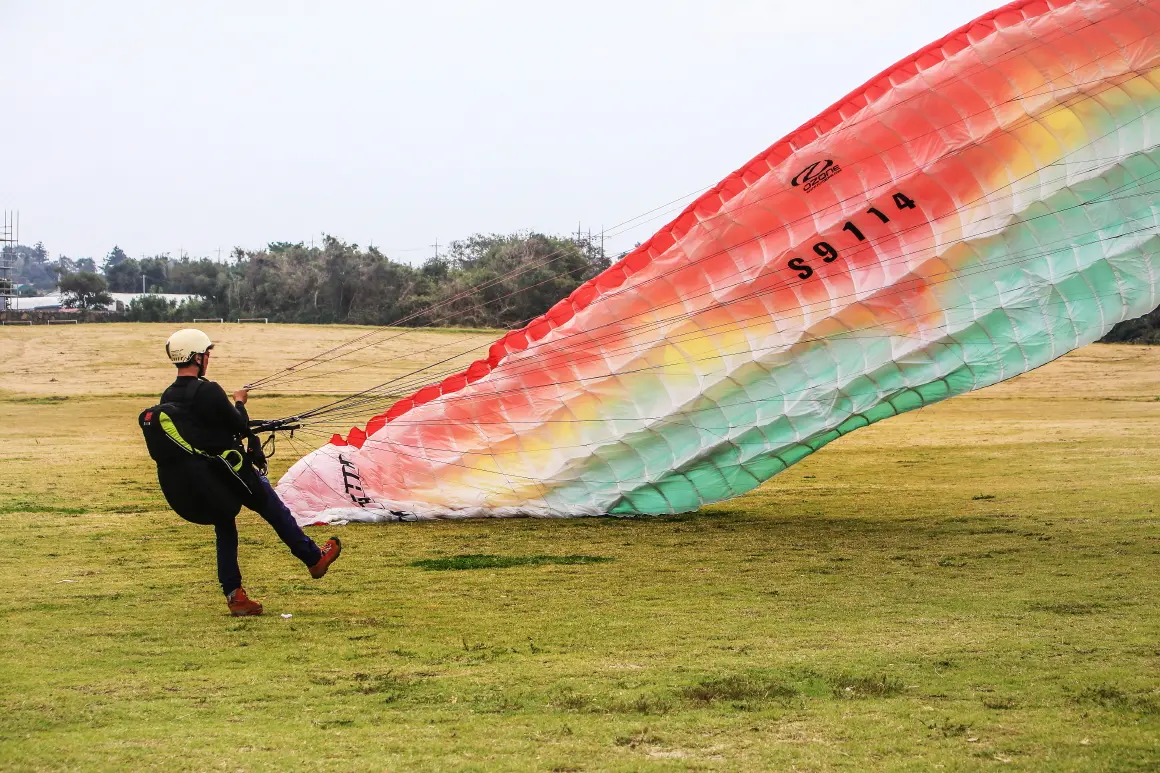
Which day should hold it? Never the day that cannot bend
The strongest place is often the middle of the trip: you have already arrived, and the next day can still move if the flight cancels. A cancelled slot can become a café, coast or oreum walk instead. The weakest place is arrival day, checkout with luggage, the last afternoon before the airport, or a day where car-return time is fixed. If that flexibility changes your base choice, settle where to stay in Jeju before you promise a flight to the day.
For travellers without a car, the meeting point deserves special attention. It may move with wind; that is more important than the office address shown on a booking page. Compare the practical limits of renting a car in Jeju with getting around by bus before assuming that every operator includes hotel pick-up. If you are landing early, the decision about renting immediately or waiting until the next morning also changes how much meeting-point flexibility you have.
Safety and equipment: verify the process, not the photo
Official tourism material describes a suitable launch area as needing an appropriate slope and no problematic headwind or obvious obstacles. That does not make the visitor responsible for judging whether a launch is safe. It means the final decision belongs to the trained people on site. A plan that ignores wind because a reservation exists is not a reassuring plan.
Ask before payment: how can instructor qualifications and operating permission be checked; what does insurance cover; which language is used for the safety briefing; what are the helmet, outerwear and shoe requirements; are photos or video extra; and what happens if weight, health or on-site condition does not qualify? Those answers affect the day far more than an advertised average flight duration.
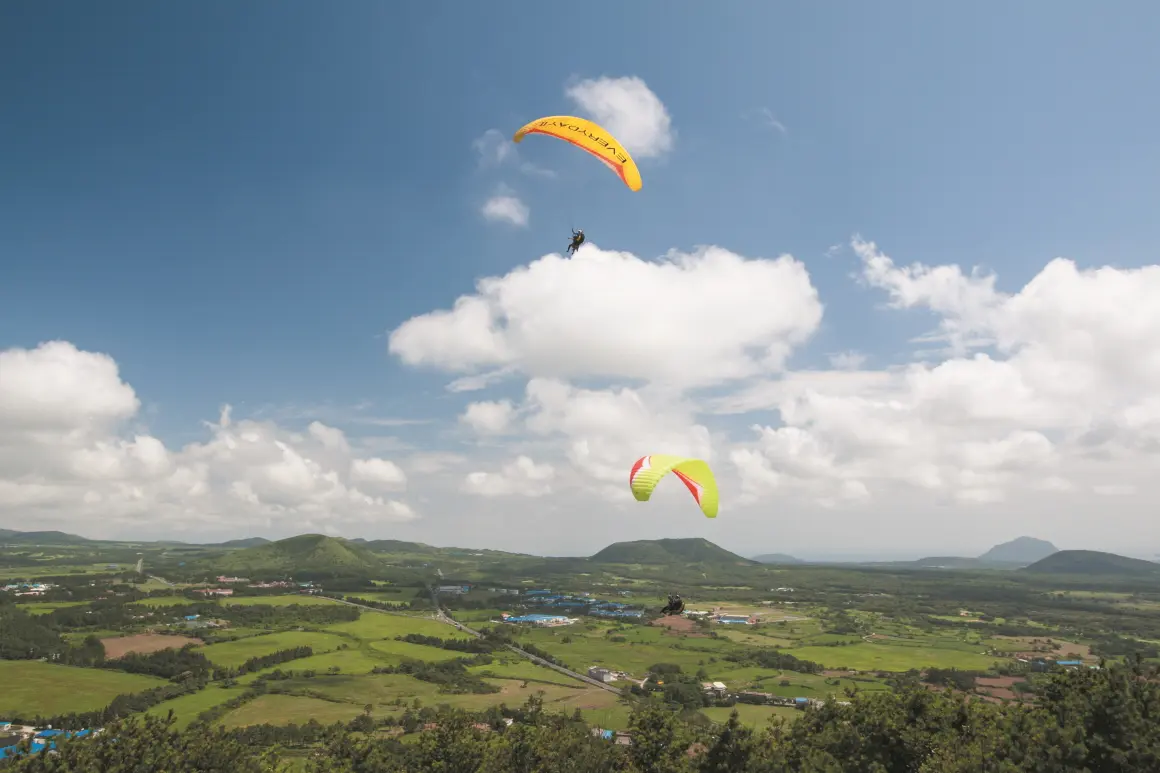
Cancellation and refund: two different cancellations are often confused
“The weather makes the flight impossible” and “I no longer want to fly” are usually not the same event. A sales page may offer a full refund under a weather warning while setting different charges for a personal reschedule, a cancellation a few days before, or a no-show. Those conditions belong to that product and operator; save the product page, operator confirmation and payment-platform terms for the booking you make.
Do not choose a non-refundable option only to secure an early price if you cannot accept its outcome. Jeju weather changes quickly. The better value is not the lowest advertised figure but an arrangement that still leaves you with a good day when the wind changes.
Write the weather Plan B before you leave
If the activity cancels, do not start looking for an alternative at the meeting point. Keep an oreum walk, café, museum or coast stop available in the same broad direction, but do not claim it will always be beside the launch: the meeting place can move. Use Jeju east versus west to avoid a backup that creates a new cross-island trip. For a wet day, go directly to the Jeju rainy-day plan and reorder the itinerary instead of waiting for a flight that may not happen.
This is also why the draft has no hard booking CTA. Before you have confirmed wind, meeting, eligibility, refund and insurance, “book now” merely moves the uncertainty to after payment.
Eight checks before you leave
- What are today's wind conditions and final meeting or launch point?
- When will the operator notify you of a delay, reschedule or cancellation?
- Do you meet that operator's age, weight and health requirements?
- How are instructor qualifications, safety briefing and insurance confirmed?
- How do weather cancellation and personal cancellation differ?
- Is pickup included? If not, how will you reach a moved meeting point?
- Are photos, video, a longer flight or other extras charged separately?
- What exactly is your Plan B if it does not fly?
Worth doing: you have a movable half-day, accept that wind leads, have checked eligibility and refund terms, and want the flight rather than a fixed-background photo. Skip it for now: it is airport day, there is no backup, you cannot accept a moved location or cancellation, or the operator cannot clearly answer safety and terms questions. Jeju paragliding can be an excellent outdoor activity, but only once “a good day even if we do not fly” is built into the plan.
Next step: keep the activity inside a flexible Jeju itinerary
Set your coast, oreum, hotel and transport direction first, then decide whether a flight fits. The issue is itinerary resilience, not pushing a purchase.
Checked for this draft: 2026-08-23. Visit Jeju provides the weather-dependent location guidance, the common Geum Oreum context and tandem-flight material. This article deliberately does not treat any one operator's age, weight, price or refund detail as a rule for all Jeju flights; confirm those with your chosen operator and payment platform at booking.
Visit Jeju | Activity and location guidance · Visit Jeju | Paragliding Jeju · Visit Jeju | Paragliding school · Visit Jeju | Paragliding safety context