
The most common mistake on a family trip to Nami Island isn’t forgetting snacks. It’s stacking every place a child might like into one day: Nami Island, alpacas, the rail bike, and a garden. Each stop sounds reasonable on its own, but together they become a cycle of early departure, bus rides, lines, bathroom stops, and getting back on the bus again. A child laughing at the first stop doesn’t mean they’ll still be cooperative at the third, and parents wanting to fit in one more attraction doesn’t mean that’s what the child will actually remember. First decide which one wish the whole family absolutely wants to keep, then leave room you can cut from nap time, meals, and the return to Seoul. That’s what makes a day trip feel like a real trip.
Let your child choose one thing they would be disappointed to miss
Before you leave, don’t ask, “Do you want to go to Nami Island, see alpacas, ride the rail bike, and visit the garden?” You’ll almost certainly get yes to all of them. Instead, ask: if you can only choose one thing today, what do you most want to tell people about when you get home? If your child wants to feed animals, the alpacas or a zoo should be the main event. If they want to pedal together with mom and dad, the rail bike is the main event. If they just want a boat ride, trees, and snacks, Nami Island alone is enough. This isn’t about restricting the day; it’s about making sure the rest of the schedule doesn’t become a countdown to the next stop.
Adults should each choose one thing they can’t give up, too. If one parent cares most about seasonal scenery and the other only wants to tire the child out, acknowledge that those priorities may conflict. Don’t try to squeeze everyone’s wish into one group package and hope the transport happens to work out. Saving one wish for another time is usually a better trade-off than wearing the whole family out in the car that day.
Nami Island suits children who can walk on their own, but that doesn’t mean it suits a full day of walking
The island has space, shade from trees, and less vehicle traffic, which makes it appealing for children who need room to move. But getting from Seoul, boarding the bus, arriving at the ferry dock, crossing to the island, eating, and heading back is already a series of transfers that require cooperation. A child who can run around in a park for two hours is not necessarily willing to keep lining up for photos after an early wake-up and a long ride. Separating “can walk” from “can handle a full day of transfers” is what makes the itinerary realistic.
Stroller use, nap time, diaper changes, spare clothes, and when hunger tends to hit often matter earlier than the attraction names themselves. If your child needs a nap, don’t choose a multi-stop tour that gets off the bus every 90 minutes. If you’re bringing a stroller, check the actual route at the ferry dock, on the vehicle, at the meeting point, and inside the attraction instead of assuming “allowed” means “easy all the way.” If any part of the day means one parent has to carry the child the whole time, the relaxation of the island is already gone before departure.
Alpacas are the destination, not a reward for getting a child through the afternoon
When a child genuinely loves animals, Alpaca World or a similar animal experience may be more worthwhile than Nami Island, and in that case lunch, rest, and dwell time should be planned around it rather than tacked onto the end of three consecutive stops. Animal experiences involve outdoor distances, feeding or interaction rules, weather, and how a child reacts to unfamiliar animals. It’s completely normal to arrive and realize the child is scared or tired. Parents should leave room for “just watch today, don’t feed” or “leave early.”
If your child only thought the animals looked cute in a photo and hasn’t kept bringing them up, don’t build the day around them just because they’re included in the package. Adding an animal stop usually means another round of getting on and off transport, gathering the group, and deciding when to use the restroom. For adults that’s just time; for children it’s an emotional reset every time. A walk on Nami Island plus dessert, a boat ride, or a break on the grass may leave behind a more complete family memory instead.
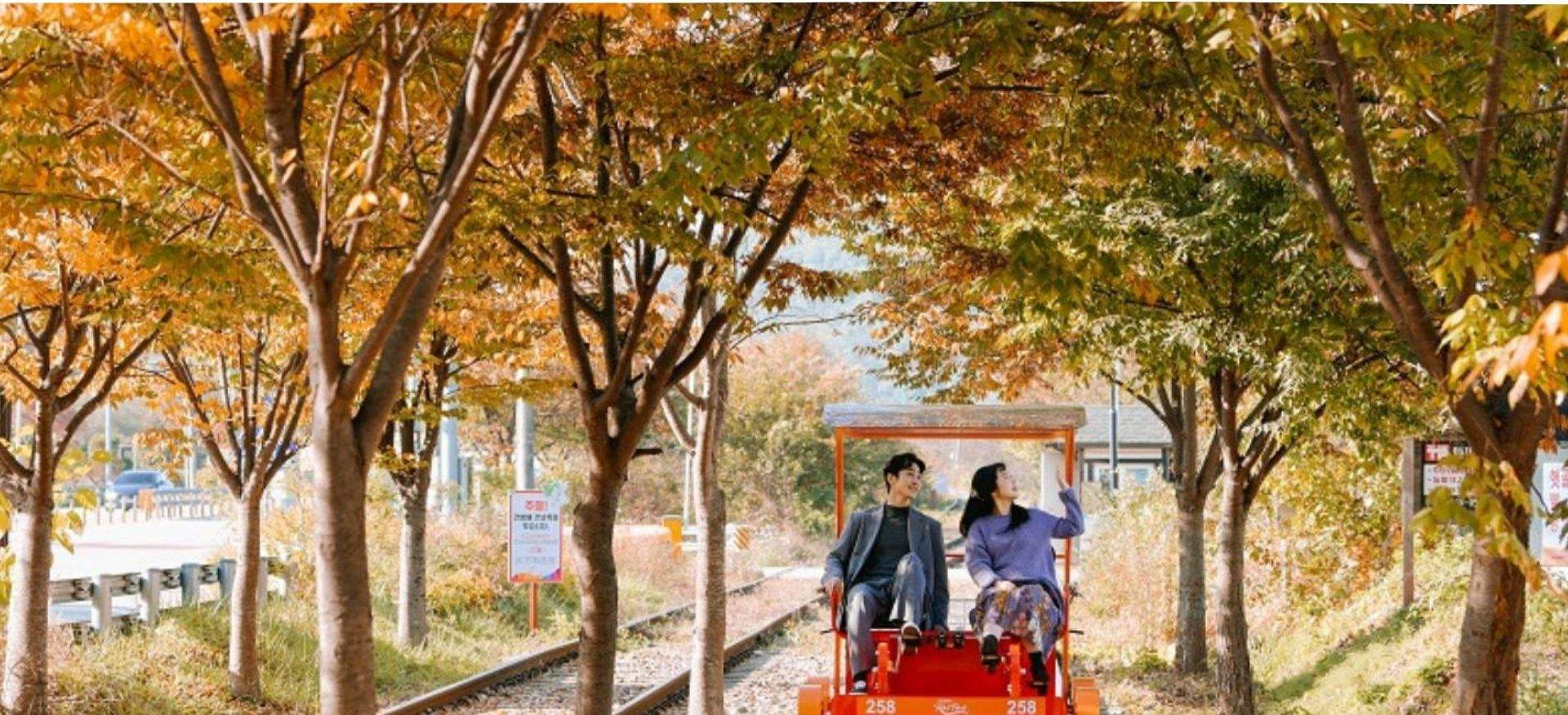
The rail bike has to pass one test first: can the child stay seated, and can the adults still pedal?
The appeal of the rail bike is shared participation, not putting the child into a moving photo backdrop. First check the number of people in the car, seat arrangement, age or height rules, weather, the waiting time before and after boarding, and whether everyone still has enough energy that day. Younger children may find it exciting, but they may also want to get off halfway through. Parents, meanwhile, have to pedal while handling water, jackets, snacks, and safety reminders. If any part of that makes you think, “We can only hope they make it through,” it shouldn’t be a must-do today.
If you want to add the rail bike, first read whether it should be the main wish or an extra stop to cut. If the answer is add, then treat it as the day’s main activity and leave Nami Island as a short walk and meal stop. If the answer is cut, don’t try to fill the gap with another attraction just because “the ticket’s already booked.” Losing one fixed transfer is often where a family day actually gains breathing room.
The value of a family group tour is that someone else handles the route; the downside is that the child can’t change the schedule for everyone
If this is your first time taking a child to the outskirts of Seoul, you’re unfamiliar with transfers, and the people you’re traveling with don’t want one person to be responsible for all the navigation, a group tour can handle the vehicle, sequence, and return trip so parents can focus on the child. That outsourcing is valuable, especially when weather changes or there are multiple stops. But a tour won’t stop just because the child is hungry, tired, or wants five more minutes. When choosing a tour, the key question isn’t “does more sightseeing equal better value?” but whether there are enough few stops and a clear meeting arrangement.
The advantage of independent travel is that you can leave early, delay lunch, or drop one thing at the last minute. The trade-off is that parents must confirm transport, the ferry dock, and the return trip themselves. A simple way to decide: if the child’s rhythm is steady, you’re only going to Nami Island, and the parents are willing to handle transfers, choose independent travel. If there’s a specific wish for alpacas or the rail bike, and the parents don’t want to watch the clock all day, choose a group tour with fewer stops. For a fuller look at the transport trade-offs, see the timeline comparison of independent travel and group tours to Nami Island.
Getting back to Seoul and only having dinner and a shower left doesn’t mean the day was wasted
The most dangerous family day trip plan is to schedule a concert, night view, popular restaurant, or another activity that requires a fixed arrival time after you return to the city. Traffic, crowds, and the child’s condition will already make the return trip uncertain. Even if you get back on time, everyone may only want a shower. If dinner is near the hotel and the evening can be canceled at any time, the effort you put into the morning won’t turn into an argument at night.
Make “things we can drop” part of the itinerary, not something you just hope for in your head. Before you leave, agree that if the child is clearly exhausted at the second stop, you skip the third; if the rain is heavy or clothes get wet, you head back; dinner can become delivery or a nearby hotel meal. A pre-agreed stop line isn’t being a buzzkill—it prevents sunk costs from forcing everyone to lose patience. If you can still laugh your way back to the room at the end of the day, that’s the real sign the family outing worked.
Before choosing a plan, translate the family’s answers into something you can actually execute
For example: “Our six-year-old wants to see alpacas, both parents don’t want to leave at dawn, naps can happen in the car, and we don’t want an evening activity.” That naturally rules out plans with three or four stops, late returns, or awkward meeting arrangements. Or: “Our ten-year-old wants to ride the rail bike, the whole family can wake up early, and Nami Island only needs a short walk.” In that case, the rail bike should be the main focus, and there’s no need to squeeze the garden in too. The more specific the sentence, the less likely you are to be pulled by the words “family favorite” into a day trip that doesn’t fit your family.
Once that’s clear, go back to the named itinerary comparison for Nami Island, alpacas, the rail bike, and the garden to check exact dates, meeting details, age rules, inclusions, and cancellation terms. If you still haven’t chosen the main wish, return to the main Nami Island decision page and decide what this day should trade for. Be sure to tell any accompanying grandparents the stop line too, so the most exhausted person isn’t the one forced to say no on site. No family package can make that decision for you.
A child’s patience is part of the itinerary, too
Keep the afternoon open for your child: just five checks
- First decide whether a full day is worth giving up
- Is the rail bike really the child’s main wish?
- Who will handle transport and multiple transfers for the whole family?
- In the named package, keep only the stops you actually want
- After returning to Seoul, leave room for naps and rest before other family activities
Sources and cross-checks
- Klook: product page for Nami Island, alpacas, and nearby multi-stop tours
- Gangchon Rail Park: booking, cancellation, and on-site rules
- VISITKOREA: Nami Island visitor and transport information
- Age, height, seating, strollers, meeting points, weather, attraction combinations, and cancellation rules can all change. This article was checked in August 2026; before paying, please rely on the exact-date activity page and official notices.