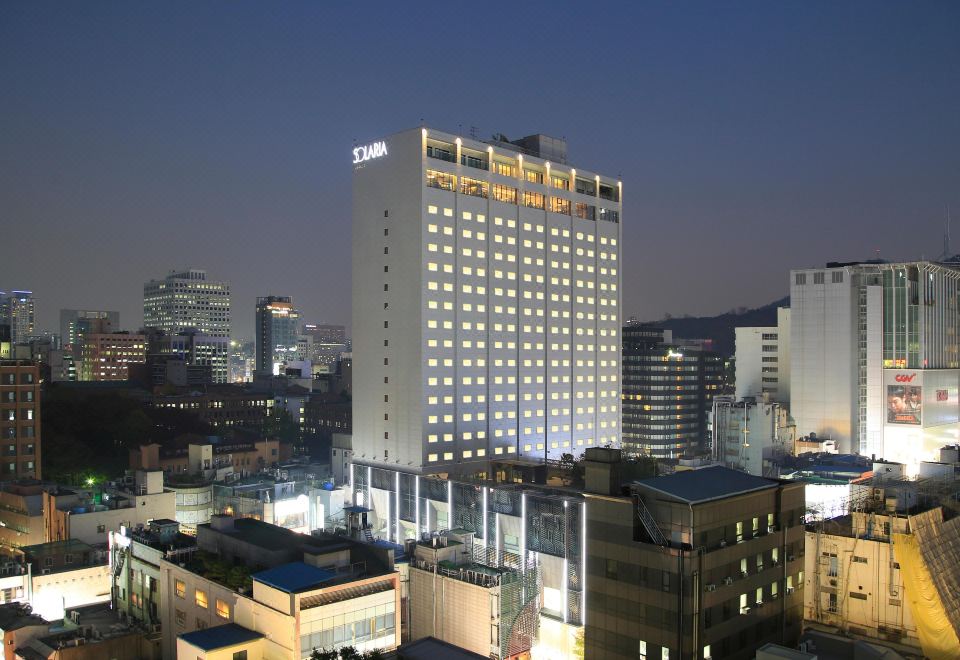
Are you paying for the ability to step straight into the main street, or are you leaving the last stretch to your luggage?
Solaria Nishitetsu Hotel Seoul Myeongdong is at 27 Myeongdong 8-gil, right above one of the busiest shopping pedestrian zones. For anyone who wants to keep wandering after dinner, head back to the room after shopping, then go out again for a late-night snack, that is a very direct advantage; it turns “Do I really need to walk back to another corner?” into something the elevator can solve. But that same advantage also comes with a trade-off: the main street is not a place where taxis and luggage can always pull up to the door.
Hotel and platform notices indicate that during parts of the day through late night, vehicle access is restricted in the area, and the closest drop-off point may be around Myeongdong Station exits, which still means some walking. This is not a reason to give up on it; it is a reason to finish one unfinished check first: can your arrival time, suitcase size, and travel companions handle that final walk? If the answer is uncertain, read luggage arrangements before check-in first, so the main street’s energy does not turn into a luggage problem once you arrive.
“Myeongdong center” sounds like a one-size-fits-all answer, but what kind of night do you actually want?
“Central Myeongdong” sounds like a universal answer, and that is exactly where the Barnum effect shows up most easily. For families with children, “center” may mean being able to return to the room at any time; for two friends, it may mean meeting easily after splitting up to shop; for first-time visitors, it may simply mean avoiding a bad choice. These three needs should not be flattened into one adjective. Solaria suits trips where nighttime plans repeatedly land in Myeongdong, where someone needs to return to the room in the middle, or where shopping is spread across several time slots.
It is not a good fit if you spend almost all day in the palaces, Hongdae, Seongsu, or Gangnam, and only pass through Myeongdong once at night. In that case, staying in the liveliest part of town is not being used repeatedly, but it may make arrival and checkout more complicated. First use how to read addresses on either side of Myeongdong to clarify the exit and return route you actually need, then decide whether you really need to stay directly above the main street.
Late-night convenience has to be weighed against the cost of getting out in the morning
A hotel on the main street makes it easy to picture only the evening: coming back to the room when you are tired, heading back downstairs after a shower, or shopping separately without worrying about finding each other. But if you need to leave early the next morning for Gyeongbokgung, Bukchon, Seoul Station, or the airport, the real question becomes which exit you will use with your luggage, whether breakfast will slow you down, and whether everyone in your group can be ready at the same time. A smooth late-night return does not mean an equally frictionless early departure; both sides need to work before the location is truly confirmed.
This is where the unfinished-effect is most useful before booking: do not only complete the mental picture of “the evening will be convenient”; you also need to complete the script for “how we leave in the morning.” If your itinerary only includes Myeongdong on the first night and then moves on to Hongdae or Gangnam the next day, staying on the main street may not save as much as you expect. Treat the hotel as the end point of each night, not as a pretty city map, and you will avoid many of the gaps people notice only after check-in.
Do not turn renovation, ratings, and photos into one promise
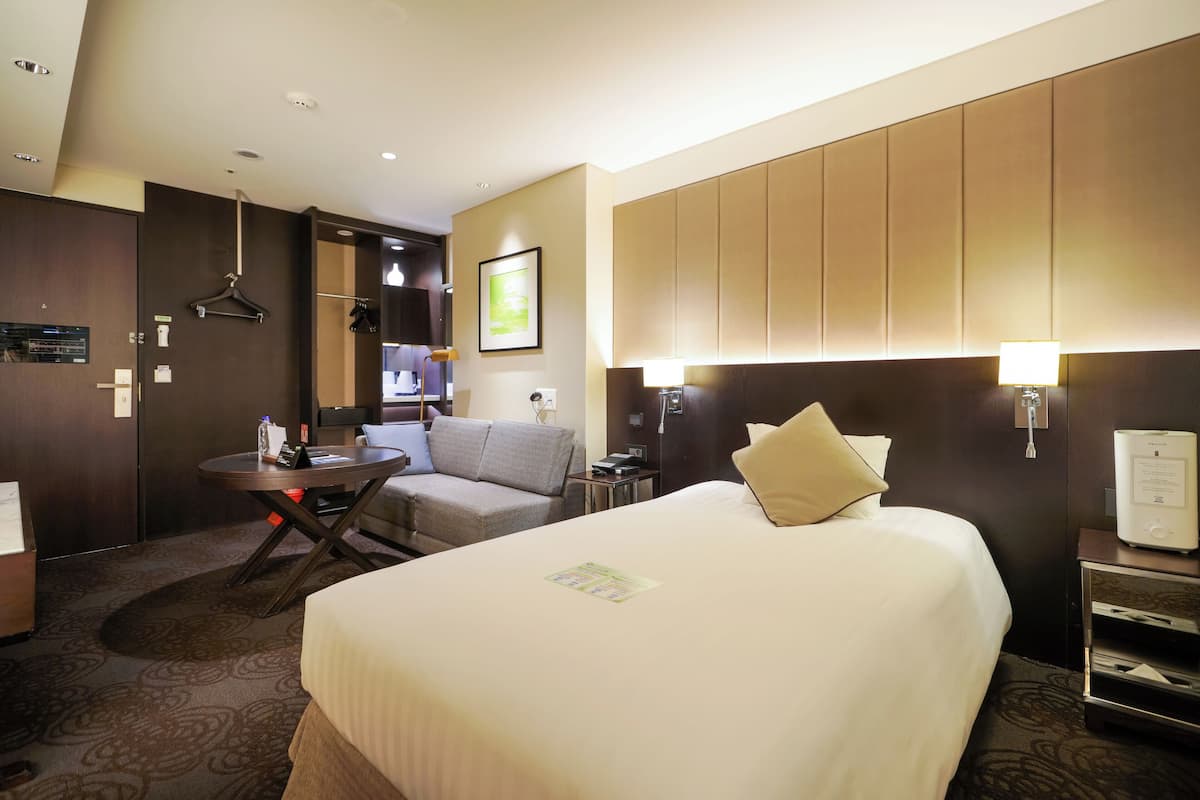
Platforms may show a recent renovation, a high location score, or attractive new rooms, but each of those answers a different question. A renovation does not guarantee that every room type uses the same setup; a location score does not mean the main street entrance is ideal for dragging luggage; and the sofa, bathroom, or view in a photo does not guarantee it will appear in your exact room type. This is not nitpicking for its own sake; it is to avoid combining three good signals into a conclusion that no page has actually promised.
A simple comparison method works here: the room name, bed count, windows, bathroom, and maximum occupancy on the booking page should match at least four of your needs before you keep it in your final three options. If one is missing, ask the platform first; do not fill in the gap yourself. That kind of caution is especially useful for light sleepers, families, or friends traveling together, because the real loss is not one fewer decoration in the room, but having to compromise on the bed and space every day of the trip.
Solaria versus other central Myeongdong options: the difference is where you are spending the money in time
Compared with Lotte Hotel Seoul, Solaria is not about indoor department store connections or a wide range of in-house facilities; it puts the budget into nighttime density above the main street. Compared with Westin Josun Seoul, it offers less of that “you can stay quietly in the room for a while after you return” hotel feeling, but it more directly supports people who want to keep staying in Myeongdong. Do not ask which one is better overall; ask what you most want to protect: the five minutes after shopping, or one genuinely restful stretch during the day.
If you only need a standard central-city return point and want more room-rate flexibility, you can also compare it with Sotetsu The Splaisir Seoul Myeongdong; they should not be treated as the same product just because they both say Myeongdong. Choosing a hotel is not about finding a personality everyone likes, but about keeping your trip from falling apart at the moment you are most tired.
A windowless room is not just a cheaper version of the same room; it is a different choice for sleep and daytime rhythm
The platform may list windowless rooms, standard rooms, twin rooms, family rooms, and higher-floor options at the same time. Do not treat them as the same product with different prices just because the brand, decor, and address are the same. A windowless room may be reasonable for someone who returns late, spends the whole day out, and only needs a quiet night’s sleep; for people dealing with jet lag, needing natural light, working in the room during the day, or feeling closed in easily, it can become a loss that is hard to fix after check-in.
Seeing “sleeps two” does not mean both guests’ luggage and schedules will fit comfortably. If your companion needs a different bed, someone goes to sleep early, or someone needs to sort shopping in the room, write the bed type, walkway space, bathroom layout, and windows into your comparison sheet first. If that check is not done, do not let a low price push you into paying. When you need a triple room or a parent-child setup, use the Seoul triple-room bed type checklist to rule out unsuitable room names; it is much cheaper than trying to change rooms on arrival.
Street noise is not the only risk; air conditioning, window direction, and cleaning rhythm should be checked separately
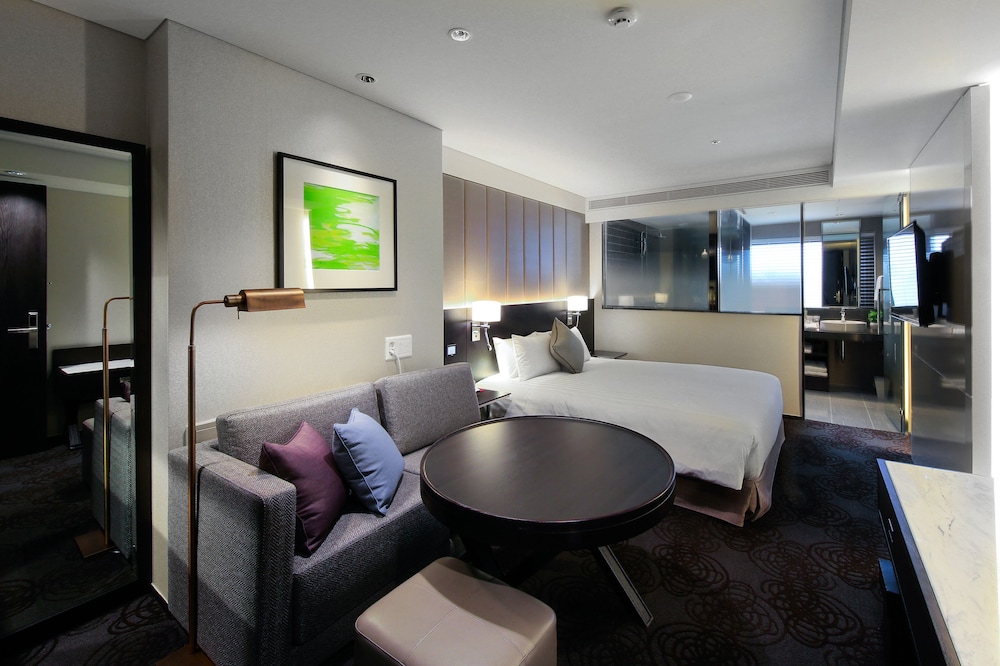
When staying in a busy district, noise is the most obvious issue, but it is not the only variable. If you are sensitive to sound, check recent guest comments on soundproofing, hallways, air conditioning, and street-facing rooms; if you are sensitive to heat or stuffiness, confirm the seasonal air-conditioning setup as well. The hotel’s centralized heating and cooling rules may change by season, so you should not assume that a photo of air conditioning in the room means you can control it yourself in any month. When choosing a room, break the sleep risk down into the floor you are on, the window direction, and the month of your stay, rather than just asking whether Myeongdong is noisy.
Cleaning and amenities should also be checked against the current policy. Some travelers care about a full daily reset; others only care about clean towels and trash removal. Those are not the same thing. If this trip includes an early flight, sensitive sleep, or a lot of luggage, first look at Seoul hotel sleep-condition checklist and do not assume every detail will suit you just because the rating is high.
Breakfast and the main-street location only become an advantage if you are willing to leave one morning open
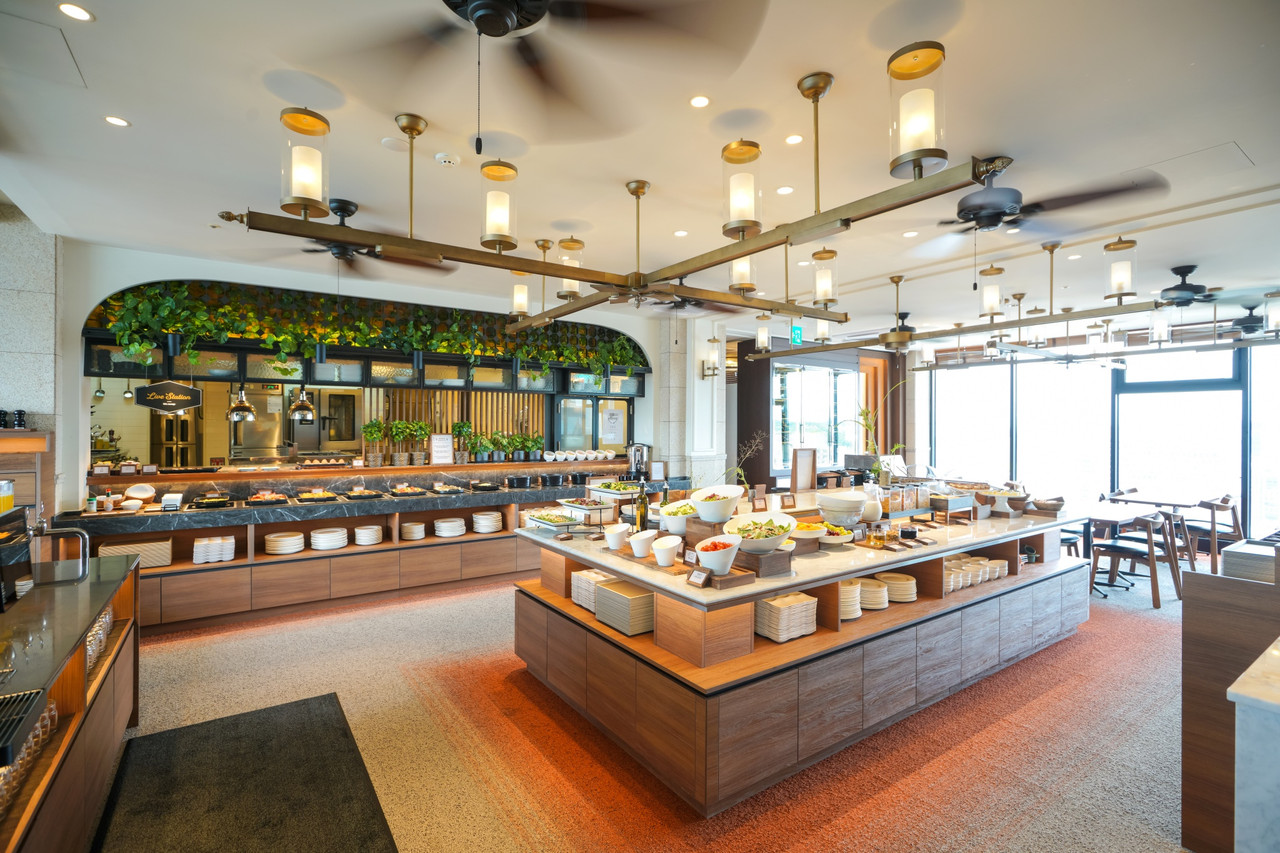
Breakfast looks like a form of safety, but it should not replace your morning decision-making. If you need to leave for Bukchon, Gyeongbokgung, or the airport by 8 a.m., first check whether the departure time and plan are actually worthwhile; if your travel companion needs breakfast before they have enough energy to shop, then eating in the hotel may be the only way to reduce coordination cost. The same logic applies to the main-street location: you only have a reason to pay for it if you will truly spend one evening or afternoon in Myeongdong.
Finally, fix the stay date, number of guests, exact room name, windows, bed type, breakfast, taxes, and cancellation deadline, then open three platforms. Confirm the hotel name is Solaria Nishitetsu Hotel Seoul Myeongdong and the address is 27 Myeongdong 8-gil; do not mix in similarly named hotels or properties on different streets. What you still lack before booking is not more reviews, but answers to your own luggage, sleep, and nighttime return needs.
Once those answers are written into the same itinerary sheet, then you can pay without letting “the location is great” replace the actual decision. A hotel is not a prize for your trip; it is the place you still need to be able to return to when you are at your most tired. If you still cannot answer one of those questions, keep the cancellable option and give tomorrow’s plan room to change, while reducing pressure on your companions.
Further reading
The convenience of a main-street entrance only shows its value when your dinner plan changes
Solaria’s location does not make everything in Myeongdong closer; it makes last-minute changes less costly. If it rains, if a travel companion wants to return to the room first, if you buy something you need to put down, or if dinner shifts from Jongno to Myeongdong, staying near the main street lets you finish one leg and then choose the next. That flexibility is easy to hide behind the phrase “it’s lively”; for people who still go out at night, it is an advantage, while for those who want to sleep early or head to another district first thing every morning, the effect may be the opposite.
So do not only ask whether it is noisy outside your window. Check the time you expect to return to the room, the direction your room faces, and whether repeated trips in and out are likely because your companions are on different schedules. If you use the hotel as your evening meeting point, the main street saves time spent finding each other and waiting; if you want the room to be a quiet finish, read the room type and the real noise conditions in reviews before deciding whether this address is worth it.
Next step: put Myeongdong hotels back into the actual trip
- Where to stay in Myeongdong: the last stretch from different exits
- Sotetsu The Splaisir Seoul Myeongdong’s central-location trade-offs
- Solaria vs. Sotetsu: how to choose between the main street and central-city return
- Lotte Hotel Seoul: deciding between department store access and tower access
- Hongdae vs. Myeongdong: the night you least want to walk far
- Seoul hotel comparison map