| The situation you’re stuck on | Is this hotel a fit? | Check before booking |
|---|---|---|
| Spending the day in the city center, then deciding at night whether to go to Myeongdong or Namdaemun | Yes; your return options aren’t limited to one district | Actual exit, luggage route, and the last stretch on foot |
| Traveling with someone who shops while another person heads back early | Conditional fit | Exact bed setup, room layout, and bathroom configuration |
| Two nights in Hongdae, or a trip built around catching the KTX | Usually not the first choice | Compare it with a Hongdae base or a Seoul Station base first |
Myeongdong is not the only answer; the evening return is
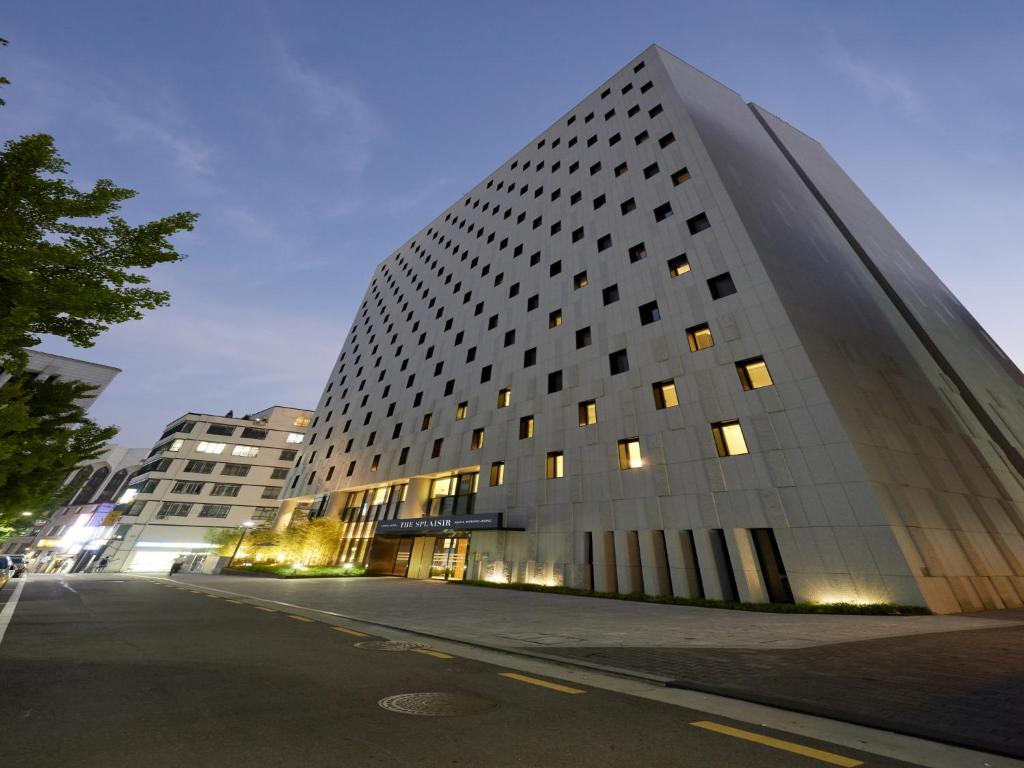
A lot of people see the name and assume this is a shopping hotel, then only ask how many minutes it is from Myeongdong Street. But once you fold the city center into an itinerary of three days or more, the part that really drains your energy is usually not the trip to the shops. It’s the fact that everyone wants to head somewhere different when the day ends: one person still wants to shop, another wants to go back to the room, another has finished dinner in City Hall, and someone else is just coming back from Namdaemun Market with bags in hand. What makes this hotel useful is that you don’t have to decide at the start of the trip that every return must be locked into “Myeongdong Station in, Myeongdong Station out.” If your schedule leans toward palaces or City Hall in the morning and Myeongdong later in the afternoon, having the freedom to decide where to go a little later is usually more practical than staying right on the busiest intersection.
On the other hand, if both of your nights are in Hongdae, Yeonnam, or Hapjeong, staying here just means sending yourself back to the city center every day. The hotel name having Myeongdong in it does not make that convenient. For that kind of trip, first compare the evening rhythm of two Hongdae hotels; if day one or the last day involves the KTX, AREX, or a lot of luggage, put the move-day advantage of Four Points Seoul Station on the same page. This is not about which one is more upscale; it’s about which address shortens the hardest part of your route.
Once there are more people, the room type decides the answer before “Myeongdong center” does
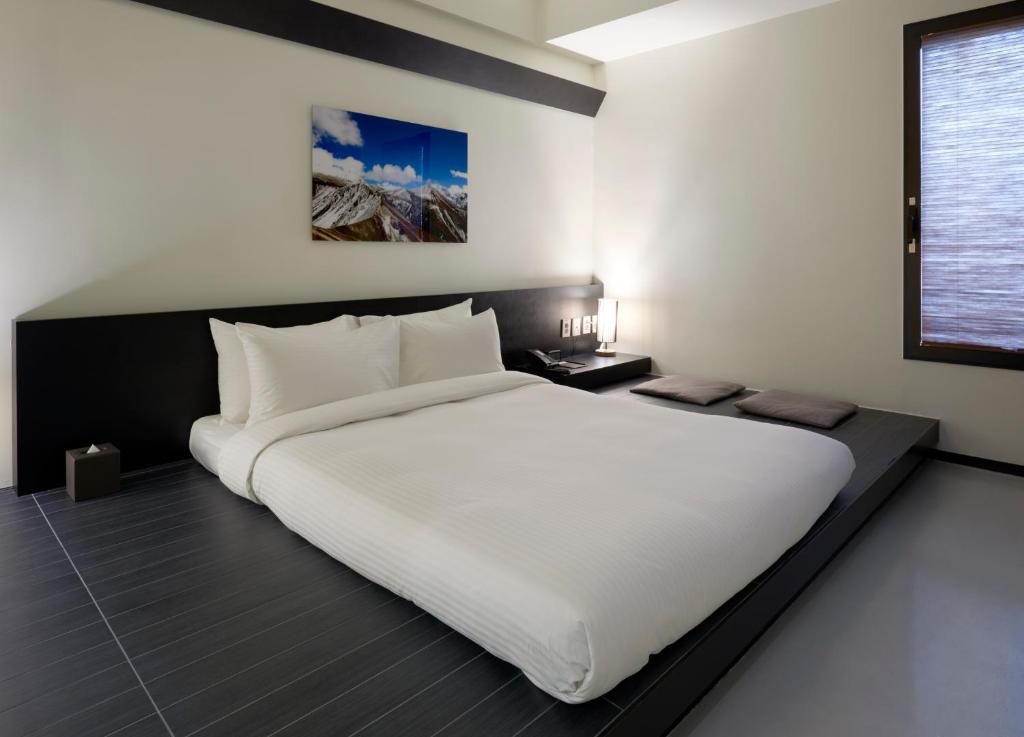
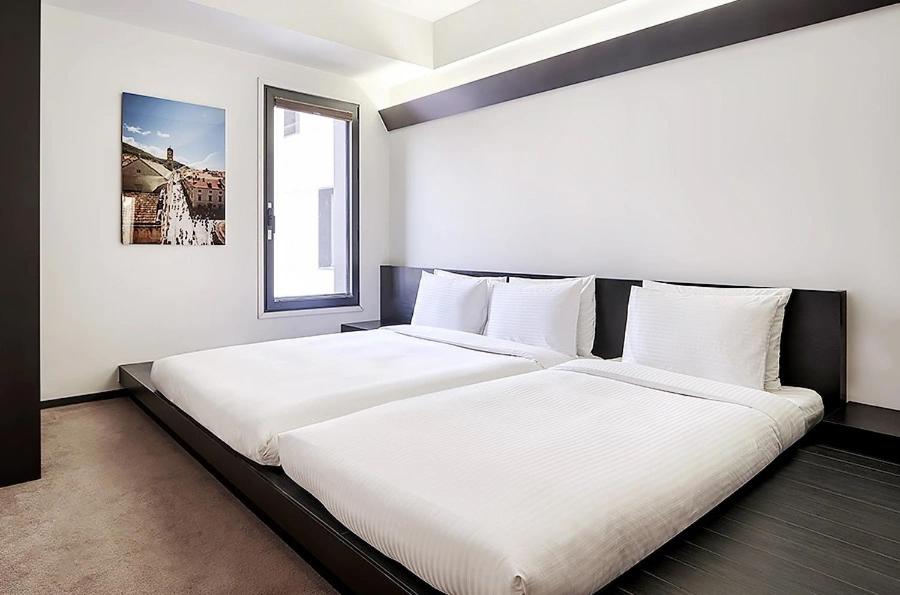
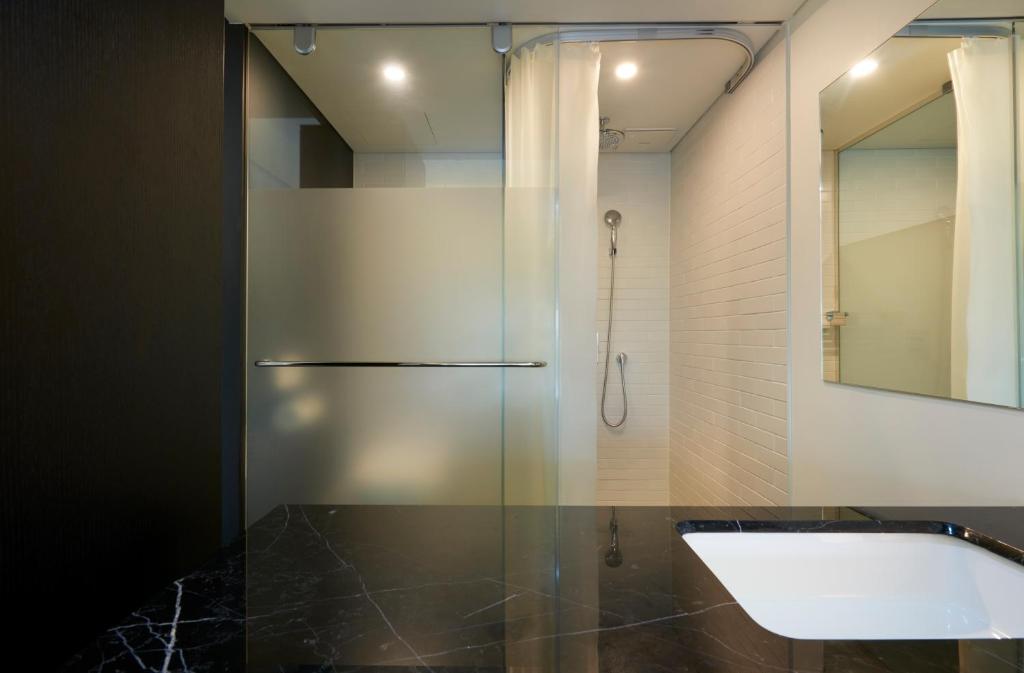
The official listing includes different types such as Double, Twin, and Family Twin. That information only makes this hotel a candidate; it does not automatically make it suitable for three people or a family. If a platform shows “fits three” in the search results, that may mean an extra bed, a different bedding setup, or a payment condition you didn’t notice. When three people all have luggage, one wants to shower early, and another wants to organize shopping before bed, the layout between the entrance, beds, and bathroom affects the next day more directly than whether the neighborhood downstairs is a commercial district. Use the Seoul triple-room bed setup check to compare line by line; if the bed type doesn’t match the actual dates, don’t count the large space shown in the sample photos toward your budget.
If your travel companions may split up after dinner, this kind of middle-ground base starts to make sense. Staying in an area with only one kind of nightlife means everyone has to end the night in the same direction. Staying on the edge of the city center lets one person head back first while another keeps wandering, without forcing the whole group to reroute the next day just because of last night’s decision. Even so, that is still not a reason to assume “more subway lines is always better.” If your daily destinations are all on the southeast side, Gongdeok or Seoul Station will not replace an east-side base just because the transfers look better on paper. First use one hotel or two to rule out unnecessary room changes, then compare the options that still remain on the table.
Rain, shopping, and sudden room breaks quickly reveal whether a city-center base works
This hotel is especially suitable for itineraries with a lot of “not sure yet whether to go back to the room” time. Myeongdong shopping is not always an uninterrupted all-day affair: clothes and skincare bags get heavier, the rain suddenly gets worse, someone wants to change clothes before dinner, or a travel companion decides to keep going only after resting in a café. If your place is on the edge of the city center you were already moving through, going back to drop things off is not a group decision everyone has to agree on. It lets the people who need to go back do so first while everyone else continues as planned. That kind of convenience is less eye-catching than “the district starts right at the hotel door,” but it is often what keeps a multi-person trip from turning into one more argument.
But don’t read that as meaning it suits every kind of weather. On rainy days, if your main backup plan is indoor malls, museums, or cafés, first check which line you’ll use to leave after the last activity ends. If you still have to cross two unpleasant stretches of street or transfer while carrying shopping bags, a hotel in the city center does not make the distance disappear. Before booking, separate out the rainy-day version of the itinerary and write down the chances of returning to the room after lunch, after shopping, and after dinner. Only if you will genuinely pass through Namdaemun or the Myeongdong area at least twice does this base offer noticeably more value than a simply cheaper option.
If you choose the wrong exit, two nearby stations can feel like two very different stays
City Hall and Hoehyeon may look like two nearby points on a map, but with luggage, a stroller, or older family members, stairs, slopes, crossings, and underground passages matter more than straight-line distance. Don’t just search for “how many minutes from the subway.” Open the actual exit you’ll use and simulate it three times: arrival on day one, leaving in the morning on day two, and returning with luggage on the last day. If it only works when the weather is good, nobody has bags, and everyone is feeling energetic, that is not a reliable hotel location. Doing this check together with how to handle luggage before and after check-in helps you avoid finding out too late that storing and retrieving your bags will send the whole group on a detour.
The same rule applies to breakfast. If your plan includes breakfast but your first stop each day is in a different direction, first work out whether leaving after eating is actually smooth. If breakfast is not included, it may matter more whether nearby places can be handled separately when travel companions wake up at different times. Don’t split breakfast, the station, and the room type into three separate advantages; they should all serve the same morning. For people staying only two or three nights, one unused breakfast or one awkward luggage pickup can leave more regret than walking 200 fewer meters.
Finally, ask one small but honest question: after you return to the hotel, will you want to go out again? If the answer is yes, the location should let you head out again without redoing a full subway transfer. If the answer is no, then quiet, bedding, and the direction you leave in the morning should matter more than the density of the surrounding district. Write that line at the end of your itinerary, and it will usually eliminate unsuitable rooms faster than reading ten more reviews.
Arrival and departure days are where “looks central” shows its cost most clearly
When you come into the city from the airport, a short distance on the map does not equal a short route with luggage. You need to rehearse it in real terms: after getting off, do you need to look for an elevator, cross through crowds, split up at an intersection, and still have enough energy at the lobby to deal with check-in? If you arrive late on day one, having restaurants or convenience stores nearby is certainly important. But it is even more important that the last stretch does not force you to drag your suitcase to the wrong exit. First look at how AREX and airport buses affect hotel choice, rather than focusing only on where one station sits on the route map.
You also have to reverse the math on the last day. If you want to have lunch in the city center after checkout, leave your luggage, and then go to the airport, this location may be a good way to finish. But an early flight, an intercity train, or a lot of shopping may make Seoul Station the better choice. The biggest regret in travel is often not one wrong night’s stay, but realizing on the third day, while pulling luggage behind you, that the convenience you built up over the first two nights can’t be carried with you. Once you’ve worked through the first-night and last-night scenarios for a three-day, two-night trip, then decide whether Myeongdong really should be the base.
Only compare the three platforms at the very end, and only for the same room
Once you’ve confirmed that it can solve your return-route and room-type issues, then open Booking.com, Agoda, and Trip.com at the same time. Keep the check-in date, check-out date, actual number of guests, bed type, breakfast, cancellation deadline, and payment currency fixed; if any one of those changes, the prices are not directly comparable. Don’t assume a plan is better just because it says “Myeongdong,” and don’t place a non-refundable rate on the same line as a flexible one. What is truly worth keeping will only be the three options that can all handle your luggage, your schedule, and your last day at the same time.
Continue planning
Next, narrow down the trade-off that actually matters
- One hotel or two in Seoul
- How to check bed setup and luggage space in a triple room
- Airport bus or AREX: how to judge the last stretch
- How to work backward from a 3-day, 2-night trip to your lodging base
- Back to the Seoul hotel comparison map
- Main street vs. city-center return base: how to choose between Solaria and Sotetsu
Sources and verification
Room types, services, transport, and booking terms can change; before paying, rely on the official page and the live display for the exact room type you selected.