Thirty-second verdict: If tonight you’ll shop, eat, then want to walk Myeongdong again before heading back upstairs to drop things off and go back out, Solaria fits that rhythm better. If your final stop isn’t necessarily on the main street, and you may be returning from City Hall, Namdaemun, or Euljiro, Sotetsu’s location is less likely to force every evening back into the same crowd.
“Both are in Myeongdong” is a search-result category, not an itinerary answer
| What you’re really comparing | Solaria Nishitetsu | Sotetsu The Splaisir |
|---|---|---|
| Who should choose it | People who will repeatedly shop on the main street and return to the room at night | People with a spread-out city-center itinerary who value returning from different directions |
| What the location gives you | The density of Myeongdong main street right downstairs | More of a buffer for returning between City Hall, Myeongdong, and Namdaemun |
| What to check first | Vehicle restrictions, the final walk with luggage, windows, and bed type | Exact room type, the block location, and whether your plans really bring you back to this side |
| When it’s a poor fit | Arriving late with large suitcases, being sensitive to main-street crowds, or not staying in Myeongdong at night | Wanting to split shopping into multiple sessions and come straight back to the room each time |
The first question isn’t the subway, but whether you’ll want to go back to the room twice at night
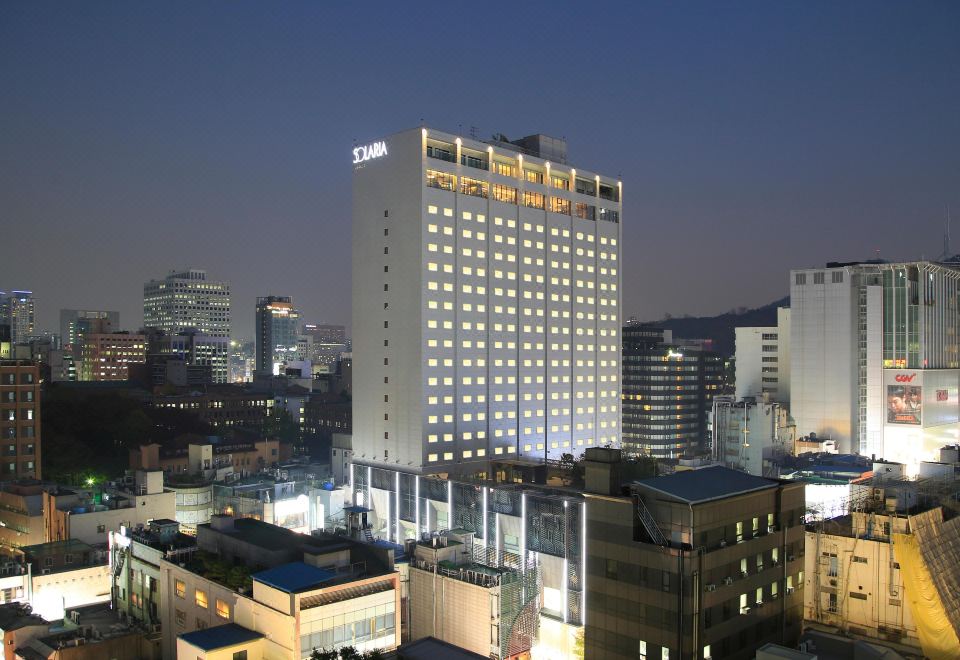
Solaria’s value, being above the main street, only really matters if you use Myeongdong as a place you go back and forth from. Buy skincare first, drop it off, then head out for dinner; let the friend with sore feet rest while the others keep shopping; or avoid interrupting a shopping day when it rains. In those cases, the elevator-to-main-street setup becomes a real advantage. If you only walk Myeongdong once on the first day and then spend the rest of the trip in Hongdae, Seongsu, or Gangnam, that density stops being convenience and becomes a location you only use once.
Sotetsu’s advantage is less like a photo and more like not forcing every return-from-different-directions evening into the main street. It suits travelers whose daytime plans span more than one district and who may not stay in the shopping crowds at night. This difference is easy to hide behind the words “Myeongdong hotel,” which is exactly where the Barnum effect kicks in: everyone thinks they need a central base, but the center they actually need is different. Ask yourself which night you most want to avoid a long walk, instead of which property has the higher rating.
Solaria: Shortens the last 100 meters of Myeongdong, but doesn’t make the luggage problem disappear
Solaria’s main-street location is very effective for evening shopping, and that means the trade-off should be stated clearly. Vehicle-restricted hours, the nearest drop-off point, and the walking distance are minor issues for someone carrying only a backpack. But for late arrivals, older travelers, children’s strollers, or two large suitcases, they can change the mood of the first day. It suits people willing to walk the last stretch; it does not suit those who treat “being dropped at the door” as a must.
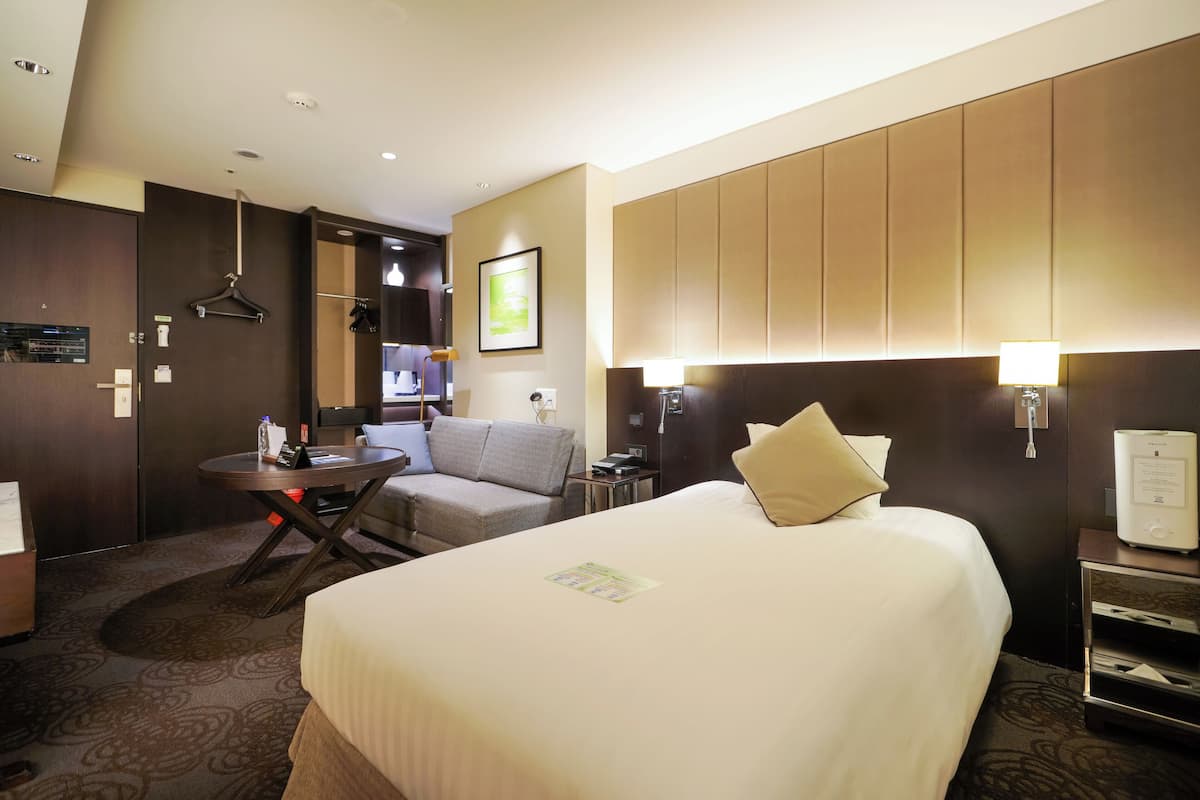
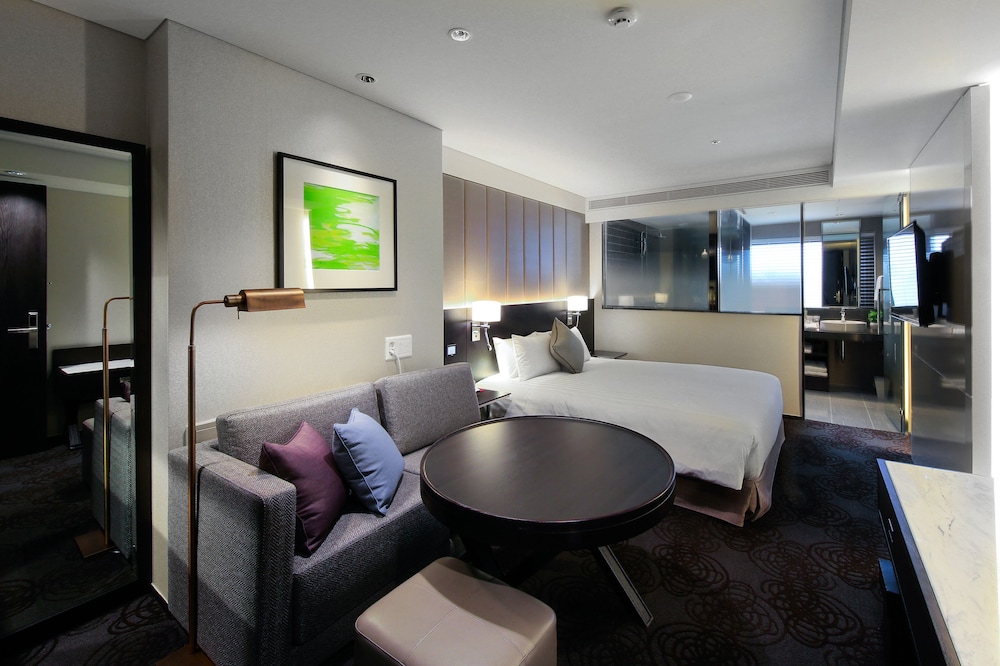
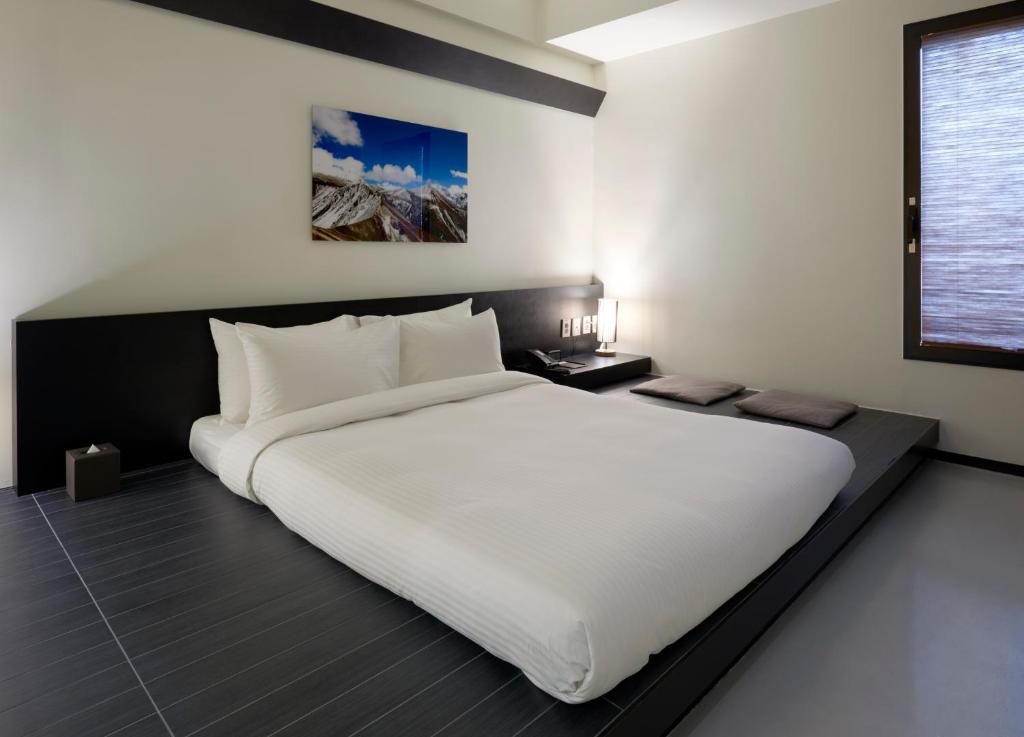
The room type is the other thing you can’t skip. A windowless room, different bed setups, and family configurations are not interchangeable. If you’re choosing it because the price is low, first make sure you can accept what comes with it. The worst outcome isn’t a small room; it’s assuming night-time convenience can make up for disappointment about sleep, windows, or bed layout. For a closer look at room types and the main-street fit, go back to the individual Solaria hotel page before deciding whether it belongs in your final two.
Sotetsu: You don’t have to stay on the busiest stretch to gain more flexibility on the way back
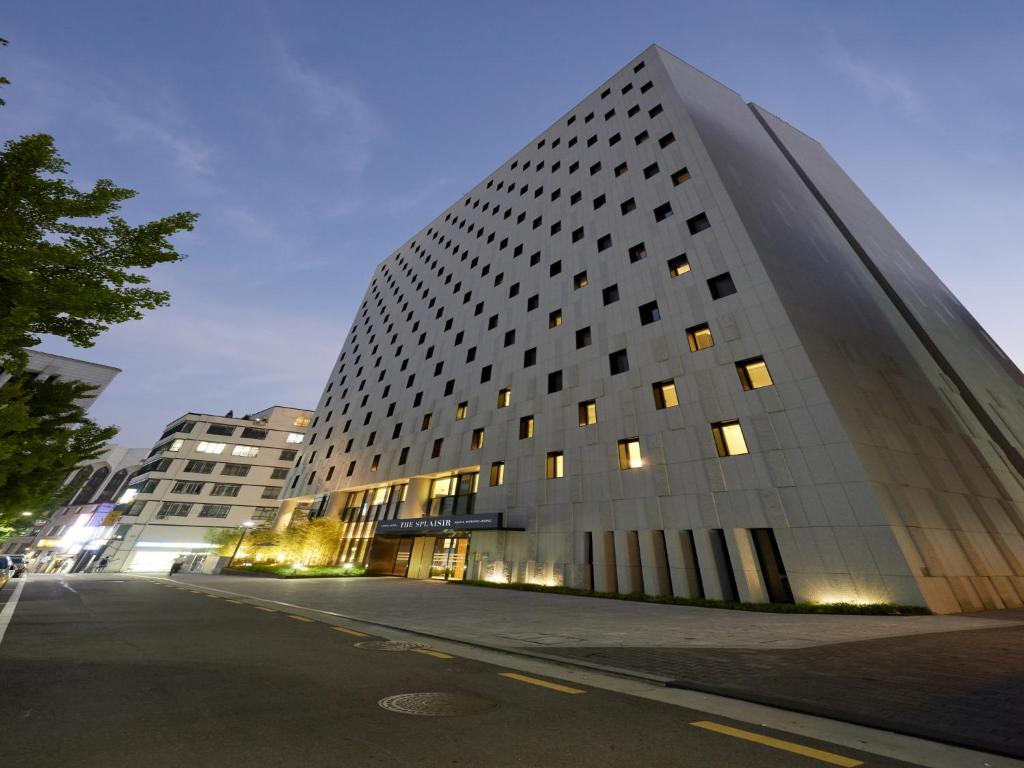
Sotetsu The Splaisir Seoul Myeongdong should not be understood as “the cheaper Myeongdong answer.” It solves a different problem: if your daytime route takes you through City Hall, Namdaemun, Euljiro, or the western side of Jongno, you may not want to squeeze back into the busiest main street at night. For first-time visitors to Seoul, groups with mismatched schedules, or people who may eat dinner in different directions, this kind of location often lasts better than being closest to one specific shop.
But it is not automatically better for everyone. If shopping is your main activity every day, and you already want to split Myeongdong into an afternoon and an evening session, losing the “step out of the elevator and you’re on the main street” convenience will be felt every time you come back. When comparing, don’t reduce map distance to a few dozen meters and force a decision. Ask yourself which loss is harder to live with: the last stretch through crowds with luggage, or the less immediate return after shopping.
Treat arrival as a rehearsal for the first night, and the answer becomes clearer than the map
The same hotel can feel completely different at 3 p.m. and at 11 p.m. If your flight arrives late, mentally connect immigration, AREX or the airport bus, transfers, luggage, and finding the entrance into one rehearsal: who is carrying the biggest suitcase? Can the others sit down while you check in? For the last stretch, do you want to walk through a bright, crowded street, or would you rather avoid one more decision that requires pushing through people? This isn’t overplanning; it’s avoiding paying for “great location” with exhaustion on night one.
For Solaria, the high density of the main street should be treated as a known condition, not a surprise clause. It is a strong fit for travelers who plan to make Myeongdong their evening base on days two and three. If you’re arriving with luggage and crossing through crowds that same night, check the hotel’s arrival instructions and drop-off location first. For Sotetsu, don’t assume that being slightly farther out automatically makes everything easy: you still need to check your airport-transport drop-off point and the walking route. Skipping one real-world segment might save search time, but it can cost you patience on the first night.
Price is not the same product: list the sleep conditions you are unwilling to lose first
When you compare the two on OTAs, the most common mistake is not missing the lowest price, but treating two different room types with different cancellation rules as if they were a direct face-off. Fix the number of guests, check-in date, breakfast, window status, bed type, whether an extra bed is possible, the payment currency, and the cancellation deadline before deciding. If the two travelers keep different schedules, whether you can separate beds or still have enough room to move around often matters more than saving a few hundred won per night. And if you’re sensitive to street noise, light, or the in-room air conditioner, don’t rely on the room name alone.
This is also where the Barnum-style illusion appears most easily: a room that “looks right for me.” Big beds, views, central locations, family-friendly—these are all pleasant, broad terms. They only become useful when they match your travel group and sleep habits. Don’t let a page saying “convenient” automatically fill in the missing pieces of windows, quiet, or separate sleeping space. On the other hand, if all you really want is a shower and sleep before heading out again in the morning, a fancy lobby and breakfast you won’t use should not force you into a different choice.
Your last day reveals the kind of convenience you actually need
Looking at the final day is the fastest way to avoid choosing wrong. If you still plan to shop in Myeongdong after check-out, return for stored luggage, and then go to the airport, Solaria’s main-street rhythm may save you one detour. But if you’ll have breakfast and your last meal in Namdaemun, City Hall, or around Jongno before leaving in the morning, Sotetsu’s city-center return flexibility may feel smoother. Neither option guarantees the fastest airport route; airport transportation, operating hours, and luggage rules still need to be checked against official information for that day.
This is also where the Zeigarnik effect can be used properly: don’t rush to close one tab right now. Keep both options open under exactly the same stay conditions, answer three questions—where you return from on the last day, where the luggage will be, and who suffers most if it rains—then book. That unfinished step is not there to create anxiety; it keeps the decision open until before cancellation costs really matter. If the cancellation terms are reasonable, you can keep flexibility. If they are non-refundable, you especially shouldn’t let a vague promise of convenience decide for you.
In the end, don’t choose the “better overall” hotel; choose the loss you can tolerate more easily
If you choose Solaria, what you give up may be the ease of handling luggage under vehicle restrictions and main-street crowds, in exchange for a rhythm of going down and back up multiple times at night. If you choose Sotetsu, what you give up is the immediate access above the main street, in exchange for a city-center return that depends less on one shopping street. The one whose second half bothers you less is usually already the closer answer. That language of loss is more honest than a total score, because price, ratings, and breakfast cannot make up for spending the wrong night in the wrong location.
Finally, lock in the stay date, number of guests, exact room type, breakfast, taxes, payment timing, and cancellation deadline. If the itinerary may still change, a cancellable plan is not an extra—it’s what preserves space to adjust your base later. Then go back to the Seoul hotel comparison map and look at these two under the same day and same guest count, so you don’t treat different products as if they were the same price gap.
More reading