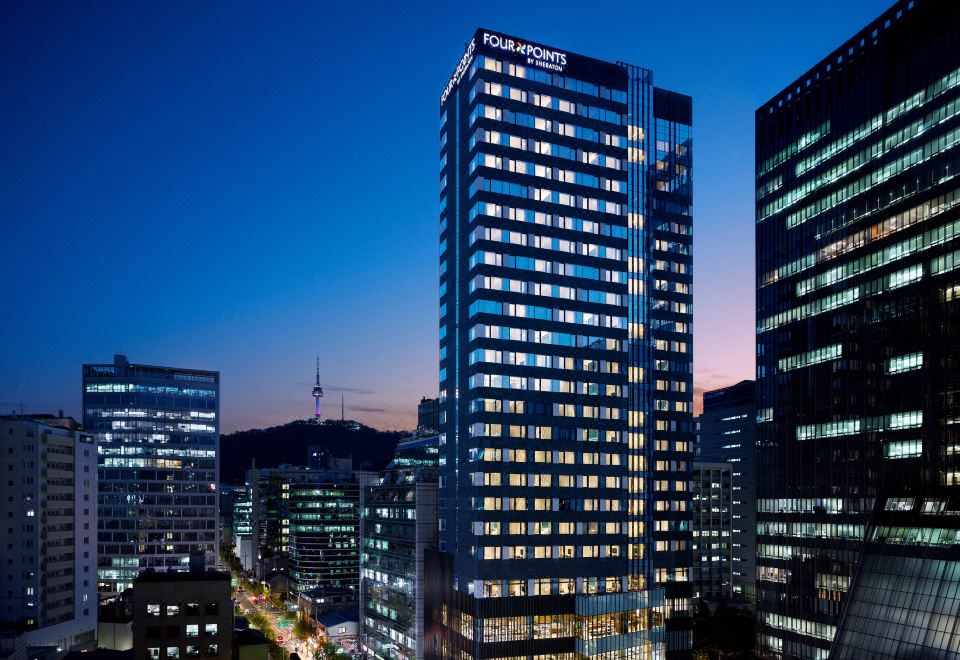
Start with the itinerary, not the rating: If your trip includes palace visits in the morning, Seongsu in the afternoon, and dinner back in Myeongdong or Jongno at night, this hotel’s transfer position is easier to use. If you only plan to shop in Myeongdong all day, you may not need to pay room rates for a transport advantage you won’t fully use.
It makes more sense to think of it as a “buffer point” in your itinerary than as a literal center of the map. What usually drains patience on a trip is not an extra subway stop, but having to decide, when you’re already tired, which exit to take back to your hotel, whether to cut through the busiest shopping streets, or whether your companions have to walk the same stretch again. If your daytime plans are likely to shift, staying somewhere that gives you two return directions means you can leave the final mile undecided until the day itself, instead of betting at booking time that all three days will follow the ideal version of the plan.
This is also why it has to be judged separately from the Four Points near Seoul Station. The Seoul Station property is more about AREX, KTX, and moving luggage on check-out day; this Myeongdong one is about flexibility after spending the day in the city center. The names are close and the brand is the same, but they serve very different endings to a trip. If your first or last day needs a direct connection to transport, start withthe Seoul Station Four Points luggage and station guide rather than assuming the two properties are interchangeable just because the brand is familiar.
What it really solves is “Which side are you coming back from today?”
Four Points Josun Seoul Myeongdong is near Euljiro 3-ga. That location is not just “a few minutes from a landmark”; it means your 2 Line and 3 Line plans don’t force you to decide on one final area every day. If your morning is Gyeongbokgung, your afternoon is Dongdaemun, and your evening ends with dinner back in the center, staying somewhere you can return to from different directions reduces the pressure of having to force every plan onto the same street.
But “convenient transport” is one of the easiest things to describe in vague, Barnum-style language: everyone feels they need it, yet few people ask whether they will actually change lines. If all three days are centered on Myeongdong, Namsan, and Hongdae, a place closer to the main street may feel more intuitive. If your sightseeing is spread out every day, Four Points starts to matter when you come back late. Write down the last stop of each day first, then return to theSeoul hotel comparison map to choose your base.
Another situation that gets overlooked is when two people split up during the day. One person may go shopping in Dongdaemun while the other stays around Seochon or Gwanghwamun, then you meet for dinner in Euljiro. In that case, the question is not who is closer to the hotel, but whether you can get home without forcing everyone onto the same route. It does not guarantee that every stop is the nearest one, but it saves you from turning the whole evening into a reunion just to get back to the hotel. For first-time visitors to Seoul who are not yet familiar with neighborhood directions, that sense of not having to pick one fixed meeting point is especially practical.
On the other hand, one thing should be made clear: it will not drop you right at the door of Myeongdong’s busiest shops. If your travel companions like to buy skincare after dinner and head straight back upstairs to drop off their haul, a hotel directly on the main street may suit that rhythm better. If you want dinner, a walk, a bar, or an exhibition to be in different directions, then it is worth trading that walk for more flexible transport options. Many people see “not far from Myeongdong” and assume the two needs are the same, only to realize after check-in that they actually chose the wrong return route, not the wrong number of walking minutes. If you’re still unsure which side you’ll be returning from each day, start by usingthe Myeongdong exit-by-exit lodging guide to break the area down, then see whether this hotel still makes sense.
Cheonggyecheon is not a scenery bonus — it marks two different kinds of night
From this side, heading north connects you to Jongno, Gwanghwamun, and the Cheonggyecheon walking route; heading south takes you back toward Myeongdong, City Hall, and Namdaemun. For anyone who does not want to push through the same shopping crowds every night, that kind of flexibility lasts longer than simply being “close to Myeongdong.” Especially if you are traveling with friends and the dinner location is still undecided, you do not have to pull everyone back to the same exit just because the hotel sits deep along a main street.
But if what you really want is to buy skincare and go straight upstairs, then come back down later for a late-night snack, this transfer flexibility is no substitute for main-street density. For that kind of need, comparethe late-night return differences between Solaria and Sotetsu directly, rather than treating two different kinds of convenience as the same product.
Hotel booking pages often create one false impression: that the same room photo means the same actual setup. When comparing properly, expand the full room name and check the number of beds, window direction, occupancy, whether an extra bed is possible, how many breakfasts are included, and the local cancellation deadline. This matters especially for three-person trips: a platform showing that a room can be occupied by three people does not mean all three will have a reasonable bed arrangement. If you try to save a bit on room rate and let one person sleep on a sofa bed without checking the size, the problem only becomes obvious after you get to the hotel. Photos are useful for judging light and desk space, but not for replacing room conditions.
If you still have not settled on a place to stay around Myeongdong, you can first keep this one as a “transfer-priority” candidate and compare it separately withSolaria’s main-street return experience: the former lets you come back from different directions, while the latter helps you walk less after shopping. Both reasons are valid. The key is not to let similar-looking room rates blur the exact friction that matters most in your trip.
Check the bed type before you talk about high floors or views
In platform photos, the large windows, twin beds, and city views can make every option look nearly identical. In reality, the exact room name decides the bed count, window orientation, occupancy, bathroom setup, and whether there is a sofa. For two friends with different sleep schedules, having separate beds often matters more than a higher floor when deciding whether the trip feels easy. For families or three-person trips, “can accommodate” also does not mean the space is automatically comfortable.
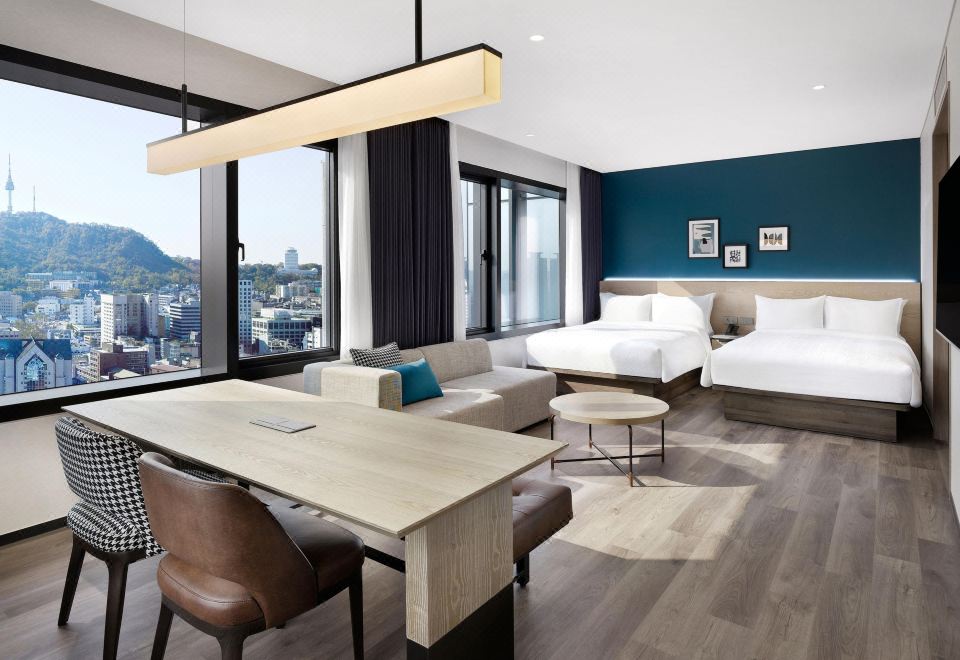
First lock in the dates, number of guests, breakfast, bed type, and cancellation deadline, then compare the three platforms. If you have not decided whether you need separate beds yet, start withhow to check bed arrangements for Seoul multi-person rooms. Finding out after payment that the bed type is wrong is usually the hardest mistake to fix.
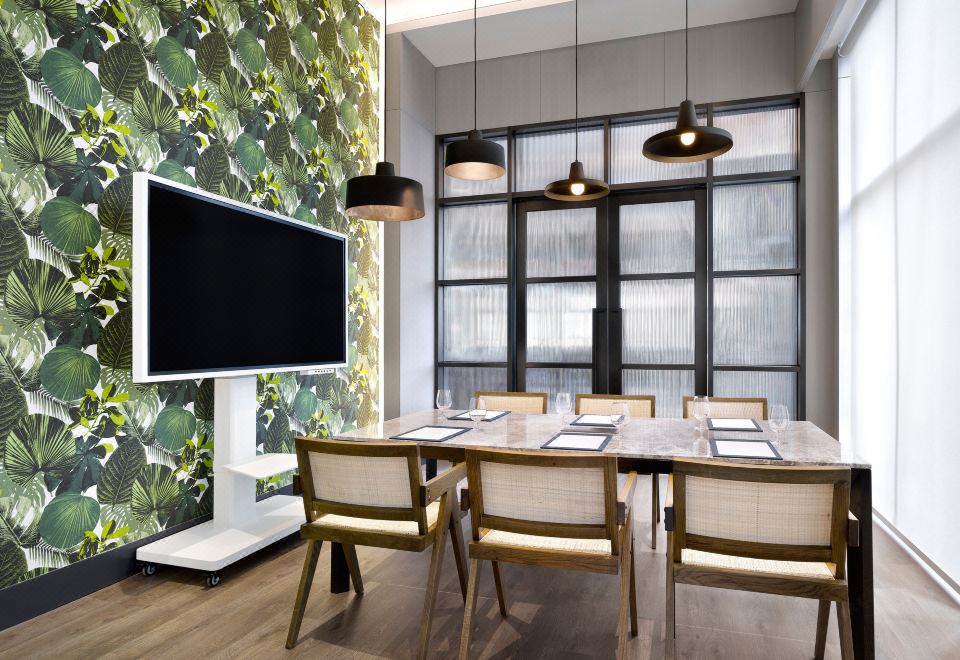
Some people think a cancelable rate must always be more expensive, so they book the non-refundable option as soon as they see it. The issue is not that you must always buy flexibility; it is that you should first judge whether the risk of change is worth paying to handle. Concerts, flights that friends have not confirmed yet, and itineraries that need to work around family schedules are the most likely to shift on the last night or the first night. By contrast, once your flights and fixed plans are locked, it becomes more important to compare the total price carefully. Putting cancellation terms and payment timing in the same line tells you the real cost better than looking only at the nightly rate.
If you plan to leave your luggage at the hotel after check-out and return to the city later in the afternoon, make sure to confirm the current storage policy from the hotel’s official information. Do not treat another branch’s policy or an old review as a guarantee. These details look minor when you are booking, but they are the things most likely to become unnecessary losses when you are transferring, dealing with rain, or dragging luggage around. You do not need to pay the highest price for every unknown, but you should keep the options that are most likely to change until the night that is most likely to change.
Don’t treat free cancellation as an add-on
Most people who choose this hotel do so because their itinerary crosses several districts; that is exactly why the final day is the one most likely to change. If check-out day might include Seoul Station, Namdaemun, or a last shopping run in Myeongdong, this location can work in your favor. If the trip suddenly shifts to Gangnam or a concert venue, the advantage becomes smaller. Keeping a cancelable option is not about delaying the decision; it is about making sure an unconfirmed final day does not lock in the whole accommodation choice.
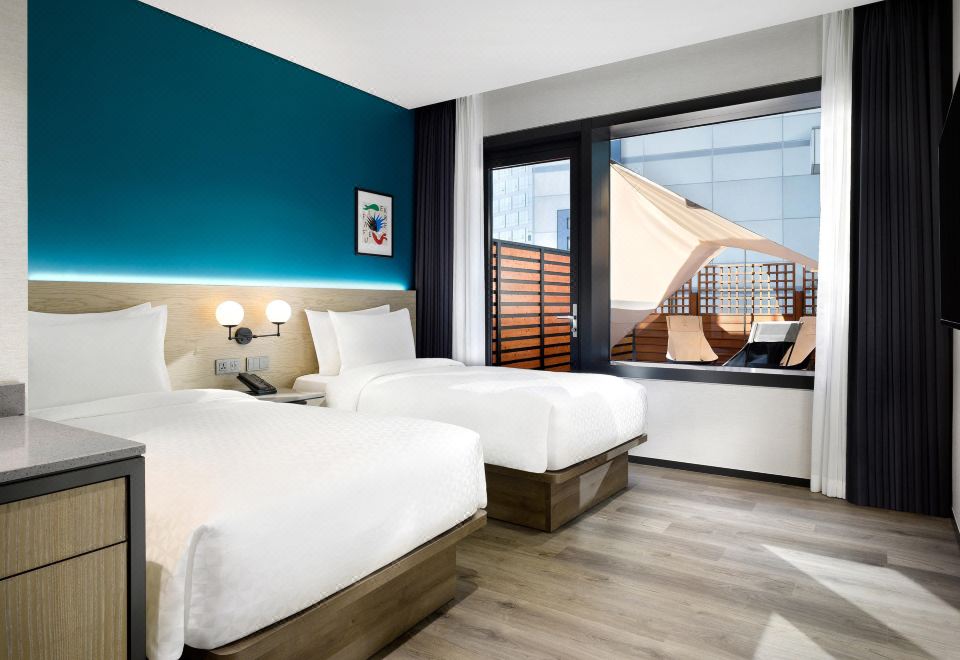
Do not let a price that only looks lowest make you treat breakfast, payment timing, and cancellation rules as identical. What you are really trying to avoid is not missing one cheap night, but realizing after a change in plans that you saved a little money while losing the room to choose again.
To finish, use a very simple split to decide: write your three-day itinerary into morning, afternoon, and evening columns. If the evening locations fall in different districts for two or more nights, or if you do not want to arrange dinner on the same side just to make the return easier, Four Points has a clear purpose. If all three nights are expected to be shopping and late-night snacks around the Myeongdong main street, then a main-street-style hotel will usually be less hassle. This is not about which hotel is more upscale; it is about putting the time cost people most often overlook into the lodging decision early.
Once you confirm it as a candidate, compare the same dates, guest count, and bed type across the three platforms. Do not get pulled in by the lowest starting price first; that number is often not the one that matches your cancellation terms, breakfast setup, or bed configuration. Choosing the right room type is how “convenient transport” really becomes one less moment of hesitation during the trip.
If you will use its transfer advantage, it is more specific than just “central”
Four Points is not a Myeongdong hotel everyone should book. It suits travelers who treat the last leg of each day as part of the trip’s cost: if you are willing to pay to skip one transfer, avoid crossing the main shopping crowds once, or make it easier to return from different directions, it has a clear reason. If you only need a room for an easy evening downstairs shopping run, Moxy or Solaria may fit your logic better.
Now finish one last small check: take out your three-day itinerary and circle the place you are most likely to be after 8 p.m. each night. If those circles are spread out, keep this hotel in the running. If they all land on the same Myeongdong main street, do not let the word “central” replace your answer.
Further reading