
The short answer: Gangneung Anmok Coffee Street is worth visiting when you treat it as Anmok Beach plus one café plus a genuine break, not a street to complete shop by shop. The public coast is always accessible, but cafés keep individual hours. Seeing the sea also does not guarantee an unobstructed window seat in every building. Allow one or two hours when Anmok already fits the southern coast direction; do not cross Gangneung twice only to reproduce one café photograph.
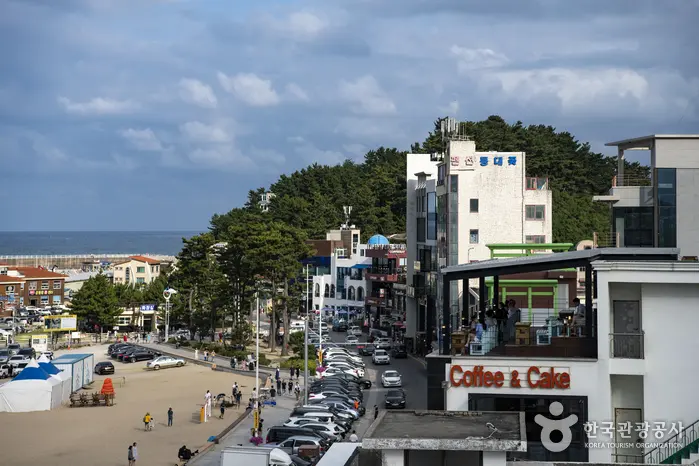
- SEA: walk Anmok Beach and take photographs; the free version already works.
- COFFEE: choose a shop by beans, roasting, dessert, accessibility or the view—not by a street-wide ranking.
- TRANSFER: check that Anmok continues your route instead of creating a return trip for one window seat.
- You need not choose all three: walk without buying coffee, or use one café without trying to complete the whole street.
Anmok is worth understanding for more than its number of cafés
Gangneung’s coffee-street story is linked to vending machines on Anmok Beach. In the 1980s, visitors drank sweet machine coffee while looking at the sea; roasters, specialist cafés and businesses of different sizes arrived later. That history explains why coffee and coast belong together here. Anmok is not simply a group of interchangeable multi-storey cafés assembled for photographs.
“Coffee city” still does not mean every cup serves the same traveller. One person wants hand-drip details and house-roasted beans; another wants a warm seat with a broad window; a family may need a lift, toilet and simple dessert. Decide which benefit matters today, then choose a café that can deliver it. The longest queue is evidence of popularity, not proof that it solves your group’s need.
SEA asks whether a free beach walk is enough. COFFEE asks whether you are paying for the drink, the view or rest. TRANSFER checks the cost of reaching the coast and leaving again. Pass these gates before turning one coffee into an expensive detour.
Twenty-four-hour street access tells you nothing about one café
VISITKOREA currently describes the coffee street as open 24 hours and immediately notes that café hours vary by business. Public access to the street and beach does not promise breakfast coffee at sunrise, indoor seating late at night, every business in low season, or an information facility and toilet remaining open around the clock.
If sunrise is the purpose, accept that the sea can be available before the cafés. If night is the purpose, remember that the ocean view changes after darkness and some shops may be closing. Check beach time and product time separately rather than searching for one universal “Coffee Street opening time.”
Morning, afternoon and evening produce different visits
Morning: the east-facing coast and lower crowds can be attractive, but cloud, wind and café opening are not guaranteed. Afternoon: more cafés are usable, while weekend traffic and competition for window seats increase. Evening: it can hold a short stop after dinner, but do not assume the daylight seascape survives unchanged after dark.
For one day, use the Gangneung one-day itinerary to choose the principal coast direction. Then use the Gangneung evening plan to decide whether Anmok is an afternoon rest, a pre-dinner stop or a coast you do not need to revisit.
How should you choose a café?
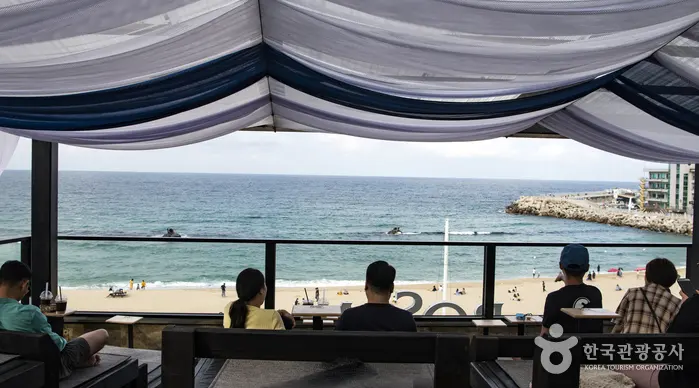
Skip the question “Which is best on the whole street?” Businesses, beans, desserts, prices and seats change too quickly. Select one priority. For coffee, look for roasting and brewing information. For sea view, check floor, window direction and expected queue. For quiet, avoid the busiest period and most photographed buildings. For rest, put toilets, lifts, seats and entrances first.
A café’s gallery cannot reserve the same window table for you. If the view is full, take the drink outside, choose another shop, or accept that coffee quality matters more than the seat. Conversely, a cold or tired group does not need a technical tasting exercise. The useful café is better than the winning café.
Do Anmok and Gyeongpo repeat each other?
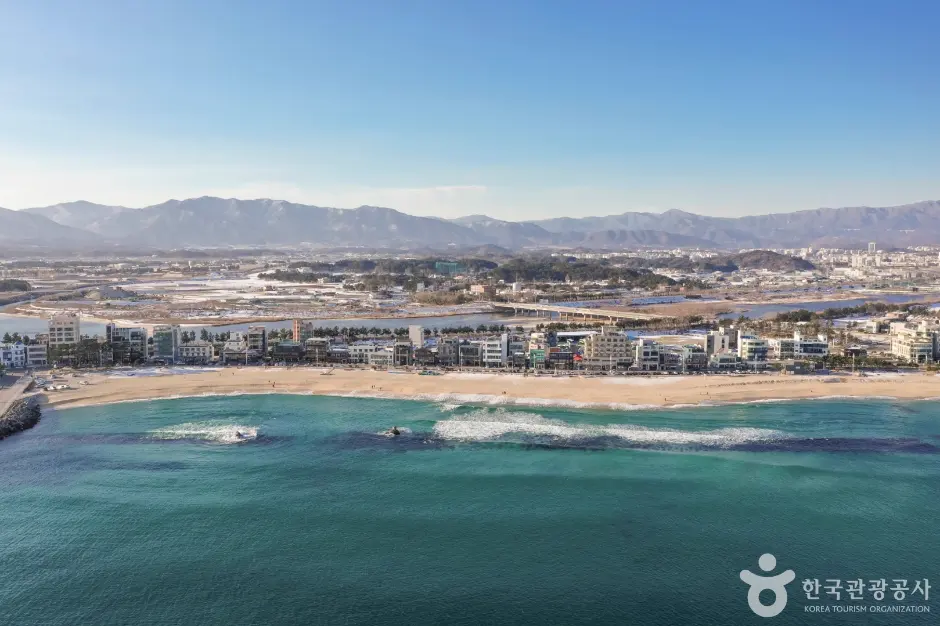
Both face the East Sea, but they can have different jobs. Gyeongpo better supports a longer beach-and-lake walk; Anmok compresses a shorter coast, many cafés and rest into one stop. With only one day, you do not need both merely because each appears on a list of Gangneung essentials. Anmok adds something when a sea-view café is genuinely different from the walk already planned elsewhere.
Visiting both is reasonable when you assign roles: use Gyeongpo for the longer outdoor section and Anmok for coffee and a shorter pause. If both stops are only “leave the vehicle, photograph the sea, buy a similar drink,” remove one and protect the pace.
On a day trip, Anmok should be flexible—not the final gamble
Travellers returning to Seoul often leave Anmok as “one more stop if time remains,” then discover that the beach is not attached to the Gangneung Station platform. Use the Gangneung day trip or overnight decision and work backwards from the train. A café still being open does not prove that the route to the station still has safe buffer.
When only forty or fifty minutes remain, a beach walk or takeaway can be stronger than waiting for a window. Anmok’s advantage is its ability to expand or contract. Do not turn a flexible coast into the reason you miss a fixed departure.
You can visit without a car, but the map is not a walking promise
Anmok sits on the southeast coast of the city, not in the forecourt of Gangneung Station. Local buses, taxis and tourist routes may serve it, but stop positions and intervals require current confirmation. The Gangneung without a car guide separates the journey in, the stay and the return to the station.
A Korea transport card can simplify local bus payment but cannot guarantee the service. Gangneung has previously promoted coast buses and foreign-visitor touring taxis that include Anmok; use those as route concepts, not timeless schedules. Check the city’s current operation for your date.
Cafés in the rain do not make the whole street an indoor attraction
In light rain, one café looking across the water can work well. The station transfer, movement between shops, sea wind and waiting for the return remain outside. In heavy wind and rain, the view may become grey spray while popular indoor seats become more crowded. Keep the Gangneung rainy-day plan ready with options that are genuinely indoors.
Winter wind creates the same problem. Takeaway on the sand may cease to be realistic, and a full café needs a second plan. Bad weather does not automatically make Anmok worthless; it may remove the SEA layer and leave you to judge whether COFFEE and TRANSFER are still strong enough.
The Anmok Travel Lounge can help, but check its service separately
Gangneung city material describes a Travel Lounge at the entrance to Anmok with rest space, visitor information, toilets, lockers, an ATM and a reservable workation room. It may help when you need to recharge, store something or reorganise the route. Hours, locker rules, reservations and same-day availability require their own check; public 24-hour street access does not make the lounge a 24-hour promise.
Two days make the stop easier to use—not automatically necessary
An overnight stay can separate an early beach from a later café, but do not create two Anmok visits without two different purposes. Use whether two days and one night in Gangneung is worth it to decide if the extra morning improves the wider coast trip, not just one cup.
Your hotel base decides whether Anmok is a pause or a transfer
A coast-side base can make Anmok a natural short stop. A transport-led base may make it the final outing before a return to the station. The Gangneung accommodation-area guide helps choose which exit cost the hotel should reduce.
Seven checks before leaving
- Are you going for the sea, coffee or a useful break?
- Is the intended café open, and does it have the access or facilities you need?
- Would you stay if the sea-view tables were full?
- Do Anmok and another coast have different jobs today?
- Does the route from the previous stop through Anmok to the station really flow?
- Will wind, rain or cold remove the beach version?
- Can you switch to takeaway, a walk or an immediate departure?
Allow one or two hours: Anmok already fits the route and you want sea, coffee and rest together. Make it a free short stop: the beach is enough; no drink is required to prove the visit. Skip it: another coast has already delivered the same experience, time is tight, or one copied window photograph is the only purpose. Anmok is valuable when it slows Gangneung down, not when it adds a café count.
Checked 23 August 2026. Coffee-street history, address, public access and real-site images follow VISITKOREA and Gangneung city material. Twenty-four-hour access refers to the public street and coast. Recheck individual cafés, menus, seats, prices, hours, sea conditions, Travel Lounge services and transport on the date.
VISITKOREA: Gangneung Coffee Street Gangneung City: Tourism City – Gangneung