
Short answer: Jeongdongjin is worth a dedicated sunrise trip only when three things work together: SUN, TRAIN, and COAST. The calculated sunrise time does not guarantee a clear horizon, and a train shown on an old blog may not run or stop there on your date. If you can stay nearby, accept a clouded-out morning, and would still enjoy the coast without a perfect orange disc, the trip has real value. If the photograph is the only acceptable result, it is a fragile plan.
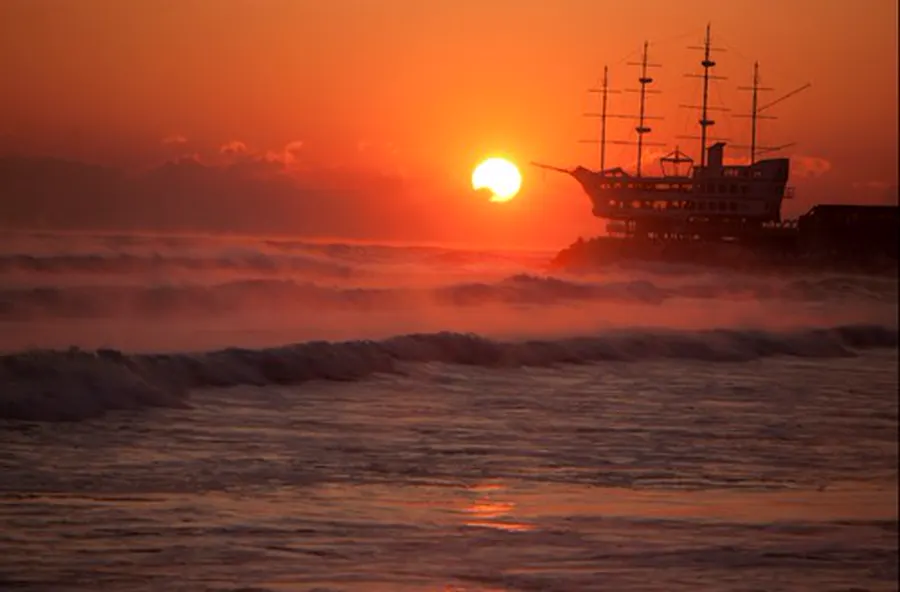
- SUN: Check the date-specific sunrise, eastern low cloud, visibility, rain, wind, and wave warnings. Arrive 30–45 minutes before the listed time.
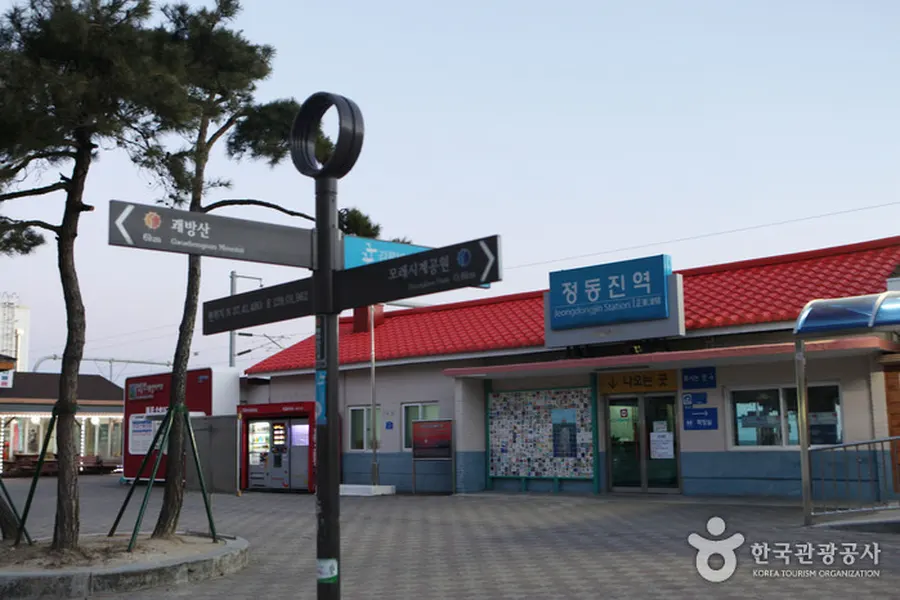
- TRAIN: The station is beside the sea, but trains, platforms, and the public beach have different access rules. Search KORAIL again for your actual date.
- COAST: Allow 30 minutes for a simple look, 60–90 minutes for the shore and Sandglass Park, or a half-day only if one separately operated attraction is genuinely wanted.
- Lowest-risk version: Stay within a verified walk of the shore, leave before dawn, and keep breakfast plus a confirmed return even if the horizon never clears.
What exactly is Jeongdongjin?
Jeongdongjin is a small coastal settlement in Gangneung’s Gangdong-myeon, shaped by the East Sea, the railway, and its sunrise reputation. Official VISITKOREA material describes Jeongdongjin Station as an unusually sea-close station and identifies the beach, pines, poetry monument, and Sandglass Park nearby. The station’s fame grew through the Korean drama Sandglass, but the landscape—not a television checklist—is still the reason to come.
It is not one gated attraction. The working station, platform, beach, park, rail bike, Time Museum, and ship-shaped resort each have their own boundaries, hours, and possible charges. Think of Jeongdongjin as a coastal district first, then decide whether one facility deserves extra time.
Is it worth a special trip from central Gangneung?
Yes, if you are willing to give the coast a complete early morning. No, if you have one spare afternoon hour and are treating sunrise as an extra stop. Place it inside a realistic Gangneung one-day itinerary and identify what it replaces. It cannot simply sit on top of Gyeongpo, Anmok, Ojukheon, and the market because it appears free on a map.
Jeongdongjin is south of central Gangneung. Sharing a city name does not turn the coast into one continuous walking strip. Travel out, sunrise, breakfast, and the return can occupy the first half of a day. If only one person wants the pre-dawn start, separating for the morning may be kinder than forcing the entire group into it.
A sunrise time is not a sunrise guarantee
The published time is an astronomical calculation for the sun crossing the horizon. It does not remove low cloud, mist, rain, haze, or sea spray from that horizon. A forecast can say “clear” for Gangneung while a narrow bank of cloud sits exactly where the sun rises. A cloudier forecast can occasionally open for a few valuable minutes.
Define success as reaching the coast safely, seeing the pre-dawn colour change, keeping the return journey, and not damaging the rest of the day by waiting indefinitely. A sharp red sun is a bonus. If that broader morning still sounds worthwhile, Jeongdongjin is a suitable choice.
Which sunrise time should you check?
Use Jeongdongjin or Gangneung for the exact calendar date. Do not use Seoul’s time, a monthly average, or a timestamp copied from an old trip report. Seasonal change is large enough to alter whether any public transport can arrive before dawn. Check once while planning and once again the evening before.
The listed time is not the moment to step onto the beach. You still need to leave the hotel, use a legal crossing, find a safe entrance, let your eyes adjust, and prepare a camera. Thirty to forty-five minutes early is a sensible minimum on an ordinary date; parking, children, mobility needs, or holiday crowds require more.
Can you stay in central Gangneung and reach it before dawn?
Sometimes, but only when the season, first service, taxi availability, and your exact hotel position align. An early summer sunrise may come before useful public transport. Even when a taxi is available outward, price and return availability still matter. Use the Gangneung day trip or overnight decision before moving your entire stay for one photograph.
A hotel near Gangneung Station is not a hotel near Jeongdongjin. There is still a journey between them, and not every southbound train necessarily stops at Jeongdongjin. If sunrise is the trip’s single priority, staying within a verified walk is the reliable version. If it is only one part of Gangneung, a central base preserves more flexibility.
Can you leave Seoul that morning and still see sunrise?
Do not convert “about two hours to Gangneung” into “a direct train reaches Jeongdongjin before sunrise.” Departure station, date, destination, stopping pattern, transfer time, and the seasonal sunrise must all work. Start with the actual Seoul-to-Gangneung route choices, then search Jeongdongjin as the destination in KORAIL for your date.
If the result does not produce a workable arrival, stay the previous night. New Year services, event shuttles, or temporary trains are not evidence for an ordinary Tuesday. A route that exists only in an old article is not a route until the current booking system returns it.
Train, bus, or taxi from Gangneung?
Train: clear destination and no road traffic, but a date-specific stopping pattern. Bus: potentially inexpensive, but first-service, transfer, and pre-dawn waiting matter. Taxi: direct, but the fare, advance availability, and return need planning. None is the universal winner at every hour.
For a car-free trip, read the Gangneung without a car guide and separate “possible during the day” from “possible before sunrise.” As soon as the outward ride is found, check the return. A one-hour sight can silently become half a day when the next service is much later.
Is Jeongdongjin Station platform a free viewpoint?
Do not treat the platform as an unrestricted public observation deck. Jeongdongjin is a working station. Ticket, admission, and staff instructions govern access on your date. Never cross a barrier, enter the tracks, or ignore a closed gate to recreate a photograph.
If you are not travelling or cannot enter the platform, use a legal public approach to the beach or nearby coast. “A station close to the sea” describes the setting, not permission to walk on railway property. This distinction matters even more in darkness.
Beach, station area, or Sandglass Park?
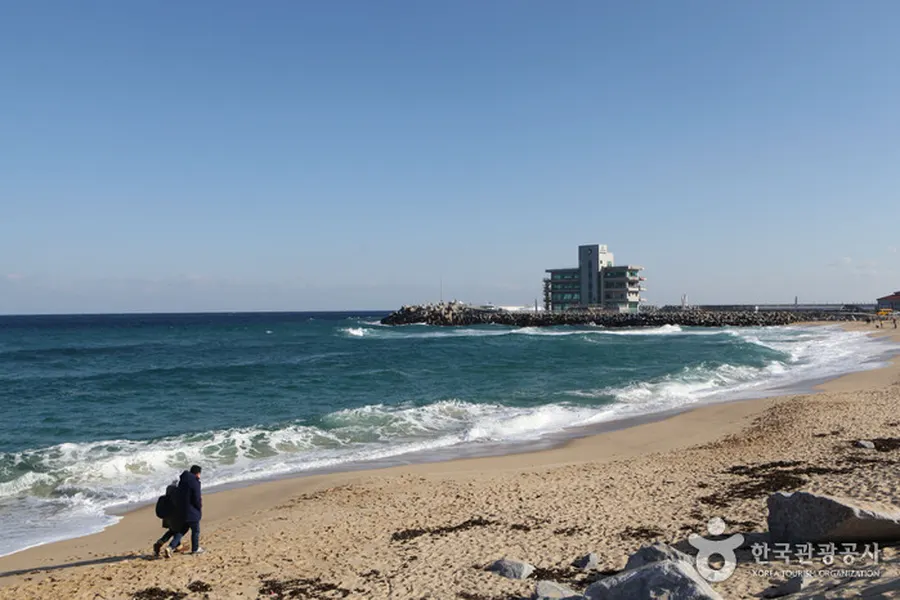
All three sit along the Jeongdongjin coast, but the view, crowd, and walking time differ. The beach gives an open East Sea horizon. The station area adds rails and pines to the setting. Sandglass Park is useful for public space and the large sandglass after sunrise. There is no single compulsory “official best spot.”
Walk the hotel-to-shore route in daylight if you arrive the previous afternoon. Note stairs, slopes, lighting, crossings, and toilets. If you arrive for the first time in darkness, follow formal signs to the first open and safe viewpoint rather than running along a road in the final minutes.
How early should you arrive?
On an ordinary date, 30–45 minutes before sunrise provides the blue-hour transition and time to settle. Arrive earlier if you must park, use a tripod, support children, or move at a slower pace. In strong wind or severe cold, reducing stationary exposure is smarter than arriving excessively early.
New Year’s Eve and major event dates are different operations. Crowds, road controls, full parking, temporary transport, and safety management can transform the approach. Never reuse an ordinary weekend buffer for January 1 without that year’s municipal notice.
How long should you stay: 30, 60, 90 minutes, or half a day?
Thirty minutes: see the sky from one safe position and leave on a confirmed service. Sixty minutes: add a short beach or station-area walk. Ninety minutes: include Sandglass Park, breakfast, or time for the first crowd to thin. Half a day: add only one attraction with independently checked opening hours.
Being in Jeongdongjin early does not make every facility open early. The museum, rail bike, restaurants, and resort visitor areas may begin much later than sunrise. Build the base plan around the coast and consider later openings optional.
Should you return to central Gangneung immediately?
If your daytime priorities are cultural sights, the city, or the northern coast, a simple breakfast and return keeps the day clean. The sunrise has already delivered Jeongdongjin’s main purpose. Review the whole Gangneung evening plan too: a day that begins before dawn should not automatically end with every night view.
If you slept locally, a slower beach walk before checkout is reasonable. If you arrived that morning and the next transport is much later, Sandglass Park and breakfast become practical waiting time. Convert the gap into a plan before arrival instead of relying on one café being open.
What does one night in Jeongdongjin actually buy?
It buys reliability before sunrise, not guaranteed weather. You can leave later, return to the room if conditions are poor, and recover before checkout. Photographers, families, and anyone uncomfortable with pre-booking a taxi gain the most from that stability.
The trade-offs can include a higher room rate, fewer late dining choices, wind exposure, and peak-date crowds. Use the Gangneung two-days-one-night test: if day two contains only sunrise followed by an immediate departure, decide whether this location still earns the hotel night.
Choose accommodation by the walking route, not the map radius
A property a few hundred metres from the water may sit across a slope, railway, vehicle road, or dark lane. Check which side holds the entrance, whether guests can exit before reception hours, whether the beach route has stairs, and what happens to luggage after checkout. “Ocean” in a name is not route evidence.
If the plan is to watch from the room, confirm the room category, direction, floor, and obstructions directly. A partial sea-view room may not face the sunrise. Keep a public-coast plan even after booking because a marketing label cannot guarantee the assigned window.
New Year’s sunrise and an ordinary morning are different trips
Jeongdongjin is strongly associated with year-end and sunrise events, and official tourism material records celebrations around Sandglass Park. The exact programme, road controls, transport, and even whether an event proceeds must come from that year’s Gangneung notice. Past festivals do not establish present access.
For January 1, accommodation, transport, warm-up points, a meeting place, and a crowd exit plan come before the most photogenic position. Travellers wanting a quiet coast will usually get more by avoiding that date and major holiday peaks than by arriving ten minutes earlier.
Is Sandglass Park worth adding?
The park’s large circular sandglass connects the coast with Jeongdongjin’s Sandglass cultural identity. It is an easy post-sunrise extension and can fill 30–45 minutes before transport. It is not worth missing a confirmed train merely to complete one landmark photograph.
Separate the public park from adjacent operated attractions. A “free” or “open” description applies only to the space named in that source. It does not make museums, experiences, or parking share the same conditions.
Should you wait for the Jeongdongjin Time Museum?
The museum extends the area’s time-and-sandglass theme but has its own admission and operating hours. It can work for visitors interested in clocks and time devices, or as an option after poor shore weather once it opens. Sunrise visitors do not need it to make the coast complete.
The practical issue is the gap after dawn. Check the operator’s current opening time before deciding to wait. If information is unclear, set a latest departure and protect the rest of Gangneung rather than sitting through an undefined closure.
Can you ride the rail bike immediately after sunrise?
The rail bike is a separately operated timed activity. Session times, ticketing, age or safety rules, and weather can all apply. Nearby tracks do not mean walk-up access at dawn. Busy dates can sell out, while wind or rain may change operations.
If the group genuinely wants it, give Jeongdongjin half a day and work backward from a confirmed slot. If interest begins only after seeing the facility, compare the next finish time with the train already booked. Do not let an impulse activity consume the exit plan.
What about the ship-shaped resort and sculpture areas?
The ship-like structure visible along the coast belongs to a resort complex. Visitor viewpoints, sculpture spaces, guest-only areas, opening hours, and admission can differ. It can be a second theme for a half-day, but it is not necessary for sunrise and its visibility does not create public access to the whole property.
With 90 minutes, stay with the station, beach, and park. If you have an overnight stay and an afternoon departure, check the operator’s current visitor rules. Never apply hotel-guest privileges to a day visitor.
Should you go when it is cloudy or raining?
Light rain or cloud can still produce a moody shore if wind and access are safe, but the chance of a clean sun is lower. Persistent rain, lightning, high winds, dangerous waves, or poor visibility are reasons not to stand near the water. Update warnings the night before and again before leaving.
If you already sleep nearby, shorten the outing and return. If you are still in town, use the Gangneung rainy-day plan instead. Cancelling one sunrise protects the trip; it does not waste Gangneung.
Cold, wind, and waves matter more than the city forecast suggests
The coast can feel colder than the town forecast, and standing still is colder than walking. In winter, use layers, a wind-resistant outer shell, hat, gloves, and dry footwear. Summer dawn can still be windy and damp. Hand warmers help, but they do not replace wind protection.
Do not step onto wet rocks, exposed breakwaters, or the active wave line for foreground interest. Place tripods where they do not block the route and cannot be struck by water. Warning barriers, staff directions, and public announcements override every photography suggestion online.
Beach access is not the same as swimming-season operation
Seeing a beach and having a supervised swimming area are different things. Seasonal lifeguards, swimming zones, showers, and services do not operate simply because the shore is physically present. A winter sunrise is not an invitation to wade into the sea.
In summer, follow the day’s flags, lifeguard instructions, rip-current information, and marked boundaries. This guide covers land-based sunrise viewing and walking; a beautiful sea state is not proof of safe swimming.
How should families, older visitors, and slower walkers shorten it?
The simplest version is a nearby stay with a verified level route, one safe viewpoint, and a quick return for warmth and breakfast. Do not demand sunrise, a full walk to Sandglass Park, train photography, and a museum opening from the same person before breakfast.
Wheelchair and stroller users should confirm slopes, kerbs, surfaces, toilets, and the exact entrance route. Darkness makes small obstacles harder to see. A daylight route check or an easier open viewpoint is better than lifting equipment over an unknown barrier.
What photography gear do you really need?
A phone is enough. Lower exposure slightly if the area around the sun blows out, begin with a wide seascape, and zoom only when the image remains stable. Camera users can pair a longer lens for sun-to-landscape scale with a wider view, but a lens cloth is often more useful than extra equipment in sea air.
A tripod is optional and can obstruct others on a crowded date. Do not flash into faces, enter tracks, move past barriers, or treat people as obstacles to your composition. The photograph comes after a safe morning.
Where should luggage go?
Rolling suitcases over sand, dark slopes, and wet pavement makes the visit worse. Overnight guests should confirm early exit, checkout, and storage with the property. Rail arrivals should verify current station storage rather than assuming a small station has enough large lockers.
Without reliable storage, keep to paved areas near the station or leave bags in Gangneung before travelling south. Passports, suitcases, and camera bags should never be scattered on the beach for a cleaner frame.
Can you add Gyeongpo, Anmok, and Jungang Market on the same day?
You can travel between them, but they are not one walkable waterfront. Jeongdongjin lies south; Anmok, central Gangneung, and Gyeongpo form different route decisions. After sunrise, return toward town and choose one coherent daytime theme instead of giving every place twenty minutes.
If your wider Korea trip already includes many paid intercity rail journeys, compare a pass with individual tickets in the KORAIL Pass decision guide. That decision does not replace the date-specific Jeongdongjin timetable, and a pass never guarantees a seat or a useful pre-dawn service.
Does driving make everything easy?
A car removes the first-public-transport problem but adds dark driving, fatigue, parking, and event controls. A driver who slept poorly can be unsafe on the return even after a successful sunrise. Sharing the wheel does not remove the need for rest.
Check accommodation or official parking information for an ordinary date. For January 1, use that year’s temporary traffic notice only. The closest lot shown by navigation is not proof that it will be open, have spaces, or be free.
Is Jeongdongjin suitable for a solo traveller?
Yes, with normal pre-dawn precautions. Share the accommodation, departure, and expected return with someone; keep the phone charged; avoid fully isolating headphones; and do not enter an unlit path just to find an empty view. Sea conditions can change without a companion noticing.
On New Year’s Day the risk changes from isolation to crowding. Choose a meeting or exit point even when travelling alone, keep the route clear, and do not stop in a vehicle lane to organise gear. Solo travel’s advantage is the freedom to cancel quickly when the forecast fails.
Do you need mobile data, payment backup, and a transport card?
KORAIL searches, weather updates, mapping, and taxi calls all depend on a working connection. Save the accommodation address, train details, and return route offline before sleep. A local transport card and a reserved intercity train ticket are not interchangeable products.
Carry a second payment method or modest cash as backup, but do not assume every small business opens at dawn. The essential preparation is a confirmed way in and out, not downloading several unfamiliar apps on the beach.
A low-risk Jeongdongjin sunrise schedule
Previous evening: update sunrise, eastern cloud, warnings, and transport; walk the hotel route in daylight. Forty-five minutes before sunrise: leave for the chosen position. Zero to thirty minutes after sunrise: watch the changing light safely. Next thirty to sixty minutes: choose the shore, Sandglass Park, or breakfast according to the confirmed return.
Write down a latest departure before sleeping. If cloud hides the sun, do not wait without a limit. If the colour is exceptional, stay only within the return buffer. That boundary is what prevents an early morning from congesting the whole day.
Who should not make it the first priority?
Skip the pre-dawn version if sleep loss will ruin the day, weather failure feels unacceptable, the group wants a relaxed morning, someone is very cold-sensitive, or the accessible route remains unknown. Daylight Jeongdongjin still shows the sea-and-rail setting.
On a single Gangneung day, travellers who care more about culture, cafés, or markets will often gain more from one complete route. Famous does not mean mandatory for every visit.
Fifteen checks before you leave
- Use the sunrise time for Jeongdongjin on the actual date.
- Update eastern low cloud and visibility the previous evening.
- Check wind, wave, lightning, rain, and coastal warnings again before leaving.
- Confirm that the outward train actually stops at Jeongdongjin.
- Confirm the return at the same time.
- Use KORAIL’s date search, not an old timetable screenshot.
- Enter platforms and tracks only under ticket and staff rules.
- Select a legal, public, and safe shore position.
- Check the real walking route from the property, not straight-line distance.
- Allow at least 30–45 minutes before sunrise.
- For January 1, read that year’s event and traffic notice.
- Wear wind-resistant layers and non-slip footwear.
- Confirm luggage storage instead of leaving bags on the sand.
- Check each paid facility’s own opening, ticket, and weather terms.
- Set a latest departure and a clouded-out backup.
Final verdict: which version is worth it?
Best version: stay nearby, accept weather uncertainty, and enjoy 60–90 minutes of coast even without a clean sun. Workable version: sleep in central Gangneung with a verified pre-dawn ride and return. Poor version: leave Seoul that morning without a real itinerary and assume a two-hour KTX claim solves every connection.
Jeongdongjin is not valuable because it guarantees one red-disc photograph. It is valuable when the coast, railway, and early light receive one unhurried block. If only one of those appeals, visit in daylight. If all three do, set the alarm.
Sources and update note
Checked August 23, 2026. Recheck sunrise, weather, coastal warnings, rail, events, roads, admission, and opening hours for the visit date.