
Short answer: Gangneung Jungang Market is worth visiting when you use it as one meal plus a downtown transfer, not as a pilgrimage to one viral stall. Separate it into BUILDING for the permanent multi-level market, FISH for the basement seafood section, and STREET for Wolhwa Street and neighboring alleys. Ground-level and alley stalls suit snacks and souvenirs; the basement shows the east-coast seafood trade; upper-floor restaurants may offer a seated meal. Evening service is shop-specific, and this is not one permanent nightly food market. Joining the longest queue and leaving is the least complete way to use it.
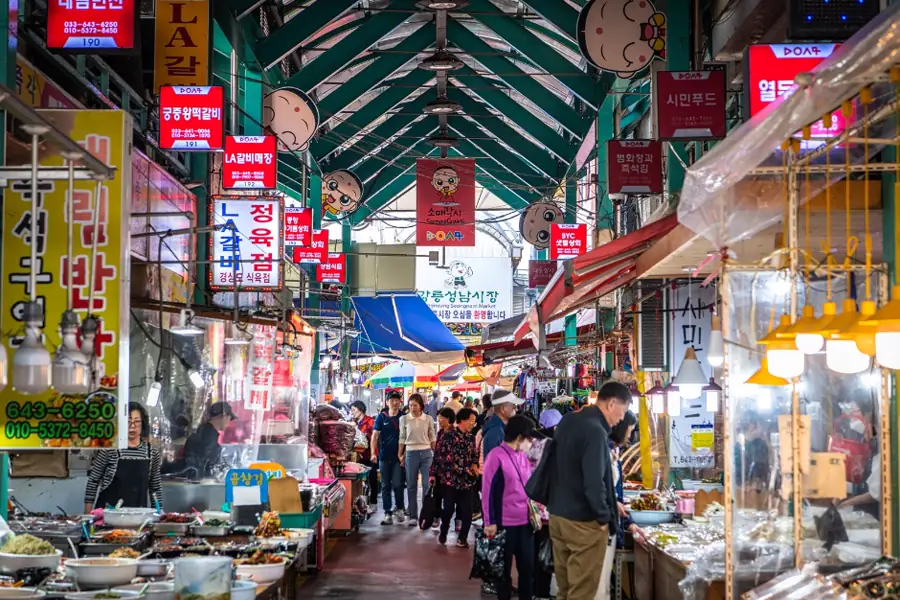
- BUILDING: the basement through upper floors serve different functions; tourist snacks are only the most visible layer.
- FISH: use the basement for fresh and dried seafood, but ask how weight, cleaning, preparation, and seating are charged.
- STREET: Wolhwa Street and adjacent alleys extend the visit; occasional weekend activity is not proof of a nightly market every day.
- Best fit: travelers arriving through Gangneung Station who can spend 90 minutes to 2.5 hours on a meal, souvenirs, and a short downtown walk.
What is Gangneung Jungang Market beyond tourist snack queues?
Gangneung City's market information says Jungang Market was formally registered as a permanent market in 1980. The building has one basement level and three levels above ground, with approximately 321 shops. Its roots as a trade center for the Yeongdong region predate that registration, and it still serves residents buying seafood, produce, ceremonial goods, textiles, clothing, and everyday products.
KTX access and tourism made prepared-food lines more visible, but they did not turn the property into a single food hall. In a one-day Gangneung itinerary, write the stop as a local meal and downtown function—not merely “buy fried chicken.” Decide whether the group needs a seated dish, shareable snacks, seafood, or gifts before the crowd chooses for you.
Why the map is confusing: market building, nearby market streets, and Wolhwa Street
Travelers use “Jungang Market” for a wider area than one legal building. The main building, connected covered lanes, neighboring commercial alleys, and Wolhwa Street blend together. Navigation to 21 Geumseong-ro reaches the core, but different entrances can first expose you to snack queues, traditional dried goods, clothing, or side-street shops.
Wolhwa Street reuses a former rail corridor through downtown and adds small shops and walking space around the market. VISITKOREA says weekends can bring cultural performances or night-market activity. That does not make the permanent market a nightly event. When deciding between a Gangneung day trip and overnight stay, check permanent shop hours separately from a dated street program.
How are the floors organized?
Gangneung City's current description assigns the basement to direct seafood sales, including squid, mackerel, octopus, flatfish, and other catches. The first floor carries food, ceremonial items, textiles, hanbok, dried seafood, clothing, and general merchandise. The second floor includes restaurants serving spicy fish stew, samsugi fish stew, roe stew, and other dishes, alongside bedding, clothing alteration, and a customer rest area. The third floor is mainly administrative.
This layout is more useful than the label “food market.” Start at ground level for quick takeaway and packaged goods, descend when the east-coast seafood trade interests you, and investigate upper-floor restaurants when a hot seated meal matters. Stalls move and opening patterns change; follow current signs rather than expecting a business to occupy the same position seen in an old video.
Why 08:30–21:00 is not a promise that every shop opens together
VISITKOREA lists 08:30–21:00 as the market's reference hours and explicitly adds “varies by shop.” Fresh seafood sellers, dry-goods shops, lunch restaurants, popular takeaway counters, and surrounding street businesses have different preparation times, breaks, weekly closures, and sell-out points. An open passageway is not proof that a saved stall still accepts orders.
Morning is better for daily trade, seafood, and lighter crowds, though some tourist food counters may not be ready. Lunch offers a broader meal selection and longer queues. Afternoon can fit an arrival from the station or a return from the coast. Evening works only with the shops that remain open. If one product is the sole reason for coming, confirm that business directly; otherwise keep two or three substitutes.
Morning, lunch, afternoon, or evening: which window is best?
09:00–11:00: calmer observation of seafood and dry goods, but an incomplete snack lineup. 11:30–14:00: the strongest meal selection and the greatest queue risk. 15:00–17:30: useful between the coast and a train, especially for takeaway. After 18:00: assume only some food shops operate; never describe the entire building as one night market.
What matters is the function. If this is lunch, arrive before the hunger and queues peak. If it is a pre-train collection stop, select food that tolerates transport and leave a hard departure time. If it is an evening walk, check two actual dinner options rather than relying on the market-wide reference range, then use the Gangneung evening plan to keep the hotel return and any Wolhwa Street activity realistic.
Choose food by portion and role, not queue length
Common visitor choices can include sweet-spicy fried chicken bites, fish-cake croquettes, potato pancakes, dumplings, pancakes, hot dogs, hotteok, coffee-related products, and seafood. The specific fashionable shop, menu, and line change. A long queue only shows demand at that moment; it does not prove the flavor suits you or the package fits a solo traveler.
For two people, begin with one shareable item and one or two smaller tastes, then add a meal if still hungry. A solo traveler should prioritize a small fresh portion, one bowl, or something that can safely become the next meal. Families should secure a workable seating and non-spicy option before buying several boxes. Leave appetite for the basement if seafood is the real priority.
Fried chicken is not the only decision: compare four things before queuing
Sweet-spicy dakgangjeong is strongly associated with tourist market visits, but sellers can differ in sauce sweetness, spice, bone-in or boneless format, fresh preparation, packing, and box size. Before joining, inspect the displayed price, estimated completion time, smallest portion, spice adjustment, and whether the texture or smell will survive a train journey.
Set a queue limit. If the wait exceeds the time your itinerary can lose, choosing another fresh snack is not “missing Gangneung.” A market is valuable because it provides alternatives. A solo traveler buying a large share box for one photograph often loses the appetite and time needed to understand anything else.
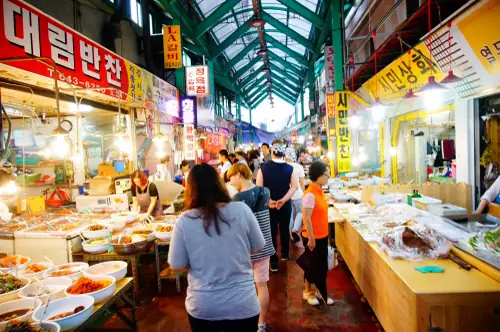
Is the basement fish market worth visiting if you do not buy?
Yes, when you want the market's local context. The basement reflects Gangneung's position on Korea's east coast rather than serving as scenery behind snack stalls. Fish, squid, octopus, flatfish, salted products, and dried seafood change with season, catch, size, and processing. Even a short respectful circuit can show more regional identity than another box of fried starch.
If you want seafood prepared or served, ask before payment: is the display price per animal, weight, or portion; are cleaning, slicing, cooking, side dishes, or seating separate; and must you take the purchase to a different business or floor? Do not import the process from another Korean fish market. If only observing, keep wet work lanes clear, watch for slippery flooring, and yield to carts and vendors.
Dried seafood and souvenirs: storage matters more than the first price
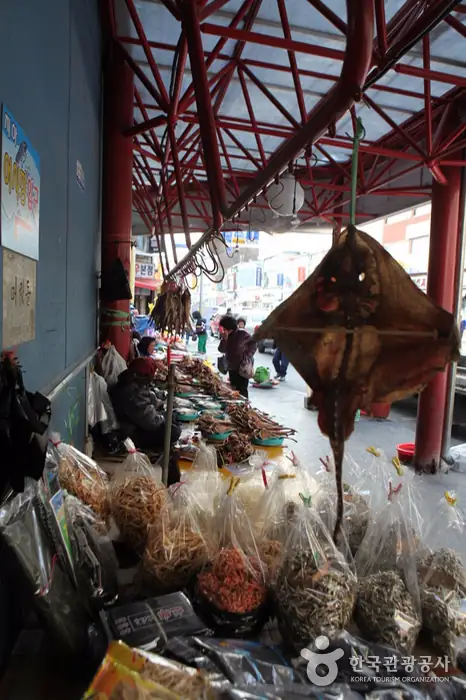
Dried fish, squid, seaweed, tiny fish, preserved foods, local produce, and packaged products can travel better than fresh catch, but “dried” does not mean effortless. Ask whether the product needs refrigeration, how long a sealed package can remain unrefrigerated, whether the hotel has a refrigerator, and whether odor or liquid makes the remaining train or flight difficult.
For gifts, inspect ingredients, allergens, weight, labeling, and package integrity. International travelers must check destination-country restrictions on meat, seafood, seeds, fresh produce, and homemade foods. Commercially sealed goods with clear storage instructions are safer than an unlabelled bag. Free market entry does not create a duty to buy something you cannot carry legally or safely.
How should solo travelers, couples, families, and seniors eat here?
Solo: choose one small immediate item, one seated bowl, or a sealed product that can serve another meal. Couple: share one fried item, then add soup, rice, or seafood. Family: identify seating, toilets, a mild dish, and a meeting point before splitting for orders. Seniors: avoid the lunch crush and prioritize an upper-floor seated meal or a quieter hour.
Seats may belong to a specific restaurant rather than the market generally. Never bring food from another seller into a dining area without permission. Ask whether an order is dine-in or takeaway, whether seating exists, and whether a number must be taken. One person queuing while another occupies space only works when the business permits it and the passage stays clear.
Allergies, vegetarian food, halal needs, and spice
Fried items can share oil. Dumplings, pancakes, fish cake, sauces, and soup bases may contain pork, seafood, fish sauce, egg, dairy, peanuts, wheat, or chili. A vegetable label does not prove a vegan stock; food that looks pale is not necessarily free from chili or seafood seasoning. Severe allergies should never be managed through a food photograph alone.
Carry a Korean-language card listing prohibited ingredients and ask about recipe and shared equipment. If the seller cannot confirm, do not take the risk. For halal travelers, “no pork” is not the same as certified halal preparation. A traditional market rewards flexible discovery but cannot be assumed to provide full English allergen documentation at every loose-food counter.
Payment and prices: bring more than one method
Businesses vary in scale and payment equipment. Larger shops may accept cards or digital methods; small stalls may prefer cash or Korean payment systems. An overseas credit card can fail even where a domestic card works. Carry one physical international card and a modest amount of Korean won rather than relying entirely on a phone wallet or large banknotes.
For loose, weighed, prepared, or seated seafood, confirm the total before committing. Show quantity with fingers, ask for the amount on a calculator, pay, and check change. A market environment does not mean every fixed-price snack is negotiable. Clarifying portion, weight, and preparation fees protects both sides better than arguing after service begins.
Gangneung Station, luggage, and the car-free visit
Jungang Market lies in central Gangneung and can be reached from the station by walking or a short local ride, depending on luggage, weather, exits, traffic lights, and pace. VISITKOREA describes Wolhwa Street as roughly a ten-minute bus ride from Gangneung Station. A short taxi can be clearer than finding a bus stop when time is tight or suitcases are large.
VISITKOREA has suggested Zim Carry at Gangneung Station or Customer Center IEUM near Jungang Market for storage, but that page warns its information may have changed. Verify current location, opening time, capacity, dimensions, and fee before depending on it. Use the car-free Gangneung plan to fix storage first; rolling a large case through wet seafood lanes and food queues is uncomfortable and obstructive.
Driving and parking: several listed lots do not guarantee a lunch space
Gangneung City lists paid curb spaces on Geumseong-ro, a public Jungang Market structure, and surrounding options near Wolhwa Street, Seongnae-dong Square, the Namdaecheon riverbank, and the central embankment. Some are paid, some have been listed as free, and capacities range from dozens to hundreds. This is a menu of options, not live availability.
Weekends, lunch, festivals, and bad weather can fill the nearest choice first. Select a first and second lot before driving, photograph the parked location, and check payment and closing rules. Ask on the visit date whether any receipt benefit exists; do not import a parking-validation rule from a different market.
Rain, summer heat, and winter conditions
Covered main lanes make the market more reliable than a beach in rain, but the route between parking, Wolhwa Street, side entrances, and the building remains outdoors. Basement and seafood areas can also be slippery. On heavy-rain days, many travelers move indoors together, making Jungang Market more crowded than it would be under clear skies.
In summer, do not carry chilled seafood through a long coast itinerary without a real cold chain. In winter, watch for ice, earlier shop closure, and queues for hot food. The Gangneung rainy-day plan should use the market as one meal and one or two sheltered hours, not pretend its roof can fill an entire storm day.
Wheelchairs, strollers, and slower travelers
Gangneung's barrier-free tourism information lists parking, designated accessible parking, toilets, an accessible toilet, a wheelchair lift, and a ramp for Jungang Market. That is useful facility evidence, but a working market still has merchandise, crowds, wet floors, narrow points, carts, and individual shop thresholds. Not every route or restaurant is equally accessible.
When a specific facility is essential, contact the market at +82-33-648-2285 to confirm the usable entrance, lift status, nearest accessible toilet, and quieter time. A stroller may fit the main aisle but remain difficult in the lunch peak. Seniors benefit from identifying a seat first. Never stop to divide food at a stair landing, fire route, or working seafood corridor.
How to place the market before or after the coast without backtracking
Jungang Market pairs most naturally with Gangneung Station, Wolhwa Street, and the older downtown. Gyeongpo, Anmok, and other coast areas pull in another direction. Efficient shapes include “station storage → market lunch → coast → return for luggage” or “cultural sights → market dinner → downtown hotel,” rather than returning from the sea every time another snack appears on a list.
The Gangneung two-day, one-night decision shows why a complete downtown meal and a complete coast block work better than repeated crossings. Put the market at lunch if sunset belongs to the sea. Use it for dinner only when the exact restaurant or stalls are confirmed and the accommodation return remains simple.
What changes on a three-day east-coast stay?
With three days, Jungang Market no longer needs to carry every local food ambition in one sitting. It can serve as arrival lunch, a separate basement-seafood visit, or a final takeaway stop. That creates smaller portions, less queuing pressure, and a chance to compare downtown food with coastal neighborhoods instead of buying everything at once.
Use the three-day Gangneung base versus two-coast plan to decide whether luggage and accommodation ever pass through downtown naturally. If every night is based far along the coast, a second market visit may waste more transport than it saves.
From Seoul on a day trip: market first or last?
Market first: lunch options are stronger and luggage can potentially be stored before the coast, but takeaway and gifts must be carried all day. Market last: food can go directly toward the train, but evening choice narrows, sell-outs happen, and queues can threaten departure.
Lock the actual arrival and return with the Seoul-to-Gangneung KTX and bus comparison. The safest day trip asks the market to provide one meal, not every famous bite. Before the return train, reserve enough time to collect luggage, travel from market to station, find the platform, and board without running with hot food.
Fourteen checks before going
- Is the goal a meal, snacks, seafood, or souvenirs?
- Does that goal belong in the basement, ground level, upper floor, or Wolhwa Street?
- Has the specific saved shop confirmed its operating date and sell-out pattern?
- Do you understand that 08:30–21:00 is a shop-variable reference?
- Will morning trade, complete lunch selection, or limited evening service suit you?
- Can a solo traveler or the group finish the package size?
- What queue length triggers a switch to another seller?
- Is seafood priced per weight, animal, or portion, and is preparation separate?
- Have allergy, vegetarian, halal, spice, and shared-oil questions been answered?
- Do you have both a physical card and modest Korean cash?
- Can chilled, dried, or takeaway food survive the remaining route?
- Is station or market-area luggage storage currently available?
- What are the first and second parking choices?
- Does the next stop continue downtown or force a coast backtrack?
Worth a dedicated stop: you want one meal to show how Gangneung's seafood trade, permanent local market, and newer snack culture coexist. Best as a route stop: you arrive or depart through Gangneung Station, stay downtown, and need food, storage, or gifts. Skip the viral queue: the wait exceeds the itinerary, the portion is wrong, or dietary information is uncertain. Skip the market this time: coast time is extremely short, nobody wants to eat or shop, or large luggage remains unsolved. Using BUILDING, FISH, and STREET makes Jungang Market more than a takeaway pickup.
Checked August 23, 2026. Gangneung City was used for the 1980 registration, approximate 321 shops, floor functions, product categories, and listed parking; VISITKOREA for the 08:30–21:00 reference explicitly marked as varying by shop, address, and images; the Wolhwa Street page for the neighboring street, possible weekend activity, and older station/market-area luggage suggestion; Gangneung barrier-free tourism information for listed parking, accessible toilet, wheelchair lift, and ramp. Recheck individual closures, evening service, displayed prices, payment, luggage storage, food preparation, and dine-in rules on the visit date.
Gangneung City: Jungang Market VISITKOREA: Gangneung Jungang Market VISITKOREA: Gangneung Wolhwa Street Gangneung Barrier-Free Tourism information