
The short answer: Daereungwon is worth visiting, especially on a first walk through Gyeongju’s historic centre, but separate the free burial-mound park from the ticketed Cheonmachong tomb interior. Cross the lawns and woodland in 45 to 60 minutes for free. Allow roughly 90 minutes and enter Cheonmachong when Silla tomb construction, the Heavenly Horse painting and excavated gold genuinely interest you.
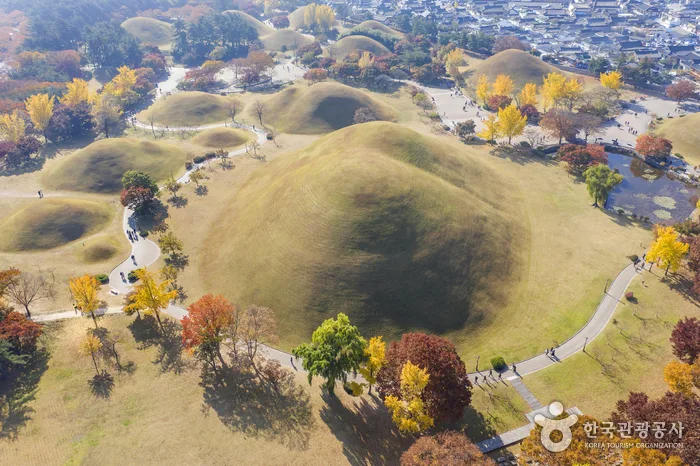
- PARK: walk among the free mounds, trees and paths for rest, a short stop or sunset photographs.
- TOMB: Cheonmachong is the only mound here with an interior open to visitors; its separate ticket pays for historical context rather than park access.
- ROUTE: the rear gate connects toward Hwangnidan-gil while the main-gate direction continues into the historic core. The wrong gate creates a return walk.
- You need not do all three: crossing the park, adding the paid tomb or skipping the site for a different Gyeongju direction can each be complete decisions.
Correct the price first: Daereungwon is free; Cheonmachong is paid
This is the fact most likely to be distorted by old English information. Gyeongju’s current Korean admission page explicitly says that entry to Daereungwon is free. It currently lists individual Cheonmachong admission at 3,000 won for adults, 2,000 won for teenagers and soldiers, and 1,000 won for children. VISITKOREA also separates the free park from the paid tomb. Some older Gyeongju English pages still present 3,000 won as Daereungwon admission; that predates the change and should not decide whether you enter the park.
Free still uses walking and transfer time; Cheonmachong adds ticketing, a possible queue and the indoor visit. Protect the main line with a Gyeongju one-day itinerary, then assign time separately to park and tomb. “Already here” is not a reason to buy the ticket.
What is there to see beyond 23 similar grass hills?
Gyeongju’s official material describes an approximately 126,500-square-metre park with 23 Silla tombs of different sizes, including Great Hwangnam Tomb, the Tomb of King Michu and Cheonmachong. From a distance they share smooth curves, but their size, twin-mound form, location and excavation history differ. The value is seeing a royal and aristocratic cemetery at city scale—not memorising every unidentified mound.
Use three anchors instead of “finishing” the park: the twin Great Hwangnam Tomb, the Tomb of King Michu and, if useful, Cheonmachong’s interior. Pond, bamboo, old trees and the spaces between mounds create something a museum case cannot; one photograph of a green hill does not explain the burial landscape.
The Cheonmachong ticket buys access to tomb structure
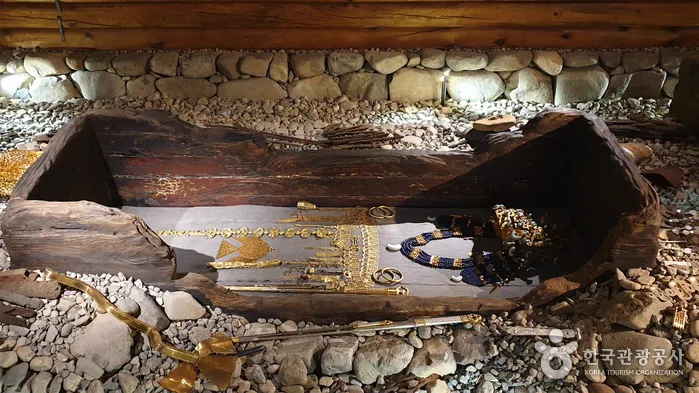
Cheonmachong dates from approximately the late fifth to early sixth century and was excavated in 1973. Its name comes from a saddle flap bearing the Heavenly Horse image; finds included a gold crown, belt, cap and gilt-bronze shoes. It is the only mound here whose reconstructed stone-piled wooden chamber visitors can enter, answering what lies beneath the lawns.
Do not assume every precious original remains inside the tomb. VISITKOREA points travellers to Gyeongju National Museum for the excavated artefacts. If Silla goldwork, archaeology and tomb engineering matter, the 3,000-won adult ticket is usually useful. If you want open-air walking and the mound silhouettes, the free park already delivers that purpose. The paid layer is not a certificate proving you visited Daereungwon.
Use 09:00–22:00 as a planning range, not a 21:59 arrival strategy
Gyeongju’s current attraction page lists Daereungwon from 09:00 to 22:00 with ticket sales ending at 21:30; the official Cheonmachong page also lists 09:00 to 22:00. That range supports morning, afternoon and evening visits, but closing time is not permission to arrive at the final minute. Buying a Cheonmachong ticket, viewing the display and leaving through another gate all require buffer.
Lighting changes, while magnolias, cherry blossom and autumn colour are never included with admission. Use the Gyeongju evening plan to choose one lead experience. Daereungwon can provide sunset without forcing every old-town site to last until closing.
Day, dusk or night: which time works best?
Day: the paths, mound scale and Cheonmachong display are easiest to read; choose it when history is the priority. Dusk: the ridges, long shadows and sky gain depth, making a natural bridge between daytime old town and evening. Night: lighting and visitors create a different atmosphere, but plant colour and mound detail recede while Cheonmachong ticketing approaches its cutoff.
No period guarantees clear history, no crowd, flowers and a perfect sunset together. Entering the tomb in daylight and leaving near dusk is complete but time-intensive. If another night view leads, finish Daereungwon earlier so dinner and the return do not collapse into the final hour.
The magnolia frame is beautiful, but it is not the entire attraction
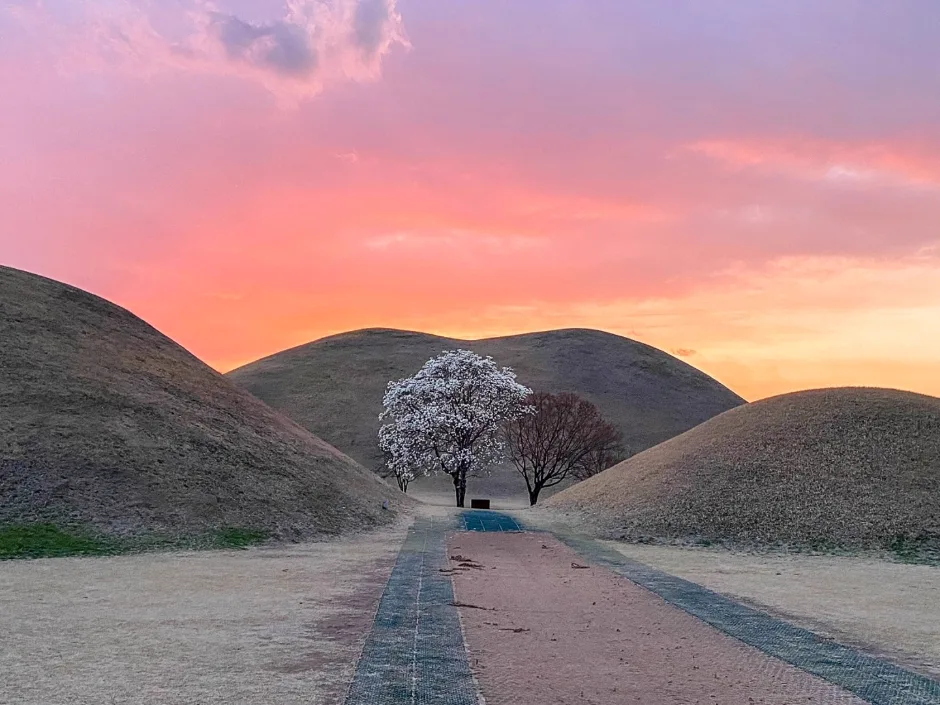
A single magnolia between two burial mounds is Daereungwon’s famous photo point. Gyeongju’s 2026 spring material uses late March as a reference, but weather, flowering and site conditions change each year. At popular times the queue can be significant, and no visitor is promised the promotional photograph’s sunset, flower volume or empty background.
If the magnolia has not opened, the mounds, paths and Cheonmachong remain. Ask whether the purpose is a seasonal photograph or the Silla cemetery. The answer determines whether poor flowering means continue or return the time to the next old-town stop.
Main gate or rear gate? The choice decides whether you backtrack
Gyeongju’s official route advice says the rear gate is faster when coming from Hwangnidan-gil. Moving through the park toward the main gate supports continuation into the historic core. This is Daereungwon’s strongest ROUTE layer: it need not behave like an enclosed garden where every visitor exits through the same door. It can form part of the line between Hwangnidan-gil and the heritage area.
Mark the entry gate, Cheonmachong and exit first. “Meet at Daereungwon” is too vague when companions can stand at different gates. For a fixed admission, bus or dinner, work backwards from the correct exit rather than taking the first door.
A day trip or overnight stay changes the speed inside the park
When returning to Seoul or Busan on the same day, continuous walking inside Gyeongju’s old town is more valuable than the fullest possible version of every attraction. Set the return deadline through the Gyeongju day-trip or overnight decision. If time is short, crossing the free park and seeing one main mound is reasonable; the paid tomb then depends on actual interest.
An overnight stay separates the tomb, sunset and evening old town. Use the Gyeongju overnight itinerary to place Daereungwon from afternoon into dusk. For longer stays, the two-night old-town or station-last-night decision checks whether the hotel preserves this walk without a final-day transfer.
Visiting without a car is sensible, but arrival in Gyeongju is not arrival at the gate
Daereungwon is easier without a car than remote sites, but Shin-Gyeongju Station, the bus terminal, hotel and park gate remain different locations. Use Gyeongju without a car to separate intercity arrival, local connection, park walk and return. “Central” does not mean beside the train door.
A Korea transport card handles bus payment but cannot guarantee service or choose the gate. With limited walking ability, combine the taxi drop-off, restroom, Cheonmachong queue and exit direction; the shortest path does not pass every highlight.
How should rain, heat and winter change the visit?
Cheonmachong is indoors, but most of Daereungwon remains an outdoor path. In heavy rain, reaching the tomb, queuing and continuing to the next stop all remain exposed. At a hot summer noon, “free, so walk slowly” may cease to be helpful. In rain, make the tomb the focus and compress the outside; do not treat the whole cemetery as an indoor alternative.
Winter changes grass, sunset and comfort, so night is not automatically stronger. Seasonal scenery exists only when it appears. If weather removes PARK and nobody wants TOMB, skipping is better than completing a wet or overheated circuit.
Daereungwon and Bulguksa are not two versions of the same history stop
Daereungwon explains royal burial inside the old-town line; Bulguksa, toward Tohamsan, explains Buddhist architecture and stone pagodas. They compete for movement, not a “better history” title. Use whether Bulguksa is worth leaving downtown for, then choose by theme instead of attempting two half-day versions.
Seven checks before entering
- Do you need the free PARK, paid TOMB or through-route today?
- Have Daereungwon and Cheonmachong hours, price and ticket cutoff changed?
- Which gate will you enter, and on which side is the next stop?
- Do tomb construction and excavated Silla objects genuinely interest you?
- Are magnolia, blossom, foliage and sunset bonuses rather than the only reason?
- How much outdoor walking and queuing suit the weather and group?
- If Cheonmachong is crowded or ticketing has ended, is the free park still worthwhile?
Do the complete visit: this is a first Gyeongju trip, you are walking the historic core, and you want to connect the outer mounds with an interior tomb. Use only the free park: you want the lawns, dusk, rest or a route from Hwangnidan-gil into old town without the display. Skip it today: time supports only a remote theme, weather removes the park’s value, or the sole purpose is copying a flower photograph that does not exist that day. Since Daereungwon became free, the important saving is not 3,000 won; it is choosing the layer worthy of your time.
Checked 23 August 2026. Current Korean Gyeongju attraction and admission pages take priority: Daereungwon is free, Cheonmachong has separate admission and 09:00–22:00 is the planning range. Mound count, area, Cheonmachong history and images were cross-checked with Gyeongju and VISITKOREA. Some older English Gyeongju pages still show the former whole-park charge; this article does not use it. Recheck price, ticket cutoff, gates, commentary, flowers, lighting and maintenance on the date.
Gyeongju Tourism: current Daereungwon details Gyeongju Tourism: current admission table VISITKOREA: Daereungwon Tomb Complex VISITKOREA: Cheonmachong Tomb