
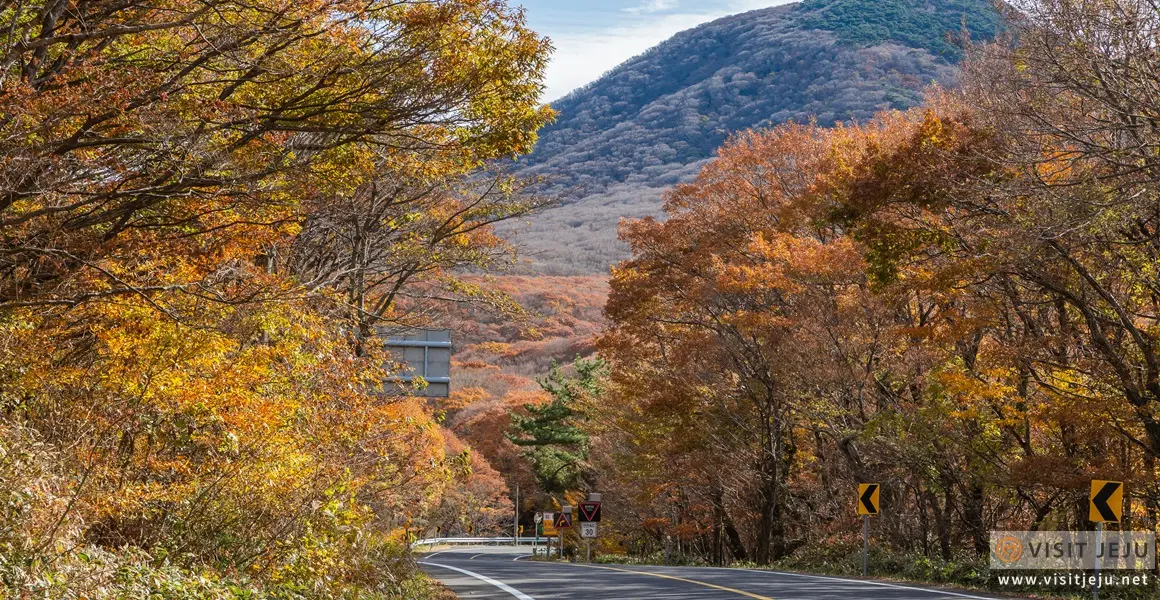
30-second answer: if you have two or more Hallasan / Road 1100 foliage blocks—for example Cheona Forest Path on one day and Eorimok, Yeongsil or the 1100 Highland area the next—your accommodation can reasonably serve that repeated mountain corridor. A Jeju City base is especially practical for travelers using the current Bus 240 corridor and for anyone who wants a city fallback when the mountain plan fails. If autumn leaves are only one day of your trip and tomorrow points to Seongsan, the coast or the airport, moving hotels for foliage alone usually does not pay back. As of August 20, 2026, KoriNavi could not find an official 2026 annual Hallasan foliage forecast that justifies writing a fixed “best weekend” into the booking decision.
Ask four questions for each hotel candidate: How many times will I enter the same mountain corridor? Do I need an early start? If Road 1100 is affected by weather or traffic control, does this base still have a second use? Is tomorrow’s first stop still on the same side? If three or more answers are Yes, foliage may justify changing the base. If you only want one red road and one photo stop, change the itinerary first—not the hotel.
Split the problem into mountain foliage and lowland late autumn before you choose a hotel
Visit Jeju’s current and historical autumn material treats Hallasan’s foliage as layered rather than island-wide and simultaneous. Cheona Forest Path is still listed by Visit Jeju as a well-known Hallasan autumn-leaf route, with deciduous forest turning yellow, orange and deep brown. That immediately changes the accommodation question. You are not trying to find “the hotel closest to all autumn leaves.” You are deciding which elevation band and which corridor deserve two consecutive travel blocks.
If your trip is actually a Hallasan hiking trip, start with where to stay for a Hallasan hike. That guide deals with trailheads, early starts and the physical cost of hiking. This article does not duplicate the complete hiking decision. It only asks whether the foliage season itself creates enough repeated mountain use to justify moving your accommodation.
Cheona Forest Path is not a “sleep in Aewol because it is closest” problem—the real cost is the long walk plus the exit
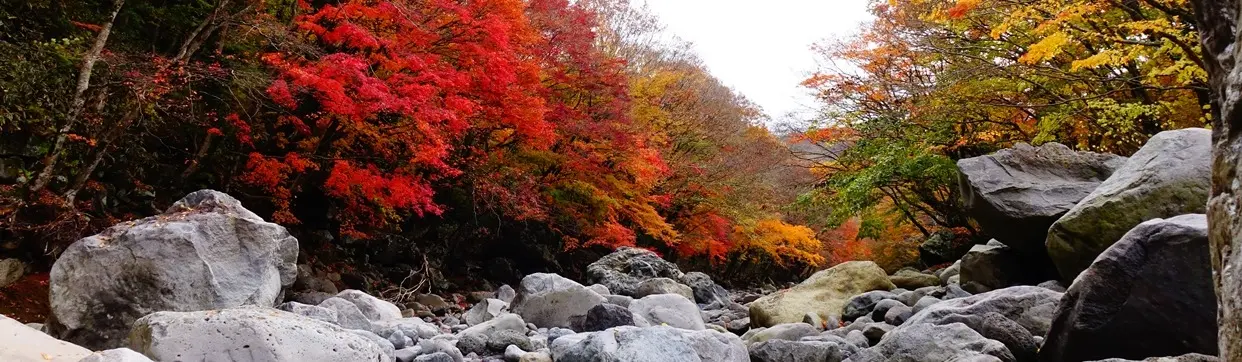
Visit Jeju’s current Cheona Forest Path page describes a 10.9-km Dulle-gil route from Dol Oreum to the Cheona Basin and says the full route takes roughly three hours and forty minutes one way. It also warns that the forest road can be closed for up to two days after heavy rain for safety. This is much more useful for accommodation planning than a simple map pin. The day includes access, a demanding walk, the exit, and whatever transport gets you back to dinner and sleep.
That is why “stay nearest to Cheona” is incomplete advice. You need to know whether you can reach the start in the morning, how you leave after the walk, and what you do if rain removes the trail from the day entirely. Visit Jeju has also recommended the Road 1100 bus for this area during busy autumn periods. The current Jeju Bus Information System still lists Bus 240 from Jeju Bus Terminal through the Cheona Forest Path entrance, Eorimok, the 1100 Highland rest area and Yeongsil before continuing to Jungmun and the Jeju International Convention Center.
Without a car, Jeju City is useful because Bus 240 and the fallback day live in the same base
The current official route data for Bus 240 runs from Jeju Bus Terminal along Road 1100 toward Jungmun / ICC and includes the Cheona Forest Path entrance, Eorimok, 1100 Highland and Yeongsil-area stops. For a traveler without a car, this makes Jeju City a practical mountain-corridor starting point even though the city is obviously not “inside” Hallasan. If public transport is your default, read how to travel Jeju without a car and keep the one-direction-per-day principle intact.
The important limitation is that Bus 240 is not a magic guarantee against weather or road management. A Jeju Bus Information notice dated July 27, 2026 states that when Road 1100 is under traffic control, Route 240 changes from Jeju Bus Terminal → Road 1100 → Convention Center to Jeju Bus Terminal → Pyeonghwa-ro → Convention Center. In other words, the very stops you wanted in the mountain corridor can become unavailable. A hotel chosen only because it is “closer to the mountain” cannot fix that. A city base that still works for food, a west-side day or an indoor fallback can.
Wind, rain, road controls and trail-safety decisions can alter a Hallasan day. If the previous evening shows poor conditions, do not force the mountain plan simply because the hotel was chosen for foliage. Use the Jeju rainy-day fallback to shrink the day or change its direction, then use the next safe mountain window.
With a rental car, you gain timing flexibility—not permission to move hotels every night
Driving does make foliage chasing easier. You can check conditions in the morning and choose Road 1100, Eorimok, Yeongsil or another autumn route without rebuilding the whole transport chain. That flexibility has a cost, though. Autumn traffic, parking, mountain weather, concentration and the drive after sunset all belong to the driver.
If you already have two mountain days, both a Jeju City base and a south-side base can be logical depending on the next day. If foliage is only one day, keeping the original hotel is usually cleaner. If you have not decided whether a car is worth the work, use the Jeju rental-car decision guide. “Autumn leaves are spread out” is not enough reason by itself to turn an entire trip into a driving trip.
Jeju City is not the default answer for every foliage traveler—it is strongest for north-side starts, repeated mountain days and backup value
If you will enter Road 1100 from the north on two consecutive days, or use Cheona Forest Path on one day and another Hallasan foliage block on the next, Jeju City can form a clean loop: leave for the mountain in the morning, return to city food and services at night, then use the same corridor again. The city’s value here is not “more attractions.” It is the ability to finish a physically or weather-sensitive day without adding another difficult transfer.
That does not mean every hotel in Jeju City is equally convenient for Bus 240 or mountain access. Check the actual route from the property to Jeju Bus Terminal or the relevant stop, the first departure that works for your day, and the return after your planned exit. Administrative labels such as “Jeju City” are not a substitute for the door-to-door transfer.
Staying on the south side can be correct when the next day is already south
The other end of Route 240 reaches Jungmun and the Jeju International Convention Center. That is an important corrective to the idea that every Road 1100 foliage trip should start from Jeju City. If you are already sleeping in Jungmun, use Yeongsil or the 1100 corridor the next day, and then continue with another southern day, there is no reason to move north simply because Jeju City is the more obvious bus-origin answer.
Accommodation must serve the entire block of travel, not one mountain map. If your trip has two or more south-side days, check where to stay around Seogwipo and decide whether the south is already the stronger base. If the property is actually in the Jungmun resort area, recalculate the first stop, last stop and transport mode from that exact address. Autumn foliage is one daytime block; it should not erase the rest of a south-side itinerary.
Late-autumn lowland color is a fallback target, not a reason to chase the “last red spot” with your suitcase
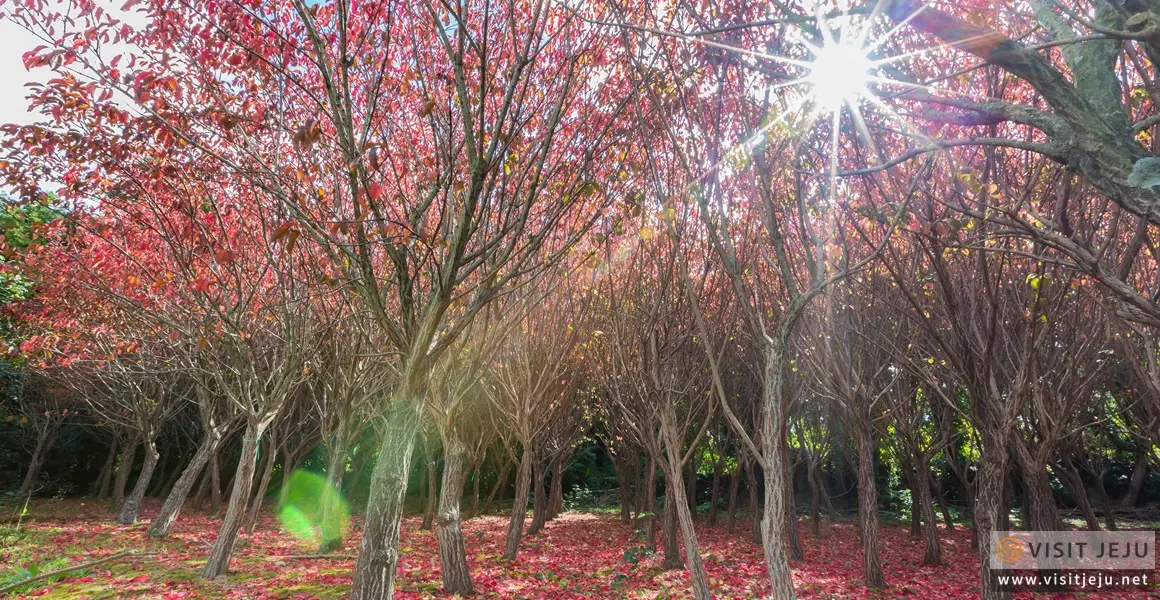
Older Visit Jeju autumn material has used the Hangpaduri / Aewol area as an example of lower-elevation foliage that can remain interesting later in the season. This kind of color is different from a Hallasan mountain day. It behaves more like a western Jeju outing that can be added to a city or west-side itinerary rather than a pre-dawn mountain mission.
If western Jeju was already going to take two days, then use the west Jeju base decision to see whether Aewol or another western base earns its move. If lowland foliage is only one stop, keep Jeju City or the existing hotel and travel out for the day. This is the central difference between J094 and an ordinary “best autumn spots” article: where the leaves are red does not tell you where you should sleep.
Do not lock a 2026 hotel around an old “peak foliage date”
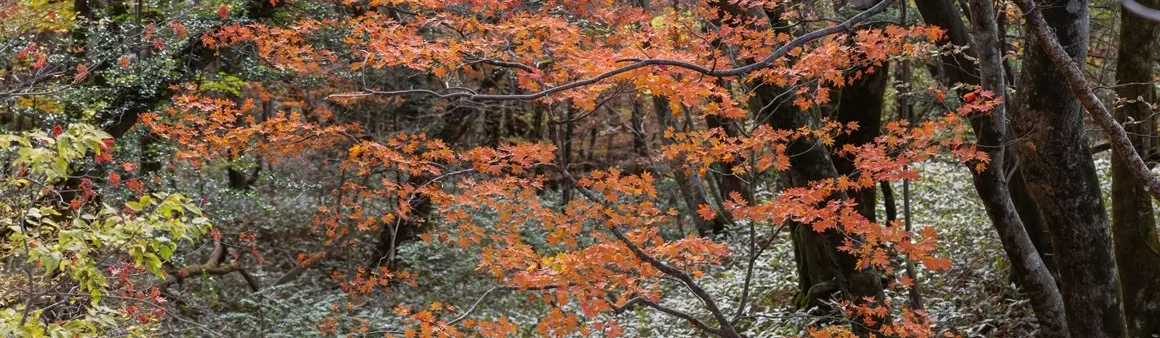
Historical official material gives useful seasonal context. An older Visit Jeju autumn feature described Hallasan leaves beginning around mid-October and reaching a peak around early November, while a more recent Visit Jeju feature describes Cheonwangsa’s surrounding forest as colorful from late October into mid-November. Those ranges help explain the season. They do not create a guaranteed 2026 peak date for every elevation, trail and tree species.
As of August 20, 2026, KoriNavi has not found a current official annual Hallasan foliage forecast that is strong enough to hard-code one weekend as “the best.” The better booking strategy is therefore to buy recoverability: use a base that still serves another day, choose cancellation terms that match your tolerance for change, and re-check official foliage, Hallasan trail and Jeju Bus information closer to departure.
This distinction matters because autumn travel has two clocks. The first is the color clock, which you do not control. The second is your trip structure—hotel moves, bus access, driving fatigue, tomorrow’s direction—which you do control. Accommodation should be optimized around the second clock.
Before paying, answer these eight questions
- Is autumn foliage one day or at least two? One day should start from “do not move the base.”
- Is the main target Hallasan / Road 1100 or lower-elevation late autumn? They are different accommodation problems.
- Do you need an early start? Early timing is what increases the value of sleeping on the correct side of the mountain corridor.
- Without a car, are you depending on Bus 240? Check the actual route, stop, return and service timing—not only the map distance.
- What happens if Road 1100 is controlled? A base with no useful Plan B is fragile.
- Is tomorrow still on the same side? If not, the hotel move has a poor chance of paying back.
- Are you treating last year’s foliage timing as this year’s guarantee? Remove that assumption before booking.
- Do the room price and cancellation terms let you recover if the mountain plan changes? In foliage season, recoverability can be worth more than a scenic address.
Two or more Hallasan / Road 1100 days: accommodation can legitimately move for the repeated corridor; Jeju City is particularly useful for Bus 240 users and travelers who need city backup. One foliage day: keep the existing hotel and treat autumn color as the day route, not a new base. Already staying on the south side: do not force a north-side move when Route 240 and Road 1100 are also accessible from the Jungmun side and your next day remains south. Arriving late in the autumn season: move the foliage target to lower elevation before you move the luggage. The largest risk is not sleeping a little farther from the reddest leaves; it is sacrificing the recoverability of the entire trip for a foliage window you cannot control.
Next decisions
Rechecked on 2026-08-20. Visit Jeju currently lists Cheona Forest Path / Cheona Valley as a Hallasan autumn-leaf destination and notes a 10.9-km route, roughly 3 hours 40 minutes one way, plus possible closure for up to two days after heavy rain. Jeju Bus Information currently lists Route 240 from Jeju Bus Terminal through the Cheona Forest Path entrance, Eorimok, 1100 Highland and Yeongsil toward Jungmun / Jeju ICC. A Jeju Bus Information notice dated 2026-07-27 states that when Road 1100 is under traffic control, Route 240 diverts via Pyeonghwa-ro. Historical Visit Jeju autumn features are used only to explain seasonal elevation differences and lower-elevation fallback logic; their dates are not treated as a 2026 foliage forecast.
Visit Jeju | Cheona Forest Path Cheona Valley · Visit Jeju | Hallasan autumn foliage feature · Jeju Bus Information | General routes · Jeju Bus Information | Road 1100 diversion notice
Foliage, road access, trail openings, bus schedules and traffic controls can change with weather and operations. Actual arrangements may vary by date, season and policy; re-check Visit Jeju, official Hallasan information and the Jeju Bus Information System before departure.