
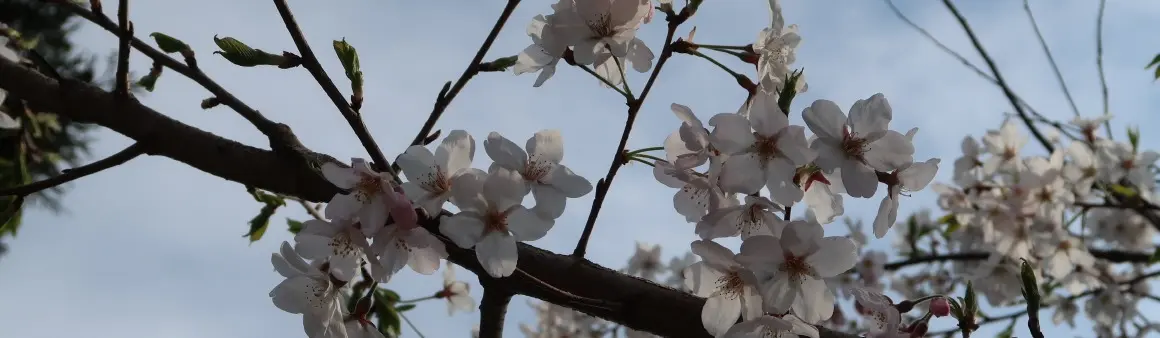
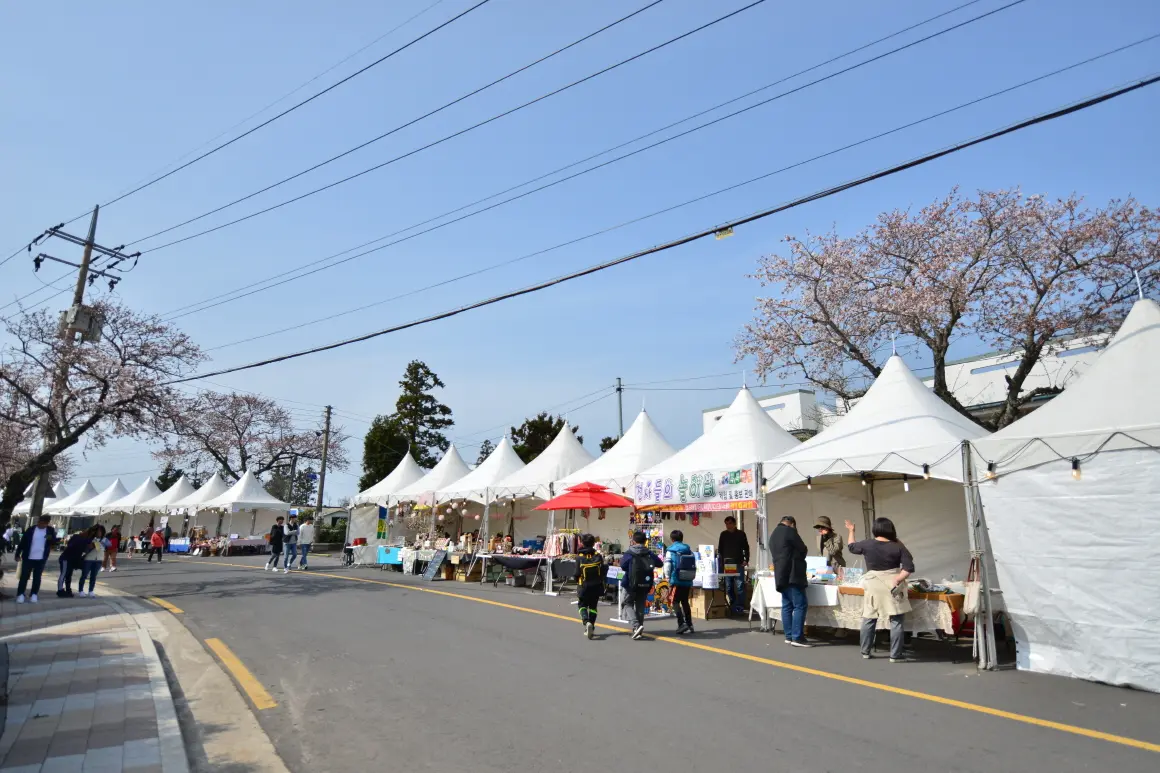
30-second answer: if your plan includes Jeonnong-ro after dark and another walk there the next morning, or you expect to finish two consecutive festival evenings in Jeju City, a Jeju City base usually has the strongest payback. Visit Jeju’s current record for the 2026 Jeonnong-ro King Cherry Blossom Festival gives the dates as March 27–29, 2026; during the festival, roughly 1.2 km of the street was made car-free, and lighting was installed around the cherry trees for evening viewing. By contrast, if Jangjeon-ri, Shinpung-ri or Noksan-ro is one daytime stop inside a west or southeast driving day, do not create another hotel move for one afternoon. Treat the blossom road as part of the route unless the same direction repeats tomorrow.
Ask four questions for every hotel candidate: Will I visit this blossom area once or twice? Do I need a specific time window such as night or early morning? Is tomorrow’s first stop still in the same direction? If the flowers disappoint, does this base still work for the rest of the trip? If you can answer Yes to three of them, changing your accommodation for cherry blossoms may earn its keep. If the only argument is “this road looks best today,” keep the suitcase where it is.
Jeonnong-ro earns “stay closer” status when you want two different time windows
Jeonnong-ro is not a sight that automatically justifies three hotel nights. Its accommodation value comes from repetition. You might see the illuminated street in the evening, stay for dinner, return once more after dark, then walk it again early the next morning if the weather is calm. In that itinerary, the hotel joins two flower-viewing windows into one clean night instead of turning the same road into two cross-island transfers.
The official 2026 festival page also matters because it records a roughly 1.2 km vehicle-control section during the event. That changes the accommodation calculation: having a rental car does not automatically make the nearest car-based plan the easiest one. The core festival street is a walking environment, and the important question is what happens after the evening ends. If Jeonnong-ro is the center of your spring trip, begin with where to stay in Jeju City rather than searching for an imaginary category of “cherry blossom hotels.”
A city hotel can support the blossom plan without promising a cherry-blossom room view
Astar Hotel Jeju is an existing city candidate once you have decided that Jeonnong-ro, the airport and city dinners belong in the same section of the trip. Its own booking decision still depends on bathroom type, sauna access, breakfast and final price. KoriNavi does not turn a city address into a guaranteed “Cherry Blossom View” room category that the hotel has not promised.
Ramada by Wyndham Jeju City Hall can suit a different group, especially travelers comparing Family Twin and Suite-style products. The blossom Persona solves the area decision first; legal occupancy, bed topology and the value of extra space still belong in the hotel’s exact room decision. If you have not even chosen the city or regional base yet, return to the overall Jeju accommodation decision instead of letting one spring photo skip the transport question.
Jangjeon-ri in Aewol is worth seeing; that does not mean it deserves another hotel night
Visit Jeju’s current listing identifies Jangjeon-ri King Cherry Blossom Road as a spring attraction in Aewol, at Gwangsang-ro 403, and the 2026 spring feature again included it among the western cherry-blossom roads. That is enough to make it a credible viewing candidate. It is not enough to conclude that every blossom traveler should sleep in Aewol.
If your west side already has two full days—Aewol, ARTE MUSEUM, 9.81 Park or other western stops—Jangjeon-ri can strengthen the case for a west Jeju base. If it is only one blossom afternoon, you still want dinner in Jeju City and tomorrow points east, an Aewol hotel move simply adds luggage management before and after the flower road.
The southeast only deserves a moved base when you will use the same side for at least two days
Visit Jeju’s 2026 spring feature listed Shinpung-ri Cherry Blossom Road as a roughly 3–4 km blossom route in the southeast. It behaves differently from Jeonnong-ro. This is more of a driving or route-based spring landscape than a city event where you walk after dinner and return to your room. The hotel question therefore cannot be “the southeast has good blossoms, so I should sleep east.” The question is whether tomorrow still uses Seongsan, Pyoseon, Seogwipo or the same east/south side.
If you have two full days on the same side, then where to stay in east Jeju or where to stay in Seogwipo becomes relevant. If the blossoms are one day only, keep the flower road subordinate to the existing base. And if sunrise at Seongsan is the fixed priority, your accommodation should serve that early clock before it serves a blossom road.
Noksan-ro’s pink-and-yellow spring scene is attractive—and easy to over-chase
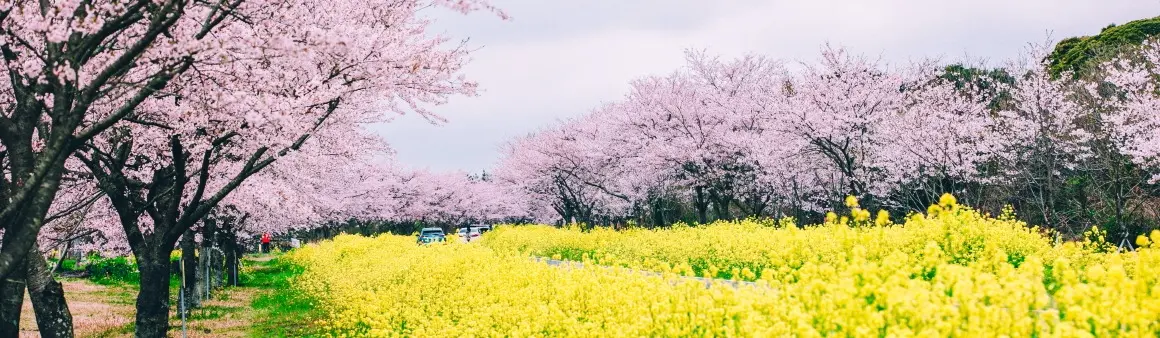
Visit Jeju’s current Noksan-ro material treats the road as a representative spring route, and official seasonal material has described late March to early April as a period when cherry blossoms and canola can overlap. But the cherry peak is shorter. The two flowers will not produce the same ideal combination on the same dates every year. A stronger plan treats Noksan-ro as a bonus when bloom and weather cooperate, while keeping Pyoseon, Seongsan or other south/east stops ready if conditions are ordinary.
A hotel whose entire reason is “I need a guaranteed pink-and-yellow photo” carries too much risk. A southeast stay needs a second job: perhaps tomorrow is still east, Pyoseon or south. That is the same logic as the Jeju rainy-day fallback: a robust base absorbs uncertainty instead of making one missed attraction ruin the day.
Because bloom timing is uncertain, your hotel should still make sense if the flowers miss
Cherry blossoms differ from a normal attraction because a hotel booking months in advance cannot lock the full-bloom window. Temperature, wind, rain and elevation or micro-area differences can move opening, peak and petal fall. For a 2027 or later trip, the 2026 festival dates are recent historical evidence, not a permanent calendar. Do not copy March 27–29 into a future itinerary as if it were guaranteed.
This is why every blossom hotel needs a second purpose. Jeju City can still serve the airport, dinner and city plans. A west base should already have at least two west-side days. A southeast or Seogwipo base should already support the south/east itinerary. If a bloom miss would erase the entire reason for the room, the accommodation decision is too fragile.
Visit Jeju’s 2026 spring material also pointed to later double-flowered cherry blossoms as another spring window after the earlier blossom period. That can be useful for later dates, but it still should not be converted into a guaranteed future full-bloom date. Recheck official bloom information and weather before departure.
For a rental-car blossom trip, parking and the post-night-view drive matter more than raw proximity
Because Jeju’s bloom spots are scattered, a car can add flexibility. But Jeonnong-ro’s festival traffic controls are a useful reminder: the car may deliver you to the city area without giving you the right to drive into the flower street itself. If you are still deciding whether to rent, use do you need a rental car in Jeju? to test the entire trip rather than assuming two blossom days justify five car days.
The plan to avoid is a long west or southeast route in daylight followed by a cross-island chase for one final night-view bloom. Driver fatigue does not disappear because cherry blossoms last only a short time. If night viewing is essential, move the accommodation logic toward Jeju City. If it is not essential, let the day end in its existing direction. A hotel should delete the hardest road segment, not encourage you to add every possible one.
Without a car, Jeju City usually keeps more backup options than “the closest hotel to one flower road”
A no-car traveler is especially exposed when bloom conditions change after booking a rural area around one road. Jeju City keeps transport, evening services and Jeonnong-ro on the city side. If the west or southeast looks better that day, you can use it as a day trip rather than moving every bag to follow the report.
If the full trip uses buses, start with Jeju without a rental car and keep one direction per day. Three social posts saying “go today” do not make three directions fit into one day; transfers and waiting still cut the trip into pieces.
Do not pay a premium for “a room with cherry blossoms” unless the room product actually guarantees it
Street blossoms have a short viewing window, and visibility changes with room direction, floor, buildings and tree height. KoriNavi will not convert a hotel near Jeonnong-ro, City Hall or another blossom road into a guaranteed cherry-blossom-view property. Unless the hotel or your exact room SKU explicitly guarantees that view, treat it as a possible bonus—not an upgrade entitlement.
The blossom accommodation benefits worth paying for are repeatable: no long trip after night viewing, an easy early-morning revisit, nearby food and a workable rainy-day reset. Those are benefits you can plan. Whether one tree outside your window is exactly at peak bloom is not.
Seven questions before you book
- What is your number-one blossom spot? Pick one before listing five equal priorities.
- Will you visit once or twice? Night viewing plus an early revisit is what sharply raises the value of staying closer.
- Is tomorrow still in the same direction? If not, a blossom-only hotel move has weak payback.
- What does the base do if bloom conditions disappoint? It should still serve another planned route, flight, meal or region.
- Are there festival traffic controls? A rental car does not guarantee parking at the flower-road entrance.
- Does the whole group want the early revisit? One photographer’s preference may not justify moving everyone’s luggage.
- Does the exact room guarantee the blossom view? If not, do not pay a premium for “maybe.”
Jeonnong-ro night + next morning: use Jeju City so the evening and the morning become one accommodation use case. Jangjeon-ri once: place it inside a west-side day; only consider moving west when the west repeats for two days or more. Southeast / Noksan-ro chasing: move south or east only when east, Pyoseon or Seogwipo already fills at least two days. The governing rule is simple: bloom plans can change at the last minute; hotel-move cost does not disappear. A base that still works when the flowers miss is the strongest cherry-blossom accommodation decision.
Next decisions
Rechecked on 2026-08-20. Visit Jeju’s 2026 19th Jeonnong-ro King Cherry Blossom Festival page records March 27–29, 2026 in the Jeonnong-ro area of Jeju City, with roughly 1.2 km of traffic control during the festival and lighting for evening viewing. Visit Jeju’s 2026 spring feature includes Jangjeon-ri King Cherry Blossom Road and Shinpung-ri Cherry Blossom Road among spring bloom options. The current Jangjeon-ri attraction listing gives Gwangsang-ro 403 in Aewol-eup. Visit Jeju’s current Noksan-ro material also identifies it as a spring canola/cherry-blossom route.
Visit Jeju | 2026 Jeonnong-ro King Cherry Blossom Festival · Visit Jeju | 2026 spring recommendations · Visit Jeju | Jangjeon-ri King Cherry Blossom Road · Visit Jeju | Noksan-ro
Opening, peak bloom and petal fall change with temperature, wind, rain and local conditions. Festival dates, road controls, lighting and event programs can also change from year to year. Recheck the latest official information before booking around a future bloom window and again before departure.