
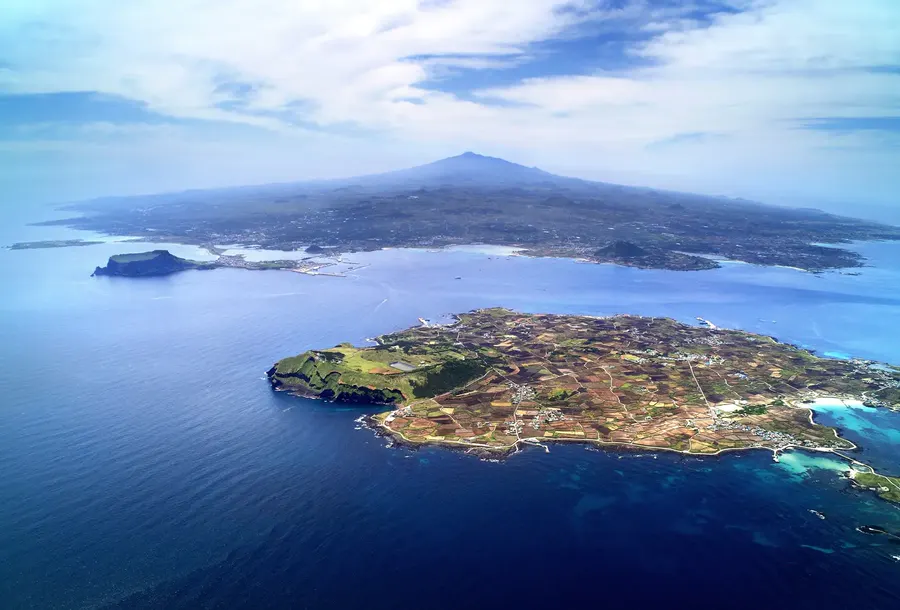
Short answer: Udo Island is worth visiting when you want farmland, stone-walled villages, a volcanic peak, contrasting beaches and haenyeo culture on one small island. Do not let the “10–15-minute ferry” sell it as a casual extra stop. Port check-in, waiting, the island loop and the return sailing are the real time commitments. On a first visit, allow four to six hours including the crossing and make three decisions: FERRY, LOOP and RETURN.
- FERRY: complete the passenger form, show valid identification, and confirm sea conditions, sailing time and arrival port.
- LOOP: tourist bus, bicycle, walking and legally permitted electric transport exchange freedom for different levels of effort and risk.
- RETURN: the last boat is a hard deadline; returning a vehicle, reaching the correct pier and joining the queue happen before departure time.
- Best fit: travellers willing to make Udo the anchor of an eastern Jeju day rather than chase four or five mainland sights after disembarking.
What is Udo? It is not just a beach beside Seongsan
Udo lies east of the main island of Jeju and takes its name from a shape compared with a reclining or rising cow. Current official information describes an island about 3.8 kilometres long with a coastline of approximately 17 kilometres. Farmland, fishing grounds, villages, stone walls, haenyeo, a volcanic hill and several kinds of shore make it a condensed Jeju landscape, not a simplified one.
Udobong rises to roughly 132 metres and reveals how the fields, settlements, coast and Seongsan area relate to one another. Jeju Udo Rhodolith Beach, Hagosudong and the dark shore at Geommeolle then show how different two coasts on the same island can look. In a three-day Jeju itinerary, make Udo the main decision for the eastern day rather than something to “add after” another major attraction.
The crossing is short, so why does Udo still need half a day?
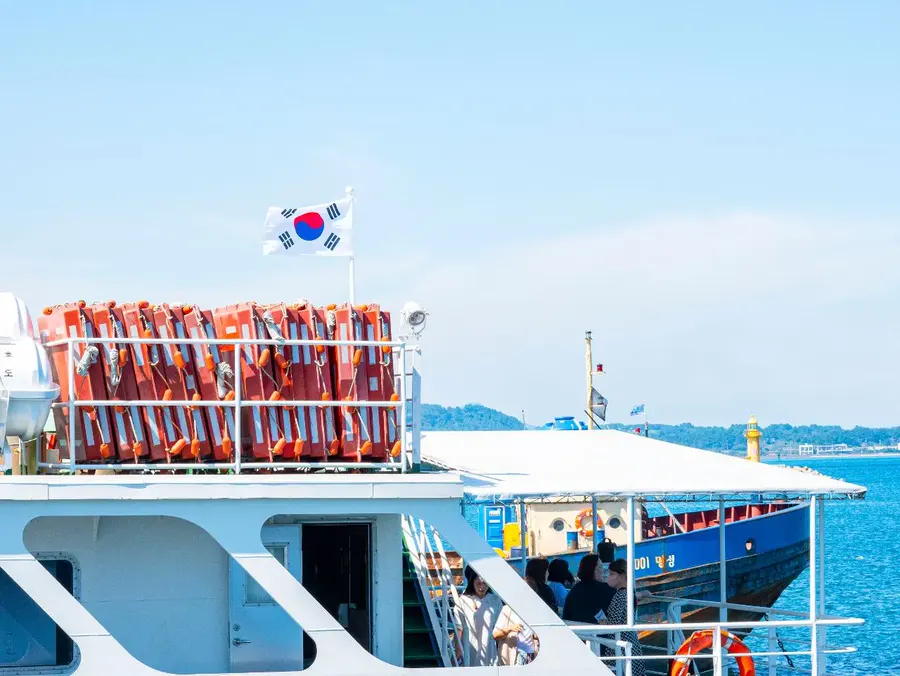
Official guidance puts crossings from Seongsan Port or Jongdal Port at about 10–15 minutes. That is only the time moving across the water. You must still reach the terminal, park or walk from a bus stop, complete the form, show identification, buy the correct ticket, wait, board, disembark and select transport on Udo. Before returning, the same sequence works in reverse.
Visit Jeju says that one or two principal sights plus a café or meal generally requires three to four hours on the island. Travel between your accommodation and Seongsan is extra. A four-day Jeju itinerary can give the east a complete day. With only three days, choose clearly among Udo, other eastern coasts and a long cross-island drive instead of treating them as adjacent map pins.
Seongsan or Jongdal Port? Do not assume both sailings use one Udo pier
Both mainland ports serve Udo. Seongsan usually has more sailings and fuller passenger facilities, while Jongdal can suit a northeastern route but may offer fewer departures. Visit Jeju’s August 2026 day-trip example uses Seongsan and describes a typical interval of about 30 minutes, with extra sailings possible during busy periods.
Weather, vessel allocation and demand can change departure times and the port used on Udo. You may arrive at Cheonjin Port or Haumokdong Port. Do not copy one seasonal timetable and freeze the whole day around it. When buying the ticket, confirm the outbound arrival port, eligible return pier, final sailing and rules for service changes; save or write down the answer.
What documents do you need for the ferry?
Visit Jeju’s August 2026 itinerary explicitly instructs passengers at Seongsan to complete a boarding declaration, show identification and then buy a round-trip Udo ticket. For an overseas visitor, an original valid passport is the safest assumption. Ask the terminal directly about documents for children, acceptable Korean resident identification and any electronic-ID option.
Do not reach the counter with only a blurred cloud photograph, and do not assume a family can share one person’s details. Names, birth dates and documents must match the declaration and ticketing process. A rental car, luggage or stroller may also add handling time. Arriving early protects the conditions needed to board; it is not wasted sightseeing time.
Why do official pages disagree about the fee?
The newer Visit Jeju Udo page lists Udo Marine Provincial Park admission at KRW 1,000 for adults, KRW 800 for youths and military personnel, and KRW 500 for children, with exemptions under the relevant ordinance. It states that ferry fare is separate. The current VISITKOREA listing still describes the attraction as free. Because two official sources conflict, this guide does not promise free admission on your travel date.
Your receipt may separate the ferry, terminal or park components. Ask the port for that day’s round-trip total for each adult and child, and inspect the items at purchase. An old blog price is not a reliable budget. More importantly, Udo’s value depends on a viable half-day and useful weather; a small admission charge alone should not force it into the itinerary.
Can a normal Jeju rental car go onto Udo?
Do not assume that it can. Visit Jeju says restrictions on outside vehicles in Udo-myeon have been extended from 1 August 2026 to 31 July 2029. Possible exceptions include 16-passenger charter buses, Class 1 low-emission hydrogen or electric rental vehicles, rentals used by people with transport difficulties, and rentals for guests staying on Udo. Every exception remains subject to its conditions.
Even when the vehicle appears to qualify, confirm eligibility, evidence, insurance and ferry carriage with both the rental company and ferry operator. Use whether to rent a car in Jeju to decide mainland transport, but do not turn “I already rented a car” into “I may drive it on Udo.” The predictable plan is to leave the mainland car at the port and choose compliant transport after landing.
Tourist bus, bicycle, walking or a small electric vehicle?
Tourist bus: no driving and less exposure to wind, useful for mixed mobility, but the stop order, frequency and busy-day capacity reduce freedom. Bicycle or e-bike: stop where you like, but account for 17 kilometres of coast, crosswinds, sun, traffic and battery. Walking: official guidance estimates three to four hours around the island without stops, so real sightseeing takes longer. Small electric or motorised vehicle: flexible, but licence, legal class, speed, insurance and operator compliance all matter.
Visit Jeju warns that rules for rented motorcycles, motorised bicycles and personal mobility devices differ by vehicle type, maximum speed, power source and liability insurance. “Tourists use it every day” is not proof that your licence and insurance cover it. If you do not want that legal layer, use a car-free Jeju bus strategy to separate mainland connections from Udo’s own tourist bus.
Three hours, five hours or an overnight stay?
Three to four hours on Udo: choose Udobong or one beach, then one meal or café, using efficient transport. Five to six hours: combine two or three contrasting landforms, a slower loop and a meal; this is the most balanced first visit. Overnight: see dawn, sunset, village life and stars beyond day-trip crowds, while accepting separate accommodation, dining and ferry arrangements.
A day trip does not require collecting every marker around the loop. Staying in Seongsan through a two-day East Jeju plan helps you reach an early ferry and return to a nearby hotel. From Jeju City or the west, subtract the cross-island road time from your usable Udo hours. An overnight stay still cannot make a ferry run in unsafe sea conditions.
Udobong, Rhodolith Beach, Hagosudong or Geommeolle?
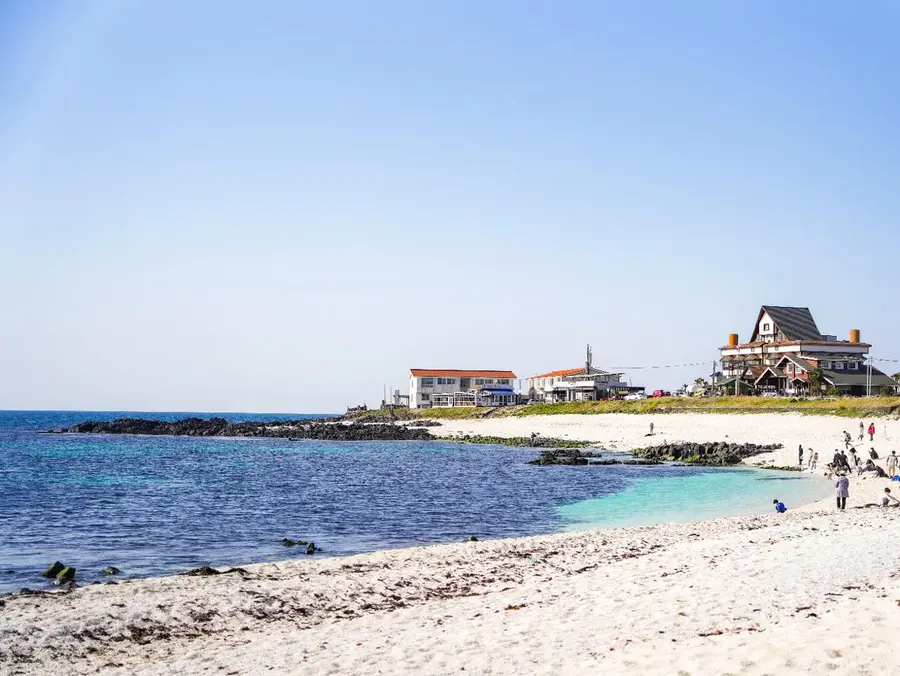
Udobong: understand the island’s topography, farms, villages and relationship with mainland Jeju, with a slope and wind exposure. Jeju Udo Rhodolith Beach: the most recognisable contrast between pale shore particles and blue-green water. Hagosudong: a broader sandy shore and attractive shallow-water colour for a slower stop. Geommeolle: dark sand, cliffs and wave-eroded scenery that feel entirely different from the pale west coast.
Do not attempt all four in three or four hours. For topography, choose Udobong and one beach. If the group should avoid a climb, select two contrasting coasts. Swimming requires a separate check of the season, lifeguards, waves and permitted area. Udo earns its time through contrast, not four versions of the same sea-colour photograph.
The “white coral beach” is protected rhodolith, not a souvenir
Jeju Udo Rhodolith Beach is also called Seobinbaeksa and was once widely described as Coral Beach. Visit Jeju now clarifies that the pale grains are not broken coral. They are rhodoliths formed as red algae calcify, and the beach is protected as a Natural Monument. Do not remove grains or white fragments as a keepsake.
Walk only where permitted, avoid closed conservation areas and do not move or pile pieces for a photograph. Tide, seaweed, season and weather can make the shore look different from promotional imagery. Protection does not mean maintaining a permanently spotless blue-and-white backdrop for visitors.
Rain, wind and fog change the ferry before they change the photograph
An Udo day has two weather layers. Sea conditions determine whether ferries operate normally; then wind and rain determine whether cycling, beaches and Udobong remain worthwhile. Light rain does not always stop a boat, while a bright sky can still accompany wind and waves that alter service. A rain percentage for central Jeju City is not enough to judge the water off Seongsan.
Check official ferry operation and marine warnings that morning, then keep a Jeju rainy-day plan on the mainland. If the outbound sailing is delayed, shorten the return plan too; do not “recover” lost Udo hours by cancelling the margin. When fog removes the view from Udobong toward Jeju, beaches and villages may still work, but the value proposition has changed.
The last ferry is not the time to leave your final attraction
Before the scheduled return you must travel from the final stop to the correct port, return or settle a rental, complete any required procedure, join the queue and board. If a phone reminder says “last ferry 17:30,” leaving a beach at 17:30 is already too late. Keep a complete buffer before the official last departure, with more on crowded days or when the route is unfamiliar.
Mark the return port on your map immediately after landing and ask the rental shop or bus operator for its last practical handover. If weather worsens or operations change, an earlier ferry is often stronger than maximising the final minute. After the boat reaches Jeju, parking exit queues, bus waiting and the journey back to your hotel still remain.
Families, older travellers and accessibility: boarding is not a frictionless loop
Terminal circulation, the vessel, gangway gradient, pier levels, crowded sailings and island transport can all affect a wheelchair, stroller or traveller with knee pain. Sand, the Udobong slope and shop thresholds do not have one accessibility standard. Ask the ferry in advance about boarding assistance, toilets, wheelchair position and any restriction on remaining inside a vehicle.
The most stable family version is ferry plus bus plus one or two level stops, not renting the fastest motorised vehicle to chase the full loop. Prepare children’s documents, motion-sickness measures, sun protection and water on the mainland. A five-day Jeju itinerary lets Udo move with the forecast and causes less family pressure than fixing it to one specific morning.
Bicycles and small electric vehicles: more freedom means more responsibility
The coastal road may look gentle, but crosswinds, tourist buses, cars, pedestrians, roadside parking and opening doors appear together. Wear a helmet, never film while driving and move fully out of traffic before stopping. Photograph the battery display and condition at handover, then confirm range, return point, damage liability and the rain policy before signing.
Whether an international driving permit works depends on the vehicle’s legal classification, not whether it looks like a toy. Without the correct licence and insurance, choose a bicycle or bus. If right-side traffic is unfamiliar, wind is strong or a companion reacts slowly, “freedom to loop” does not erase risk. Freedom is useful only when everyone returns safely to the pier.
Is staying overnight worth it?
An overnight stay reveals early fields, sunset and village life outside the day-trip peak, and removes pressure to complete the loop in a few hours. Current vehicle restrictions also list rental vehicles used by qualifying Udo accommodation guests as a possible exception. Ask the rental company and ferry exactly what reservation evidence is required and whether insurance and carriage apply.
The trade-off is that accommodation, dinner, luggage, next-day sea conditions and the mainland itinerary become linked. If wind delays the morning ferry, a flight, distant hotel or timed booking may suffer. You do not need to sleep on Udo merely to eat peanut ice cream; it has independent value when you genuinely want the island before the first arrivals and after the final day visitors leave.
Peanuts, seafood and cafés are local context, not a checklist
Udo is known for small peanuts used in ice cream, coffee, pastries and makgeolli. Haenyeo and fishing culture also make seafood part of island life. Choose one meal or one peanut product if it interests you, but buying the same dessert at every stop does not prove that you experienced the island.
Opening times, breaks, ingredient origins and seafood prices change. Read the menu and origin information, and ask about cross-contact if anyone has a peanut allergy. A famous queue must serve the return ferry plan, not make the whole group sprint for the last boat. Missing one ice cream is easier to repair than missing the sailing.
Should Udo anchor an eastern day or stand alone?
Udo belongs to eastern Jeju and works best from Seongsan or with the surrounding day kept in the east. Once East Jeju versus West Jeju has fixed each day’s direction, do not attach Aewol, Hallim or Sanbangsan in the west to the Udo day. Ferry operations impose a hard clock, while cross-island driving is vulnerable to congestion.
An early sailing, about five hours on Udo and one flexible evening stop after returning to Seongsan make a complete day. Do not make Udo, a mainland eastern peak, Seopjikoji, a forest attraction and a Jeju City night market simultaneous requirements. Activate a mainland eastern backup only if the ferry is cancelled; that is smoother than preloading every option into fixed times.
Twelve checks before leaving
- Is Udo the day’s anchor, or do you only want a ferry photograph?
- Have you confirmed the mainland port, Udo arrival port and return pier?
- Does every passenger have valid identification and any child document?
- Have you rechecked that day’s ferry fare, park charge and final sailing?
- Does an outside rental car genuinely meet a 2026–2029 exception?
- Will you use bus, walking, bicycle or a licensed and insured motor vehicle?
- Which one or two core sights fit a three- to four-hour visit?
- Will wind, rain, fog or sea conditions remove the main value?
- Are swimming, marine activities and Udobong safe and open that day?
- How much time remains for vehicle return, the correct pier and boarding queue?
- What support do children, older travellers, wheelchairs or motion sickness require?
- If boats are cancelled, is the mainland eastern backup ready?
Worth a full day: you want a volcanic hill, fields, villages, contrasting shores and an offshore-island rhythm, and accept a ferry deadline. Compress to half a day: stay in Seongsan, take an early boat, and choose Udobong or one coast plus a meal. Skip this time: you have only three days but stay in western Jeju, sea conditions are unstable, the documents are wrong, or the group cannot manage boarding and island transport. Udo is not a simple attraction added by a 15-minute ferry; FERRY, LOOP and RETURN must all work.
Checked 23 August 2026. The current Visit Jeju Udo page and its August 2026 day-trip itinerary were used for island scale, crossing time, ports, passenger form and identification, visit length, Marine Provincial Park charge, outside-vehicle restrictions and island transport. VISITKOREA was used as a cross-check. Official sources conflict on free admission versus a park charge, so verify ferry fare, park fee, sailing times, arrival port, last boat, rental eligibility, insurance, swimming and marine activities with the port and operator on the visit date.
Visit Jeju | Udo Island Visit Jeju | August 2026 Udo Day Trip VISITKOREA | Udo Maritime Park