
The short answer: Cheonggyecheon Stream is worth visiting, but most travellers should walk one section rather than try to complete it. This is not a gated attraction with one entrance, ticket desk or compulsory direction. It is an approximately 11-kilometre public waterway through central Seoul. Its most useful version takes 30 to 90 minutes between two places already in your day. Walking from end to end merely because the stream is free can consume half a day.
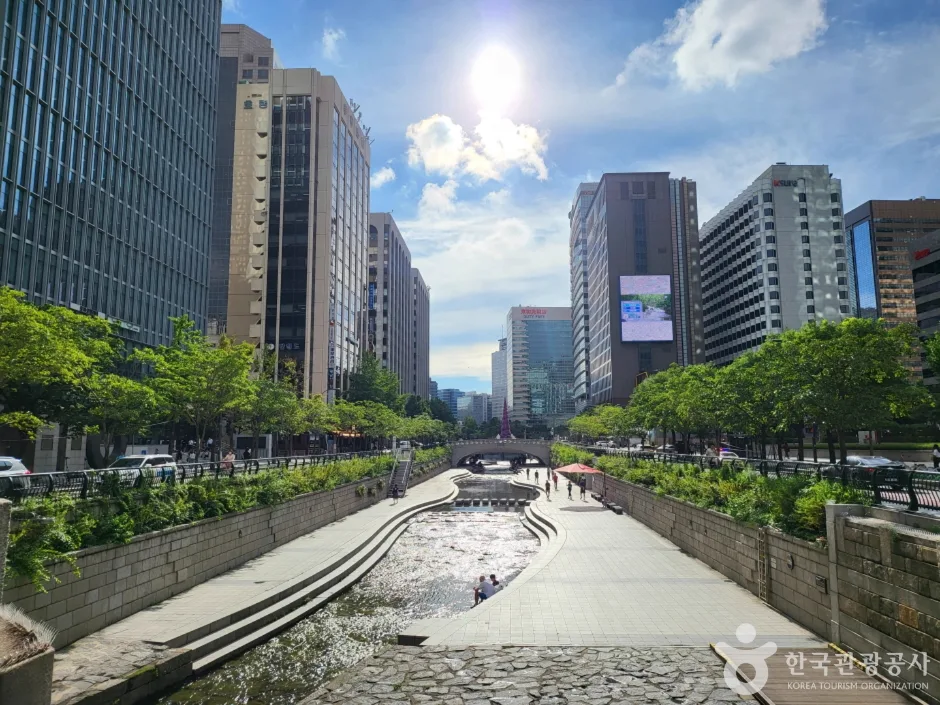
- SECTION: do you need the clear plaza start, central Jongno or a section continuing toward Gwangjang Market and Dongdaemun?
- LIGHT: daytime shows the stream and urban structure; dusk and night change the mood but also make steps and meeting points less obvious.
- EXIT: know the next bridge, subway station and meeting point before descending, especially with children, older travellers or rain.
- You need not complete all three: sitting briefly, walking two bridges or using the stream after dinner can be a complete visit.
Cheonggyecheon is not one point: choose the section first
Visit Seoul describes an approximately 11-kilometre stream beginning at Cheonggye Plaza and passing beneath 22 bridges. Those numbers explain its scale; they are not a completion challenge. If you type only “Cheonggyecheon” into a map, the chosen pin may be far from the section that fits today. Reaching it, then returning to a palace, shopping area or hotel, creates a detour the stream itself was meant to avoid.
Cheonggye Plaza through central Jongno is easiest for a first visit: the beginning is recognisable and connects toward City Hall, Gwanghwamun, Jonggak and Myeongdong. Jongno toward Gwangjang Market suits a walk continuing to food or markets. Farther east is not worse, but the distance, street character and return direction change. Locate the main area in a four-day Seoul itinerary, then take the stream section inside that day instead of rebuilding the day around the stream.
The plaza section is easy to understand, but not automatically best
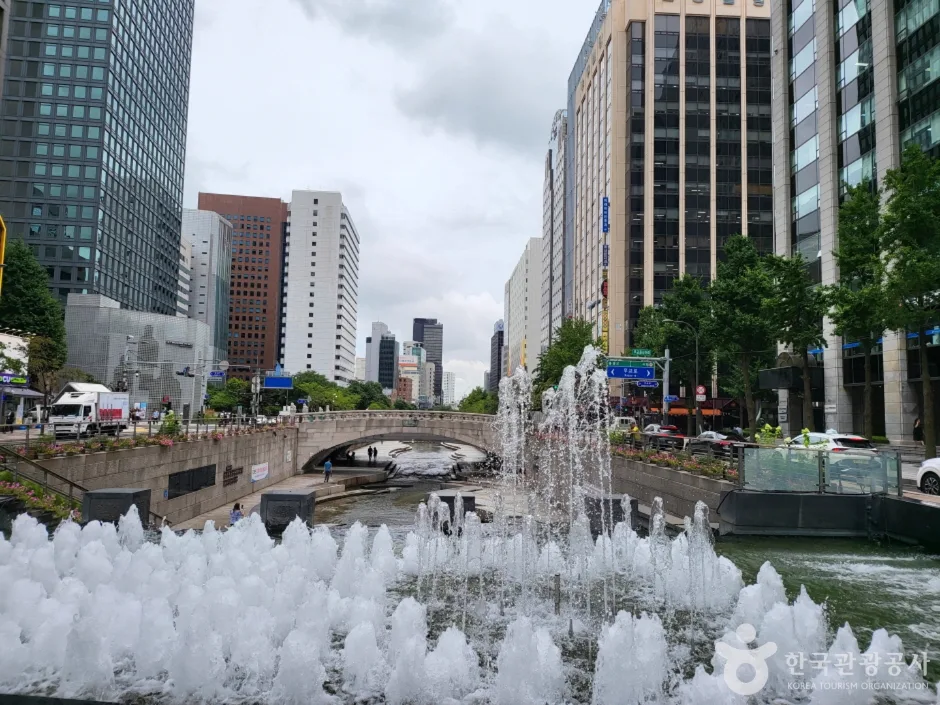
VISITKOREA identifies Cheonggye Plaza as the restoration’s starting point, with a waterfall, fountains, paths and information about the 22 bridges. It gives a first-time visitor a clear picture quickly and works when only half an hour remains. It is also close to offices and major visitor routes. Lunch hours, weekends, festivals and programmed events can make the real experience busier than the calm photographs suggest.
With five days in Seoul, the city-centre priorities do not all need to compete on one day. Use a five-day Seoul itinerary to place the stream on a day already passing City Hall, Jongno or Dongdaemun. You can then decide from the weather and energy whether to stop after two bridges or continue east. The ability to shorten the visit is a benefit, not evidence that the attraction is incomplete.
Day, dusk or night: which version should you choose?
Daytime shows the water, stone walls, bridges, greenery and surrounding towers most clearly, and makes exits easier to identify. Dusk keeps some daylight while adding the evening mood, though popular sections become busier. Night can support a short post-dinner walk, but darker details, steps and group meeting points require more attention.
Do not treat festival photographs as the standard appearance every night. The Seoul Lantern Festival, media art, outdoor library and seasonal fountains have their own year, dates, sections and operating hours. An ordinary evening may contain none of the same installations. If night is the actual priority, use the Seoul night-experience decision to compare a stream walk with viewpoints, performances and night markets before saving energy for the wrong kind of evening.
Open 24 hours does not mean accessible in every weather condition
Visit Seoul currently says that the promenade is open 24 hours a day, seven days a week, and immediately notes that access may be restricted when it rains. The Seoul Metropolitan Government adds the critical reason: water can rise very quickly and submerge the path without warning. If an evacuation announcement sounds or barriers appear, leave through the nearest exit. Never shelter beneath a bridge, because floodgates may open during rain.
Cheonggyecheon is therefore not a dependable indoor-style rain alternative. Even light rain requires attention to on-site instructions; heavy rain, thunderstorms or an existing closure require a genuinely indoor replacement. Save the Seoul rainy-day plan before arriving at a blocked staircase. A break in the rain does not guarantee immediate reopening: risks must be removed and cleaning may still be required.
It can feel cooler in summer, but it is not air conditioning
The lower level, water sound and patches of shade can make a short rest pleasant, but a midsummer noon walk is still outdoor activity. Some sections receive direct sun, while steps, stone surfaces and repeatedly moving between street and water add effort. On a very hot day, shorten the section, carry water and retain an exit that reaches an indoor space quickly. Do not continue into heat merely to reach a bridge name on a checklist.
Winter reverses the problem. Cold, wind and potentially slippery surfaces can remove the value of a long evening walk. A free attraction does not cancel fatigue. If the afternoon already needs recovery, test the route against a Seoul hotel base for a midday rest. The green-looking detour may cost more energy than returning near the hotel.
Many nearby subway stations do not make every entrance equally useful
Visit Seoul lists stations connected to the long corridor, including City Hall, Jonggak, Jongno 3-ga, Jongno 5-ga, Dongdaemun, Dongmyo, Sinseol-dong, Euljiro 1-ga, Euljiro 3-ga, Euljiro 4-ga, Dongdaemun History and Culture Park and Yongdu. The list proves that the stream crosses several districts. It also proves why “the nearest station” is an incomplete question: the station nearest one entrance may be far from where you need to leave.
Choose the entry station, exit station and walking direction together. A Korea transport card simplifies subway or bus payment but cannot choose the correct bridge. Save both the street-level and waterside position on your phone. Otherwise, one traveller can be waiting on the bridge while another has already descended below it.
Accessible facilities exist, but 11 kilometres are not one flat path
Visit Seoul lists accessible pathways, lifts and accessible restrooms. That does not make every entrance identical. Stairs, ramp distance, lift location, facility maintenance and the intended exit vary by section. A wheelchair user, a stroller or someone with limited knees should not reach the first staircase before beginning to search. Confirm an accessible entrance and exit, then reduce the waterside distance to match them.
For children, the stream can be a 30-minute observation and rest stop, but it is not a splash attraction. Seoul’s rules prohibit swimming, bathing, bicycles and roller skates. Put the short version into a family four-day Seoul itinerary. For older companions, use where to stay in Seoul with parents to count the journey from the hotel to the entrance and back, rather than looking only at the flatter waterside section.
Where should the stream lead next? Choose one direction
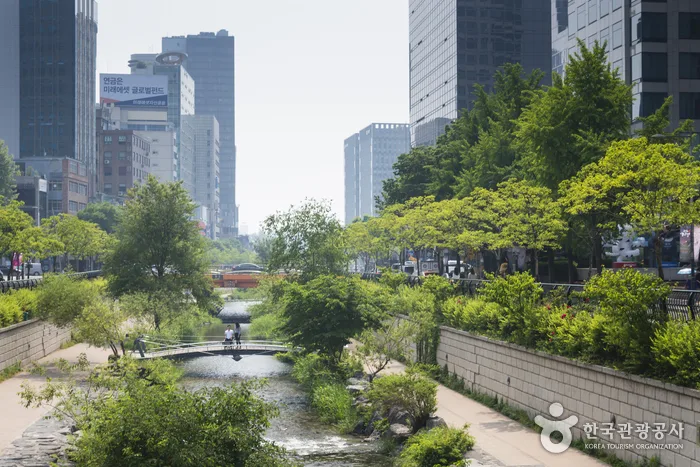
West and the starting-point side connect more naturally toward City Hall, Gwanghwamun and the Myeongdong area. Central Jongno supports restaurants and commercial streets. Eastward can continue toward Gwangjang Market, Dongdaemun and a longer urban walk. The weak version walks far east and then reverses the whole line for a timed reservation in the west.
Cheonggyecheon does not need to become a half-day headline. It can move you after lunch, slow down a shopping day or fill part of the walk back after dinner. Removing it from an overloaded route does not make a Seoul trip incomplete. Using it as the connection between two areas is more valuable than crossing the city only to photograph the water and leave.
Seven checks before going down to the stream
- Do you want waterside rest, a city walk or a dated seasonal event?
- Which bridge or station is the start, and where will you leave?
- Does the section connect two places already in today’s route?
- Is there rain, a water-level warning, closure or facility maintenance?
- Is the fountain, lighting or event you expect really operating today?
- Does anyone need a lift, ramp, restroom or shorter section?
- If it is too hot, cold, crowded or closed, what is the nearest street-level alternative?
Walk for 30 to 90 minutes: you are already around City Hall, Jongno, Gwangjang Market or Dongdaemun and want a free route between places. Make it shorter: see the start, sit briefly or walk two or three bridges after dinner. Skip it today: reaching it requires crossing Seoul, rain has restricted access, your group cannot use the planned entrances, or a fixed reservation leaves no exit buffer. The best Cheonggyecheon visit is not the longest one; it is the section without a return trip.
Checked 23 August 2026. Length, 22 bridges, 24-hour promenade, nearby stations, rain restrictions, public-use rules and images were cross-checked with the Seoul Metropolitan Government, Visit Seoul and VISITKOREA. Water level, closures, fountains, lighting, events, lifts and entrance conditions may change on the day; check again before descending and follow all on-site instructions.
Visit Seoul: Cheonggyecheon Stream Seoul Metropolitan Government: Cheonggyecheon VISITKOREA: Cheonggyecheon Stream