
Short answer: when searching for Seoul family hotels, do not begin with stars, a pool icon or a “good for families” badge. A toddler who naps, two school-age children, a family of four that needs two bathrooms, and parents who stay out until late are four different hotel problems. Filter in this order: real sleeping positions → the most difficult hotel-return segment → stroller and luggage access → whether the room works while someone rests → facilities you can place on an actual day and time. Only then should you compare named hotels and prices.
30-second filter: “Seoul family hotels” can hide five completely different decisions
| What is actually making the hotel choice hard? | First thing to test | Go here next |
|---|---|---|
| A child naps and you expect a daily hotel return | Midday return cost and who returns first | Family midday-break hotel base |
| Three or four people are not sure how to sleep | Real beds and usable room space | One family room or two rooms |
| Hongdae and Myeongdong both look convenient | The part of the day when you are most likely to return | Hongdae vs Myeongdong with kids |
| You want a pool, Kids Zone or kitchen | Whether your itinerary contains time to use it | Fix the daily schedule before paying for the facility |
| You have not chosen the main activity area | First and final stop of each day | Go back to the Seoul hotel shortlist logic |
This is the reason S018 works as a family-hotel hub rather than another “10 best hotels for kids” page. The broad query is only useful if it routes you to the narrower constraint that will actually change the booking. Once you know the problem is beds, midday returns, neighborhood, stroller access or facilities, a generic family-friendly list becomes less useful than a smaller decision tree.
It also prevents cannibalization with the existing family articles. The Hongdae vs Myeongdong family guide answers an area conflict. The family room vs two rooms guide answers a room-count conflict. This page sits above them and sends the reader to the correct branch.
Forget the child’s age for a minute: sleep, beds and movement change the answer more directly
“Travelling with kids” is not a precise hotel requirement. A two-year-old may need a stroller, a predictable nap and an early bedtime. A ten-year-old may skip naps entirely but still need a real bed and enough floor space for luggage. Two children can turn one bathroom and one desk into a morning bottleneck even when the total room size looks generous.
Ask three questions before opening another hotel tab: who gets tired first, where will every person actually sleep, and will anyone return to the room before the rest of the group? If the main problem is where four people sleep, stop comparing neighborhoods and use one family room vs two rooms. If there are three guests, also use the Seoul triple-room checklist so “occupancy 3” does not get mistaken for “three proper beds.”
Do not decide that Myeongdong is “better for families” or Hongdae is “more convenient” until you know when the day breaks
Family itineraries are often decided by the least glamorous segment: after lunch when someone is fading, at 5 p.m. when shopping bags have multiplied, or when rain turns a short station walk into a slower stroller-and-umbrella operation. That is when a hotel becomes a base rather than a bed.
If central-Seoul activities dominate and you expect a midday or early-evening return, Myeongdong/Euljiro may make that reset easier. If arrival, dinners and several nights sit on the western side, Hongdae can be the cleaner base. This page does not repeat that comparison; the full Hongdae vs Myeongdong with kids article already tests the most likely hotel-return segment.
ENA Suite makes sense when the family needs both central-Seoul resets and room utility—not because “Suite” sounds better
Visit Seoul currently lists ENA Suite Hotel Namdaemun at 36 Sejong-daero 11-gil, Jung-gu, and describes 182 rooms including Suite and Family guest rooms. That tells you the room categories exist; it does not tell you which one is the right product for your dates or family.
The practical reason to continue to ENA Suite Hotel Namdaemun is a route-and-room combination: City Hall, Deoksugung, Namdaemun and central Seoul are genuinely part of the trip, and someone may need a hotel reset during the day. If all four family members are outside from breakfast until midnight and most evenings end in Hongdae, paying more simply because a room is called a Suite may buy space you barely use.
Hotel PJ is strong when keeping the group in one usable room matters—but “Myeongdong” in the name does not erase the final walk
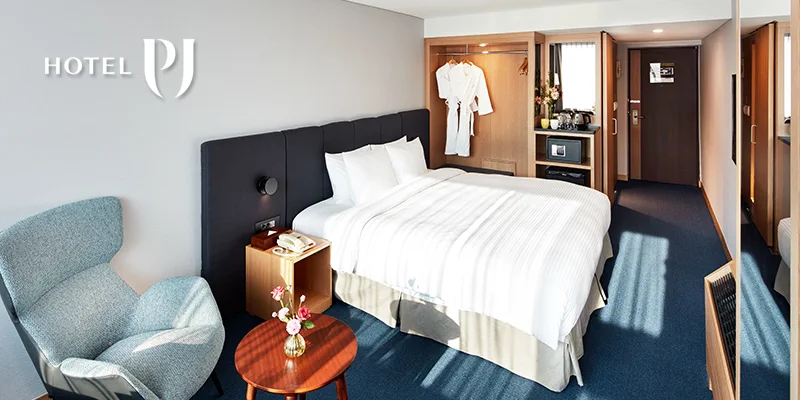
Hotel PJ’s official site currently positions its rooms as spacious and lists family travellers among the intended guest types. The named Hotel PJ Myeongdong guide is therefore most useful when the question is not “is Myeongdong popular?” but “can three or four people sleep, unpack and reset without the room becoming a traffic jam?”
If your itinerary repeatedly uses Gwangjang Market, Euljiro or Dongdaemun as well as central Seoul, Hotel PJ can make more sense than a property deep inside Myeongdong’s shopping core. If ENA Suite and Hotel PJ become the final two, move to the ENA Suite vs Hotel PJ family-room comparison. That is a better next step than opening ten OTA tabs and comparing headline prices for different room products.
Novotel Dongdaemun proves why “it has a pool” is not enough to call a hotel better for kids
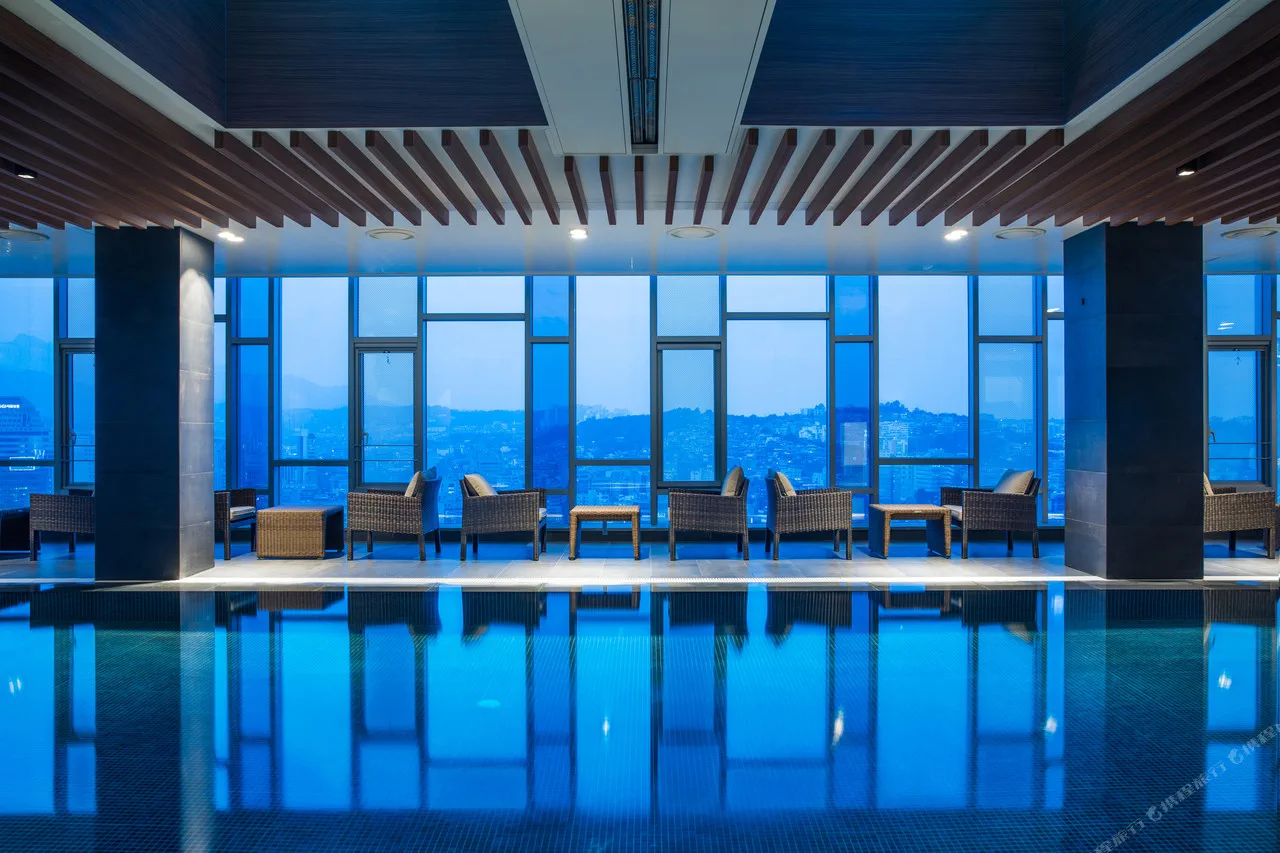
Novotel Ambassador Seoul Dongdaemun’s current official information lists 523 rooms in total: 331 hotel rooms and 192 Residences, with laundry and kitchen facilities in the Residence inventory. The property also lists a Kids’ Zone, an indoor pool and a rooftop outdoor pool. But the same official information states that the rooftop outdoor pool is restricted to guests aged 19 and above, and hotel facilities have maintenance or special closure schedules.
That is the perfect family-hotel warning: “the hotel has a pool” and “your child can use the pool you saw in the photo on your dates” are different claims. If Dongdaemun repeats across two evenings, you actually need Residence-style living functions, or you have deliberately protected hotel time, continue to Novotel Ambassador Seoul Dongdaemun. If the family is outside all day and the rooftop image is the main reason you are upgrading, the facility is doing too much work in the decision.
The most common family-hotel premium is paying four nights for something you only “might” use
Family hotel searches tend to stack every desirable feature together: pool, breakfast, kitchen, larger room, Kids Zone, laundry, maybe a better view too. The problem is that these features compete for the same budget. A two-night stay with twelve-hour sightseeing days may not need a kitchen or living room. A four-night trip with a daily nap may make daytime room space far more valuable than a view.
Translate every paid feature into a real time slot: “indoor pool on Day 3 from 4:00 to 5:30,” “hotel breakfast before the 8:30 departure,” or “laundry on the slow afternoon.” If you cannot assign a likely day and time, treat the feature as having zero value for now. Breakfast is especially easy to overbuy; use the Seoul hotel breakfast decision instead of counting it automatically as a family benefit.
Strollers and luggage do not need to wait for a dedicated stroller guide: use them as an early rejection filter
Stroller access deserves its own narrow decision page, but the broad family-hotel hub still needs a minimum standard. If the final segment requires repeated stairs, a long detour to an elevator, or a confusing underground connection every time you return, that hotel can fail before the room comparison starts.
You do not need to audit every subway exit for twenty hotels. Narrow the list to three, then zoom into the station, elevator exit, crossings, slopes and rainy-day alternative. Arrival day deserves the same treatment. Two large suitcases plus a stroller are not the same “seven-minute walk” as two adults with backpacks. If you arrive before check-in, solve luggage before hotel check-in before assigning the first afternoon too many jobs.
For a four-night family trip, changing hotels needs stronger evidence than it does for two adults
A hotel move costs more than checkout and check-in when children are involved. It also means repacking clothes, snacks and medicine, moving the stroller with the luggage, and handling the gap before the next room is ready. A second base should delete several real, repeated detours—not merely make one neighborhood look prettier on the map.
If half the trip is west and half is central, test the move with one family hotel or two bases over four days or the broader one Seoul hotel vs two bases. For families, the threshold should be stricter: identify the exact difficult trips that disappear after the move. If you cannot name them, staying put is usually the cleaner default.
These four families should not be pushed into the same “best Seoul family hotels” list
Toddler with a fixed nap: hotel-return routing should outrank the facility list; start with the daily family midday-break base. Two school-age children: real beds, bathroom flow and parallel mornings may matter more than a Kids Zone. Family of three or four that stays out late: the room must sleep everyone properly, but a Residence or pool may add little. Family deliberately planning a hotel afternoon: now the pool, Kids Zone, larger room or Residence functions can legitimately move higher.
The best outcome of this hub is that you leave it quickly. Once the actual family constraint is obvious, the broad keyword “family-friendly” becomes less useful. Move to the narrower room, area, midday-return, stroller or named-hotel decision instead of keeping every possible feature in one giant shortlist.
Verdict: choose Seoul family hotels by eliminating what cannot work before comparing what looks nicest
The most reliable order is: guest count and real beds → the hotel-return segment most likely to go wrong → stroller and luggage access → whether the room supports rest and repacking → only then pool, Kids Zone, breakfast, kitchen and view. This sequence will eliminate some hotels that look very family-oriented in marketing, while preserving others that have fewer child-specific visuals but fit your actual routine much better.
The cleanest named-hotel routes in the current KoriNavi cluster are: central family reset plus room utility → ENA Suite Hotel Namdaemun; multi-person room and central-east itinerary → Hotel PJ Myeongdong; repeated Dongdaemun nights plus genuine Residence/facility use → Novotel Ambassador Seoul Dongdaemun. None is “the best family hotel in Seoul.” Each solves a different family problem. If the activity area is still unclear, go back to the Seoul hotel selection guide before choosing a property.
Sources and verification
- Visit Seoul | ENA Suite Hotel Namdaemun Seoul: current address, 182 rooms and Suite/Family room description; rechecked 2026-08-20.
- Hotel PJ Myeongdong official site: current positioning for family travellers and spacious room inventory; rechecked 2026-08-20.
- Hotel PJ | PJ Signature Family Twin: current room example showing 39 m², one king-size bed plus one single bed, and capacity 3; rechecked 2026-08-20.
- Novotel Ambassador Seoul Dongdaemun official site: current Hotel/Residence room counts, Residence laundry and kitchen facilities, Kids’ Zone, pools and 2026 facility notices; rechecked 2026-08-20.
- Novotel Ambassador Seoul Dongdaemun | Swimming Pool: reservation basis, indoor/outdoor choice and rooftop pool age 19+ restriction; rechecked 2026-08-20.
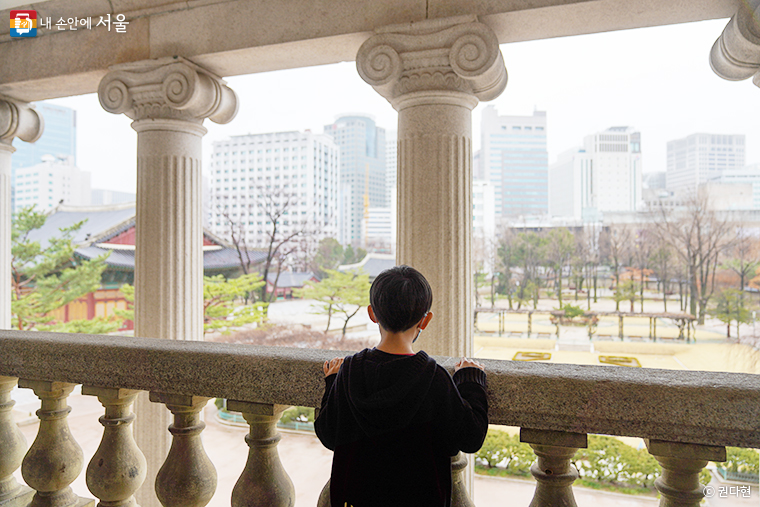
- Seoul Metropolitan Government / MediaHub: source context for the opening family city image.
Room types, child occupancy, facility access, maintenance schedules, breakfast and operating policies can change by date and product. Recheck the hotel and exact booking product before payment. This Persona page is a decision hub, so it does not add Booking.com, Agoda or Trip.com conversion CTAs before a specific hotel has been chosen.