
Short answer: Yangdong Village is worth visiting when you can give it at least 90 minutes—preferably a relaxed half-day—and when a lived-in Joseon-era settlement is genuinely part of why you came to Gyeongju. It is not a quick Hanok-photo extension of the old town. If you only have a few city-centre hours, finish the Silla core first; if you have an overnight, a car or patience for slopes and quiet walking, Yangdong gives you a different Korea from tomb mounds and temples.
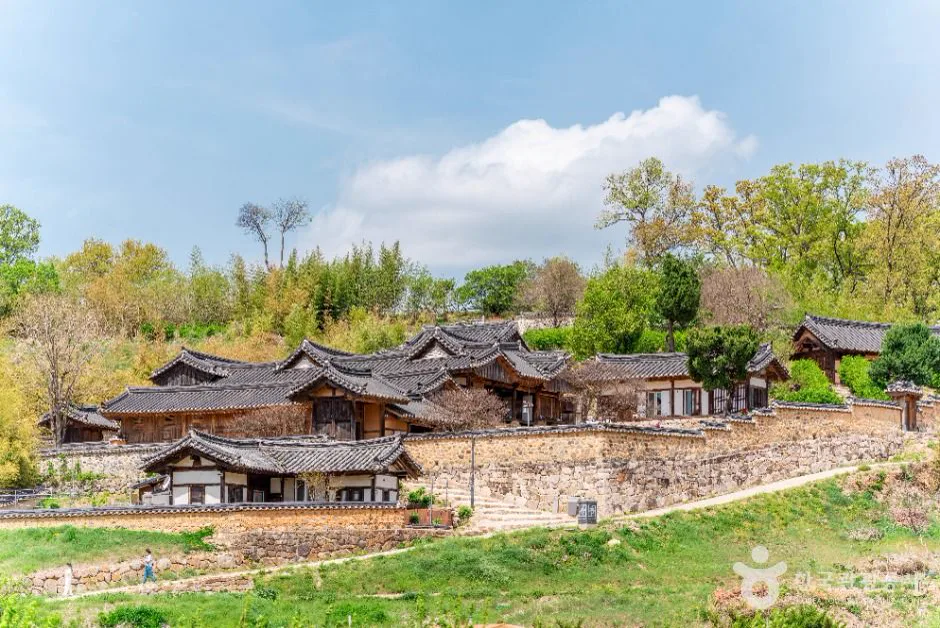
- Go: you have a half-day and want a Joseon clan village, not another city-centre monument.
- Keep it short or skip: you are on a rushed Seoul day trip, arrive late, or need Donggung & Wolji at dusk.
- Never do: enter homes without permission or treat residents as part of a photo set.
What makes Yangdong Village different from Gyeongju old town?
Old-town Gyeongju explains the Silla capital through tombs, astronomy and palace sites. Yangdong explains a later Joseon landscape of clans, Confucian life and housing hierarchy. VISITKOREA describes roughly 160 old houses in the valley, including 54 more than 200 years old. It is not “another Hanok street.”
Do not give it the same one-hour slot as Daereungwon and Cheonmachong. One rewards dense old-town walking; the other rewards slow observation across terrain.
Why is it World Heritage but not essential for everyone?
Yangdong and Hahoe were inscribed together in 2010 for their traditional clan villages and relationship to landscape. World Heritage describes significance, not a compulsory itinerary. If your interest is mainly Silla or you have only one day, extra city-centre time may be the better use of it.
Go when you want to understand how people lived, studied and organised space after seeing Gyeongju’s temples and tombs.
How much time do you need?
45 minutes: only an entrance orientation and a short view; not a worthwhile dedicated detour. 90 minutes: one main lane and enough time to see the high/low settlement pattern. 180 minutes: a fuller loop, cultural interpretation and breaks.
Budget for slopes, navigation, toilets, photographs and the return journey. The usual mistake is calling it “one hour” then sacrificing a Gyeongju evening plan.
When should you arrive?
Official reference hours are 09:00–19:00 from April to September and 09:00–18:00 from October to March, with last ticketing one hour before close. Conditions can change for resident privacy, weather and operations, so check the date itself.
Morning is quieter; hot summer middays make the slopes harder. Rain changes footing and visibility. “Open all year” does not mean equally comfortable every day.
Can you enter the houses?
No—unless permission and signage explicitly allow it. The official visitor information says visitors must not enter house buildings without permission. This is a living settlement, not a museum where every door is an exhibit.
Read the broad layout first, then approach clearly open areas. Do not cross thresholds, point cameras inside or block narrow routes for a photograph.
How should you read tiled and thatched homes?
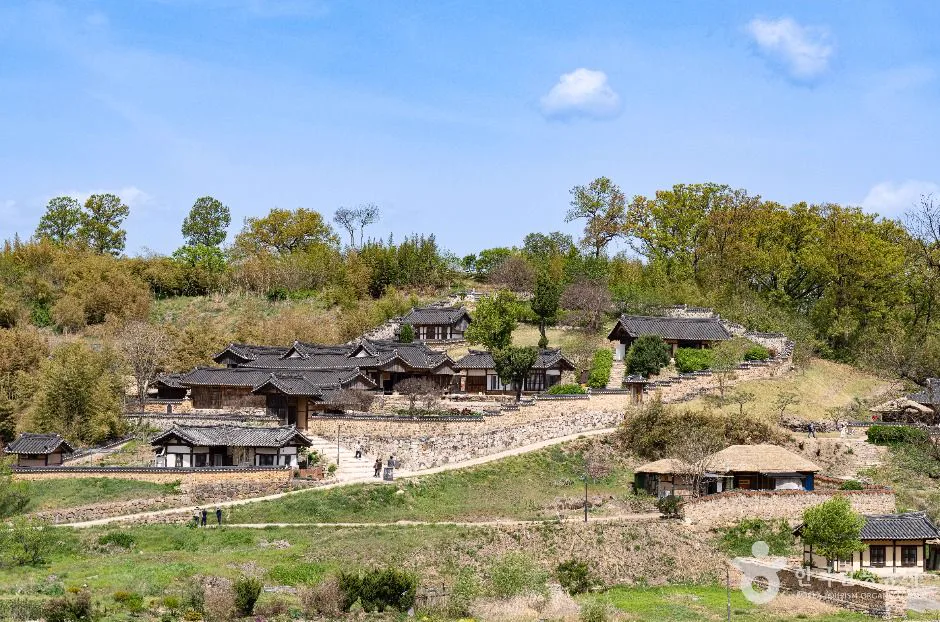
The point is not to collect the prettiest roof. Tiled homes generally occupy higher, more prominent positions while thatched homes sit lower, making social hierarchy visible through the valley. The mountain is part of the settlement’s structure, not background decoration.
Can you visit without a car?
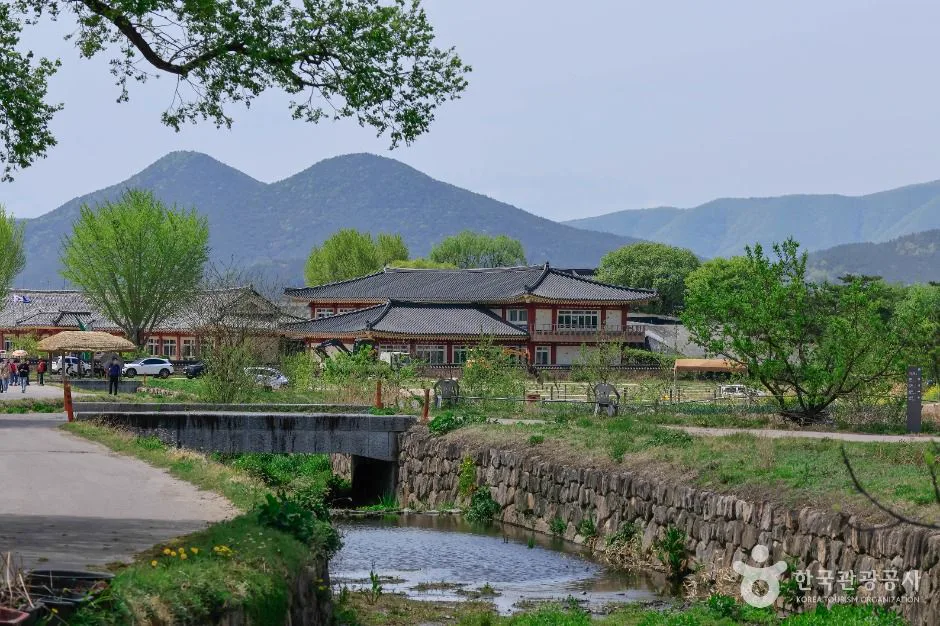
Yes, but that is the first practical gate. Yangdong is outside the dense old-town core, so waits, transfers and the final walk matter. Check your real start and return in Gyeongju without a car, not a straight-line map distance.
Car-free visitors with only one day should usually prioritise the old town. With an overnight, a taxi connection or a deliberately slow itinerary, the village becomes more realistic.
Is driving better?
Driving makes a half-day stop simpler, and the official listing says parking is available and free. It does not make a five-attraction day possible. Weekend and seasonal crowds still require time to arrive, park and walk.
Do not use a car to fragment a coherent route into constant short drives. It reduces transfers, not fatigue.
Should a Seoul day trip include it?
Usually not if you have not completed the old-town essentials. Check Seoul-to-Gyeongju transport and the final return first. An overnight is often a better solution than forcing Yangdong into the last two hours.
What about arriving from Busan?
Late arrival, luggage and no car all make Yangdong a poor first stop. Use Busan-to-Gyeongju guidance to choose your arrival area, then start with accommodation or the old town. With a car and a northern countryside-focused day, it can work well first.
Should you pair it with Bulguksa or the old town?
Yangdong is neither an old-town walking extension nor the same subject as Bulguksa. Bulguksa explains Silla Buddhist architecture; Yangdong explains Joseon clan settlement. First-time visitors normally put Yangdong on an overnight day rather than lose the rhythm of Donggung & Wolji.
What changes in rain, heat and winter?
Its value depends on outdoor views and walking, so rain lowers the return. Heat means water, sun protection and no midday hill sprint; winter means earlier daylight loss and colder wind. If weather collapses, Gyeongju National Museum is the stronger indoor substitute.
Is it suitable for children or slower walkers?
It suits families willing to slow down, not groups expecting a flat indoor attraction. Slopes, rough surfaces and distance change the pace. Pick an entrance-area route and one view rather than treating “every house” as success.
Photography etiquette
Do not enter private space, climb non-public ground or use residents as scenery. One wide view, one lane and one material detail will remember the village better than a rushed collection of doorways.
How should you continue after the village?
Return to accommodation, dinner or an old-town evening rather than improvising two more distant stops. An overnight route, where to stay and hotel choices help prevent the return becoming another long transfer.
Final verdict
Go if you have time, transport and curiosity for settlement structure. Keep it for a second visit or skip it if you have only a hurried Silla day. For the city-wide order of decisions, start with the Gyeongju destination guide.
Before you go
- Check current hours and last ticketing.
- Allow at least 90 minutes.
- Check weather and slope conditions.
- Respect homes and resident privacy.
- Confirm the return, not only the route there.
- Do not add it to an already full one-day plan.
- Carry water in summer and allow daylight in winter.
Read alongside
Use the one-day route, day trip versus overnight and Korea eSIM planning to settle the broader trip before committing to a countryside detour.