
Short answer: Gyeongju National Museum is worth a place in an itinerary, and not only when it rains. Its value is that it turns the tombs at Daereungwon, the Buddhist art at Bulguksa and the night view at Donggung & Wolji back into real objects and real Silla lives. Do not try to “get your money’s worth” by seeing every gallery simply because admission is free. Pick a track first: HISTORY, ART, WOLJI, OUTDOOR or KIDS. Give it 45 minutes for one question, about 90 minutes for two galleries plus the Divine Bell, and two to three hours only if the whole museum complex is genuinely your priority.
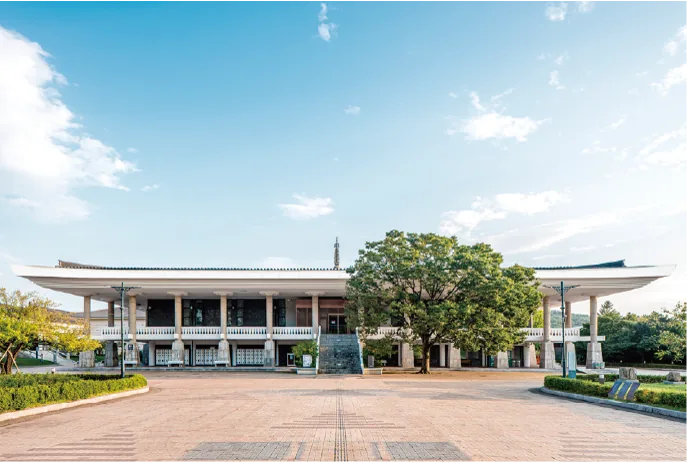
- HISTORY: First Gyeongju trip? Start with the Silla History Gallery for the kingdom, tombs, goldwork and chronology.
- ART: Visiting Bulguksa, Seokguram or Hwangnyongsa-site? Use the Silla Art Gallery for Buddhist art, temple objects and architectural fragments.
- WOLJI: Going to Donggung & Wolji? See the palace objects first or after sunset rather than treating the pond as a photo-only stop.
- OUTDOOR: Have only 30–45 minutes? The Divine Bell and open-air stone works make a complete short visit.
- KIDS: The Children’s Museum has sessions and capacity; free does not mean guaranteed walk-in entry.
What is Gyeongju National Museum actually for?
At 186 Iljeong-ro, close to Donggung & Wolji, Wolseong and the Hwangnyongsa Temple Site, the museum is the object-based half of an old-capital visit. Its core subject is Silla, the kingdom that lasted from 57 BCE to 935 CE in the southeastern Korean peninsula. The site separates political history, Buddhist art, palace-life finds, children’s interpretation and outdoor stone monuments rather than putting “everything Gyeongju” into one generic hall.
That distinction matters. A tomb mound, a temple foundation and a reconstructed pond can feel abstract on their own. Goldwork, roof tiles, dishes, inscriptions, statues and architectural pieces show what people used, believed, made and buried. Use the museum to make the outdoor city more legible—not as a box to tick before lunch.
Is it worth adding to a first Gyeongju itinerary?
Yes if Daereungwon, Cheomseongdae, Wolseong, Donggung & Wolji or Bulguksa are on your route. Going before those sites gives you a framework; going afterwards lets you reconnect what you just saw with the evidence behind it. The payoff is understanding, not another landmark pin.
If you have only a few hours and your real plan is cafés and photos around Hwangnidan-gil, forcing a three-hour museum visit is not automatically “cultural.” A much better compromise is to reserve 45–60 minutes within a one-day Gyeongju route for one gallery and the bell. That is a decision, not a failed full visit.
Morning, midday or late afternoon: when should you go?
Morning works when you want the historical sequence before walking the old town. Midday is excellent in summer heat, winter cold or rain. Late afternoon works when the museum is a reflection point after Daereungwon or Bulguksa, provided you set a hard exit time before Gyeongju’s evening plans.
What usually goes wrong is arriving late, adding gallery after gallery because it is free, then losing the sunset. If you are travelling in and out on the same day, decide whether a Gyeongju day trip is realistic or an overnight is better first; the final train or bus should determine your museum exit time, not the other way around.
How long do you really need?
45 minutes: choose the Silla History Gallery highlights or the outdoor area. 90 minutes: History plus Wolji, then the Divine Bell. 120 minutes: add the Silla Art Gallery. 180 minutes: allow a slower campus walk, special exhibition, children’s session or closer attention to outdoor sculpture.
Walking between buildings, lockers, toilets, children’s breaks and re-orienting on the grounds all consume time. The museum is not one corridor. Choose an exit time first and remove a gallery if necessary; adding a third hall because you are already inside usually makes the rest of the day worse.
Is admission really free?
The official visitor information lists permanent exhibition halls, the Children’s Museum and ordinary special-exhibition halls as free, except special exhibitions that explicitly require a ticket. Treat that as the starting rule, not a promise that every temporary show, program, tour or children’s session will have the same conditions.
The important cost is not the admission price. It is the time required to reach the site, how much attention your group has left and whether the stop improves the next part of your day. Free admission gives you permission to see the right section and leave, not an obligation to consume every display case.
Which days is the museum closed?
The current homepage lists January 1, Seollal (Lunar New Year’s Day) and Chuseok as regular closure days. That is useful planning information, but not a promise that every gallery will be available every other day. A room can close temporarily for reinstallation, conservation or a special exhibition while the rest of the museum remains open.
Do not reduce the question to “is the building open?” Read the current notice list if a particular gallery, object, guided tour or children’s session matters to you. Holiday crowds and changed local transport can affect a well-planned visit even when the museum itself is open.
Are special exhibitions the same as permanent galleries?
No. A special exhibition has its own dates, room, entry method, capacity and sometimes a ticket. The permanent galleries are still enough for a meaningful first visit, so do not make an old poster or travel video the sole basis for setting aside a half-day.
Check the current and upcoming exhibition pages before you pay for transport or reorganise an itinerary. A temporary show can be a strong reason to extend the visit; it should not cause you to skip the basic History, Art or Wolji route that is relevant in every season.
What is the most reliable first-visit order?
Begin in the Silla History Gallery, move to either the Silla Art Gallery or Wolji Gallery according to your route, then finish outside at the Divine Bell. That order goes from political story to objects to landscape-scale monuments. It is easier to remember than opening rooms by proximity.
Families can reverse the order: secure the Children’s Museum session first, then let adults take one core gallery in turns. Travellers with only an hour can skip the “full route” entirely and choose one main hall plus the bell. A smaller deliberate route is more useful than museum fatigue.
Should you visit Daereungwon and Cheonmachong before or after the museum?
Daereungwon first gives you the physical scale of royal tombs before you encounter the objects excavated from them. Museum first explains why a grass mound can contain crowns, belts, horse gear and imported glass. Both orders work; choose whether your group learns best from sensation first or explanation first.
For a compact day, do the tomb complex in the morning, the museum around midday and the pond at dusk. In heat or rain, move the museum earlier. Avoid shuttling repeatedly between Daereungwon and the museum only to correct a missed object—Gyeongju’s value is in the connected story, not perfect collection coverage.
How is the Silla Art Gallery different from the History Gallery?
History is organised around the kingdom’s development and chronology. Art concentrates on Buddhist art, temple objects, sculpture, reliquary-related material, roof tiles and architectural fragments. The first gives a political timeline; the second makes religion, craft and sacred places visible.
Even with no Buddhist-art background, start with material, gesture, scale and original location rather than trying to identify every deity. Ask where an item belonged in a temple and what it reveals about the building around it. That makes the next historic site more intelligible.
Why is the museum campus often underestimated?
The entrance view makes it easy to assume everything is inside one large building. In reality the galleries, Children’s Museum, outdoor area and Treasury are separate stops across the grounds. “I will just walk around once” is not a route plan.
Circle two main objectives, one outdoor object and your intended exit on the map. If time runs short, delete the third gallery. Reserve a full half-day only when the group actually wants the fuller campus experience, not because a guidebook uses the word “museum.”
Why do the opening hours look inconsistent online?
The current English homepage shows regular hours of 10:00–18:00 and lists closures on January 1, Seollal and Chuseok. It also shows a March-to-October Saturday extension to 20:00. Yet the museum’s older English General Information page still contains earlier wording about 19:00 weekends and 21:00 extensions. Those pages should not be blended into one “guaranteed” schedule.
Before travelling, check the homepage and current notices for your exact date, especially around Korean holidays, exhibition changes and maintenance. Separate the campus closing time from the last entry, a particular gallery, the children’s session, the shop and café. An evening extension does not mean every service stays open equally late.
Which galleries should you choose?
The museum’s own facility guide identifies the Silla History Gallery, Special Exhibition Hall, Silla Art Gallery, Wolji Gallery, outdoor exhibition area, Divine Bell, Children’s Museum and Treasury of the Silla Millennium as separate spaces. Start from your trip question instead of a generic “top ten objects” list.
For a first visit, the most reliable order is History first, then either Art or Wolji, then the outdoor bell. It moves from a story, to objects, to architectural scale. If you are already exhausted, do not pretend that seeing a room from every building is more complete than learning one section properly.
What should a first-time visitor look for in the Silla History Gallery?
The History Gallery presents Silla and the region chronologically, from the kingdom’s formation through the Unified Silla period, with a focused “Silla, the Land of Gold” component. Start with three questions: how did political power form, how do tombs communicate identity, and what changed after unification? You do not need to memorise every pottery type to get a useful answer.
Find three things you can take back outdoors: one clue about tombs, one about goldwork and status, and one about exchange or city life. Later, the mound landscape at Daereungwon and the roof-tile fragments around Gyeongju stop being merely “old.” If this is your priority, pair it with the practical walking logic in Gyeongju without a car.
Are the gold crowns always on display?
Do not plan an entire trip around the assumption that a particular crown, or every famous crown, will permanently be in one room. Important objects can move for conservation, loans, gallery changes and time-limited exhibitions. A special exhibition that gathers major crowns is a dated event, not a permanent product.
If one named object is the sole reason for your visit, check the museum’s current exhibition and collection information immediately before you travel. Everyone else will get more out of asking how an object was made, worn, buried and associated with authority than from chasing an old promotional image.
How does the Silla Art Gallery change a Bulguksa visit?
The Silla Art Gallery focuses on Silla culture and arts, including Buddhist Art Rooms, Hwangnyongsa material and the Kukeun Collection. The museum says roughly 700 works from the Three Kingdoms and Unified Silla periods are displayed across four rooms, with supporting interpretation such as material on Seokguram and Bulguksa.
Bulguksa is a living and restored temple setting; the museum makes smaller objects, statues, reliquary-related material, tiles and fragments easier to see at close range. If you are adding Bulguksa to your Gyeongju plan, visit Art either beforehand to build vocabulary or afterwards to recover details that a busy temple visit cannot explain. Do not force Bulguksa, Seokguram, Namsan and every gallery into one day merely because they appear on the same map.
What is the Wolji Gallery—and why is it more than an indoor version of the pond?
The Wolji Gallery selects about 1,000 objects from some 30,000 excavated at Donggung, the East Palace, and Wolji Pond. The collection includes architectural decoration, roof tiles, Buddhist sculptures, metal dishes, spoons, ceramics, wooden tablets and evidence of outside connections. In practical terms, it shows how a royal complex was built, furnished, supplied and administered.
At night, Donggung & Wolji can become only a reflection photograph. The gallery gives that image a palace, kitchen, workshop and written record. Pick two themes—architecture, food, writing or exchange—rather than reading every label. Then use a realistic Gyeongju evening plan to time the pond after your indoor visit.
Should you visit Wolji Gallery before or after Donggung & Wolji?
Visit the gallery first if the illuminated pond is your evening centrepiece: objects give you a reason to look beyond the lights. Visit after the pond if you want to correct a photo-first impression with excavated evidence. Either order works because they belong to the same broad old-town area; splitting them across two long transport journeys is rarely efficient.
Use the museum closing time and the pond’s evening atmosphere as two anchors. Put about 90 minutes between them. If companions are already museum-tired, choose Wolji alone rather than adding an entire History Gallery as well.
Is the outdoor area worth seeing if you have little time?
Absolutely. The outdoor exhibition contains around 1,100 stone works—belfry pieces, pagodas, Buddha statues, memorial supports and stylobates—mostly transferred from old temple, palace and fortress sites in Gyeongju and the surrounding area. It restores scale after indoor cases full of small objects.
Fine weather is best, but a brief dry-weather walk can still be useful. In a thunderstorm, heavy rain, ice or intense heat, do the indoor gallery first and decide later. “Free outdoor” is not a reason to risk slipping, heat stress or a miserable group.
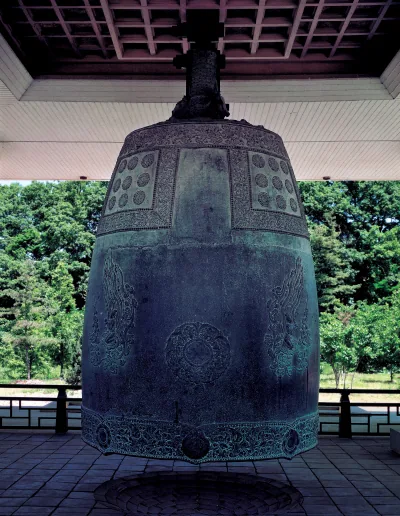
Why is the Divine Bell of King Seongdeok a must-see?
Also known as the Bongdeoksa Bell, the Divine Bell was completed in 771. At roughly 3.65 metres high and about 18.9 tonnes, it combines political commemoration, Buddhist meaning and highly developed metalwork. The museum identifies it as National Treasure No. 29 and one of the outdoor area’s most iconic works.
Do not arrive expecting to strike it. Look instead at the dragon-shaped suspension, flying figures, lotus decoration, striking point and inscription. Even a 30-minute stop can feel complete if you see the bell with one well-chosen History Gallery room.
What else should you notice outside?
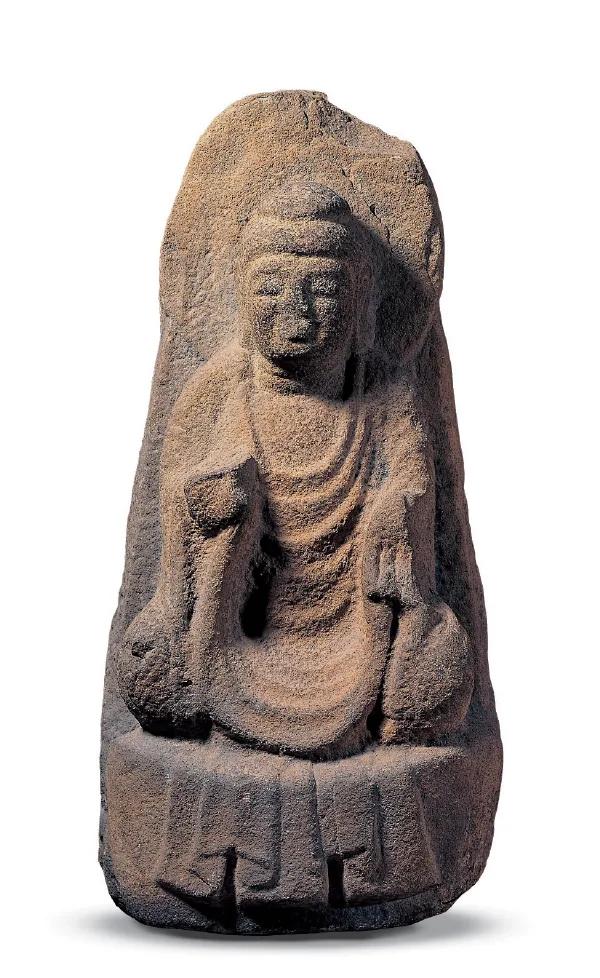
The Three-story Stone Pagoda from the Goseonsa Temple Site and the standing stone bodhisattva from Nangsan are among the outdoor highlights. Read the origin label before photographing an object. The key question is not only “what is this?” but “why is it now here rather than at the site where it once stood?”
That question explains why a museum visit is relevant to travellers who prefer outdoor archaeology. Preservation, relocation, weathering and the relationship between original site and museum display are part of the story. Take one wide photo and then spend time on one object’s material and scale rather than racing through every stone.
Is the Children’s Museum a reliable family stop?
It is an experience-oriented space where children learn about Korean history and traditional culture through games and programmes. That makes it useful for families, but it is not a childcare service attached to the adult galleries. The value depends on a child’s age, language comfort and interest in participating rather than simply entering.
Plan its session first, then let adults alternate through one major gallery. Do not make children finish every historical case before they “earn” the interactive room. The museum’s official pages provide reservation options and capacity controls; check the current arrangement instead of assuming a walk-in place.
Does free entry to the Children’s Museum mean you can enter at any time?
No. The museum publishes session and reservation information because capacity is managed. Times, entry arrangements and short-term closures can change. Parents should treat a confirmed session as the anchor, then place adult galleries before or after it.
Have a fallback: the Divine Bell, outdoor works and one adult gallery are a better contingency than waiting indefinitely at a doorway. Large groups should contact the museum in advance rather than expecting a standard individual-visitor rule to apply.
Is there an English guided tour?
The museum has published dated English-guide announcements and describes free exhibition-guide services, but a past schedule is not evidence that a tour will run on your Sunday or in your season. Check the current notice immediately before travel and arrive early if the tour is central to the day.
If there is no suitable tour, use the English leaflet, multilingual labels and a self-directed five-to-eight-object route. Waiting at the entrance for an unconfirmed service is a poor trade for the rest of a short Gyeongju day.
Can you visit with no Korean language ability?
Yes, but set a small task. The official site offers Korean, English, Japanese and Chinese leaflets, and the museum promotes multilingual information and guide services. Pick five to eight anchor objects, save the floor plan, then translate only labels that answer your question. Photographing every paragraph through a translation app is not an efficient museum strategy.
Check current notices if an English guided tour is important; the homepage carries dated announcements, so older schedules should not be treated as permanent. For practical connectivity between sights, have your Korea eSIM sorted before the day, but download any museum material on Wi-Fi rather than relying on mobile signal as your sole guide.
What are the photography and facility rules?
The visitor rules prohibit flash, tripods, selfie sticks and commercial photography, as well as food and drinks in exhibition halls. Do not touch exhibits; keep phones silent or on vibrate. A special exhibition or borrowed item can carry tighter restrictions, so signs and staff instructions always win.
The facility guide lists lockers, a café, shop, convenience store, wheelchair and stroller-related services, but operating hours and availability can vary. Do not gamble on a locker for oversized luggage. Eat before or after the galleries so that a meal queue does not cut into your chosen visit window.
Is the museum manageable with a wheelchair, stroller or slower pace?
The site lists wheelchair and stroller-related visitor facilities, but the grounds are a campus and the outdoor area adds distance. A slower route should select one indoor gallery, accessible facilities and the bell rather than assuming a complete circuit is comfortable for every traveller.
Confirm current loan, lift, accessible-toilet and route information directly with the museum if mobility support is essential. That is more reliable than judging accessibility from a map or a single wide photograph.
Is it the best rainy-day backup in Gyeongju?
It is one of the strongest rainy-day choices because the core galleries are indoors and it adds meaning to the outdoor sites you may need to shorten. But it should not be treated as an emergency warehouse where the group spends every remaining hour. Keep one gallery as the main task and protect energy for food, transport and a possible evening weather break.
In light rain, the outdoor bell can still be worthwhile. In thunderstorms, ice or severe weather, prioritise indoor galleries and follow staff directions. Weather is a reason to change sequence, not a reason to abandon a thoughtful plan.
How should summer heat, winter cold and blossom season change the plan?
In humid summer and sharp winter weather, the museum is a useful midday indoor reset. During blossom and peak foliage weekends, visit early or use it as a timed shelter from crowded outdoor paths. Spring flowers do not improve every museum experience; they mainly make the choice of outdoor walking period more precious.
In every season, preserve a buffer before Donggung & Wolji. A museum session that drifts late is more likely to damage your evening than to add an essential object. Build the day around daylight, weather and transport rather than an idealised “complete visit.”
How do you connect it from the old town, Daereungwon or Donggung & Wolji?
The museum fits naturally with the eastern historic area. Walking can work for travellers who enjoy a slow old-town day; a short local ride may make more sense in heat, rain, with children or after a long train journey. Check the live map and bus timing on the day rather than treating a straight-line map distance as walking time.
Think in clusters. Pair the museum with Daereungwon and the pond, then travel once toward dinner or accommodation. That is usually better than using it as a separate stop between a station-area hotel and a distant temple excursion.
Is it practical on a same-day trip from Seoul?
It can be, but only after you have fixed the departure, arrival and final return. A museum stop is easy to add when the old town is already the focus; it becomes stressful if it competes with Bulguksa, Seokguram, every tomb, a café queue and a sunset all on one same-day timetable.
Use the timings in the Seoul-to-Gyeongju transport guide and choose either a 45–90 minute museum visit or an overnight. The museum is not the reason to miss your last connection.
Is it a good first stop from Busan?
It can be a calm first stop if you arrive before the afternoon and want an indoor orientation before the old town. It is less sensible as the first stop when your arrival is late, luggage is awkward or the group’s real priority is a dusk visit to the pond.
Check the route choices in this Busan-to-Gyeongju guide, then decide whether to go directly to accommodation, begin with Daereungwon, or use the museum as your weather-protected middle of day.
Is driving and parking straightforward?
Driving can make a multi-generation group more comfortable, but it also creates parking, navigation and return-to-car time. It does not justify scattering a compact old-town route across unnecessary car moves. Check current parking arrangements and signs when you arrive, especially on weekends and holidays.
If your next stop is nearby, leave the car parked and walk the cluster. The museum is more valuable when it reduces logistical friction, not when it creates a sequence of short drives.
What should you do after the museum for an evening view?
Donggung & Wolji is the obvious continuation, but only if you leave the museum in time and the weather is worth it. A museum visit should clarify the pond, then get out of its way. Save an evening meal, a short old-town walk or an accommodation check-in as alternatives if the group is tired.
For the route choices after dark, use the dedicated Gyeongju evening plan rather than stacking every night sight on one evening. One well-timed pond visit is better than a rushed parade through three places.
How does the decision change for a day trip versus an overnight?
On a same-day trip, the museum is a controlled 45–90 minute context stop. Overnight, it can become the relaxed middle of a fuller old-town day or the rainy-morning anchor before moving on. The difference is not cultural ambition; it is how much time your return transport removes.
Use the day-trip versus overnight decision before trying to optimise gallery order. If the city has only been given a few rushed hours, spending more time on an itinerary redesign may be better than adding another museum room.
A low-fatigue two-hour route
Start with 45 minutes in the Silla History Gallery. Take a short break, spend 30 minutes in either Wolji or Art according to the next sight, then reserve 20–25 minutes for the Divine Bell and one outdoor work. Leave the remaining time for walking, toilets, lockers and an unhurried exit.
This route deliberately leaves material unseen. That is its strength. A group that still has energy for Donggung & Wolji, dinner or an evening walk has had a better Gyeongju day than a group that finished every gallery exhausted.
How should you reach the museum?
It is easier to combine with the eastern old-town sights than with a separate station-area outing. From Seoul, Busan or a local accommodation, settle the bigger transport decision first: use the specific guidance for Seoul to Gyeongju or Busan to Gyeongju, then decide whether walking and city buses can connect the museum to your chosen sights.
A car can reduce transfers but adds parking, navigation and the temptation to split related sights into inefficient stops. Without a car, make the museum one part of a compact eastern old-town cluster rather than a lonely detour between unrelated areas.
What is the best old-town route with the museum?
For a balanced day, do Daereungwon and nearby historic streets in the morning, use the museum in the hottest or wettest part of the day, then continue to Donggung & Wolji toward evening. Reverse the first two if you prefer historical context before tombs. The exact order matters less than keeping the route compact and protecting the evening from museum overrun.
Staying overnight turns this from a race into a useful choice. Use a Gyeongju overnight itinerary, hotel decision guide and where to stay in Gyeongju to choose an area that makes the evening and next morning easy. For two nights, the old-town-versus-station trade-off in this two-night location guide is more useful than assuming every hotel is interchangeable.
Who should skip it or keep it very short?
Keep it to the outdoor bell or skip it on this visit if your group strongly dislikes museums, has only enough energy for one old-town walk, or is trying to cover a packed multi-city trip in a single day. It also loses value if every minute is spent chasing a specific object that has not been confirmed on display.
That is not a verdict against the museum. It is a reminder that Gyeongju works better when one meaningful layer is absorbed than when every famous name is squeezed in. If you are choosing the whole Korea itinerary first, compare Gyeongju’s place within how many days a first Korea trip needs or a Seoul–Busan–Gyeongju seven-day route.
Bottom line: should you go?
Go if you want Gyeongju’s tombs, temples and palace pond to mean more than attractive ruins. Choose one track, give it an honest amount of time, and let the museum answer the question your outdoor stops raised. Do not go merely because it is free, and do not claim you “did the museum” by opening every gallery for five minutes.
For a broader map of the city before fixing individual stops, start at the Gyeongju destination guide. Then build the day around the few places that genuinely fit your pace, weather and transport—not around a checklist.
Before you go: quick checklist
- Check the official homepage and notices for today’s actual hours.
- Confirm temporary gallery closures and the current special exhibition.
- Choose HISTORY, ART, WOLJI, OUTDOOR or KIDS before entering.
- Set a 45-, 90-, 120- or 180-minute exit time.
- Do not assume a particular crown will be on display.
- Do not assume an English tour runs on your date.
- Book or confirm the Children’s Museum arrangement when it matters.
- Keep food and drinks outside the galleries.
- Pack for a no-flash, no-tripod, no-selfie-stick visit.
- Check the weather before committing to the outdoor area.
- Keep the museum, Daereungwon and Donggung & Wolji in one route cluster.
- Leave a buffer before sunset and your final transport.
- Do not rely on a locker for oversized luggage.
- For mobility needs, confirm current access facilities directly.
- Leave after the route you chose; free entry is not a reason to see every room.
Read alongside
If the museum makes you want to see the objects in their landscape, continue with the Daereungwon and Cheonmachong guide, the Donggung & Wolji guide and the Cheomseongdae decision guide. They answer different on-the-ground questions, so read only the one that matches the next stop.
More Gyeongju planning
For a slower multi-day route, use the overnight itinerary. For a single first trip through several Korean cities, use the seven-day Seoul–Busan–Gyeongju route. Both links are planning tools, not reasons to add more attractions to a day that is already full.