
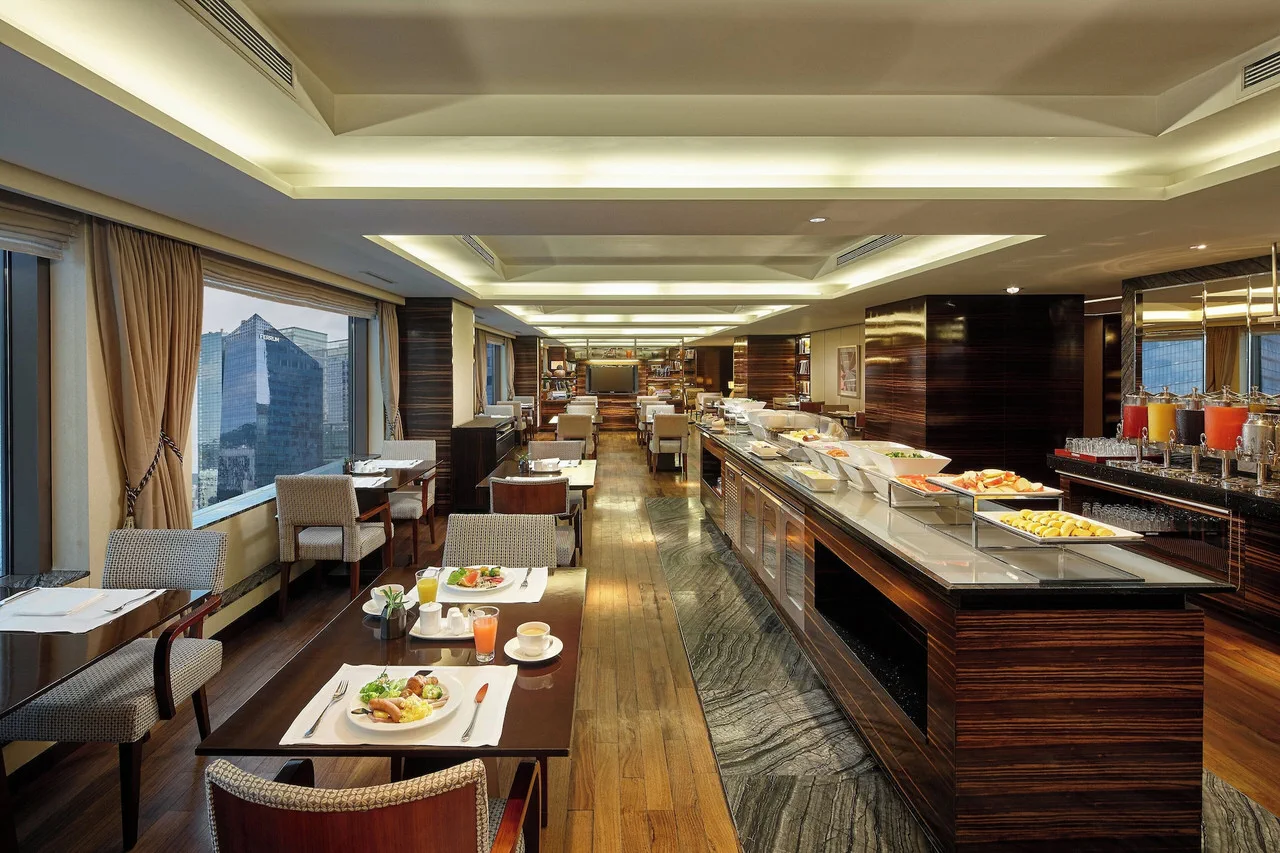
Short answer: if you are deciding where to stay in Seoul with a stroller, put “200 metres from the station” second. First check whether you can travel from street level to platform on a continuous elevator route, whether the exit you will actually use has that elevator, how long the transfer corridor is, what happens between the elevator exit and the hotel entrance, and how many times you will repeat the segment. Myeongdong/Euljiro works well when central Seoul and hotel returns repeat; City Hall/Seoul Station can suit transport-heavy days; Hongdae works when west Seoul and airport access repeat; Jamsil becomes convincing when the southeast is a real two-day cluster; Dongdaemun is useful when its evening district genuinely repeats. No district wins simply because a station has an elevator.
Do not start with “which district is best for families?” Draw the full hotel-door-to-platform route
A normal hotel comparison often ends at “300 metres from Station X.” A stroller route needs at least five segments: hotel door to pavement, street to station entrance, entrance to fare gates, gates to platform, and any transfer to another line. One unavoidable staircase or a badly placed elevator can change how that entire 300 metres feels.
Seoul Metropolitan Government currently publishes station-level accessibility data including elevators, escalators and accessible restrooms. The city’s accessibility policy defines “One Station, One Accessible Route” as a continuous elevator route from street level to concourse to platform. That is a better model for stroller families than simply counting how many station exits appear on a map.
There is one critical limitation: an official table saying Myeong-dong Station has elevators does not mean the exit next to your hotel is the elevator exit, and it does not mean every transfer is short. Before booking, place the elevator exit and hotel on the same map. Station name alone is not enough.
30-second decision table: start with the stroller segment you will repeat most often
| Your repeated situation | Base tendency | Cost people often miss |
|---|---|---|
| Central sightseeing and shopping, with naps or bag drops back at the hotel | Myeongdong / Euljiro | The elevator exit may be on the wrong side; an underground shortcut can actually be longer |
| AREX/KTX, arrival/departure and large-luggage days matter a lot | City Hall / Seoul Station | Large stations can involve long indoor walking even without stairs |
| Airport access plus repeated Hongdae/Yeonnam/Hapjeong days | Hongdae | The popular exit and the practical elevator exit may point in different directions |
| Lotte World, Seokchon Lake and southeast Seoul appear for two days or more | Jamsil | If the rest of the trip is central/west, cross-city travel can outweigh the stroller benefit |
| Dongdaemun, DDP and Gwangjang Market evenings repeat | Dongdaemun | Multiple lines add options but can also create longer transfer corridors |
Myeongdong/Euljiro works when the stroller saves a whole extra station entry—not because the area is automatically flat
The strongest stroller argument for Myeongdong/Euljiro is repetition. If the trip already clusters around central Seoul, you may be able to sightsee in the morning, return after lunch, restart in the afternoon and shop at night without entering the subway for every small task. Avoiding one whole station entry can matter more than shaving a few hundred metres off one isolated journey.
The official accessibility table currently lists elevator facilities at central stations including Myeong-dong and Euljiro stations, but that does not choose a hotel for you. Match the candidate property to the exit you would actually use, then check crossings, gradients and any underground detour. If most of your trip is Hongdae and Yeonnam, a beautifully accessible Myeongdong exit is still the wrong base.
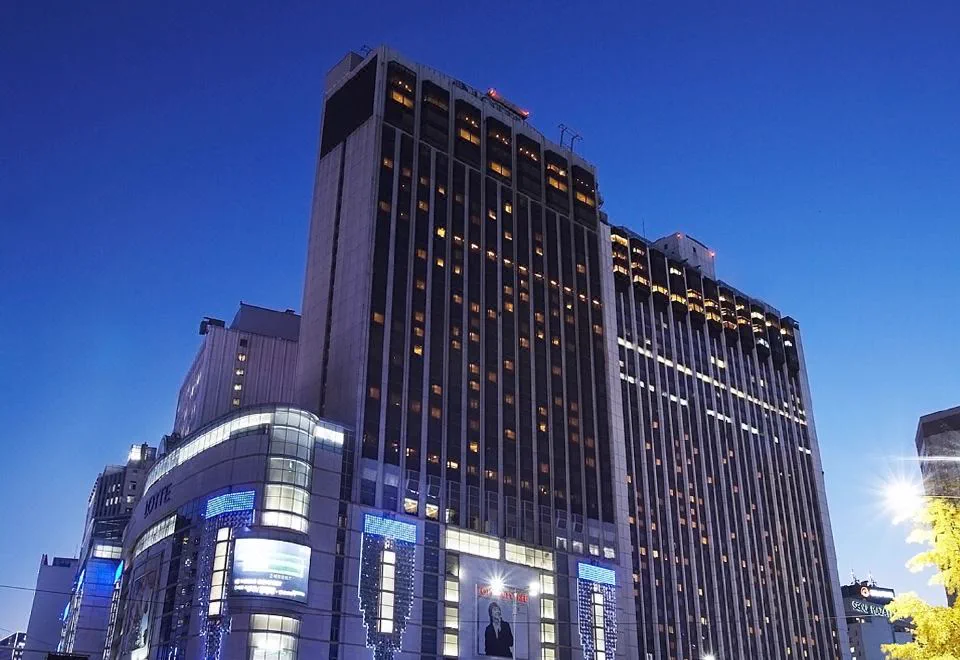
Once central Seoul is genuinely the right area, use Hongdae vs Myeongdong with kids for the broader family-base decision. Then test named properties such as Lotte Hotel Seoul for repeated central returns or Nine Tree Premier Myeongdong 2 for the Euljiro-side route. This page does not rank them by elevator count.
City Hall/Seoul Station is strong on transport days, but a large station can mean “no stairs, lots of walking”
With a stroller plus large luggage, Seoul Station can look like the safest answer because AREX, KTX and subway services converge there, and some nearby hotels use underground connections. That can be valuable when arrival, departure or intercity travel appears more than once. The trade-off is internal distance: the route can be fully step-free and still be long.
The current Seoul accessibility table lists elevator facilities at Seoul Station and City Hall Station. Treat that as proof that accessible infrastructure exists, not proof that your fastest shortcut is accessible. For stroller travel, a slightly longer level elevator route is often preferable to a shorter route that ends at stairs.
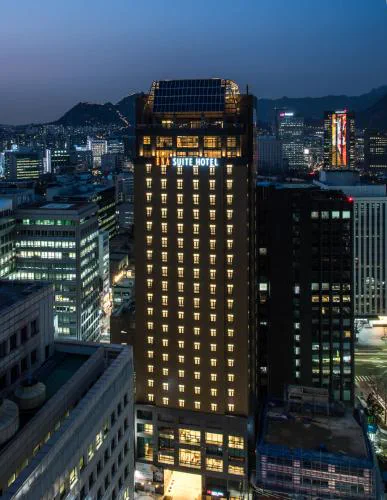
Four Points by Sheraton Josun, Seoul Station already separates the underground connection, AREX/KTX and luggage logic. It is a useful next page when transport days dominate. If Deoksugung, Namdaemun and central daytime plans matter more than the big hub itself, compare ENA Suite Hotel Namdaemun as a City Hall-style reset base.
Hongdae’s most common mistake: “AREX is easy, therefore the stroller route is easy”
Hongdae is attractive for families because airport access and a west-Seoul daily rhythm can fit together. But “AREX to Hongdae” solves the train segment only. Hongik Univ. Station is a multi-system station with many exits; the exit shown in nightlife or shopping guides may not be the elevator route that best serves your hotel.
Do not ask which Hongdae exit is most popular. Ask: after getting off the line I will actually use, which continuous elevator route reaches street level closest to the hotel, and what happens after that? A lower room rate can lose its value quickly if the practical elevator exit leaves you with a long, crowded street detour every time.
If the real conflict is still Hongdae versus Myeongdong for a family trip, use the family Hongdae vs Myeongdong guide. A stroller increases the weight of the final segment; it does not turn a district that is wrong for the itinerary into the right one.
Jamsil becomes strong only when the family itinerary genuinely concentrates in southeast Seoul
Jamsil can work extremely well with a stroller when the trip already includes Lotte World, Seokchon Lake, nearby shopping and meals. Keeping a full family day within one district can eliminate repeated station entries. Seoul’s current station accessibility data also lists elevator facilities at Jamsil Station.
But one Lotte World day is not automatically a reason to move four nights to Jamsil. If the other days are Myeongdong, palaces and Hongdae, the cross-city cost can outweigh the easy local stroller day. Use one family hotel or a Jamsil night for Lotte World before turning one attraction into the entire accommodation strategy.
Dongdaemun is not an elevator question; it is a “how much underground transfer walking?” question
Dongdaemun History & Culture Park connects several lines, which looks excellent on a transit map. With a stroller, more lines can also mean longer internal corridors. Seoul’s accessibility table lists elevators and escalators at the station, but the important variables are which line you use most, where the destination sits within the station complex, and whether the hotel return forces you through the transfer area.
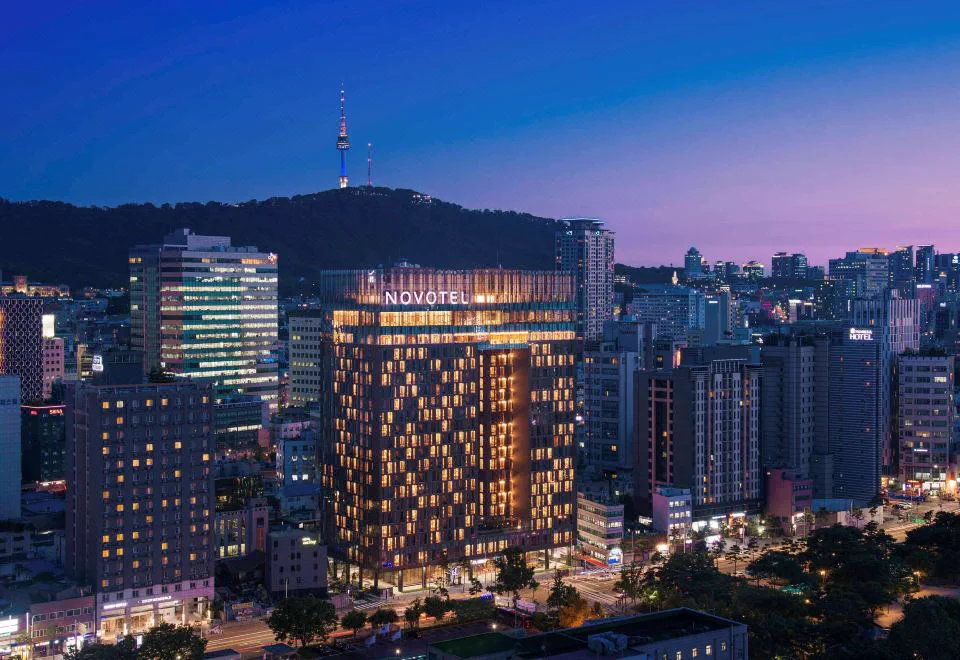
If DDP, Dongdaemun nights, Gwangjang Market and central-east Seoul repeat, accepting a more complex station may still be worthwhile because you remove a cross-city hotel return. If this area appears once, “three lines nearby” is not a reason to move the whole stay. Novotel Ambassador Seoul Dongdaemun is useful when family facilities and repeated Dongdaemun use both matter.
Use S-Map or Seoul’s accessibility maps to inspect stairs and narrow streets before booking
Seoul Metropolitan Government’s S-Map street-view project was specifically described as useful for wheelchair and stroller users because it helps people preview stairs, obstacles and narrow alleys. Seoul’s newer mobility-support tools also provide information about pedestrian barriers and elevator-oriented routes.
The practical workflow is simple. Get the shortest walking line from a standard map, then inspect the final few hundred metres with S-Map or official accessibility information. If the shortest line contains stairs, a steep awkward segment, a narrow alley or a complicated underground route, test the second-shortest but more level option. For stroller travel, “shortest” should mean least likely to require lifting the stroller or rerouting, not just the fewest metres.
Rain turns an acceptable final 500 metres into the part of the trip you may hate repeating
Five hundred metres in dry weather is not the same as 500 metres while holding an umbrella, pushing a stroller and carrying shopping. Winter layers or a sleeping child can have the same effect. A single major crossing or exposed block that looks trivial in good weather may become the exact segment you want to remove every afternoon.
Run a bad-weather test on the final shortlist: after the elevator exit, is there a covered or indoor alternative, do you cross a very wide road, and are there entrance steps at the hotel? If the route works only on a pleasant dry day, treat that as risk. The Seoul rainy-day hotel-return test helps combine the stroller, rain gear, bags and a tired child into one realistic scenario.
A lightweight stroller does not repair a bad hotel route
A compact stroller is easier to carry than a large one, but if your daily route requires folding it repeatedly, holding the child and climbing stairs, you have simply converted a location problem into arm work. Choose the hotel to reduce high-frequency lifting first; use stroller weight to handle occasional exceptions.
Taxis are useful backups for the same reason, but “we can always taxi back” should not become the daily design. If every return requires a car to avoid the subway and final walk, the hotel may be too far from the trip’s real center. Stroller travel benefits from a route that is boringly predictable, not a new transport workaround every night.
Use the final 10 minutes before booking for this checklist—not another 20 reviews
- Fix the subway line you will use most often. The same station can feel very different from different lines.
- Find the elevator exit, not the nearest exit. Put that exit on the same map as the hotel.
- Inspect the final 500 metres at street level. Look for major crossings, slopes, stairs, underground passages and narrow streets.
- Multiply the friction by hotel-return frequency. A route used twice a day deserves much more weight than a one-off arrival path.
- Retest it in rain and with the child asleep. If you would still willingly repeat it, the route is robust.
If crib, feeding and naps are the bigger problem, return to Seoul hotels with a baby or toddler. If the stroller is secondary but the child will definitely nap every day, start with the family midday-break hotel base. S020 has one job: when “do not lift the stroller and do not repeat unnecessary detours” is a hard requirement, remove fake convenience from the map.
Verdict: where to stay in Seoul with a stroller means choosing the route you can actually repeat every day
For a central itinerary with hotel returns, Myeongdong/Euljiro deserves an early check. If AREX, KTX and arrival/departure logistics dominate, City Hall/Seoul Station can make sense once you price in the internal station walk. If west Seoul and airport access repeat, Hongdae can work. If Lotte World and southeast Seoul occupy two days or more, Jamsil becomes genuinely strong. Dongdaemun is a trade-off between multi-line flexibility and longer underground movement.
Do not finish with the vague question “which Seoul area is easiest with a stroller?” Reduce it to a statement you can verify: on the line I use most, I can reach street level on a continuous elevator route, the hotel is reachable without lifting the stroller, and I would still accept the final segment in rain twice a day. When that sentence is true, the location is practical for your trip.
Sources and verification
- Seoul Metropolitan Government | Subway Accessibility Facilities: station-level elevators, escalators and accessibility facilities; used to verify infrastructure presence, not to rank hotels by elevator count. Rechecked 2026-08-20.
- Seoul Metropolitan Government | Mobility Support for Persons with Mobility Challenges: definition of One Station, One Accessible Route and current accessibility-navigation information. Rechecked 2026-08-20.
- Seoul Metropolitan Government | Seoul Helping Map: stroller-inclusive navigation and barrier attributes including curb height, slope and sidewalk width. Rechecked 2026-08-20.
- Seoul Metropolitan Government | S-Map street view: official description of previews for stairs, obstacles and narrow alleys, including use by stroller users. Rechecked 2026-08-20.
- Hotel images are reused from KoriNavi’s existing verified property media for Lotte Hotel Seoul, ENA Suite Hotel Namdaemun and Novotel Ambassador Seoul Dongdaemun; exact hotel services and entrance conditions should still be rechecked for the travel date.
Elevators can be temporarily unavailable and exit routes can change because of maintenance or construction. Recheck the actual station, exit and street-level route shortly before travel. This Persona page is a location decision guide and does not add Booking.com, Agoda or Trip.com conversion CTAs before a specific hotel has been chosen.